XROGO
Nov 5, 2026

XROGO unveils robot deployment plan at CeMAT ASIA, targeting manufacturing and inspection work

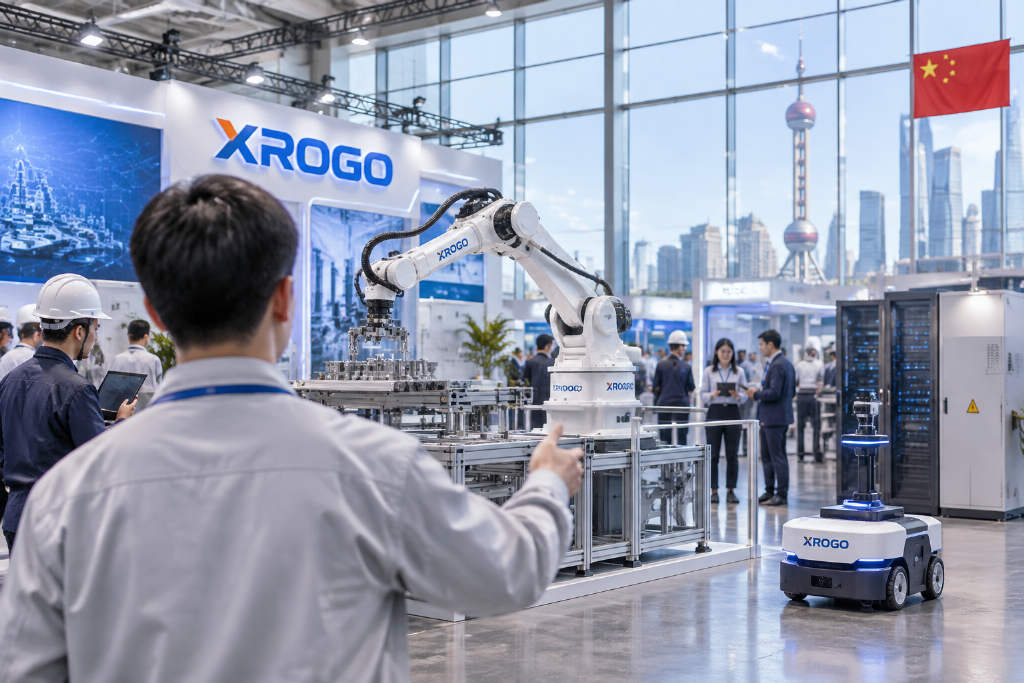
XROGO, a robotics company, has introduced its "robot deployment plan" at CeMAT ASIA 2026, the Asian International Exhibition for Logistics Technology and Transport Systems. The program is aimed at enterprise clients and ecosystem partners, with its first phase centered on two use cases: material loading and unloading in manufacturing, and inspection and on-duty monitoring in server rooms and power distribution rooms. The company said it wants businesses to hire robots in a way that resembles hiring workers, using a "robot rental plus service" model as the main commercial structure. XROGO said this approach is designed to lower the upfront barrier for companies adopting robotic equipment for the first time. According to a company executive, the firm will match hardware and services to specific task requirements, then work with clients to define job targets, rollout schedules, and acceptance results. To improve robots' ability to handle real-world tasks, XROGO said frontline workers and specialists will take part in training, while engineers provide tools and training support to shorten deployment time. The company also said it plans to extend validated task capabilities to more job categories through coordination between on-site robots, remote personnel, and localized services. The news was reported by QbitAI.
1210
XROGO unveils robot deployment plan at CeMAT ASIA, targeting manufacturing and inspection work
GlobalFoundries
Nov 5, 2026

GlobalFoundries swings to Q3 loss after booking $441 million charge tied to shares issued to U.S. government

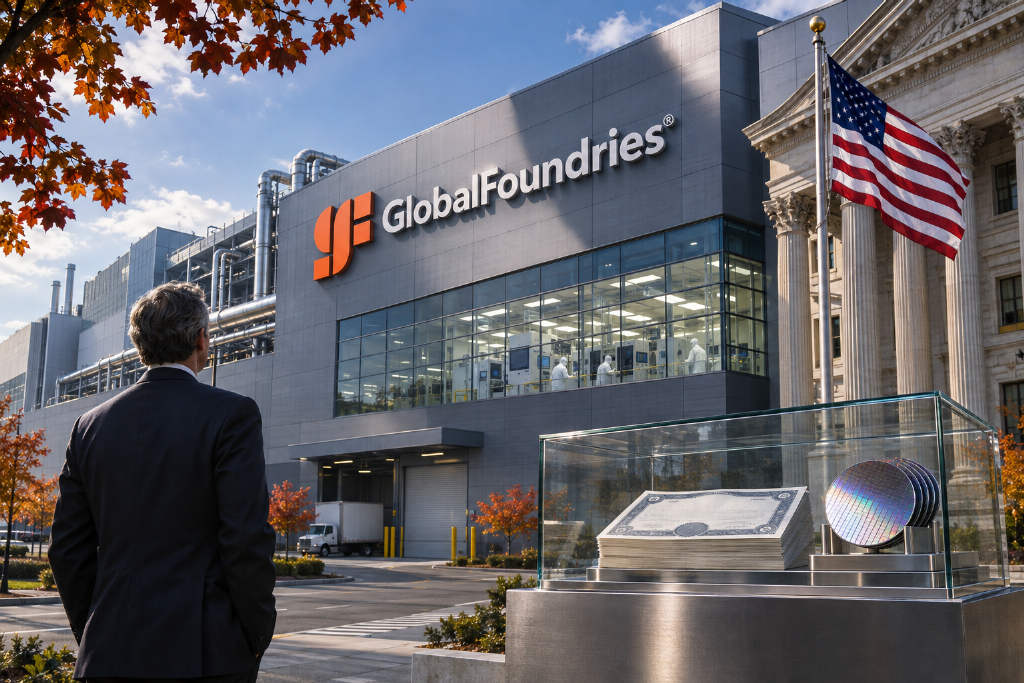
GlobalFoundries reported third-quarter revenue of $1.899 billion on Nov. 4, up 13% from a year earlier and 6% from the prior quarter, with core operating figures largely landing within the company’s guidance range. The headline result, however, flipped from profit to loss under IFRS: the chipmaker posted a net loss of $270 million, or $0.49 per share, compared with net income of $167 million in the previous quarter and $249 million a year earlier. The company said the loss was mainly driven by a non-cash charge of $441 million recorded in non-operating expenses after it issued 9.9 million common shares to the U.S. government in September. Those shares were issued under an agreement signed with the U.S. Department of Commerce on Sept. 3 at a filed issuance price of $37.85 per share, for a total of about $375 million. Excluding such items, GlobalFoundries said non-IFRS results remained profitable, with non-IFRS net income of $298 million and earnings per share of $0.53. The company also guided fourth-quarter revenue to $2 billion and disclosed updates on agreements involving Taiwan Semiconductor Manufacturing Co. and a U.S.-Japan cooperation plan.

1200
GlobalFoundries swings to Q3 loss after booking $441 million charge tied to shares issued to U.S. government
CITIC Securities
Nov 3, 2026

CITIC Securities strategist says A-share domestic demand and manufacturing blue chips have more room for valuation repair

According to Renmin Caixun, Bao Chengchao, chief strategist at the research department of CITIC Securities, said in his latest view that large-cap blue chips in China remain relatively cheap in a global comparison. Among the U.S., Japan, South Korea and China A-share markets, A-shares are the only market where the valuation premium of AI over non-AI stocks is still above its historical midpoint. As of Oct. 22, 2026, the A-share AI/non-AI PE multiple stood at 4.4x, in the 82nd percentile since 2016, while the same measure in the U.S., Japan and South Korea had fallen to the 1st, 17th and 24th percentiles. Bao said overseas AI premiums have largely been absorbed by a rerating in non-AI stocks. He added that non-AI blue chips tied to domestic demand and manufacturing in A-shares trade at just 15.6x PE, in the 21st historical percentile, suggesting relatively ample room for valuation repair, though realization of that room still depends on macro conditions.

1080
CITIC Securities strategist says A-share domestic demand and manufacturing blue chips have more room for valuation repair
MarsBit
Nov 1, 2026

Why a MarsBit essay argues S&OP can intensify, not resolve, KPI conflicts

MarsBit has published a long-form commentary by GritMeng that uses a stripped-down manufacturing example — two demand orders and three materials — to argue that traditional sales and operations planning, or S&OP, does not remove KPI conflicts inside factories built on shared materials, shared capacity and bottleneck constraints. The article says the usual fix of putting sales, production, procurement and finance in the same room can make matters worse if planning logic still lets high-priority orders lock up early shared resources even when those orders cannot be completed until later. The piece builds its case around a simple setup: one shared material A, one dedicated material B, one bottleneck material C, and two orders with different due dates and priorities. Under a static priority-first scheduling rule, the higher-priority order grabs the only available unit of A even though it cannot start until C arrives later, while the lower-priority order that could have shipped earlier is forced into delay. GritMeng calls this an "X-shaped cross mismatch" and uses it to explain inventory buildup, shortages, idle capacity, late delivery and cross-department KPI clashes. The article then proposes a different planning approach that separates business priority from the real completion window, and cites operating data from Lenovo’s global integrated planning system as well as a 296-second stress test for an IPC planning engine on a laptop-scale setup.

1070
Why a MarsBit essay argues S&OP can intensify, not resolve, KPI conflicts
artificial intelligence
Oct 21, 2026

China issues opinion calling for full rollout of the "AI+" initiative

The General Office of the Communist Party of China Central Committee and the General Office of the State Council have issued an opinion calling for the full implementation of the "AI+" initiative, according to ChainCatcher. The document says artificial intelligence should be used to empower a wide range of industries across the economy. It also stresses deeper integration between technological innovation and industrial innovation. In the same document, the authorities called for progress in making manufacturing more intelligent and greener, while also speeding up the promotion and application of agricultural science and technology achievements. No additional details were provided in the brief.

910
China issues opinion calling for full rollout of the "AI+" initiative
Nvidia
Oct 21, 2026

Nvidia plans stakes in four German AI startups as part of nearly $10 billion Europe push

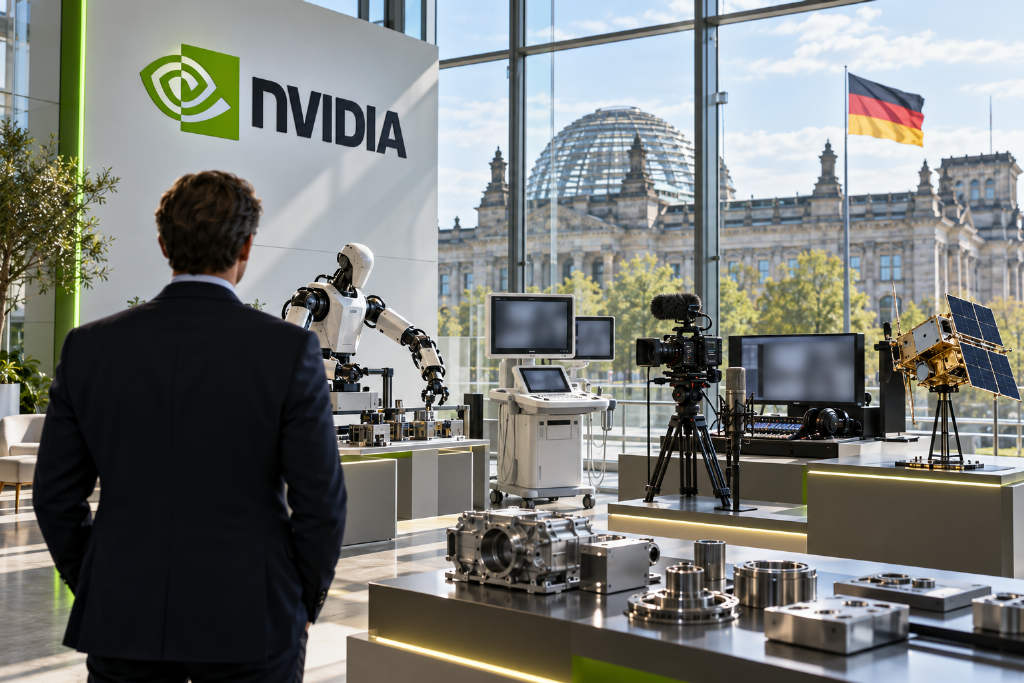
Nvidia said it plans to invest in four German startups: robotics company Agile Robots, medical software firm Avelios Medical, AI audio and video generation company Mirelo, and satellite manufacturer Reflex Aerospace. The move forms part of Nvidia’s broader commitment to invest nearly $10 billion in Europe to support the region’s AI industry. On the same day, German Chancellor Merz, Germany’s Federal Ministry for Economic Affairs and Energy, the ministry responsible for research, technology and aerospace, and Nvidia signed a declaration of intent to cooperate on physical AI models. The parties also aim to expand AI use in robotics, industrial equipment and manufacturing. Merz separately called on Germany’s small and medium-sized businesses to make fuller use of existing industrial data and speed up real-world AI adoption.

1390
Nvidia plans stakes in four German AI startups as part of nearly $10 billion Europe push
Arda
Oct 20, 2026

Arda raises $230 million at a $1.5 billion valuation

AI manufacturing startup Arda has raised $230 million in a new financing round, reaching a valuation of $1.5 billion, according to Techub News, which cited Crypto Briefing. The company is focused on using artificial intelligence to automate manufacturing processes in the United States. Its stated aim is to improve efficiency across industrial operations while reducing reliance on foreign supply chains. The funding and valuation place Arda among the more highly valued startups working at the intersection of AI and manufacturing automation. No additional details about the round were disclosed in the source brief, including participating investors or the structure of the financing. The report centers on Arda’s effort to apply AI tools to U.S. manufacturing workflows as companies look for ways to streamline production and strengthen domestic industrial capacity.

1050
Arda raises $230 million at a $1.5 billion valuation
NVIDIA
Oct 19, 2026

Jensen Huang meets German chancellor in Berlin as NVIDIA plans investments in four German companies

NVIDIA founder Jensen Huang met German Chancellor Friedrich Merz in Berlin, where the two discussed combining German engineering with NVIDIA’s AI technology to support development in manufacturing and the automotive sector. Separately, NVIDIA said it plans to invest in four German companies: Agile Robots SE, aveliosmed, MireloAI and reflexaerospace. The planned investments span robotics, healthcare, creative tools and space. The update was reported by Techub News. No financial terms were disclosed in the source material, and the announcement did not include additional details on timing beyond the meeting and investment plan described in the report.

1500
Jensen Huang meets German chancellor in Berlin as NVIDIA plans investments in four German companies
Total 47 items
Go topage