AMD’s MEXT Claims Servers Can Cut DRAM Use in Half With Limited Performance Loss
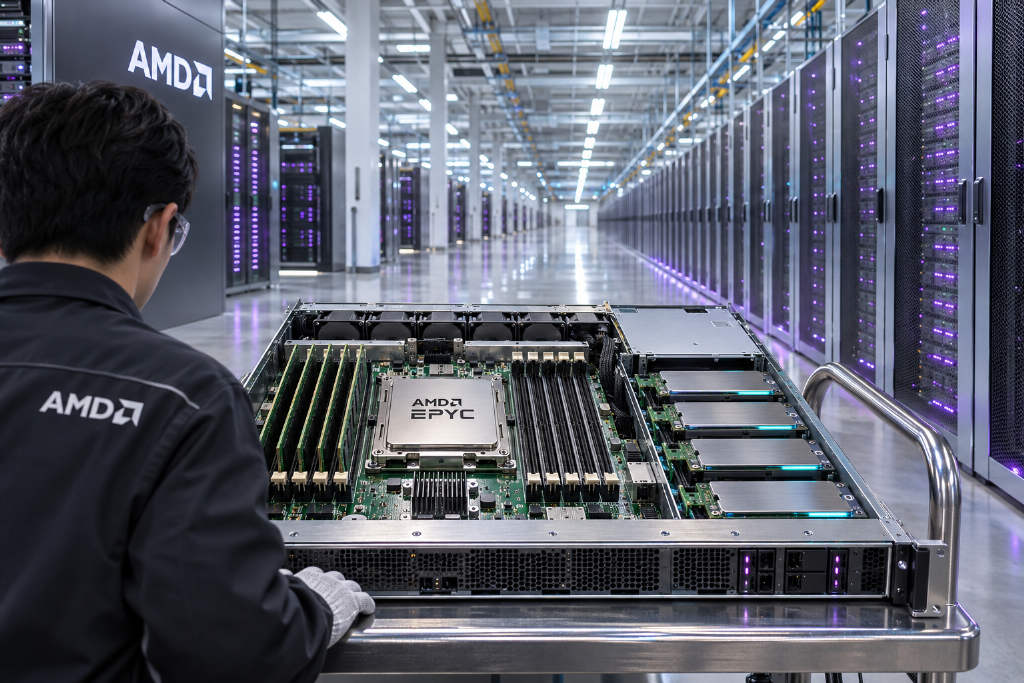
AMD has introduced MEXT, a predictive memory engine designed to reduce the amount of physical DRAM required by servers. The system moves cold memory pages to less expensive NVMe SSD storage and uses a Transformer-based model to predict which pages will be needed next, returning them to DRAM before access. AMD and MEXT founder Gary Smerdon say the reduction can range from 20% to 75%, depending on the application and its performance target. AMD cited internal results showing Synopsys PrimeTime retaining 95% of performance with half the DRAM, while Spark SQL and a five-agent Agentic AI workload each retained 99% under the same capacity reduction. The company said most workloads are better suited to a 20% to 25% reduction, with larger cuts requiring application-specific tuning. AMD has not disclosed prediction-hit-rate data, a key metric because incorrect predictions can force pages to be read from the SSD in real time. MEXT currently runs as a Linux kernel module and supports EPYC servers only. AMD plans to expand internal deployment from 145 servers to 2,000 in 2027 and is working with HPE on customer access.