Phison
Oct 16, 2026

Phison CEO K.S. Pua says CXMT's 4F² memory push is a market scare, not a near-term supply shift

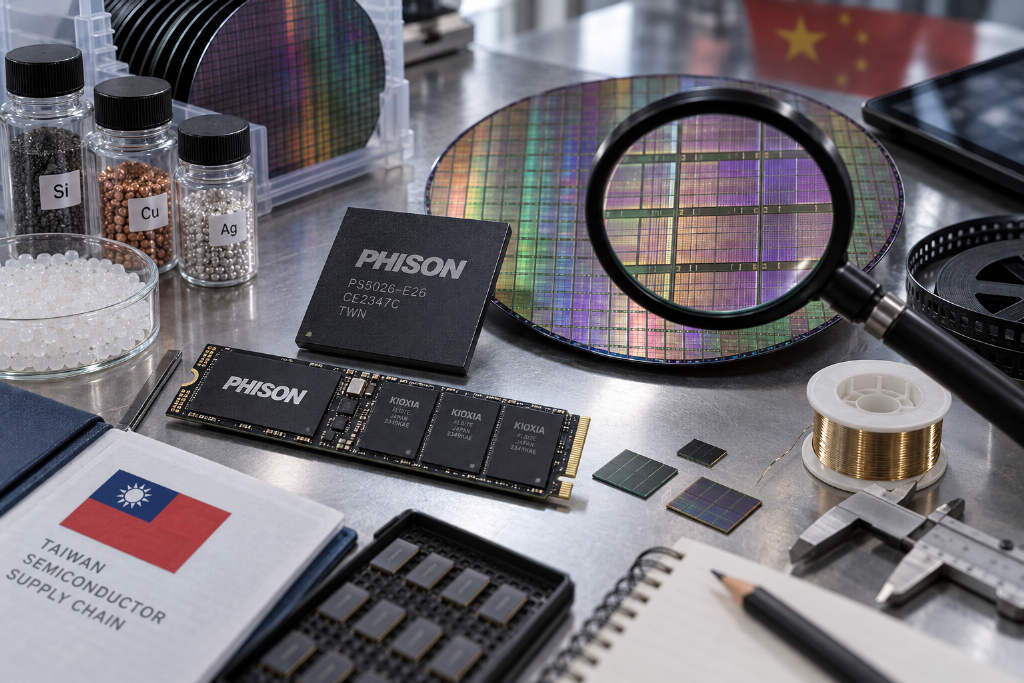
Phison Electronics CEO K.S. Pua pushed back against market anxiety after Chinese DRAM maker ChangXin Memory Technologies, or CXMT, said it had completed the design of a next-generation 4F² memory cell architecture. In comments published after an Oct. 15 interview with Economic Daily, Pua said the reaction looked more like a "market ghost story" than an immediate competitive threat. His point was simple: a newly announced technology does not translate into instant mass production. Pua said the path from design disclosure to commercial output still runs through validation, yield improvement and full-scale manufacturing, all of which take time. He argued that the current shortage in memory supply will not be resolved in the short term and said Phison is still seeing strong customer demand. According to him, the company is not worried about a lack of orders; it is more concerned about shortages in materials that could delay shipments. The report also noted prior market pressure across memory stocks after news that CXMT, described as the world’s fourth-largest DRAM producer, aims to launch DDR5 server memory using the technology by the end of 2026. Elon Musk had also weighed in earlier, saying China can scale production faster than many expect once it masters a manufacturing process, though he added memory may be different because HBM and 3D stacking remain harder to catch up on.
1250
Phison CEO K.S. Pua says CXMT's 4F² memory push is a market scare, not a near-term supply shift
Elon Musk
Oct 14, 2026

Musk praises Micron pricing as fair while criticizing other memory suppliers

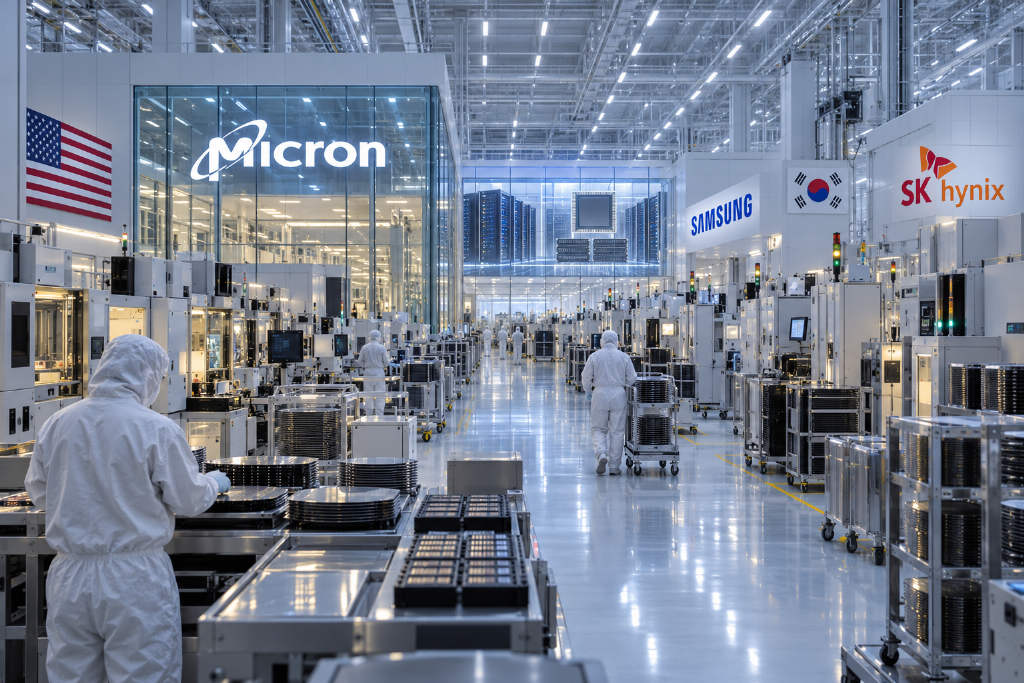
Elon Musk publicly praised Micron’s approach to future memory pricing, saying the U.S. chipmaker has been reasonable while other suppliers have quoted prices so aggressively that customers will remember it. His comments came after investor Nicholas Mugalli shared a new JPMorgan research note on X that remained bullish on the memory and storage sector despite a recent sell-off in semiconductor and AI stocks. JPMorgan said the global memory shortage could last through 2028 and disclosed that Micron has signed 26 strategic customer agreements, with remaining performance obligations tied to those contracts reaching $150 billion. Musk did not name the suppliers he was criticizing. Still, because the advanced DRAM and high-bandwidth memory market is dominated by Micron, Samsung Electronics and SK Hynix, the remarks quickly drew attention to the two South Korean companies. TrendForce data cited in the report showed that in the second quarter of 2026, Samsung held 39.4% of the global DRAM market, SK Hynix had 24.9%, and Micron held 23.3%, giving the three companies a combined 87.6% share of global DRAM revenue. JPMorgan also projected strong demand ahead, estimating that the total addressable market for HBM could rise from about $64 billion in 2026 to $160 billion in 2027 and roughly $280 billion in 2028.

1200
Musk praises Micron pricing as fair while criticizing other memory suppliers
Goldman Sachs
Oct 9, 2026

Goldman Sachs says Dell ships AI servers 4 to 6 weeks faster, with memory seen as a 2027 bottleneck

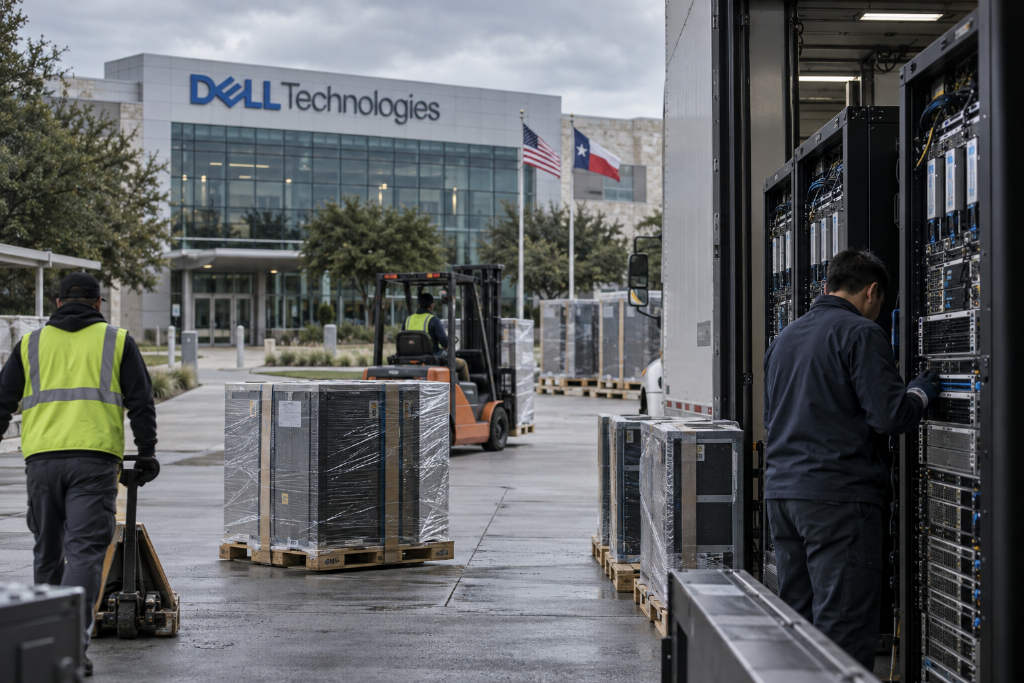
Goldman Sachs kept a Buy rating on Dell in a report dated Oct. 8, 2026, arguing that the company’s AI server business still holds a meaningful edge over peers. The bank said Dell can deliver AI servers roughly four to six weeks faster than competing OEM and ODM vendors, giving customers a chance to put infrastructure to work earlier and start generating revenue sooner. Goldman said that timing advantage helps support Dell’s premium pricing. The report was based on an investor field visit to Dell’s Round Rock headquarters, where management participants included CFO David Kennedy and Infrastructure Solutions Group President Arthur Lewis. Goldman framed the key question as whether Dell’s moat extends beyond component access into system design, supply chain execution, manufacturing and deployment. On supply, Goldman said constraints remain the main limit on AI infrastructure growth. Dell expects memory tightness to continue into next year, with conditions becoming tighter in 2027 even as yields improve. On profitability, Goldman said future margin expansion is more likely to come from storage attach and operating leverage than from pushing AI server margins aggressively higher. The bank also described enterprise AI adoption as still early, with Dell expecting hybrid architectures that combine frontier cloud models with on-premise open-weight models.

1330
Goldman Sachs says Dell ships AI servers 4 to 6 weeks faster, with memory seen as a 2027 bottleneck
Nanya Technology
Oct 6, 2026

Nanya and Winbond post record September and Q3 revenue as analysts keep Winbond target at NT$218

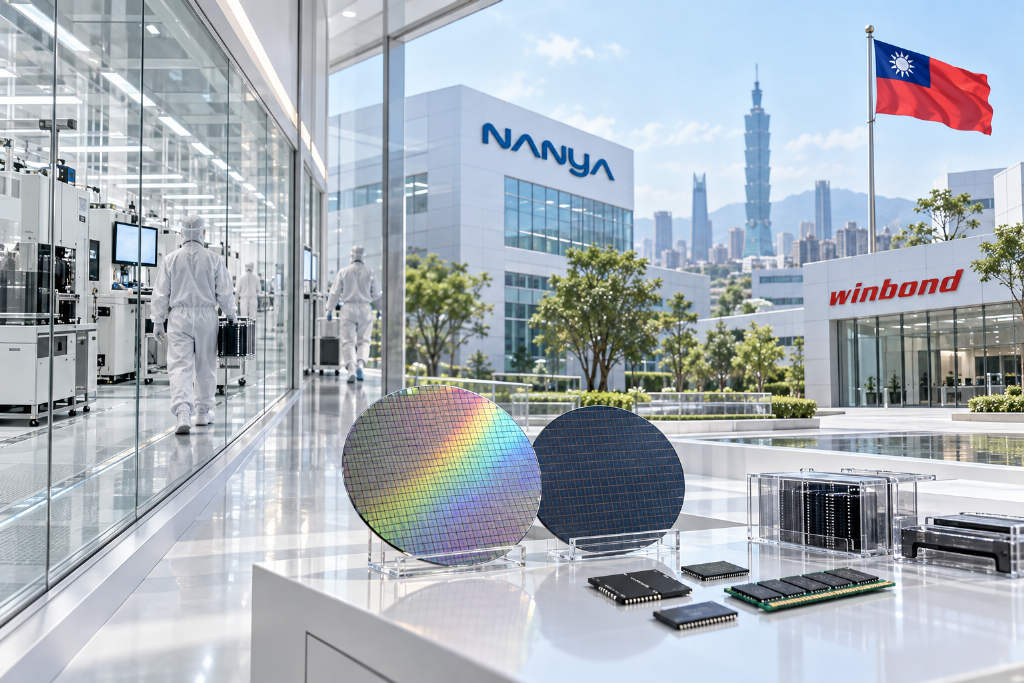
Memory pricing kept climbing and pushed both Nanya Technology and Winbond Electronics to fresh revenue highs in September, with third-quarter sales also reaching records. According to a United Daily News report cited in the source material, Nanya posted September consolidated revenue of NT$45.091 billion, up 0.9% from August and 576.62% from a year earlier, marking an 11th straight monthly record. Winbond, whose consolidated figures include subsidiaries such as Nuvoton Technology, reported NT$28.249 billion for September, up 3.44% month over month and 256.67% year over year, extending its record streak to 10 months. Analysts cited by Commercial Times raised their outlook for Nanya’s third-quarter DRAM bit shipments and average selling prices, while a local brokerage projected Winbond’s gross margin could rise to 76.3% in the third quarter and placed a NT$218 target price on the stock. The report also noted Winbond’s planned $1.12 billion cash acquisition of an Infineon NOR Flash and F-RAM business, and Nanya’s approval to establish operations in Pingtung Science Park focused on 3D wafer packaging and testing.

2680
Nanya and Winbond post record September and Q3 revenue as analysts keep Winbond target at NT$218
memory
Sep 30, 2026

Long-term supply deals are tying up memory output and lifting the price floor for consumers

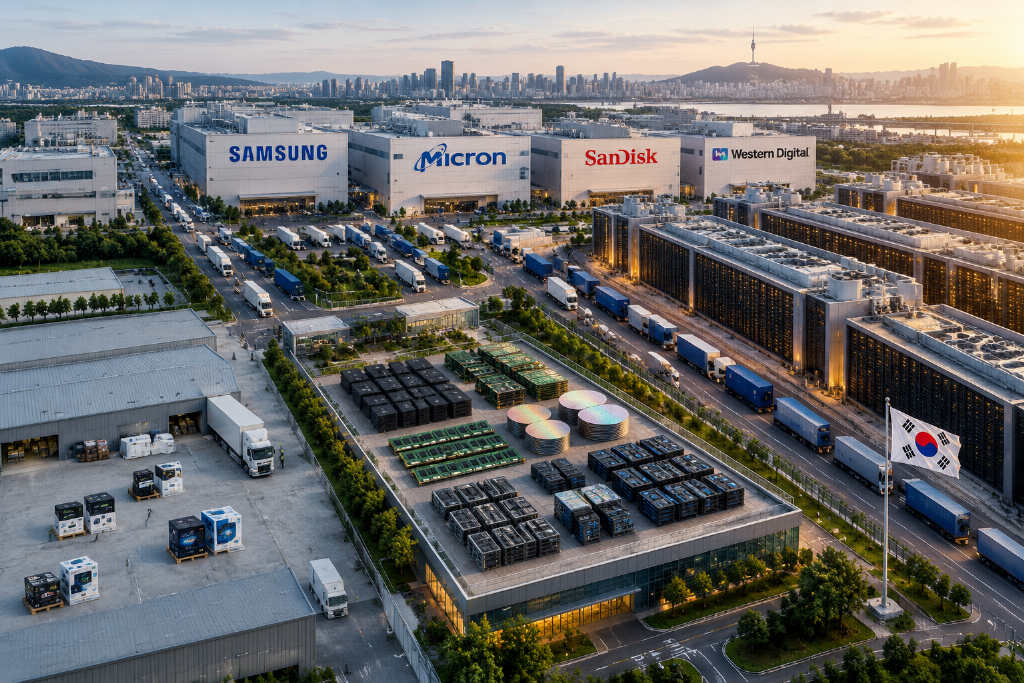
Major memory makers including Samsung, Micron, SanDisk, and Western Digital are shifting more of their output into multi-year supply agreements with a small group of large customers, a move aimed at reducing the industry’s long-standing boom-and-bust cycle. The report says these long-term agreements now cover roughly 50% to 70% of production in some cases, leaving less supply available for the broader market. That shift is already showing up in end-user pricing. A 32GB DDR5 kit that averaged $122.50 in September 2025 is now priced at $567.50, while 64GB DDR5-6000 kits have climbed from about $240 to roughly $1,300 to $1,400. Cloud providers are emerging as the main buyers behind this demand, with TrendForce projecting capital spending by nine major cloud companies to rise from $922 billion in 2026 to $1.383 trillion in 2027. The debate now centers on whether long-term contracts can really weaken the memory cycle, or simply cushion profits until the next downturn. Analysts, executives, and investors remain split, while China’s rising supply and U.S. political resistance add another layer of uncertainty for the retail market.

1620
Long-term supply deals are tying up memory output and lifting the price floor for consumers
AI
Sep 27, 2026

Analyst says claims of 10-year AI demand visibility do not hold up as memory, ABF substrates and power emerge as bottlenecks

P Equity Research analyst Mr. P said in a Sept. 26 podcast that the market narrative claiming hyperscale cloud providers have "10 years of demand visibility" is not credible. In his view, cloud companies struggle to forecast demand even two years out, and AI infrastructure spending will still be constrained by cyclical capital expenditure patterns. In the near term, inference demand is expected to keep lifting demand for memory products including HBM, DRAM and NAND. Mr. P estimates hyperscaler capex could reach $1.1 trillion to $1.2 trillion next year, with memory accounting for 50% to 60%, or roughly $500 billion to $700 billion. UBS has projected the figure could be as high as $900 billion. He also argued that AI compute constraints are shifting away from GPU unit counts alone toward power, advanced packaging, memory and ABF substrates. He added that used prices for older GPUs such as the H100 remain elevated, B-series GPU rental rates are still rising, ABF substrate tightness may last until 2028 to beyond 2030, and gas turbine order books at Mitsubishi, Siemens and GE Vernova are already filled past 2030.

840
Analyst says claims of 10-year AI demand visibility do not hold up as memory, ABF substrates and power emerge as bottlenecks
Micron
Sep 26, 2026

Micron says its Sanand plant in India has moved into full commercial shipments

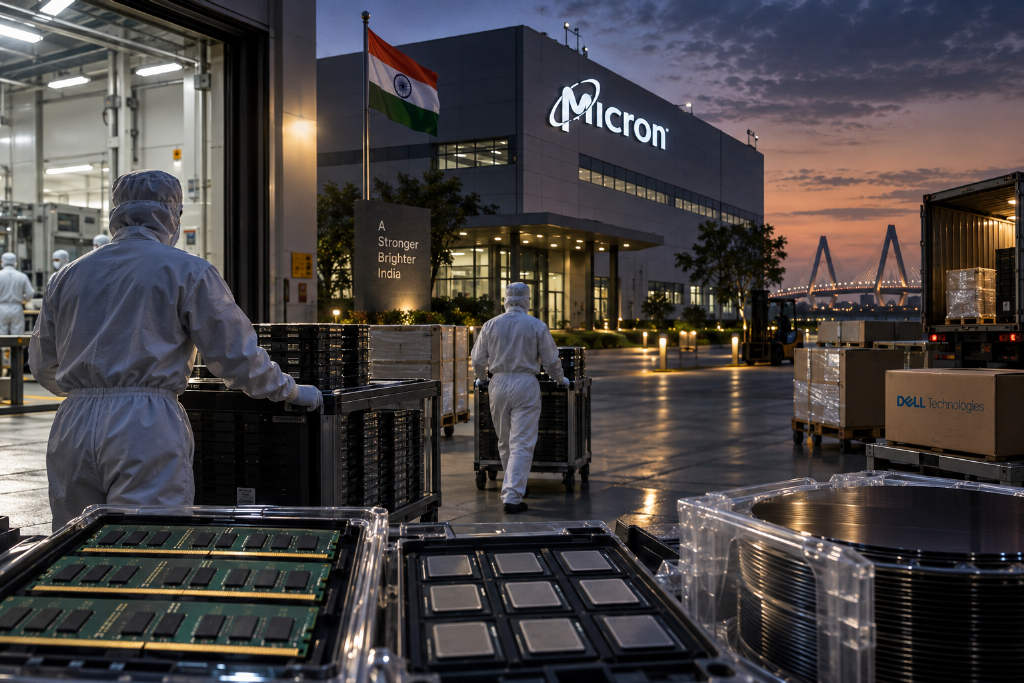
Micron said its $2.75 billion plant in Sanand, Gujarat, has completed construction and entered full commercial shipments, supplying finished memory products to customers worldwide. The facility handles advanced DRAM and NAND wafers produced by Micron at other sites and converts them into finished storage products in India. According to the company, commercial production at the plant began earlier this year. Micron also said the first India-made shipments from the site have already been sent to Dell Technologies. The update was cited by Techub News, which referenced Watcher Guru. The announcement marks the transition of the Sanand facility from the construction phase to full shipment operations, with the plant now serving global customers as part of Micron’s manufacturing network.

1130
Micron says its Sanand plant in India has moved into full commercial shipments
JPMorgan
Sep 20, 2026

JPMorgan Sees Stronger Semiconductor Fundamentals, Puts 2026 Cloud Capex at $954 Billion

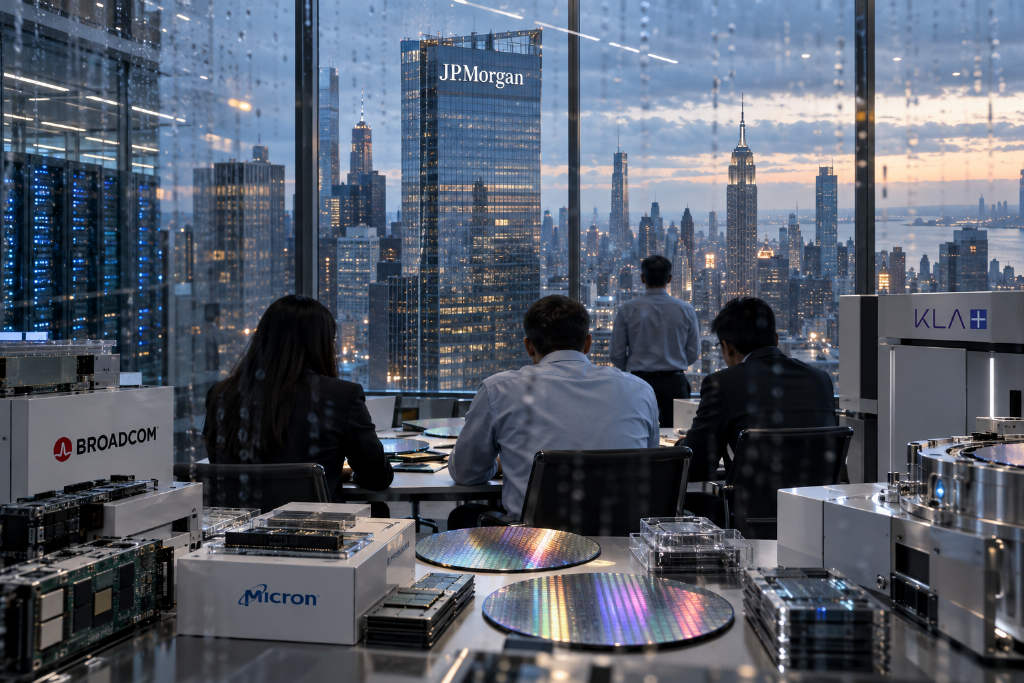
JPMorgan said in its Sept. 18 U.S. semiconductor and semiconductor equipment autumn report that industry fundamentals are improving and the recent pullback in chip stocks looks constructive rather than disruptive. The bank’s model projects semiconductor industry growth of 118% in 2026 and 35% in 2027, while wafer fab equipment is seen rising 31% in 2026 and 38% in 2027. A key pillar in that view is cloud capital spending, which JPMorgan now estimates at $954 billion in 2026, climbing to $1.41 trillion in 2027 and $1.54 trillion in 2028. The bank said early AI monetization and return-on-investment signals are becoming easier to see, with faster cloud and AI revenue growth, larger backlogs, more long-term contracted capacity, and improving profitability across cloud and AI businesses. JPMorgan also highlighted custom AI ASICs and memory as two major themes in the current upcycle. It estimates the custom AI ASIC market at roughly $60 billion to $70 billion in 2026, with a 40% to 50% compound annual growth rate over the next several years, and forecasts DRAM and NAND pricing to rise about 250% in 2026. Among its preferred names, the bank listed Broadcom, Analog Devices, Marvell, Micron and KLA in large caps, while also favoring Nvidia, Applied Materials and Lam Research.

4130
JPMorgan Sees Stronger Semiconductor Fundamentals, Puts 2026 Cloud Capex at $954 Billion
Total 63 items
Go topage