Google
Sep 3, 2026

Google Develops Hardware and Software to Tackle AI Memory Bottleneck, Recycles DDR4

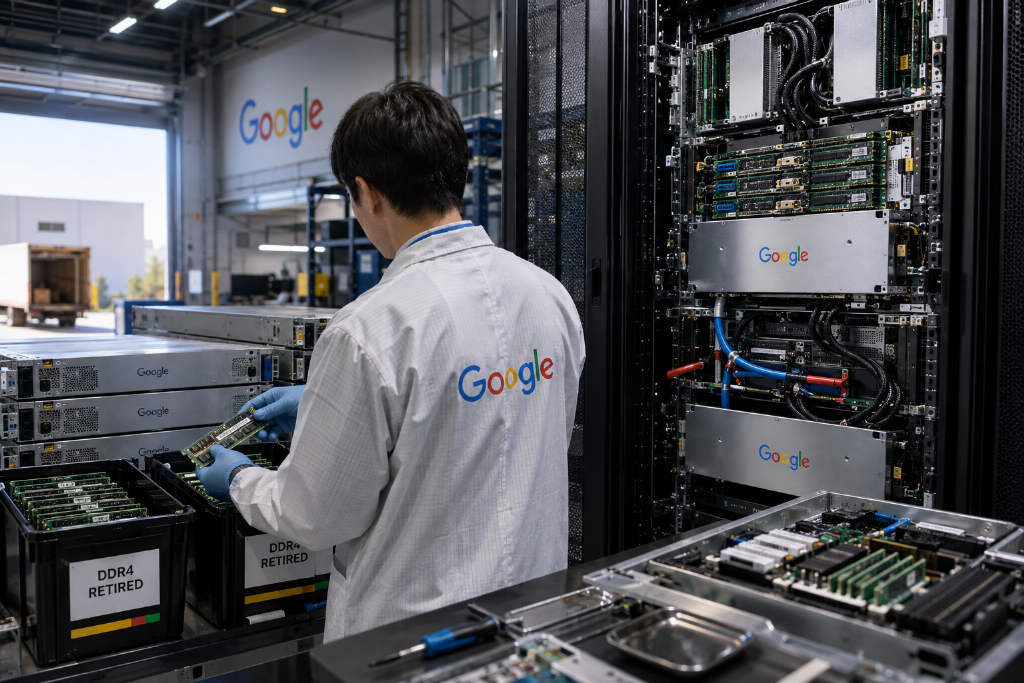
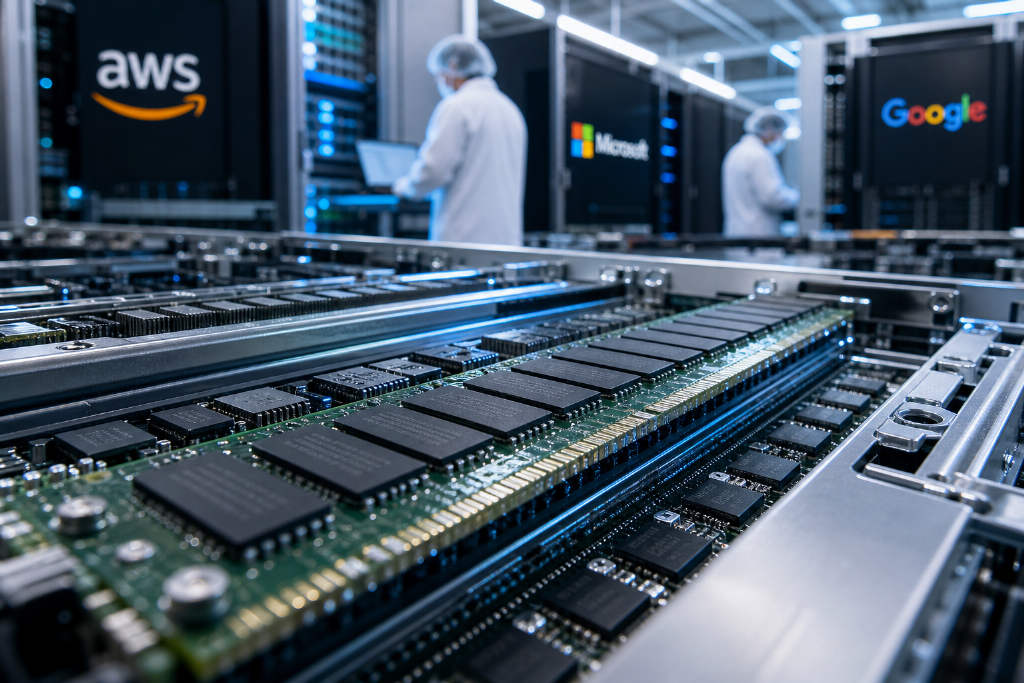
Google's senior director of supply chain infrastructure, Nikhil Cherian, revealed the company is developing both software and hardware solutions to address memory constraints in AI servers. The approach includes salvaging DDR4 modules from retired servers, designing custom adapters to connect older memory to next-generation servers, and importing retired servers for DDR4 removal. Cherian noted that AI has shifted from compute-constrained to memory-constrained, with high-performance memory consuming about 75% of an AI server's bill of materials. Goldman Sachs expects third-quarter PC DRAM prices to rise 18% to 23% and server DRAM 13% to 18%. Trendforce data shows spot prices for DDR4 8GB and DDR5 8GB reached $142 and $133 in August. Google's two new TPU ASICs this year feature memory-optimized designs, potentially reducing memory requirements by a factor of six, with the TPU8i chip packing 288GB of HBM3e memory.

2060
Google Develops Hardware and Software to Tackle AI Memory Bottleneck, Recycles DDR4
Goldman Sachs
Sep 2, 2026

Goldman Sachs sees firmer PC DRAM pricing in Q3 while mobile DRAM outlook softens

Goldman Sachs said in a memory price tracking report dated Aug. 31 that memory prices are still rising in the third quarter, though the pace now differs by product category. TrendForce lifted its 3Q26 forecast for PC DRAM price gains to 18%-23%, while keeping server DRAM at 13%-18%. Mobile DRAM was revised down to 8%-13%, making it the only category with a weaker near-term outlook, and NAND pricing around 20% was described as broadly in line with Goldman’s view. The bank said the common driver behind these moves is that suppliers continue shifting capacity toward server DRAM and HBM, tightening supply for other segments. Spot data for August showed DDR4 8GB and DDR5 8GB PC DRAM prices up 2% to $142 and $133, while server DDR5 64GB rose 1% to $1,500 and its premium to DDR4 widened to 16%. Goldman kept buy ratings on Samsung Electronics and SK Hynix, saying the current pricing backdrop still favors the two memory leaders despite short-term inventory pressure in mobile DRAM.

2550
Goldman Sachs sees firmer PC DRAM pricing in Q3 while mobile DRAM outlook softens
Goldman Sachs
Aug 31, 2026

Goldman Sachs says memory content in humanoid robots could reach $600 to $800 per unit

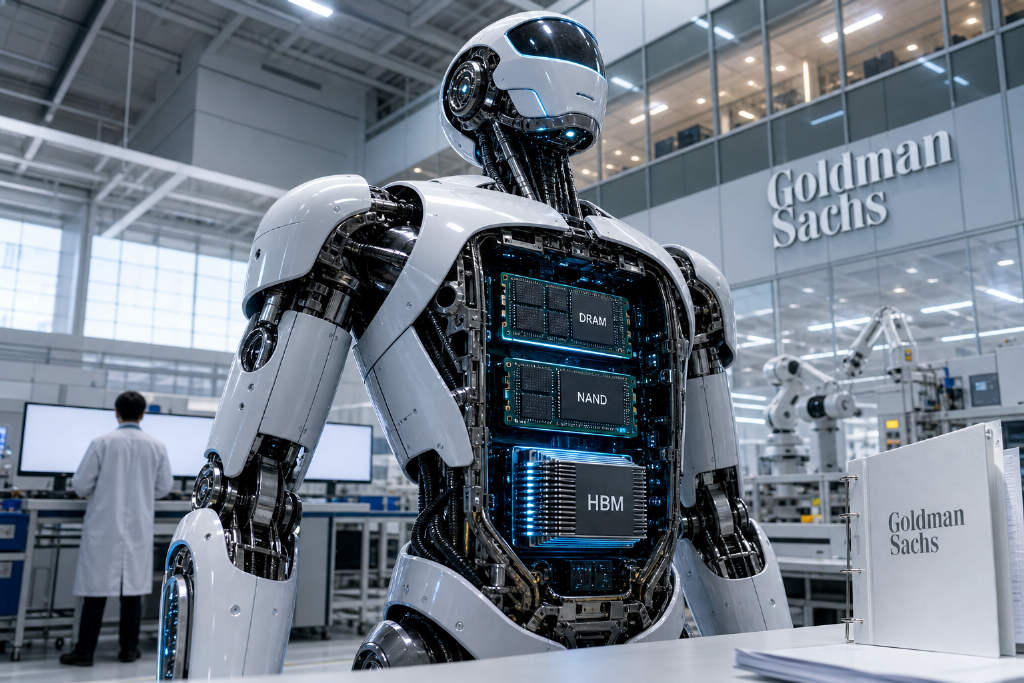
Goldman Sachs estimates that memory could account for as much as 40% of a humanoid robot’s semiconductor value, excluding GPUs and CPUs, according to a post by Paradis on X. The bank’s working assumption is that an average humanoid robot will carry about 128GB of DRAM and roughly 1TB of NAND non-volatile memory. On that basis, the serviceable market for DRAM per unit is put at $250 to $350, while NAND is estimated at $350 to $450. Combined, total memory value per robot comes to about $600 to $800, or potentially more. Goldman Sachs also said at least part of each system’s memory stack is expected to use high-bandwidth memory, or HBM, because humanoid robots face heavy edge-computing workloads. The note added that HBM supply is currently dominated by Micron, Samsung and SK Hynix, leaving limited near-term competitive pressure for Chinese memory makers including CXMT. The bank said it remains unclear whether robot makers will source HBM and conventional DRAM from different suppliers, and noted that DRAM and NAND pricing could shift even though its assumptions use prevailing market prices at the time of writing.

1430
Goldman Sachs says memory content in humanoid robots could reach $600 to $800 per unit
Nvidia
Aug 30, 2026

Citrini Analyst Says Nvidia Rubin Ultra HBM Could Drop to 8 Layers, Demand May Rise

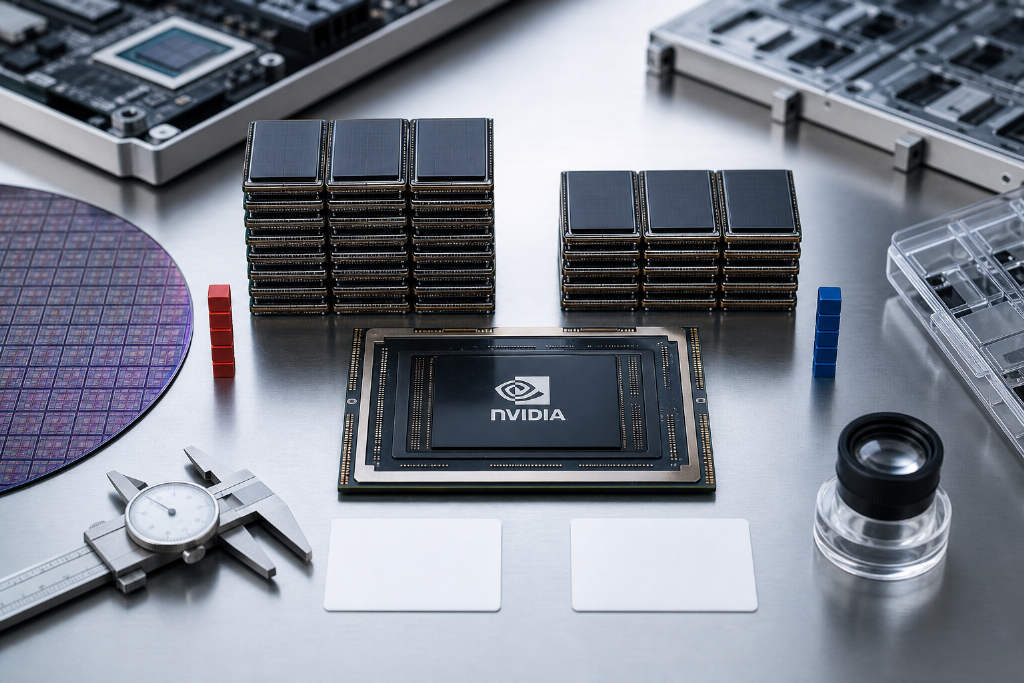
An analyst at Citrini said Nvidia's Rubin Ultra could switch from 12-layer HBM4E to 8-layer HBM, citing sources. OpenAI and Anthropic had asked for 4-layer parts but memory makers rejected the idea, so the cut may stop at 8 layers. Jukan, the analyst, attributes the move mainly to yield and cost concerns: with 12-layer HBM4E and price increases, memory could account for roughly 70% of Rubin Ultra's total bill of materials. Software optimizations such as model quantization, MLA, and computation splitting are moving rarely accessed KV cache and model states to LPDDR, CXL, and NAND, leaving HBM for the active working set. After minimum capacity is met, customers now value bandwidth over capacity. Fewer layers could improve packaging yield and lift HBM and AI accelerator shipments, potentially expanding total HBM demand. Higher bandwidth requirements also reduce the share of wafers passing speed binning, consuming extra DRAM wafer capacity. Longer term, HBM will be replaced by new architectures, likely merging memory and logic; the next two years are critical for memory makers to expand into logic.

2340
Citrini Analyst Says Nvidia Rubin Ultra HBM Could Drop to 8 Layers, Demand May Rise
OpenAI
Aug 28, 2026

OpenAI updates ChatGPT temporary chats with save option and access to existing memory

OpenAI has updated ChatGPT’s temporary chat mode, adding more control over what the session can access and what happens to useful conversations afterward. Users can now choose to let a temporary chat use existing memory, custom instructions, and plugins. They can also save a helpful temporary conversation directly into chat history. The default behavior of temporary chats remains unchanged in two key ways. A temporary chat still does not create new memory on its own, and it still does not appear in the chat list by default. The session only turns into a regular chat if the user actively chooses to save it. The change gives users a way to keep the short-lived nature of temporary chats while still pulling in settings and context they have already built inside ChatGPT. It also adds a direct path for preserving conversations that start as temporary but later prove useful.

1410
OpenAI updates ChatGPT temporary chats with save option and access to existing memory
Samsung
Aug 28, 2026

Samsung Develops 8-Layer HBM4E for Nvidia's Custom NVHBM

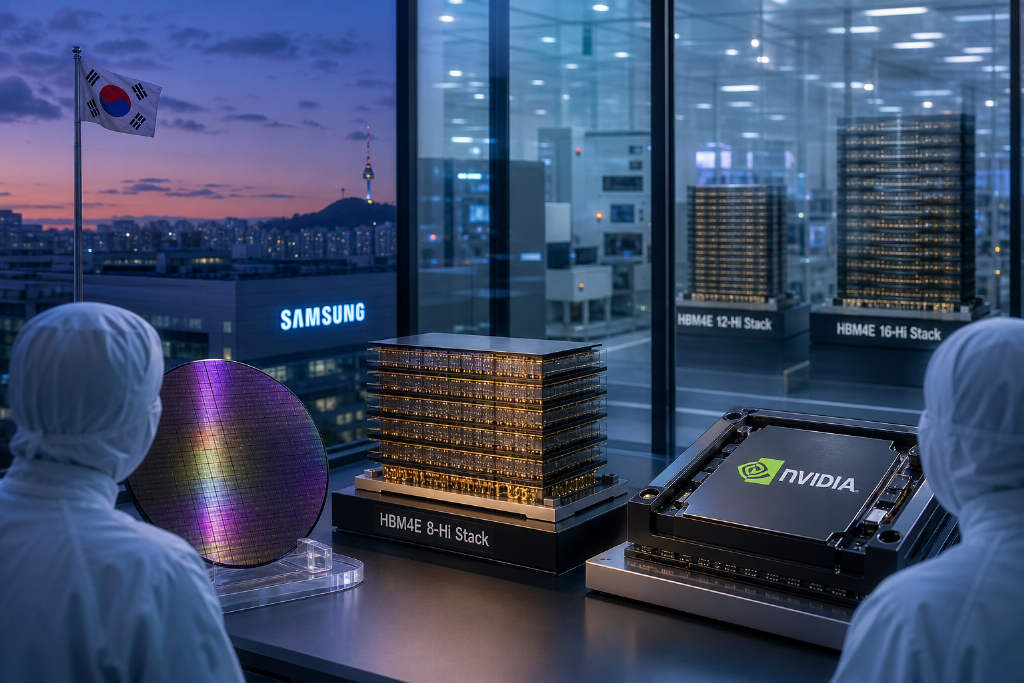
Samsung Electronics is developing an 8-layer HBM4E product at Nvidia's request, according to Korea's Seoul Economic Daily. The chip is intended for Nvidia's custom high-bandwidth memory (NVHBM), and it uses fewer stacked layers than the 12- and 16-layer options Samsung initially prepared. Nvidia's target speed for the memory is 17–18 Gbps, about 20% faster than the 14.4 Gbps seen in Samsung's early HBM4E samples. The simplified layering is expected to reduce manufacturing difficulty in wafer thinning, precision stacking, and packaging, improving yield and supply potential. NVHBM could first appear on Nvidia's upcoming Rubin Ultra AI GPU, which is slated for next year; the platform plans to scale GPU interconnect from 72 to up to 576 units to offset lower per-GPU memory capacity. Samsung, which designs and produces DRAM, logic chips, and base dies, says it can provide one-stop custom HBM services. Industry observers note that Samsung has already shown strong transfer speeds with HBM4, and its capabilities may gain more attention as Nvidia shifts its focus from high stacking to high-speed transmission.

2210
Samsung Develops 8-Layer HBM4E for Nvidia's Custom NVHBM
TrendForce
Aug 26, 2026

TrendForce says memory could take 68% of major cloud providers’ capex by 2027

A new TrendForce report says DRAM and NAND Flash are on track to account for 68% of total capital expenditure by major cloud service providers in 2027, overtaking GPUs and other server components as the biggest cost center in the AI buildout. The report projects capex by hyperscalers including Amazon, Microsoft, and Google will rise 98% in 2026 and another 50% in 2027, with memory contract prices driving much of the increase. Server DRAM prices rose 64% in the second half of 2025 and are expected to climb another 270% in 2026, while enterprise NAND Flash increased 35% over the same period and may jump a further 235% in 2026. TrendForce also said HBM prices could still rise 70% to 140% in 2027 even where long-term agreements cap part of the pricing. The report argues that memory vendors are gaining more pricing power across the AI supply chain, while cloud providers may have to choose between spending more, passing costs to customers, reducing memory configurations, or shifting to in-house AI ASICs.

5530
TrendForce says memory could take 68% of major cloud providers’ capex by 2027
Total 63 items
Go topage