Xiaomi
Aug 25, 2026

Xiaomi shows off AI Cube prototype with 160GB unified memory as memory shortage clouds any price war

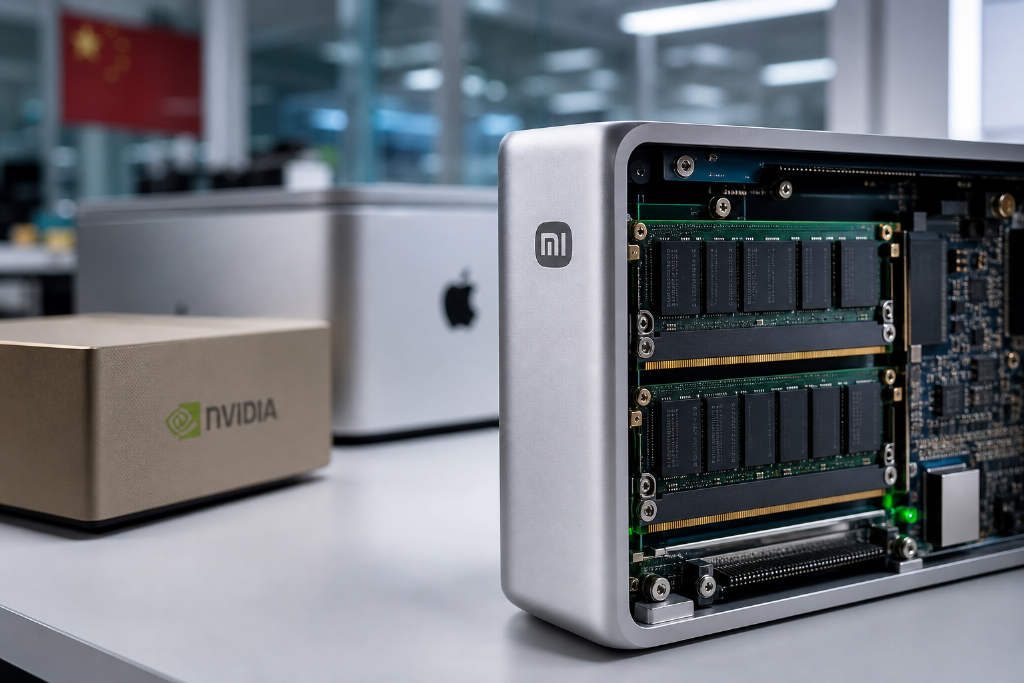
Xiaomi has revealed an engineering prototype called AI Cube, a desktop AI machine built around three Xring chips and positioned against Nvidia’s DGX Spark and Apple’s Mac Studio. The machine’s headline spec is 160GB of unified memory, and the report says Xiaomi is targeting local inference for models up to the 200B class. That pitch lands at a difficult moment for the industry: memory has become the cost bottleneck. According to the report, global DRAM contract prices rose about 90% to 95% quarter over quarter in the first quarter of this year, with another 58% to 63% increase projected for the second quarter, while SK hynix has warned shortages could last beyond 2030. Nvidia has already raised DGX Spark by $700, from $3,999 to $4,699, and Apple has removed the 512GB option from the M3 Ultra Mac Studio while raising the jump from 96GB to 256GB from $1,600 to $2,000. The report argues that for local large models, memory capacity matters more than raw compute. Xiaomi has not disclosed a price or mass-production timetable for AI Cube, leaving open whether it can actually compete on price in a market defined by scarce and expensive memory.
3950
Xiaomi shows off AI Cube prototype with 160GB unified memory as memory shortage clouds any price war
Micron
Aug 21, 2026

Micron CEO Says Memory Has Become AI Infrastructure as Demand Outruns Supply

Micron CEO Sanjay Mehrotra said memory has become strategic infrastructure in the AI era, arguing that the shift is permanently changing the dynamics of a cyclical industry. He said customers are no longer treating memory as a commodity bought mainly on price, but as a critical component that affects overall system performance. Micron reported $41.46 billion in revenue for fiscal Q3 2026 and an 84.6% gross margin, and it expects gross margin of about 86% in the fourth quarter. Mehrotra said data center demand is still running about 50% above the company’s committed supply. He also pointed to future demand from autonomous vehicles, robotics and AI consumer devices, while noting that Micron, Samsung and SK Hynix were accused in June of DRAM price manipulation and that Chinese makers such as CXMT are expanding capacity.

2080
Micron CEO Says Memory Has Become AI Infrastructure as Demand Outruns Supply
Elon Musk
Aug 14, 2026

Musk says memory, not compute, is the real bottleneck for AI agents

Elon Musk backed a claim on X that memory, rather than raw compute, is the real rate-limiting factor in the age of AI agents, replying that 「Few realize this.」 The point is one he has made repeatedly this year. According to the source material, Musk raised the issue at Tesla’s first-quarter earnings call on April 22, echoed complaints about memory price inflation in late June, and then gave a sharper figure at SpaceX’s Q2 earnings call in early August: memory capacity is growing about 20% a year, while demand is rising 200% or more. The report ties that view to a broader shift in AI infrastructure. As agentic systems hold much larger context windows and persistent task histories, KV cache becomes a bigger memory burden. With HBM still expensive and tight in supply, companies are moving more context data down the memory stack into NAND and storage. NVIDIA’s Inference Context Memory Storage Platform, introduced at CES, is cited as one example, using Dynamo and NIXL to place KV cache on NVMe SSDs. The same report also tracks how markets are reading the memory cycle. Korean brokerages cut target prices for Samsung Electronics and SK hynix on concerns that the conventional memory upcycle may have peaked, while Sandisk later issued long-term revenue growth guidance that helped memory shares rebound across Asia.

2390
Musk says memory, not compute, is the real bottleneck for AI agents
Intel
Aug 13, 2026

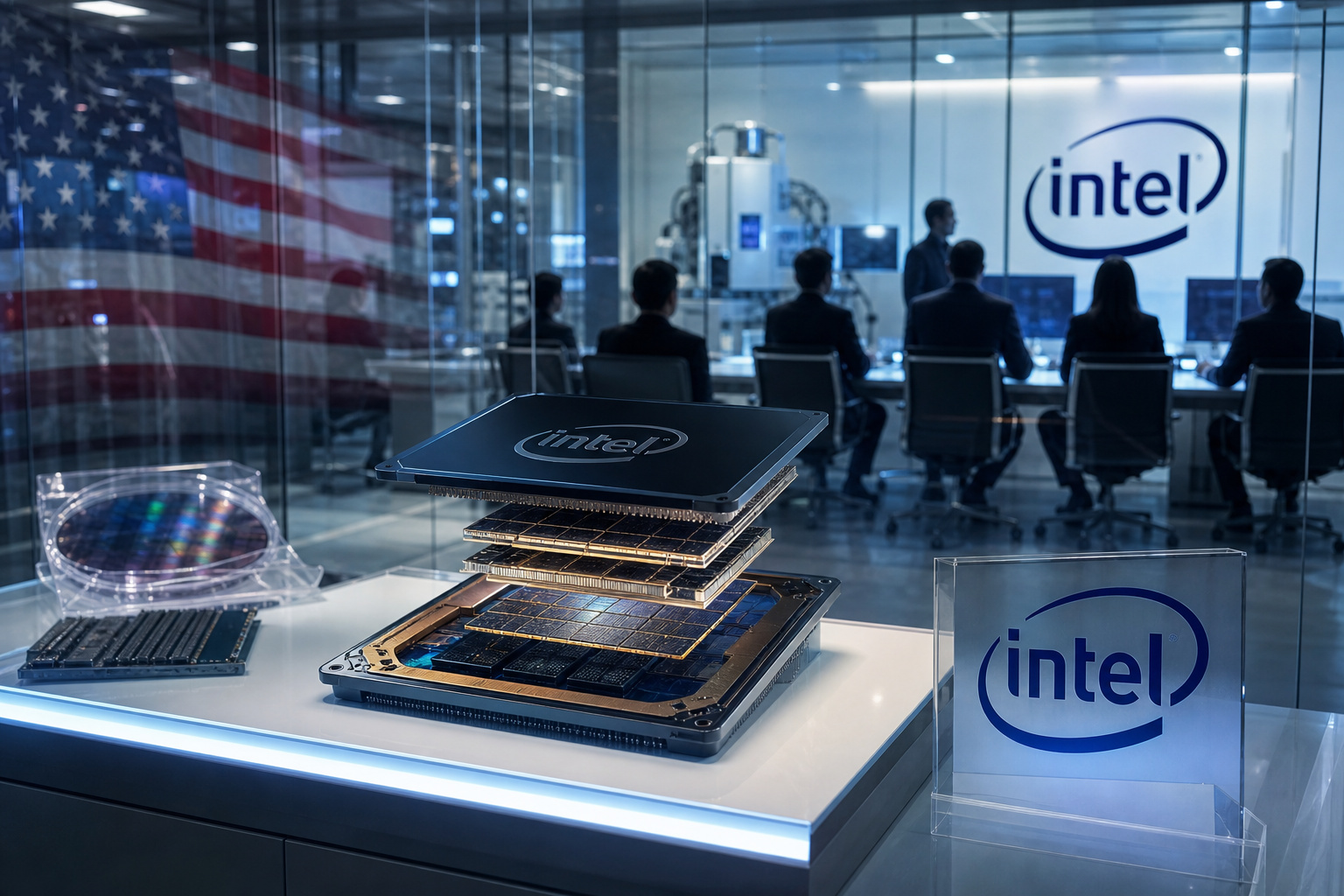
Intel CEO Chen Liwu Explores New CPU-Memory Stacking Architecture

Intel CEO Chen Liwu said during an appearance on the latest episode of the TechSurge podcast on Aug. 13 that demand for CPUs is enormous and that he fields daily calls from other chief executives who want more supply. To meet that demand, he said Intel is aggressively expanding CPU capacity and also developing new CPU architectures. Turning to memory, Chen said there are many ways to stack CPUs and memory, and that the industry has not innovated enough in memory, creating room for exploration. He acknowledged that he once avoided memory investments because he considered it a commodity business, but said that view has now changed. Chen also revealed that his friend Shock Lee, a former head of SK hynix, has joined, and he hinted that observers might guess what he is working on, while adding that nothing is ready to announce. He said he looks at short-, medium-, and long-term demand. On commitment, Chen said he typically stays at companies for 10 years — he cited Cadence — and that he is in it for 15 years at Intel. He told the board he focuses on a 10- to 15-year future and wants to build a platform that benefits the entire industry.

2120
Intel CEO Chen Liwu Explores New CPU-Memory Stacking Architecture
Goldman Sachs
Aug 10, 2026

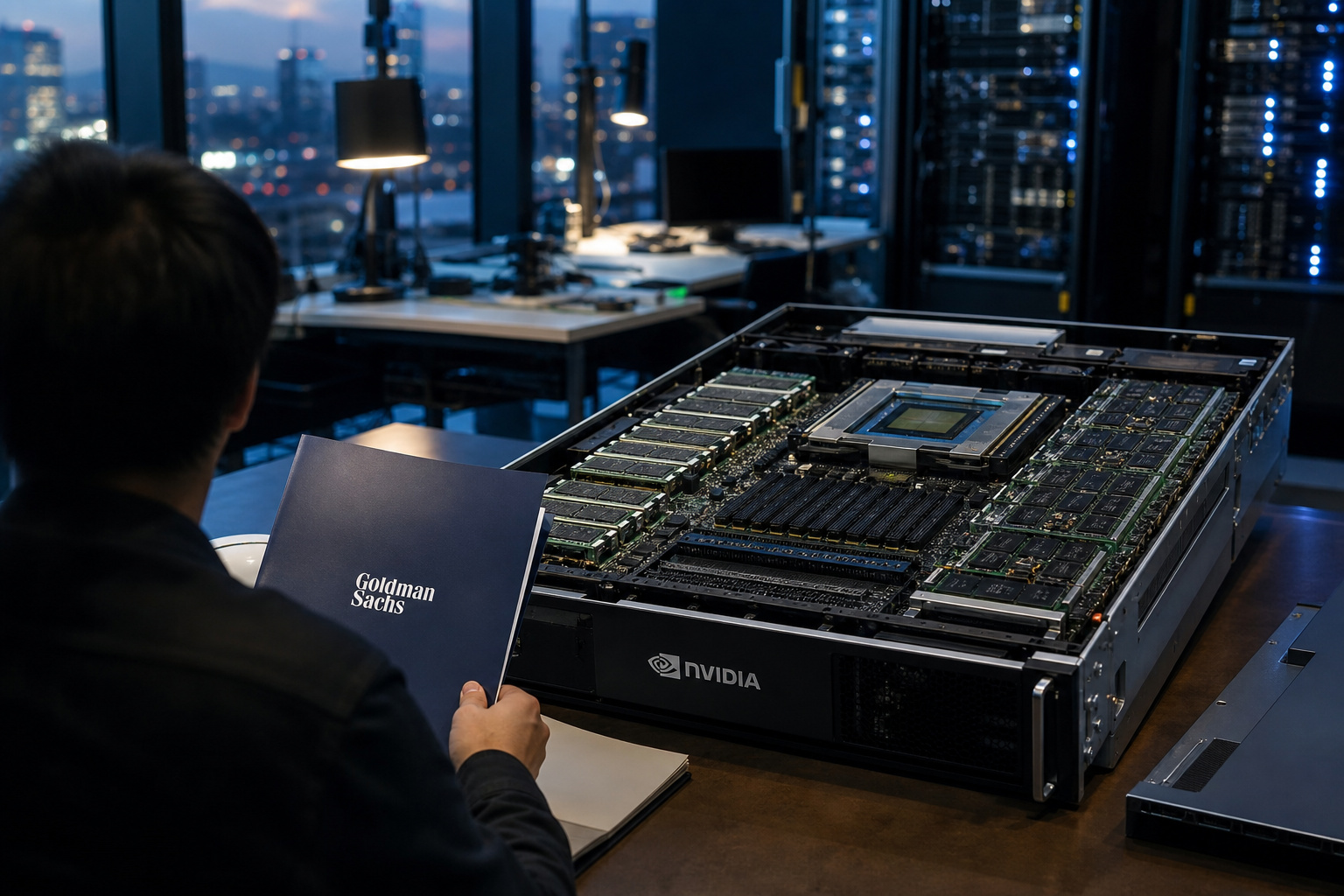
Goldman Sachs says memory could account for about 62% of Nvidia Vera Rubin BOM

Goldman Sachs said in a report dated Aug. 10 that memory components are expected to make up about 62% of the bill of materials for Nvidia’s next-generation Vera Rubin superchip. Citing Goldman’s analysis, ZeroHedge said the cost share of SOCAMM2 memory modules on the CPU side of the Vera Rubin platform is notably higher than that of HBM4 high-bandwidth memory on the GPU side. Goldman had already noted in May that as demand for AI infrastructure keeps rising, memory is becoming a key part of the hardware cost structure for AI servers. The latest note adds to that view by pointing to the growing weight of high-performance memory in next-generation AI computing platforms and the rising importance of the memory segment across the AI chip supply chain.

2650
Goldman Sachs says memory could account for about 62% of Nvidia Vera Rubin BOM
US stocks
Aug 10, 2026

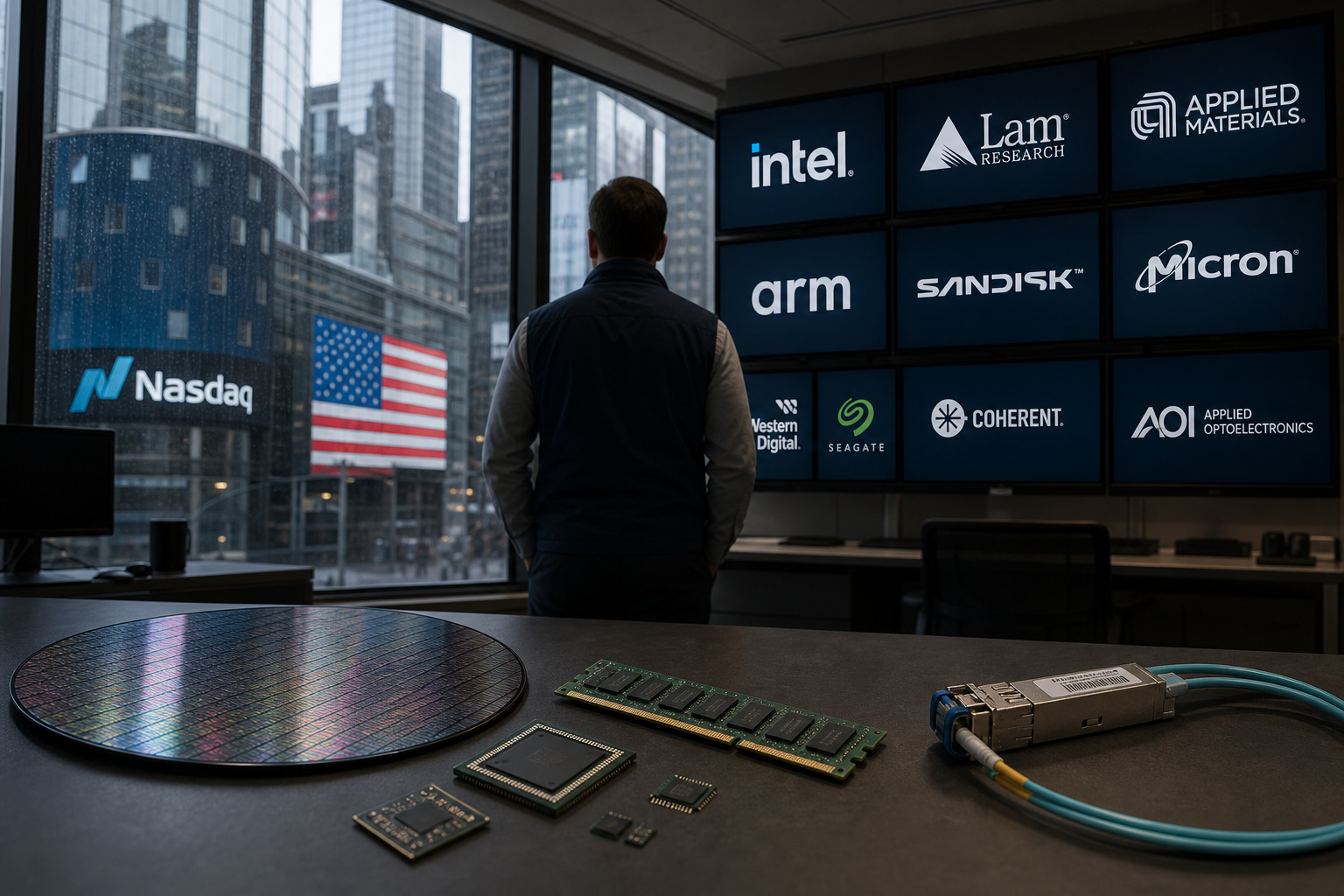
US Premarket: Semiconductors, Memory, Optical Stocks Edge Higher; AAOI Up 5%

On August 10, according to market data from BIT (bit.com), U.S. stock premarket trading saw modest gains across semiconductor, memory, and optical communications sectors. Semiconductor stocks rose broadly: Lam Research (LRCX) gained 2.14%, Intel (INTC) rose 2.06%, Applied Materials (AMAT) advanced 2.26%, and Arm (ARM) added 1.63%. Memory stocks also climbed: Hynix (SKHY) was up 0.51%, Micron (MU) gained 1.35%, Western Digital (WDC) added 1.53%, SanDisk (SNDK) rose 2.12%, and Seagate (STX) gained 0.82%. Optical communications names led the gains: Astera Labs (ALAB) rose 1.89%, Applied Optoelectronics (AAOI) jumped 5.23%, Coherent (COHR) gained 4.23%, Credo (CRDO) added 2.42%, and Lumentum (LITE) rose 3.56%. The data reflects premarket moves on Monday, with AAOI posting the largest percentage gain among the highlighted stocks.

2910
US Premarket: Semiconductors, Memory, Optical Stocks Edge Higher; AAOI Up 5%
Samsung
Aug 9, 2026

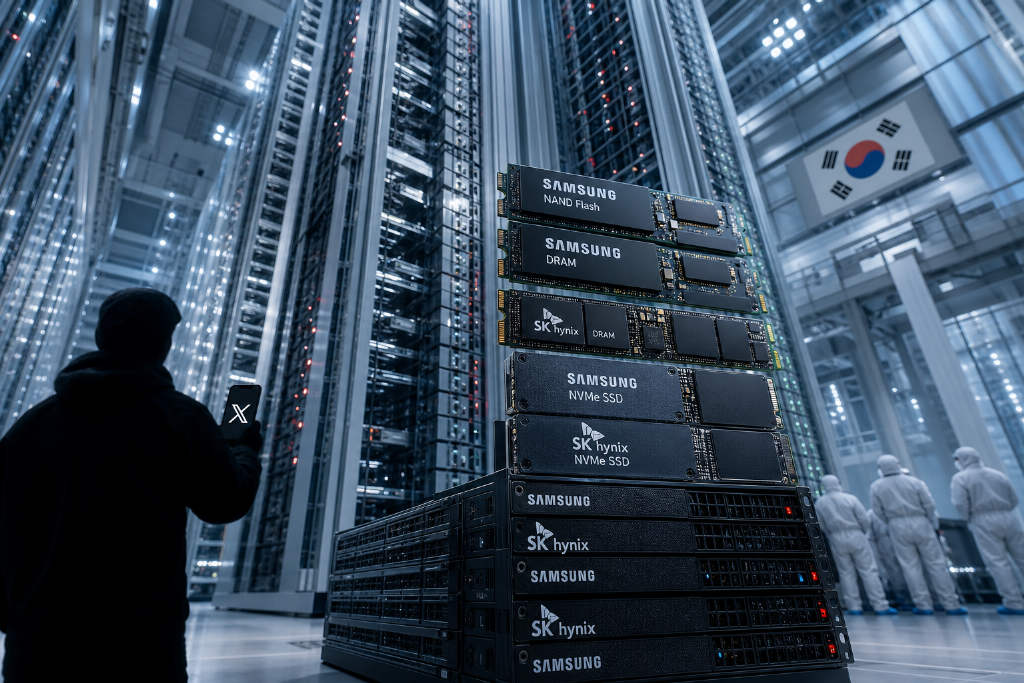
Samsung HBM4 Yield Nears 80% Months Early; HBM Share Target Set at 38%

Samsung Electronics has lifted the yield of its sixth-generation HBM4 memory to roughly 80%, about four months earlier than its original year-end target, according to Korea's Seoul Economic Daily. The company began mass production and shipment of HBM4 in February, and early yields were below 60% before stabilizing within half a year. Samsung said the yield has now entered a stable range, and it plans to more than triple HBM4 revenue in the third quarter from the previous quarter. HBM4 is expected to account for more than 60% of the company's overall HBM revenue in the second half. By the end of the year, Samsung aims to lift its HBM market share to about 38%, a level close to its share in DRAM. The larger HBM4 supply is also expected to support production of Nvidia's Vera Rubin AI accelerators. Lee Jong-hwan, a professor at Sangmyung University's Department of System Semiconductor Engineering, said major customers such as Nvidia benefit from multi-supplier sourcing rather than relying on one vendor. That gives Samsung room to expand HBM4 shipments and gain share quickly.

2520
Samsung HBM4 Yield Nears 80% Months Early; HBM Share Target Set at 38%
memory
Aug 9, 2026

'New Stock God' Remains Bullish on Memory, Says Photonics Fundamentals Intact

According to ChainCatcher, a figure dubbed the 'New Stock God' has reiterated their bullish stance on memory chip makers, including Micron (MU) and Samsung, arguing that markets tend to rotate between different supply bottlenecks. This week, photonics names from AXTI to LITE are back in focus; compared with the July selloff, the main change has been in share prices, followed by scattered narratives and business updates. The investor noted that the market already knew during July that COHR and LITE's laser products were sold out for the next two years and had learned about demand imbalances from AAOI's last quarter's earnings call. Aside from post-liquidation price moves, photonics fundamentals have not deteriorated; bottlenecks in optical transceivers and indium phosphide substrates remain unchanged, possibly even worsening. On memory, the 'New Stock God' said retail investors are showing capitulation, though the same crowd was extremely bullish after MU signed 16 SCAs and delivered solid guidance. They believe the current ratio of memory operating profit to market cap is 'extremely unreasonable,' and demand imbalance may worsen next year. The same companies have only seen changes in valuation and narrative, while the market rotates across sectors.

3870
'New Stock God' Remains Bullish on Memory, Says Photonics Fundamentals Intact
Total 63 items
Go topage