Nanya Technology
Jul 22, 2026

Nanya Technology says HBM is not the best fit for AI inference, pushes custom UWIO DRAM

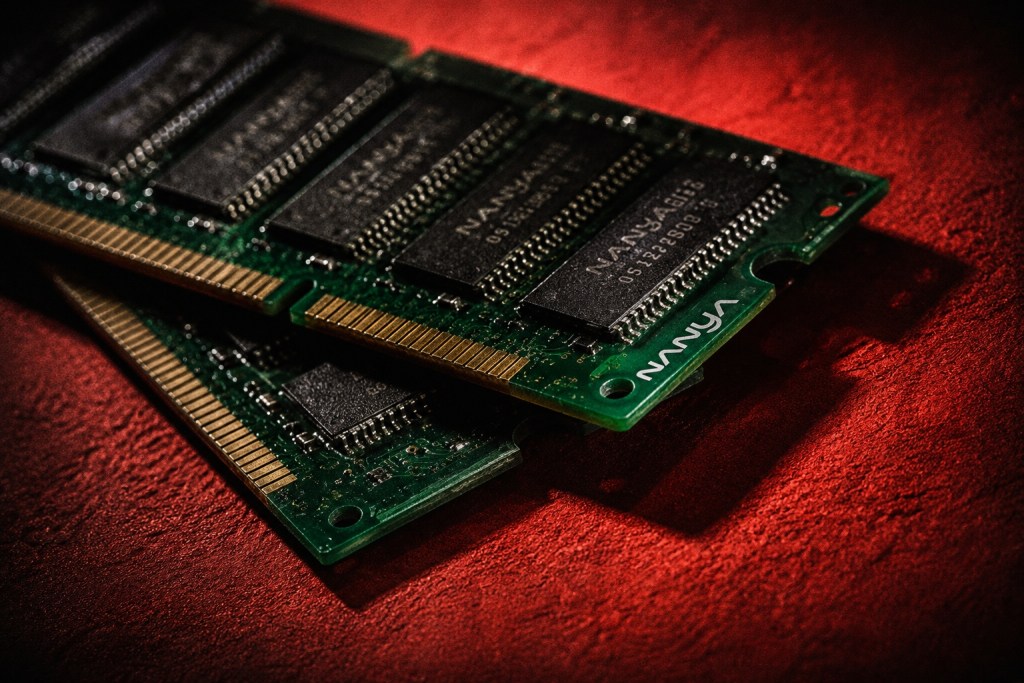
Nanya Technology is repositioning its memory strategy as AI workloads shift from cloud training to inference at the device edge. Speaking at the Industrial Technology Research Institute’s forum on semiconductor and AI computing sustainability, senior vice president Wu Chih-hsiang said high bandwidth memory, or HBM, faces built-in limits in power use and I/O structure that make it less suitable for AI PCs, smartphones, and portable devices. The company is betting on custom UWIO DRAM paired with Wafer-on-Wafer 3D IC stacking. According to Wu, the design allows DRAM to be integrated directly on top of CPU or ASIC logic chips, reducing signal loss and latency associated with conventional packaging. He said the architecture can deliver 5x to 10x the bandwidth of traditional approaches while cutting per-bit energy use to between one-third and one-tenth of HBM. Nanya also tied that product push to broader demand growth. The company said memory capacity in AI PCs has risen from 16GB to 128GB per machine, with annual global shipments reaching hundreds of millions of units. On manufacturing, Nanya said its Taishan fab in New Taipei City, a project with planned investment of NT$500 billion, is expected to begin volume output as early as the start of next year.

2220
Nanya Technology says HBM is not the best fit for AI inference, pushes custom UWIO DRAM
Bernstein
Jul 22, 2026

Bernstein says market is too bearish on memory LTAs as new contract structure adds downside support

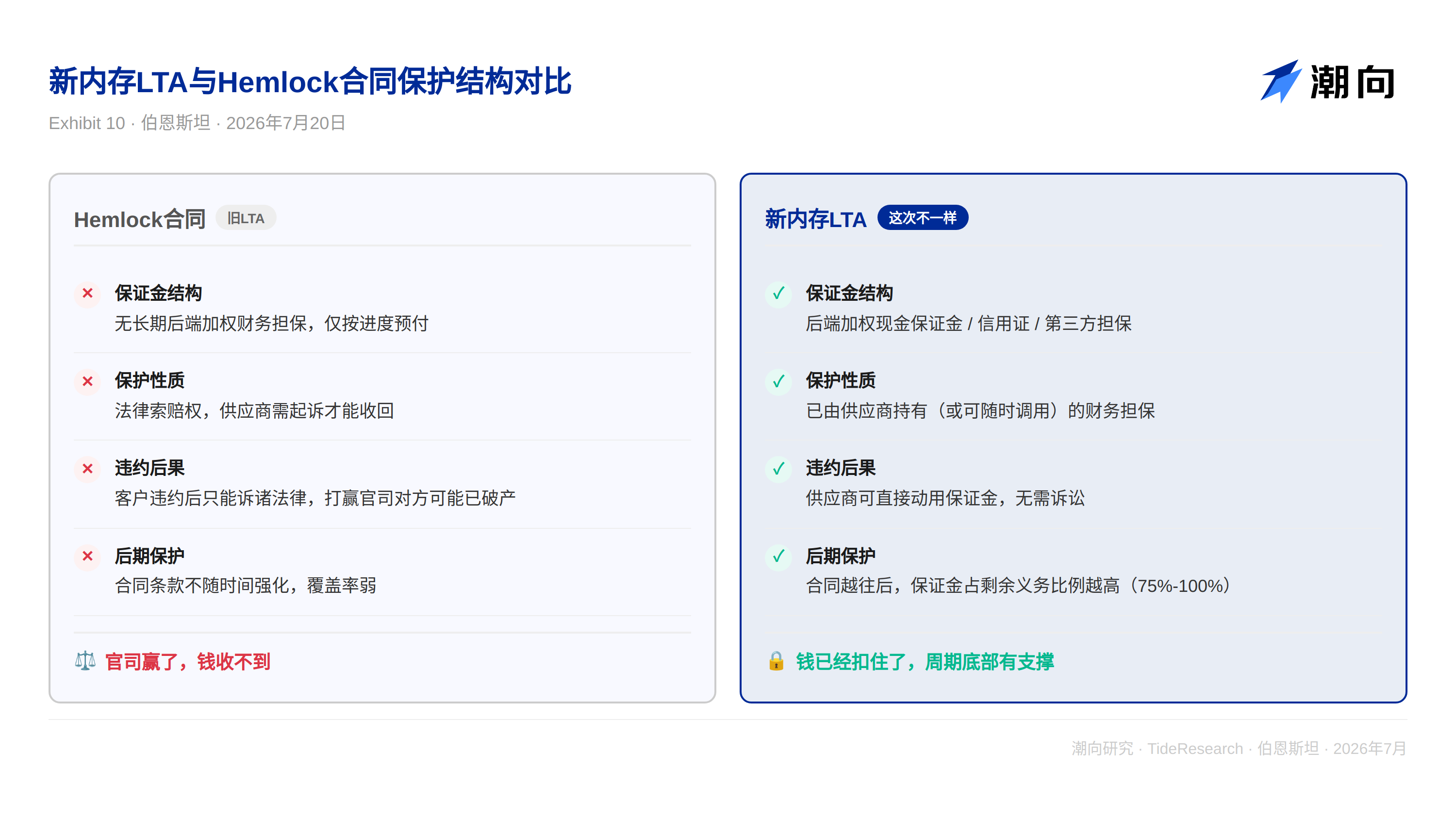
Bernstein’s latest report on memory-sector long-term agreements argues that the market has become overly pessimistic about how much protection these contracts can provide. The firm says the new generation of LTAs differs from past failed examples because cash deposits are weighted toward the back end of the contract, which raises the cost of walking away later in the cycle. In Bernstein’s view, that matters because the memory market usually needs support during the downturn phase rather than at the start of an upcycle. The report also says this cycle’s counterparties are stronger, with hyperscale cloud companies and AI infrastructure providers replacing the weaker customer groups seen in earlier LTA failures. On stock calls, Bernstein rates SanDisk, Samsung Electronics, SK hynix, and Micron Outperform, while KIOXIA is its only Underperform name. The biggest internal debate remains NAND: Bernstein’s U.S. team sees AI-driven demand broadening as systems store more context and KV cache in flash, while its Asia team is more cautious because Chinese suppliers may scale NAND capacity more easily than DRAM.

2190
Bernstein says market is too bearish on memory LTAs as new contract structure adds downside support
CXMT
Jul 17, 2026

CXMT orders reportedly booked through end-2027 as PC brands step up memory purchases

BlockBeats reported on July 17, citing PC supply chain sources, that ChangXin Memory Technologies, or CXMT, has entered the final stage of its IPO process. The same sources said PC brands have accelerated orders for CXMT memory, with bookings reportedly extending through the end of 2027. According to the report, the shift comes as China-U.S. tensions have eased and Apple has allegedly tested CXMT memory while lobbying the U.S. government to allow its use. Sources also said major PC vendors have already completed product testing, but actual supply will still depend on quota allocation. The report added that memory prices may see slower gains in the second half of 2026, but are still expected to keep rising. Brands are said to be passing part of the higher cost on to consumers. End-product price increases have started to weigh on sales, though sources said the market has not yet reached a breaking point. Large customers including Dell, HP, Lenovo and Apple are expected to get priority access, while smaller manufacturers may be left off supply lists. Supply chain sources also said the U.S. had at one point considered adding CXMT to the Entity List, though no such move has been announced.

2800
CXMT orders reportedly booked through end-2027 as PC brands step up memory purchases
Micron
Jul 17, 2026

Micron signs SCAs with Qualcomm and six other companies to secure automotive memory supply

Micron said on July 17 that it has signed Strategic Customer Agreements, or SCAs, with seven key technology suppliers in the automotive ecosystem: Qualcomm, Visteon, Harman, JOYNEXT, Denso, Astemo and Hyundai Mobis. The company said these are the SCAs referenced during its fiscal 2026 third-quarter earnings call. According to Micron, the agreements are designed to bring more certainty around supply and pricing. That, in turn, is meant to support investment in the technology development, qualification and manufacturing capacity required for future automotive platforms. Micron said the arrangements should help make sure advanced vehicle platforms have the memory and storage needed to deliver richer, safer and smarter experiences.

2580
Micron signs SCAs with Qualcomm and six other companies to secure automotive memory supply
Bernstein
Jul 13, 2026

Bernstein says chip equipment stocks can rise on their own after memory’s 661-point outperformance

Bernstein argued in a July 13 research note that semiconductor equipment stocks do not need a decline in memory names to outperform. The report came after memory stocks had outperformed chip equipment by 661 percentage points since June 2025, a gap that has raised concern over whether equipment makers would fall if memory pulled back. To test that view, Bernstein compared the three largest memory companies — Samsung, SK Hynix, and Micron — with five major equipment makers: Applied Materials, Lam Research, ASML, KLA, and Tokyo Electron. It found the average rolling correlation between memory and equipment was only 0.4 from 2012 to 2018, rising to 0.6 after 2019. Over the same periods, equipment stocks showed a much tighter 0.8 to 0.9 correlation with the Philadelphia Semiconductor Index. The note also highlighted two extended divergence periods: from January 2015 to December 2016, equipment stocks rose 21.9% while memory fell 16.2%; from January 2021 to December 2022, equipment gained 15.3% while memory dropped 34%. Bernstein’s broader point is that if mean reversion sets in after memory’s recent surge, relative returns may shift toward equipment. The firm also cited SK Hynix’s planned 100 trillion won investment in a new fab in Cheongju and said equipment market and EPS estimates could still move higher before 2028.

810
Bernstein says chip equipment stocks can rise on their own after memory’s 661-point outperformance
Total 63 items
Go topage