OFT

Stellar
2026-09-03 07:27:46

USDT0 Goes Live on Stellar Network for Cross-Border Payments and DeFi

The Stellar Development Foundation has announced the launch of USDT0 on the Stellar network. Built on LayerZero's OFT (Omnichain Fungible Token) standard, USDT0 maintains a 1:1 reserve with USDT, enabling users to access global liquidity instantly without needing wrapped tokens or third-party tools. The integration allows Stellar users to transfer value with fees under $0.01 and finality in approximately 5 seconds, spanning over 170 countries. USDT0 is already live on the decentralized exchange SushiSwap, and more DeFi protocols are expected to integrate in the future, expanding payment applications in emerging markets in Latin America, Africa, and Asia-Pacific. This move aims to support cross-border payments and DeFi use cases on the Stellar network.

70
USDT0 Goes Live on Stellar Network for Cross-Border Payments and DeFi
The Sandbox
2026-08-25 13:33:38

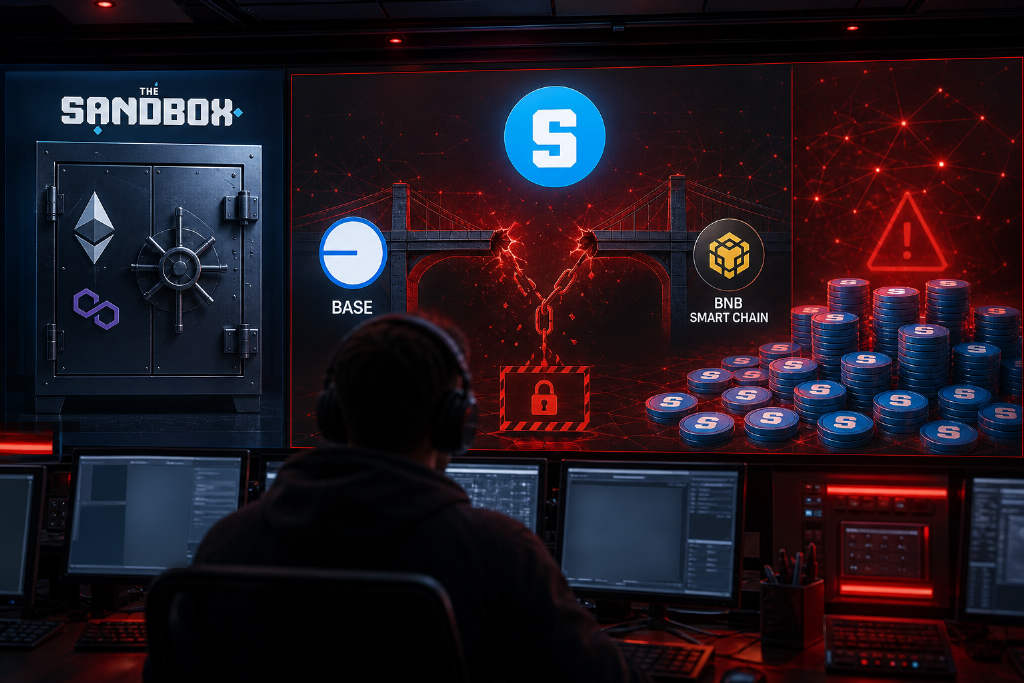
The Sandbox isolates unbacked SAND after cross-chain bridge exploit on Base and BNB Smart Chain

The Sandbox has halted cross-chain transfers on Base and BNB Smart Chain after an exploit let an attacker mint large amounts of unbacked SAND. Security firm Blockaid said the issue may have involved abuse of the approveAndCall function to seize LayerZero delegate permissions, giving the attacker privileged control over the bridge contract and allowing token minting without a matching lockup of Ethereum-based SAND. Early monitoring flagged more than 500 million SAND minted abnormally on Base, while PeckShield later reported that two addresses received roughly 14.9 billion SAND. During the incident, Blockaid estimated that more than 400 transactions generated unbacked SAND with a notional value of about $49 billion at market prices. The report stressed that figure does not represent actual realized losses. The Sandbox said the direct impact was less than 0.01% of SAND’s 3 billion total supply, that locked assets on Ethereum remain intact, and that wallets were not compromised. The company has taken a snapshot for affected liquidity providers and said compensation details will be announced later. Upbit and Bithumb also moved to restrict SAND deposits and withdrawals.

220
The Sandbox isolates unbacked SAND after cross-chain bridge exploit on Base and BNB Smart Chain
Keeta
2026-08-24 02:14:52

Three protocol attacks hit Keeta, The Sandbox and Term Finance within days

Three separate crypto protocols were hit by attacks in less than a week, each exposing a different failure point in onchain security. On Aug. 20, payments-focused blockchain Keeta Network switched its mainnet to read-only mode after what it described as a security issue in a single component. The team later demanded that the attacker return the funds within 72 hours and said it had gathered evidence including IP data, VPN and VPS details, user-agent information, related email accounts, and service providers. On Aug. 22, The Sandbox suffered a cross-chain minting attack tied to its SAND bridge contract on Base. The attacker allegedly abused approveAndCall to seize LayerZero delegate authority, minting large amounts of SAND on Base and BNB Chain without Ethereum mainnet backing. While the notional over-minting figure reached about 14.9 billion SAND, the project and security reviews said the actual value drained from reserves and monetized was about $670,000. A day later, fixed-rate lending protocol Term Finance saw a governance proposal executed after sitting onchain for roughly six days with zero opposing votes. Assets moved out of the protocol included about 2,843 ETH and 1.68 million USDC, with reported losses around $8.5 million. Taken together, the three incidents point to a recurring question in crypto infrastructure: who can mint, who can change parameters, and who is watching governance before execution.

770
Three protocol attacks hit Keeta, The Sandbox and Term Finance within days
Hyperliquid
2026-07-24 14:28:10

ARK analyst says Hyperliquid’s HIP-3 RWA volume has overtaken crypto on a weekly basis

ARK Invest analyst Lorenzo said Hyperliquid has reached a new point in its market mix, with real-world asset trading on HIP-3 exceeding crypto-native volume for the first time in a single week. According to the figures cited in the post, RWA accounted for 54% of total platform volume, and 61% of that RWA activity came from single-stock products. The article argues this shift points to a broader change in Hyperliquid’s positioning, from a crypto perpetuals venue to a round-the-clock multi-asset derivatives platform spanning equities, indices, commodities and FX. The write-up also stresses that the RWA products in question are synthetic perpetual contracts rather than tokenized securities. Traders get price exposure, typically margined in USDC, but do not receive actual stock ownership, voting rights or legal claims on the underlying assets. It distinguishes that model from true securities tokenization and notes the two paths carry different infrastructure, legal and operational requirements. At the same time, the piece flags a math issue in the original comparison between Hyperliquid’s HIP-3 RWA volume and the rest of the DEX perpetuals market, and says the claim cannot be directly derived from the numbers presented. It further examines what the trend could mean for HYPE, USDC and Circle, while outlining the current HIP-3 market map, where activity is concentrated in stocks, commodities and indices, with much of the volume attributed to the trade[XYZ] deployment.

4460
ARK analyst says Hyperliquid’s HIP-3 RWA volume has overtaken crypto on a weekly basis