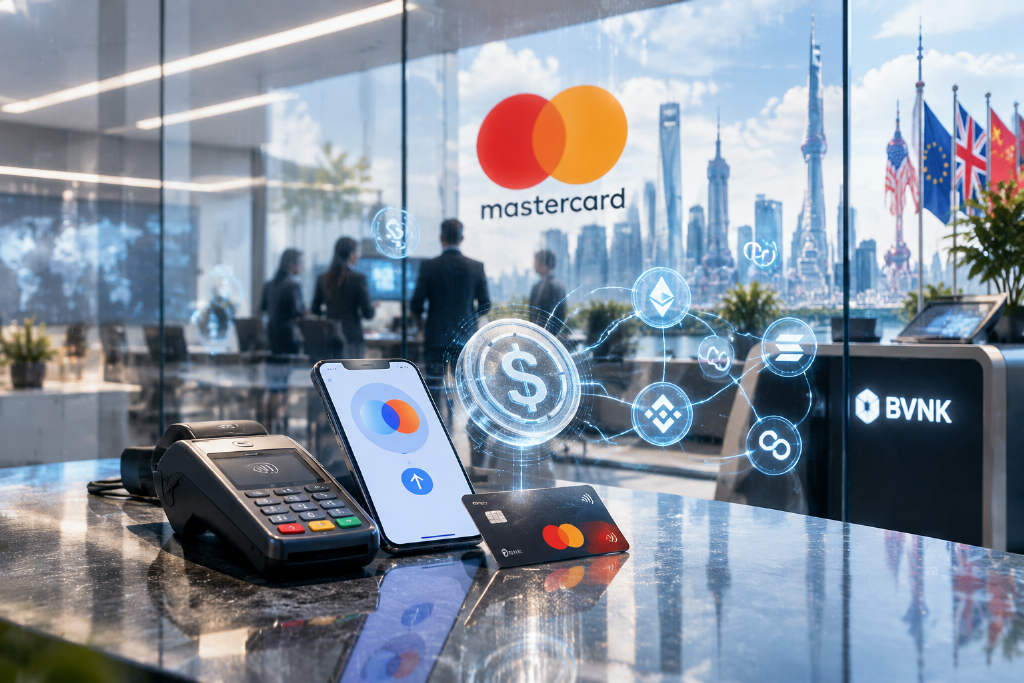
Mastercard2026-10-02 13:30:49Mastercard to Offer Open USD Stablecoin OUSD Through BVNK PlatformMastercard said it will offer Open Standard’s U.S. dollar stablecoin, OUSD, through its digital asset platform BVNK, according to a Techub News item that cited Crypto Briefing. The brief said the move is intended to use stablecoins to reshape the global payments system while improving multichain interoperability. No additional rollout details, timeline, or market data were disclosed in the source text. The announcement centers on Mastercard, BVNK, Open Standard, and OUSD, with the stated focus on payments infrastructure and cross-chain connectivity.40
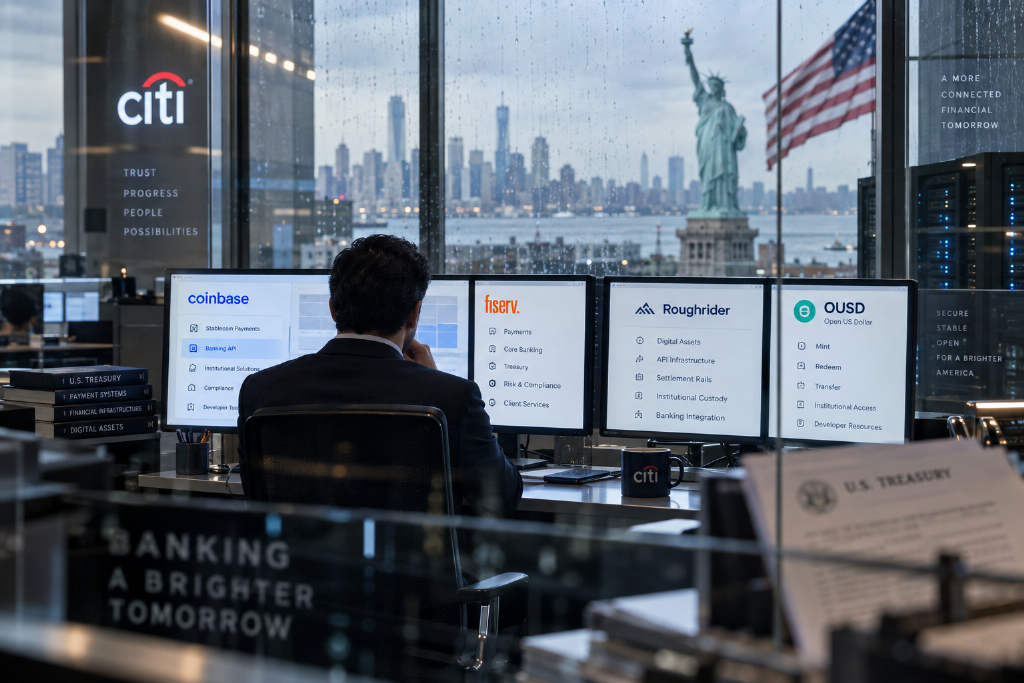
Dollar stable2026-10-02 12:14:52Dollar stablecoins are moving into bank rails as APIs, says Wen HongjunA sharp rise in U.S. Treasury yields, the launch of OUSD, Citi’s partnership with Coinbase, and the rollout of Roughrider through Fiserv are being read by commentator Wen Hongjun as part of the same structural shift: dollar stablecoins are moving out of the foreground as crypto products and into the background as bank infrastructure. Wen argues that the economics of stablecoins look stronger in a higher-rate environment because reserve income becomes more valuable. In that setup, distribution matters more than issuance. He points to OUSD’s zero-fee mint and redeem model plus reserve-yield sharing for more than 140 partners, Citi handling fiat flows while Coinbase runs the onchain layer, and Roughrider being embedded into Fiserv’s existing banking interface for more than 90 financial institutions in North Dakota. His broader claim is that stablecoins are being packaged into standardized banking functions: mint, transfer, and redeem. If that continues, banks may not need to become crypto companies at all. They would simply call a stablecoin API, while core processors and interface providers capture a larger share of the value chain.40
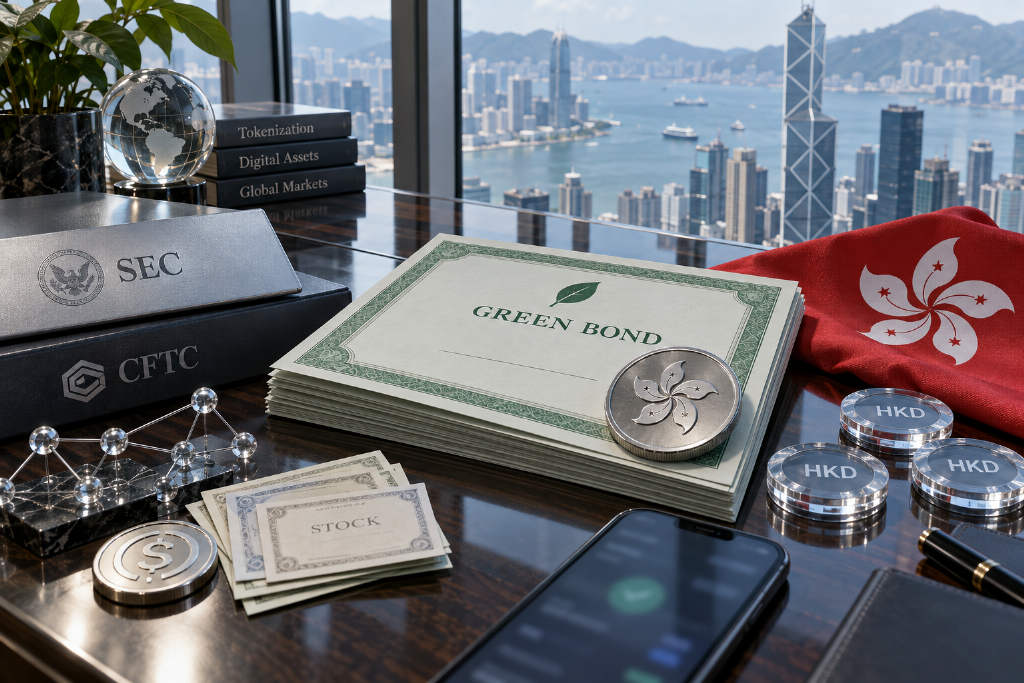
RWA2026-10-02 10:18:00RWA Weekly: Hong Kong Adds Tokenized HKD Deposits as OUSD Launches Across Multiple ChainsPANews’ latest RWA weekly roundup tracked the period from Sept. 25 to Oct. 2, 2026 and showed a market that is expanding in users even as parts of the sector cooled on valuation and transaction activity. On-chain RWA market value slipped to $38.55 billion, down 0.94% from a month earlier, while the number of asset holders climbed 51.6% to 5.0182 million. Stablecoin market capitalization rose to $294.04 billion, but monthly transfer volume fell 7.67% to $6.82 trillion, pointing to continued user growth alongside softer settlement activity. Regulatory developments drove much of the week’s agenda. A report cited by The Rollup founder Andy said the U.S. Securities and Exchange Commission is preparing to revise KYC rules so users could complete identity verification once and then access tokenized securities on-chain across platforms. The Commodity Futures Trading Commission updated crypto asset FAQs to say registered derivatives firms may treat tokenized money market fund shares and similar eligible instruments as compliant customer fund investments, while also accepting blockchain-based recordkeeping for federal retention requirements. In Europe, the European Central Bank outlined three models for bringing central bank money on-chain. In Asia, South Korea proposed expanding tokenized securities to include stocks, bonds and funds, and Hong Kong introduced tokenized Hong Kong dollar deposits into the primary issuance settlement process for its digital green bonds. On the product side, Aave V4 launched Equities Hub on Base, Ethena moved tokenized U.S. equities into the backing strategy for USDe, and Open Standard’s dollar stablecoin OUSD went live on Base, Ethereum, Solana and Tempo.40
Federal Reser2026-10-01 10:24:00PA Daily: Kashkari still sees one more Fed hike this year as OpenAI seeks a $30 billion roundPA Daily’s latest roundup covered a dense mix of macro policy, crypto markets, product launches, funding news, and on-chain activity. Federal Reserve official Neel Kashkari said he still expects one more rate hike this year and another in 2027, while Goldman Sachs pushed its forecast for the next hike from October to December after softer inflation data. In markets, Bitcoin briefly rose above $85,000 after the U.S. August PCE report came in below expectations, only to give back much of the move as the 10-year Treasury yield stayed elevated near 5.28%. Analysts cited weak spot demand, negative apparent demand, and rising bond yields as constraints on further upside. The report also highlighted several industry developments. Open Standard’s dollar stablecoin OUSD has gone live on Base, Ethereum, Solana, and Tempo, with Coinbase set to support free 1:1 minting and redemption. Base rolled out its Cobalt upgrade, Lido said MetaMask Staking will exit the Ethereum validator nodes it operates in the protocol, and Robinhood’s crypto head said its tokenized stocks are backed by real shares held in custody. On the AI and venture front, OpenAI is reportedly seeking at least $30 billion at a $1.4 trillion valuation after delaying its IPO beyond 2027, while SoftBank has completed another $10 billion investment in the company.50
OUSD2026-09-30 17:03:17OUSD supply tops 477.3 million within two hours of launch, with more than 90% on TempoOpen Standard’s dollar stablecoin OUSD reached a total cross-chain supply of about 477.3 million tokens within two hours of launch, according to BlockBeats. Reserve assets were reported at $477.3 million, indicating a 100% reserve coverage ratio at that point. The reserve mix consisted of roughly $211.2 million in U.S. Treasuries, accounting for 44.25%, and about $266.1 million in U.S. dollar cash, making up the remaining 55.75%. On the Tempo network, OUSD’s circulating supply stood at 434.2 million tokens. Cumulative transfer volume on that network reached $533.9 million. Based on the figures provided, Tempo accounted for more than 90% of OUSD’s circulating supply shortly after launch.20
Open Standard2026-09-30 15:55:32Coinbase, Visa and three others become Open Standard founding partnersOpen Standard has named Coinbase, Mastercard, Shopify, Stripe and Visa as its first five founding partners, according to comments from CEO Zach Abrams on Sept. 30. Abrams said the company is not structured as a consortium run by hundreds of participants. Instead, day-to-day operations are handled by management, while a smaller group of founding partners holds ownership and governance rights. Other partners will be rewarded based on their contribution to OUSD supply and transaction activity. Abrams said the five companies invested to become founding partners and each received an equal share of the initial equity. He also said they committed more than $1 billion over the coming months to build liquidity for OUSD. The exact amount invested by each company and their specific ownership stakes were not disclosed. At present, those five firms are the only investors in Open Standard. He added that the founding partner group is expected to expand to around 10 to 12 companies, with a board made up of founding partners also planned. Separately, the number of partners planning to integrate OUSD has grown from more than 140 in June this year to more than 200, with recent additions including SBI Holdings, UBS and fintech company Jeeves.50
Open Standard2026-09-30 15:58:34Open Standard says OUSD governance rests with founding partners as first five backers commit over $1 billionOpen Standard CEO Zach Abrams said the company is not a consortium run by hundreds of participants, according to CoinDesk. Instead, day-to-day operations are handled by management, while a smaller group of founding partners holds ownership and governance rights. Other partners are rewarded based on how much they help expand OUSD supply and trading activity. Abrams said Coinbase, Mastercard, Shopify, Stripe, and Visa have invested as the first five founding partners and each received an equal share of the initial equity. He added that the five companies have committed more than $1 billion over the coming months to build liquidity for OUSD, though the exact amount invested by each firm and their individual ownership stakes were not disclosed. At present, those five companies are Open Standard’s only investors. Abrams said the number of founding partners is expected to grow to around 10 to 12, with plans to form a board made up of those founding partners. He also said the number of partners planning to integrate OUSD has risen from more than 140 in June this year to more than 200, with SBI Holdings, UBS, and fintech company Jeeves among the latest additions.50
Open Standard2026-09-30 15:21:45Open Standard launches OUSD with free 1:1 minting and redemptionOpen Standard has launched OUSD, a U.S. dollar stablecoin aimed at businesses and developers building internet-native financial products. The token is positioned for use across banking, cross-border payments, settlement and institutional trading. According to ChainCatcher, OUSD currently offers four integration paths, with APIs and tools covering settlement, payment orchestration, trading, foreign exchange conversion, wallets and card services. All access channels support free minting and redemption at a 1:1 exchange rate with the U.S. dollar. Businesses can already connect through Mastercard, Stripe and the Visa Stablecoin Platform, while a Coinbase integration is scheduled to open on Oct. 1. OUSD will natively support Base, Ethereum, Solana and Tempo, and it is set to debut on both centralized and decentralized trading venues including Coinbase, Kraken and Uniswap. The stablecoin is issued by Bridge, a Stripe-owned company. Its reserves are held with BlackRock, Lead Bank and BNY Mellon, with reserve attestations to be published monthly. Open Standard said it now has more than 200 partners spanning financial institutions, fintech companies, banks and global enterprises.50