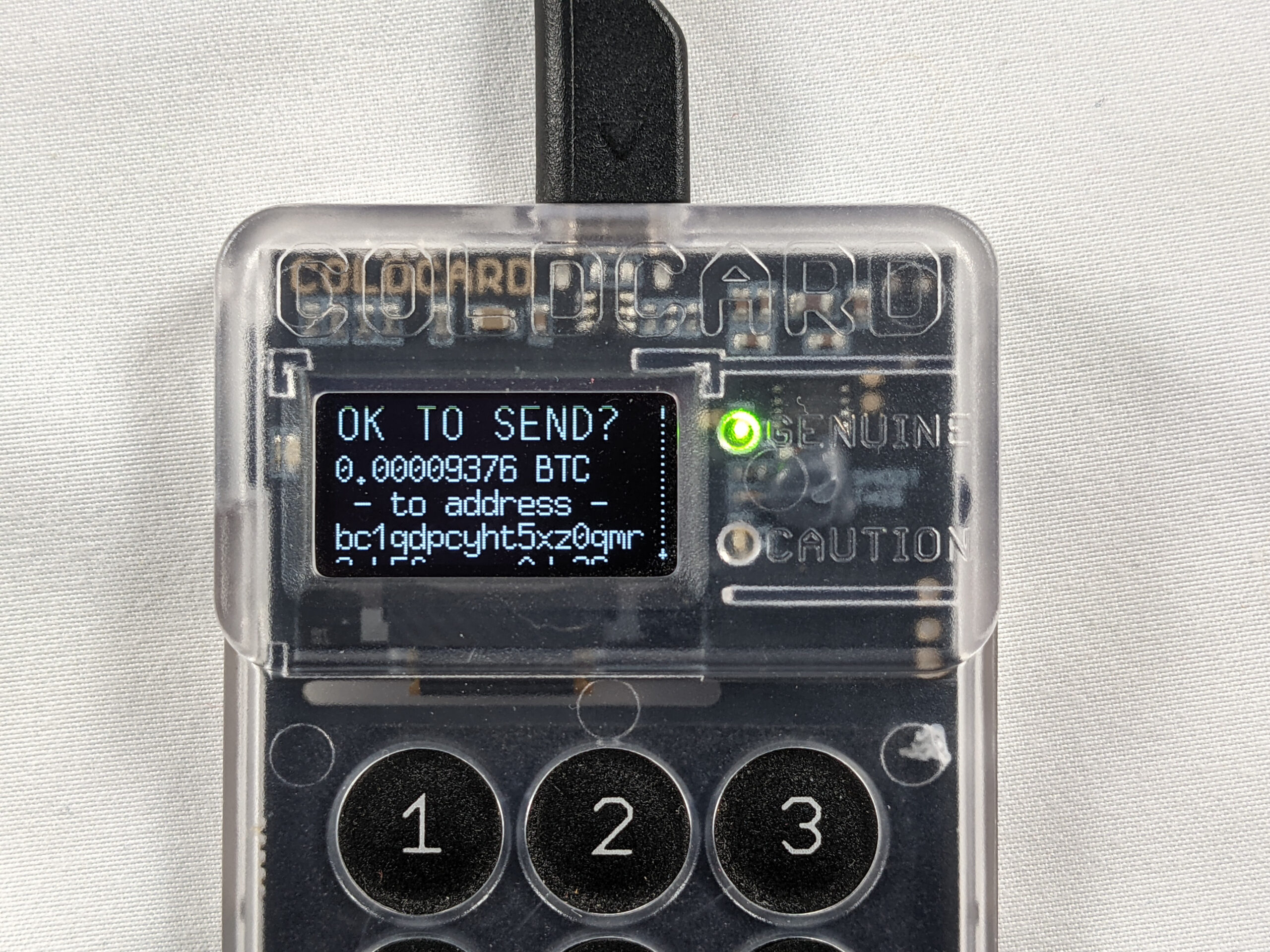
Bitcoin2026-08-01 23:00:23Coldcard RNG exploit cluster moves 0.06 BTC after stealing 1,159.42 BTCA cluster tied to the Coldcard RNG exploit has started moving a small portion of the stolen bitcoin, according to Odaily. The group previously stole 1,159.42 BTC from 870 exploited addresses, with the report valuing the haul at about $72.71 million. So far, 0.06 BTC, worth about $3,780 based on the figures cited in the report, has been sent to a new address. The remaining 1,159.35 BTC is still held across the attackers’ original eight addresses, with an estimated value of roughly $72.70 million. The update points to initial fund movement, while most of the stolen bitcoin has not yet left the original attacker-controlled wallets mentioned in the report.1980
Binance Resea2026-07-31 21:59:27Binance Research says DeFi TVL fell by $43.4 billion in the first halfBinance Research said DeFi total value locked (TVL) dropped by $43.4 billion in the first half of 2026, a decline of 38%. The report also said the market capitalization of six major Layer 1 blockchains shrank 42% over the same period, while Layer 2 user activity fell 77%. In Binance Research’s view, the downturn reflected a broad on-chain contraction rather than a rotation between sectors. The report added that 207 security incidents in the first half caused losses totaling $972 million. Although TVL has recovered slightly from the end of June, on-chain revenue may remain under pressure through year-end, according to the report. The item was cited by Techub News, with crypto.news referenced as the report source.450
Bitcoin2026-07-31 15:22:26COLDCARD Seed Vulnerability Puts Wallets at Risk as Funds Are Already Moving On-ChainBitcoin Magazine, citing an official announcement posted by Coinkite, warned that a serious security flaw is affecting COLDCARD MK3, MK4, MK5, and Q devices. The report says some wallets generated on those devices are being drained because attackers can recover the seed phrase without any action from the user. According to the article, the only wallets considered safe are those created with the dice roll method, provided the user supplied at least 50 rolls of entropy. The piece says any word seed generated after the end of 2020 on a Coldcard is not secure if the user did not add the recommended 50-plus dice rolls. It also says the flaw extends to ephemeral keys and session keys used for Clone Coldcard or Key Teleport, as well as BIP 85 seeds derived from a compromised seed. The attack is described as active, with around 1,000 BTC seen moving on-chain in connection with the issue. For affected users, the article urges an immediate move of funds to a newly generated seed or to a wallet created on a different device. If another hardware wallet is available, the report says that is the fastest option. If not, it outlines a temporary passphrase-based workaround and also mentions Nunchuck, Blockstream Green, and Bluewallet as software wallet options. The article adds that a firmware patch has already been released and says Coldcard remains usable after the update if a new seed is generated securely.2470
Coldcard2026-07-31 07:43:46Coldcard seed-generation flaw linked to 594 BTC drained in 25 minutesCoinkite has confirmed a seed-generation flaw affecting parts of the Coldcard hardware-wallet line, after on-chain analysts tracked the theft of 594.48 BTC in a burst of transactions completed within roughly 25 minutes. The incident involved 1,324 UTXOs swept through 500 transactions across a three-block window, with the funds taken from about 500 single-signature addresses. Security researchers said the issue traces back to firmware changes introduced in March 2021 that accidentally disabled the secure chip’s hardware random-number generator, leaving key generation to rely on predictable inputs such as a chip serial number and clock registers. Coinkite first focused its warning on the Mk3, then later expanded the affected scope to include older firmware on the Mk4, Mk5 and Q. The company said users should not wait for a firmware update and should move funds by creating a new seed on an unaffected device, verifying backups, testing with a small transaction and then transferring the full balance. Devices including TAPSIGNER, OPENDIME and SATSCARD were said to be outside the affected codebase.1880
Bitcoin2026-07-27 01:59:58CZ warns small exchange deals carry high security risks as MiCA and U.S. crypto bills reshape the marketA packed 24-hour news cycle brought fresh signals from crypto markets, policymakers, security researchers and public companies. CryptoQuant analyst Axel Adler said Bitcoin’s rebound is still facing four pressures: compressed volatility, weak U.S. spot demand, thin buy-side liquidity and continued loss realization by investors. In Washington, Aave founder Stani said the CLARITY Act has entered the "last mile," arguing that even in imperfect form it could become the first U.S. law to directly address DeFi and give institutions, fintechs and banks a clearer legal path into on-chain finance. In Europe, attention is shifting from winning a MiCA license to paying the ongoing cost of compliance. Market participants cited in the report said that dynamic could push the sector toward consolidation, including mergers, joint ventures and bank partnerships, with the U.K. likely to follow a similarly strict path through its own framework. Binance founder Changpeng Zhao, meanwhile, said acquisitions of smaller centralized exchanges remain possible, but post-deal security incidents are hard to attribute, making due diligence and risk controls much harder. Other major developments included updated figures on public-company Bitcoin holdings, Lido’s response to a stETH reward calculation issue, Cascade’s statement that funds tied to the CLS incident had been recovered, and new reports on wallet-targeting malware campaigns and U.S. crypto seizure actions.980
Triple-A2026-07-26 23:54:57Triple-A says hot wallet exploit caused about $12 million in losses across six chainsSingapore-based crypto payments gateway Triple-A has confirmed a hot wallet security breach that led to losses of about $12 million. Blockchain security firm PeckShield and on-chain investigator Specter first flagged unusual outflows on July 24, tracing activity across Ethereum, TRON, Polygon, Arbitrum, Solana and TON. The funds were later consolidated into a single Ethereum address. Triple-A said customer assets were not affected and that the losses were limited to operational funds. The company, founded in 2017, holds a Major Payment Institution license from the Monetary Authority of Singapore and works with Fireblocks for institutional-grade custody services. The incident has again drawn attention to the risks tied to internet-connected hot wallets in real-time settlement operations.1930
TripleH2026-07-24 21:18:50TripleH hot wallet flagged in suspected multi-chain exploit with over $9.3 million moved to EthereumOn-chain sleuth Specter said the @TripleH hot wallet appears to be facing an ongoing fund theft incident across several blockchains, including TRON, Ethereum, TON and Solana. Based on the monitored activity, more than $9.3 million in assets has already been stolen, swapped and bridged to Ethereum. The funds are now being consolidated at Ethereum address 0x01F...253b1. Specter also listed a group of related addresses tied to the incident: 0x833...aEf6, Edtt...n3K, TRSr...Skw, TNLL...87a and 0x6ca...c1d7. The update was published by Odaily as a market analysis newsflash, and the information provided did not include any official response from TripleH or further details on how the suspected attack unfolded.1460
KelpDAO2026-07-24 06:05:17On-Chain Evidence Ties KelpDAO and Humanity Protocol Stolen Funds to a Common Bitcoin Exit RouteOn-chain investigators say funds from the KelpDAO and Humanity Protocol exploits converged on the Bitcoin network, with both trails pointing to the same financial outflow point.230