BackOpenUSD

OpenUSD

Circle
2026-08-24 10:31:06

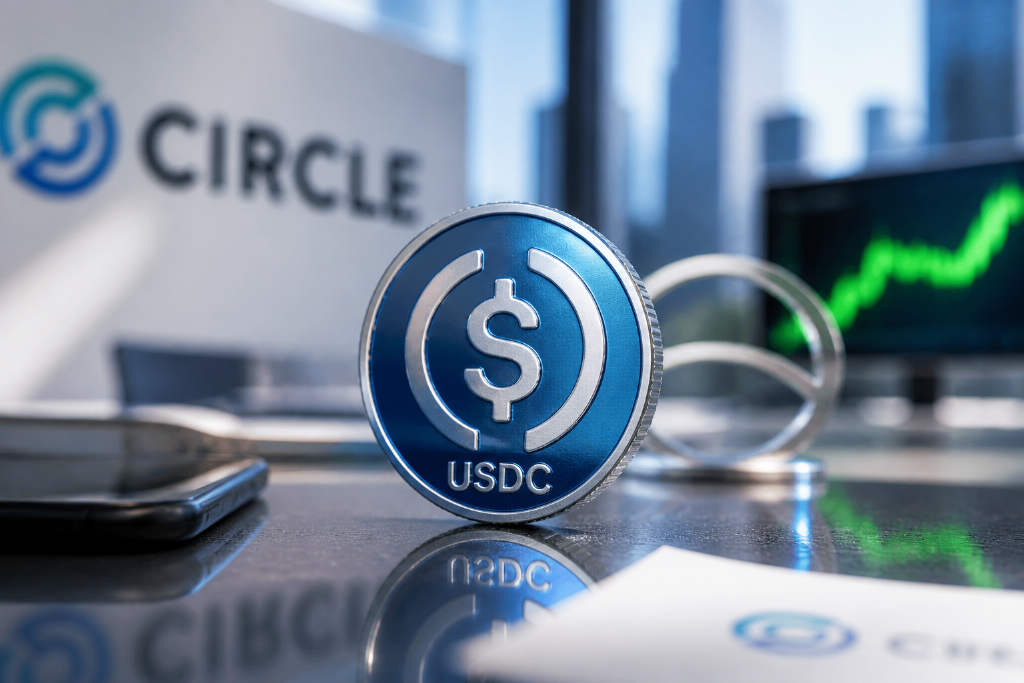
Circle Rebounds About 50% From Early-August Low as Market Reassesses Arc, CCTP and AI Agent Narrative

Circle shares have rebounded from around $57 in early August to about $87, a move that came as bitcoin rose more than 20% over the past week and lifted crypto-linked stocks listed in the U.S. Cathie Wood also said in a recent post that Circle could be a major beneficiary as technology reshapes the old world order. The article says investors are revisiting the bearish case after OpenUSD emerged as a direct challenge to Circle’s USDC-centric model. It also highlights Arc, Circle’s Layer 1 chain for USDC and on-chain finance, CCTP, its cross-chain transfer protocol, and a longer-term AI Agent use case tied to machine-to-machine payments. Still, the piece says most of the story remains narrative rather than proven execution, and Circle has yet to show enough results to confirm it has already built next-generation payment and financial infrastructure.

550
Circle Rebounds About 50% From Early-August Low as Market Reassesses Arc, CCTP and AI Agent Narrative
Taiwan
2026-08-21 04:40:42

Taiwan’s digital asset law is in force, but Chen Ching says stablecoin policy still needs top-level coordination

Taiwan’s Virtual Asset Service Act cleared its third reading on June 30, 2026 and was promulgated on July 22, formally putting virtual asset service providers under a dedicated legal regime. But former premier and former Financial Supervisory Commission chairperson Chen Ching said the law’s success should not be judged by how many licenses are issued. His main test is whether the government gives the sector sustained attention at the highest level. Speaking on episode 100 of XREX Group’s podcast Web3 Big Westward Expansion, Chen said the hardest questions begin after passage of the law: how Taiwan wants to develop virtual assets and stablecoins, who has final authority when agencies disagree, and whether firms will get a review process that is clear and predictable. He pointed to a structural issue in the law’s stablecoin provisions, where the Financial Supervisory Commission is the competent authority but approval for issuance also requires the central bank’s consent. Chen argued that stablecoins should be viewed not only as a financial product subject to compliance rules, but also through the lens of monetary sovereignty and national strategy. XREX co-founder and Group CEO Wayne Huang added that if trading can remain legally onshore, local currency has a chance to remain on-chain as well, especially as tokenized real-world assets become more important.

440
Taiwan’s digital asset law is in force, but Chen Ching says stablecoin policy still needs top-level coordination
Circle
2026-08-06 11:30:00

Circle earnings highlight reliance on USDC interest income as Morgan Stanley cuts target to $38

Circle’s latest earnings report did little to ease market concerns about the company’s business model, which remains heavily tied to interest income from USDC reserves. The company reported Q2 revenue of $701.3 million, up 7% year over year and 1% from the prior quarter, but slightly below the market’s $713 million expectation. Reserve income came in at $668 million, making up about 95% of total revenue, up from 94% in the previous quarter, while other revenue fell from $42 million to $34 million. Profit metrics were somewhat firmer, with EPS at $0.18 versus a $0.16 consensus and RLDC margin at 41.2%, roughly flat quarter over quarter. Earlier, on Aug. 3, Morgan Stanley cut its price target on Circle from $106 to $38 and downgraded the stock from Equal-weight to Underweight. During the earnings call, Circle’s CEO said the company had renewed its agreement with Coinbase on existing terms, keeping USDC at the center of Coinbase’s product suite. Still, the main question remains whether Circle can move from earning money when users hold USDC to earning money when USDC is actively used.

1000
Circle earnings highlight reliance on USDC interest income as Morgan Stanley cuts target to $38
Spark
2026-08-03 03:04:43

Spark Drops Consumer App Plan to Build Stablecoin Infrastructure Behind the Scenes

Spark, the lending and liquidity arm tied to Sky, formerly MakerDAO, has shelved its consumer app indefinitely and is now focusing on business-facing stablecoin infrastructure. CEO Sam MacPherson told CoinDesk that the stablecoin market is heading toward deeper fragmentation, with issuers and platforms spreading liquidity across more tokens and networks. Spark’s bet is that this trend creates demand for an intermediary layer that moves liquidity between those systems. Two products are being used to make that case. Robinhood Earn, which offers roughly 7% APY on USDG deposits, drew more than $200 million in 24 days through an on-chain vault structure involving Morpho, Steakhouse Financial, Ethena, Maple and Spark. On Uniswap v4, Spark said its stablecoin foreign-exchange layer handled about $1.5 billion over 30 days and accounted for around 30% of stablecoin-to-stablecoin swap volume after deploying roughly $150 million into USDS-USDT and USDS-PYUSD pools. Spark is pushing this strategy during a weaker DeFi market, with annual revenue down from about $80 million in the bull market to roughly $20 million now. MacPherson also said on-chain payments could reach $3 trillion by 2030, citing expected regulatory developments including the GENIUS Act and the possible advance of the Clarity Act.

1060
Spark Drops Consumer App Plan to Build Stablecoin Infrastructure Behind the Scenes
Visa
2026-07-28 22:05:46

Visa reports $11.6 billion in fiscal Q3 revenue, outlines stablecoin platform and OpenUSD plan

Visa reported $11.6 billion in revenue for the third quarter of fiscal 2025, up 14% from a year earlier, with the company attributing the increase to double-digit growth in payments volume, cross-border volume and processed transactions. Cross-border volume rose 13% year over year, or 12% excluding intra-Europe transactions, while processed transactions increased 10%. On its earnings call, Visa said it is investing across multiple layers of the stablecoin stack, including blockchain, issuance, wallets, infrastructure, orchestration and applications. The company said it made progress during the quarter at the issuance and application layers. Visa also disclosed that it has joined the OpenStandard consortium, which plans to launch the OpenUSD stablecoin for global money movement. The company said its stablecoin platform is designed to let partners settle with Visa in stablecoins, offer onchain wallet-as-a-service infrastructure and move funds between fiat and stablecoins, starting with OpenUSD. Visa added that the platform will integrate with Pismo to support tokenized deposits for financial institutions and may later connect with third-party tokenized deposit infrastructure providers. The company also said stablecoins and AI are complementary technologies.

1070
Visa reports $11.6 billion in fiscal Q3 revenue, outlines stablecoin platform and OpenUSD plan