PJM

ChainFeeds
2026-09-11 01:58:25

ChainFeeds roundup tracks DeFi registration bill, compute-market pricing and Ethereum’s August EIP progress

ChainFeeds’ Sept. 11 research briefing combined a policy news roundup with five long-form pieces spanning meme launchpads, AI compute markets, post-quantum zk proofs, tokenized equities on Solana, and Ethereum core development. The newsletter highlighted a revised CLARITY Act proposed by Republican lawmakers that would require non-decentralized DeFi protocols to register with the CFTC, Polymarket’s first CFO hire tied to a planned $1 billion fundraising effort, updated tokenomics from FLOP, a reported $100 million investment plan by Nasdaq Ventures into Kraken parent Payward at a $21 billion valuation, and Bitrace’s note that Fulilai Guarantee has started removing money-laundering merchants, possibly due to OFAC sanctions. The research selections then moved across several themes. One focused on Robinhood Chain’s meme launchpad race, where Pons and LONG are pushing fee-sharing and tokenized-stock trading. Another, by Pantera Capital partner Jay Yu, argued that GPU compute could evolve into a commodity market with benchmark pricing similar to power markets. The briefing also covered a16z’s release of Lattice Jolt, a post-quantum zkVM built on lattice cryptography, Pump.fun’s rollout of custom quote assets including tokenized U.S. equities, and Four Pillars’ review of Ethereum’s August EIP pipeline, testnet work, and changing assumptions around Layer 2 networks.

80
ChainFeeds roundup tracks DeFi registration bill, compute-market pricing and Ethereum’s August EIP progress
Pantera Capit
2026-09-10 23:55:00

Pantera Capital says compute could become a hard currency for the AI economy

Pantera Capital partner Jay Yu argues that GPU compute is still in the early stages of financialization, but its market structure may develop in ways that resemble electricity and other physical commodities. In his view, compute is constrained by chip type, time, and geography, which makes it heterogeneous rather than perfectly fungible, yet still capable of evolving into a globally traded asset class over the next five to 10 years. The article maps the sector through layers including hardware providers, compute service operators, clusters, inference platforms, application companies, brokers, OTC desks, index builders, and derivatives venues. Yu draws repeated comparisons with U.S. power markets, where physical delivery, benchmark formation, and risk transfer tools emerged over time. He suggests compute markets may follow a similar path, with physical GPU delivery venues anchoring index construction and futures trading. The piece also describes Nvidia as a possible “central bank” for the compute economy because of its control over chip release cycles, utilization dynamics, and residual-value support policies. It identifies four broad product categories already taking shape: physical delivery, index products, derivatives exchanges, and financing tools such as lending, treasury structures, synthetic stablecoins, insurance, and other risk-transfer products. At the same time, it says the sector still faces major issues around transparency, basis risk, standardization, and quality verification.

60
Pantera Capital says compute could become a hard currency for the AI economy
Pantera Capit
2026-09-10 06:39:30

Pantera Says AI Compute Could Follow Oil and Power Into Finance, With Nvidia as a ‘Central Bank’

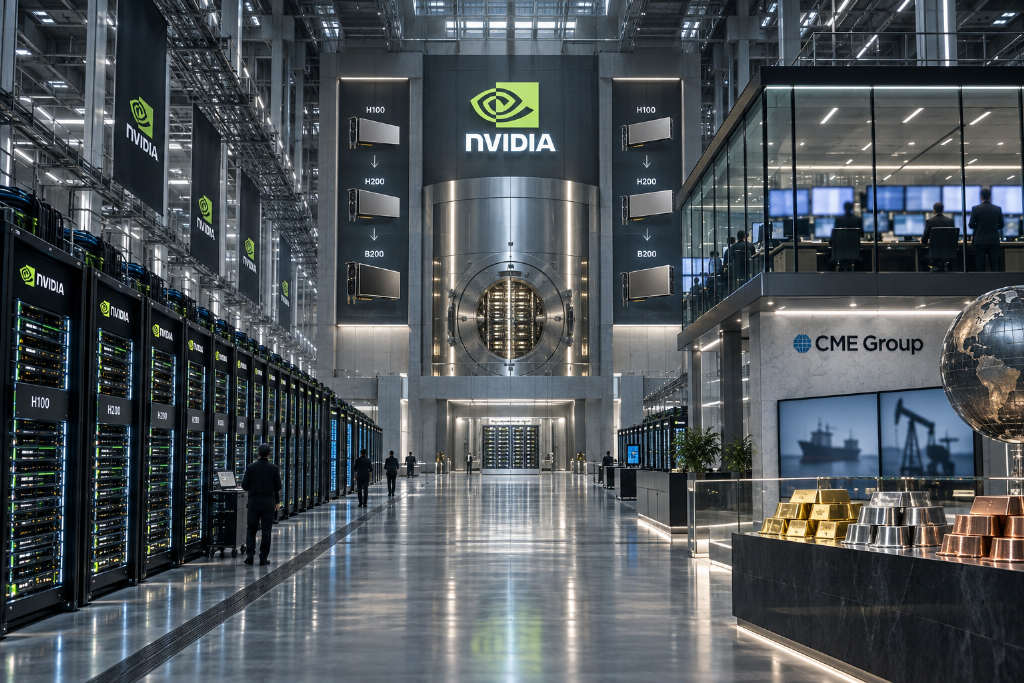
Pantera Capital investor Jay Yu argues that the market for AI compute is still traded in a highly primitive way despite trillion-dollar spending on data centers and compute infrastructure. In his view, GPU rentals and purchases still rely heavily on chat groups, OTC brokers, and one-to-one enterprise agreements, even as platforms such as SF Compute, Vast AI, and Runpod have emerged. He compares the current stage of the compute market to the early development of U.S. power and oil markets, where large physical demand came first and standardized contracts, pricing indices, futures, and hedging tools followed later. Yu says that over the next five to 10 years, compute represented by GPUs such as the H100, H200, and B200 could evolve from an internal IT expense into a standalone asset class that can be priced, traded, financed, and hedged. He also outlines a market structure spanning physical settlement platforms, pricing indices, derivative exchanges, and broader financialization vehicles. The report notes that CME Group has already announced a partnership with Silicon Data to plan futures products tied to GPU compute prices. Yu adds that Nvidia may sit above this system like a “central bank” because its product roadmap and residual value support can shape depreciation curves, financing conditions, and expectations around the future value of installed compute assets.

150
Pantera Says AI Compute Could Follow Oil and Power Into Finance, With Nvidia as a ‘Central Bank’
Keel
2026-08-11 00:28:02

Keel Shuts Down US Bitcoin Mining, Pivots Sites to AI Data Centers

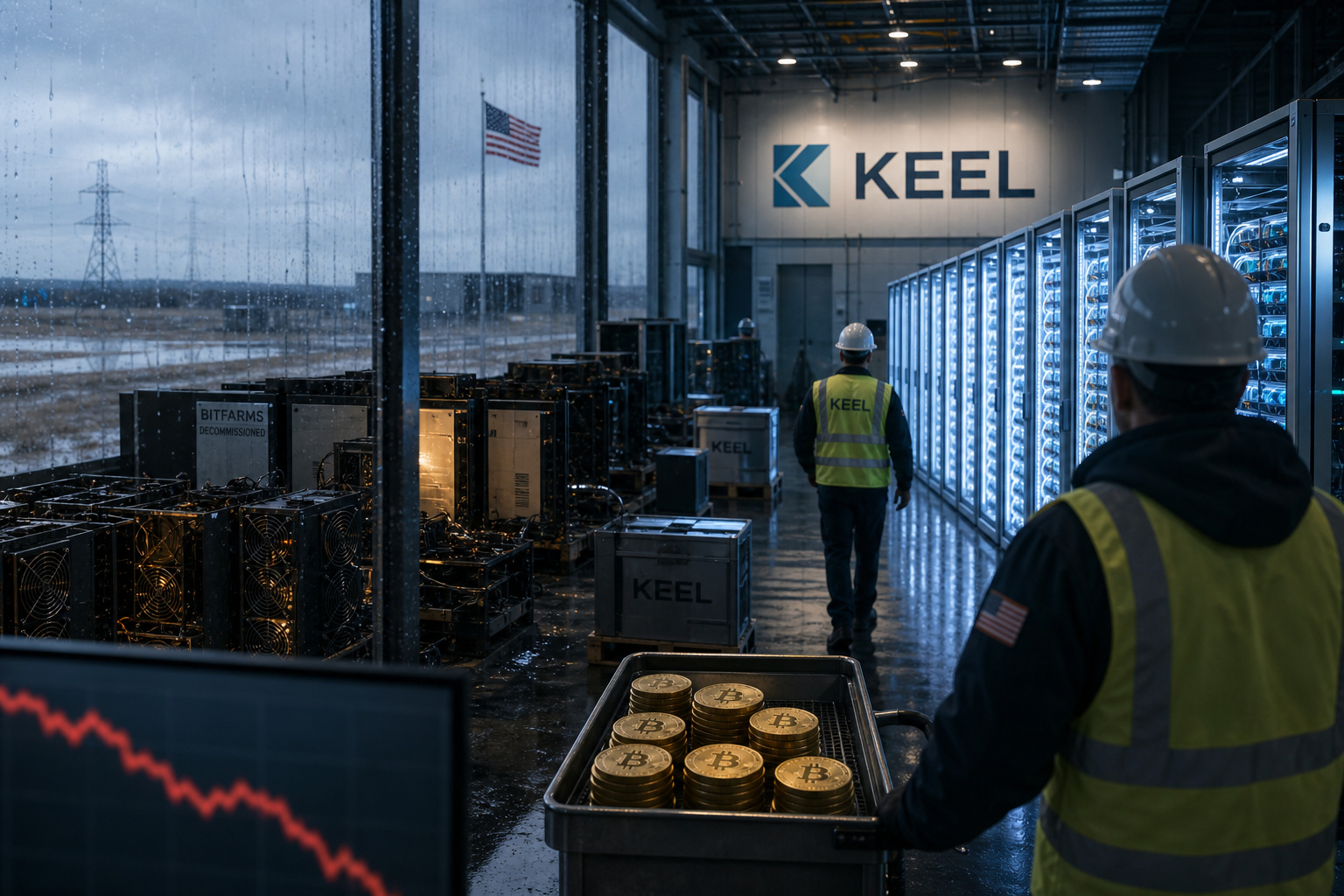
Keel Infrastructure, formerly Bitfarms, said in its latest quarterly report that it has closed all US bitcoin mining operations and is converting those sites into AI and high-performance computing data centers. Between April 1 and August 7, the company sold 1,085 BTC for $75 million and still holds 1,861 BTC on its balance sheet as it continues to wind down its bitcoin position. Revenue for the quarter came in at $30 million, down 50% year over year, hurt by lower bitcoin prices and the closure of the Moses Lake crypto mine. Net income swung from roughly $11 million in Q2 2025 to a loss of $141 million. Shares fell more than 11% in Monday trading. CEO Ben Gagnon said power is the limiting factor and that the company's three priority sites are close to full permitting, with multiple potential tenants in talks. Keel holds $819 million in liquidity and uncontracted 2027 capacity in PJM and Washington state.

1150
Keel Shuts Down US Bitcoin Mining, Pivots Sites to AI Data Centers
PANews
2026-08-05 03:30:00

PANews releases July 2026 column ranking, with AI-related stories taking seven of the top 10 spots

PANews on Aug. 5 published its Top 10 ranking of column articles for July 2026, a list compiled from overall content quality and readership across all columns on the platform. The outlet framed July as a month of structural adjustment across macro, technology, and crypto markets: AI narratives entered a valuation reset phase, storage stocks pulled back, Bitcoin ended the month at about $62,900 with a 7.3% gain, while spot trading activity weakened and on-chain trading share climbed. Against that backdrop, AI and robotics dominated reader attention, accounting for seven of the 10 most popular articles. The top five entries came from animajoe, Think AI, MSX Research Institute, Tiger Research, and EX.IO. Topics ranged from AI hardware supply chains and humanoid robots to storage-sector valuations, AI agent wallets, and whether an AI bubble could mirror the 2000 dot-com collapse. The remaining ranked pieces covered stablecoin business models, second-half AI allocations, Bitcoin mining under U.S. grid stress, volatility in South Korean equities, and bottlenecks shaping the next leg of AI speculation. PANews also used the ranking announcement to invite more writers to open columns on its platform.

1120
PANews releases July 2026 column ranking, with AI-related stories taking seven of the top 10 spots
Data Centers
2026-07-25 10:12:03

US data centers may consume about 20% of the nation’s electricity by 2035, with power emerging as AI’s next bottleneck

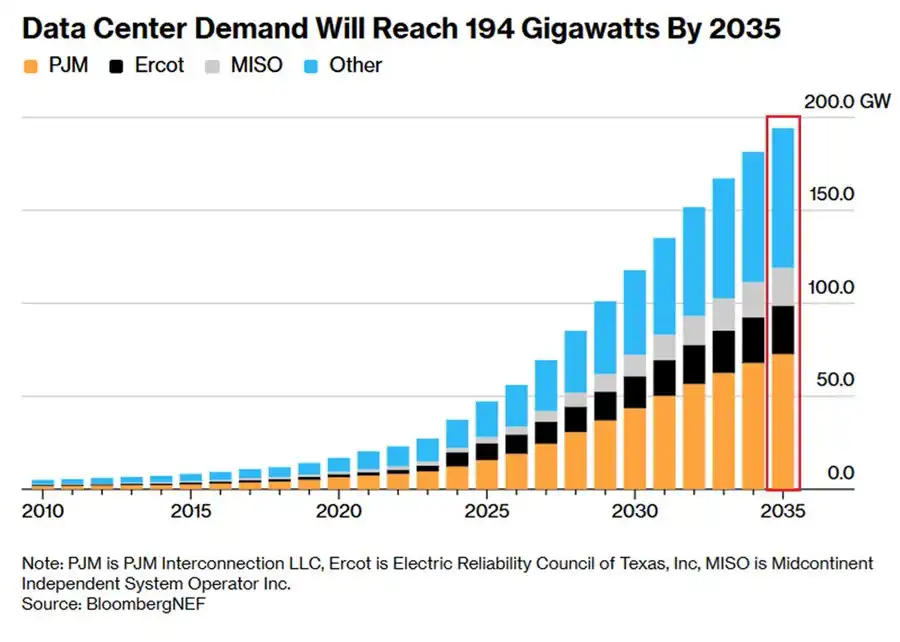
BlockBeats reported on July 25 that electricity demand from US data centers is projected to surge 253% from 2026 levels and reach a record 194 gigawatts by 2035. The report said 1 gigawatt is roughly equivalent to the capacity of a traditional nuclear reactor, underscoring the scale of the increase. Data centers currently account for about 6% of annual US electricity consumption. That share is estimated to rise to around 12% by 2030 and then to about 20% by 2035. The figures point to a rapid increase in power usage tied to the expansion of digital infrastructure. Most of the growth in electricity demand is expected to be concentrated in a small number of grid regions, including the Pennsylvania-New Jersey-Maryland Interconnection, or PJM. PJM serves Washington, DC, along with 13 states that include Virginia, Pennsylvania, and Ohio. According to the report, power supply is set to become the next bottleneck for AI.

1210
US data centers may consume about 20% of the nation’s electricity by 2035, with power emerging as AI’s next bottleneck