REC

India
2026-08-25 12:09:15

India eyes September pilot for tokenized corporate bonds settled with wholesale CBDC

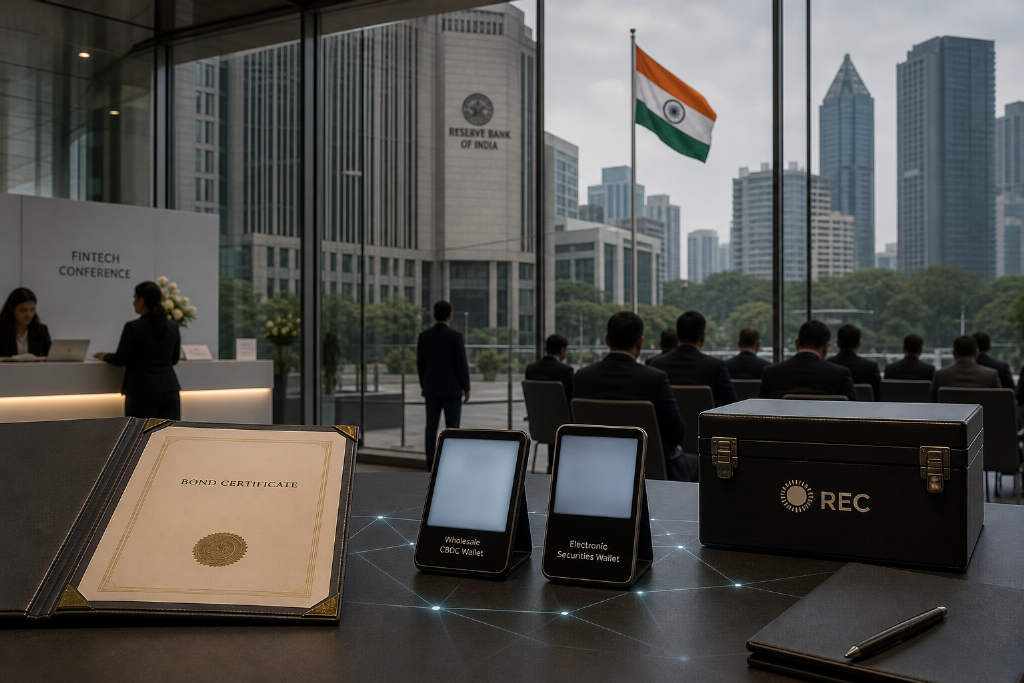
India is preparing a September pilot for its first tokenized corporate bonds, according to a Reuters report that cited three people with direct knowledge of the plan. State-controlled REC Limited is expected to issue less than 5 billion Indian rupees, or about $57 million, in tokenized debt as part of the trial. The program would initially be limited to a select group of investors and could be introduced at an annual financial technology event in Mumbai. The report said India’s central bank digital currency would be used to purchase the bonds. Investors would need two digital accounts to take part: a wholesale CBDC wallet provided by a bank and a new electronic securities wallet. Indian securities depositories are developing that wallet under the name DEMAT 2.0, which would record bond holdings on distributed ledger technology. Reuters also reported that the Reserve Bank of India and the Securities and Exchange Board of India are working together on the initiative. The bonds are expected to carry an initial three-month lockup period, while exchanges may build a secondary market for the instruments by December.


110
India eyes September pilot for tokenized corporate bonds settled with wholesale CBDC
India
2026-08-25 06:44:21

India plans first tokenized corporate bond settled in digital rupee next month

India is planning to issue its first tokenized corporate bond next month through REC, according to Techub News, citing Crypto.news. The planned deal will have a size of no more than 5 billion rupees, or about $57 million. Settlement is set to take place in digital rupee over blockchain-based infrastructure. The report describes the issuance as a notable step in India’s effort to use its central bank digital currency, or CBDC, in capital market activity. If completed as planned, the bond would mark the country’s first corporate debt issuance in tokenized form using the digital rupee for settlement. The transaction structure links bond issuance, blockchain rails and CBDC-based payment into one pilot for the capital markets side of India’s digital currency push.

70
India plans first tokenized corporate bond settled in digital rupee next month
India
2026-08-25 03:54:01

India plans first tokenized bond sale in September through REC pilot

India is preparing to launch its first tokenized bond in September, according to Reuters, in a pilot tied to the country’s push to test blockchain-based capital market infrastructure. The bond is set to be issued by state-owned power sector financier REC, with an expected size of less than 5 billion rupees, or about $57 million. The pilot is being advanced jointly by India’s market regulator and central bank, and both issuance and settlement are expected to run on blockchain rails. People familiar with the matter said the product is likely to be unveiled during an annual fintech conference in Mumbai in September, with access limited to a small group of investors at the outset. Investors are expected to participate through wholesale central bank digital currency wallets and electronic securities wallets. India’s depository institution is also developing an e-wallet called DEMT 2 to record bond ownership on distributed ledger infrastructure. The bond will carry an initial tenor of three months. Secondary trading is expected to be limited to participants holding both compatible CBDC and securities wallets, with a tokenized bond secondary market projected by December. The bond is not expected to trade on traditional electronic trading platforms.

70
India plans first tokenized bond sale in September through REC pilot
India
2026-08-25 03:53:27

India plans first tokenized bond sale in September, with size seen below 5 billion rupees

India is preparing to launch its first tokenized bond in September, according to a Reuters report cited by BlockBeats. The bond is set to be issued by state-owned power-sector financier REC, with the deal expected to come in below 5 billion rupees, or about $57 million. India’s market regulator and central bank are jointly backing the pilot, and both issuance and settlement are expected to run on blockchain rails. People familiar with the matter said the product is likely to be introduced during an annual fintech conference in Mumbai in September, with access initially limited to a small group of investors. Participants will use wholesale central bank digital currency wallets alongside electronic securities wallets. India’s depository institutions are also developing a wallet called DEMT 2.0 to record bond ownership on a distributed ledger. The bond will carry an initial maturity of three months, and secondary trading is expected by December. Those trades will be limited to participants holding compatible CBDC and securities wallets, and the instrument is not expected to trade on traditional electronic platforms.

120
India plans first tokenized bond sale in September, with size seen below 5 billion rupees
Tokenization
2026-08-05 02:32:56

Tokenization Works Only When the Underlying Asset Can Be Measured

A long-running debate in crypto tends to frame tokenization as a question of whether an asset can be put on-chain. This article argues that the real test sits elsewhere: whether the thing being tokenized can be independently measured and verified in the physical world. The contrast is sharp in environmental markets. Renewable energy certificates, or RECs, map to electricity volumes recorded by grid-connected meters, which makes them relatively suitable for blockchain-based trading. Carbon credits, by contrast, often rest on counterfactual claims about emissions that did not happen, with no equivalent hardware-based proof. In that setting, tokenization does not fix the underlying weakness and can amplify it. The article examines Power Ledger’s TraceX platform, Toucan and KlimaDAO’s carbon-credit experiment, public findings cited by CarbonPlan, Verra’s 2022 ban on turning retired credits into tradable digital instruments, and a recent livestock-collateral trial in Brazil using Cowmed smart collars. Across those cases, the same principle emerges: blockchains can transfer claims and prevent double spending, but they cannot verify whether the real-world unit behind the claim is genuine. If the measurement layer is robust, tokenization can cut friction and improve liquidity. If that layer is weak, faster trading only spreads bad assets more efficiently.

160
Tokenization Works Only When the Underlying Asset Can Be Measured