Ethereum
Nov 13, 2026

Ethereum Economic Zone Targets L2 Liquidity Fragmentation With Synchronous Calls

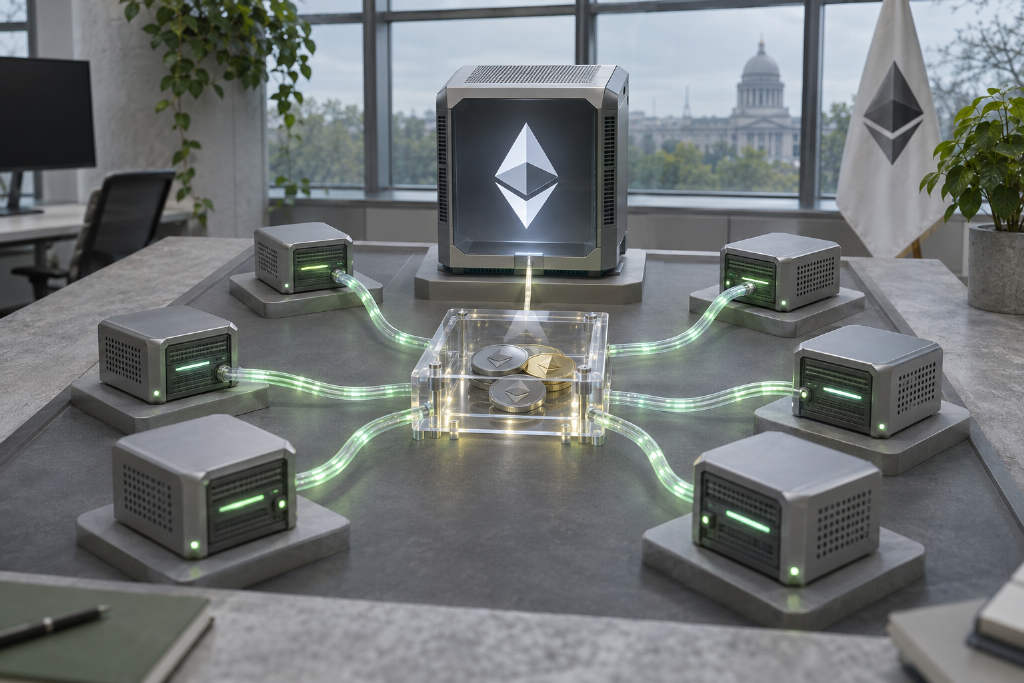
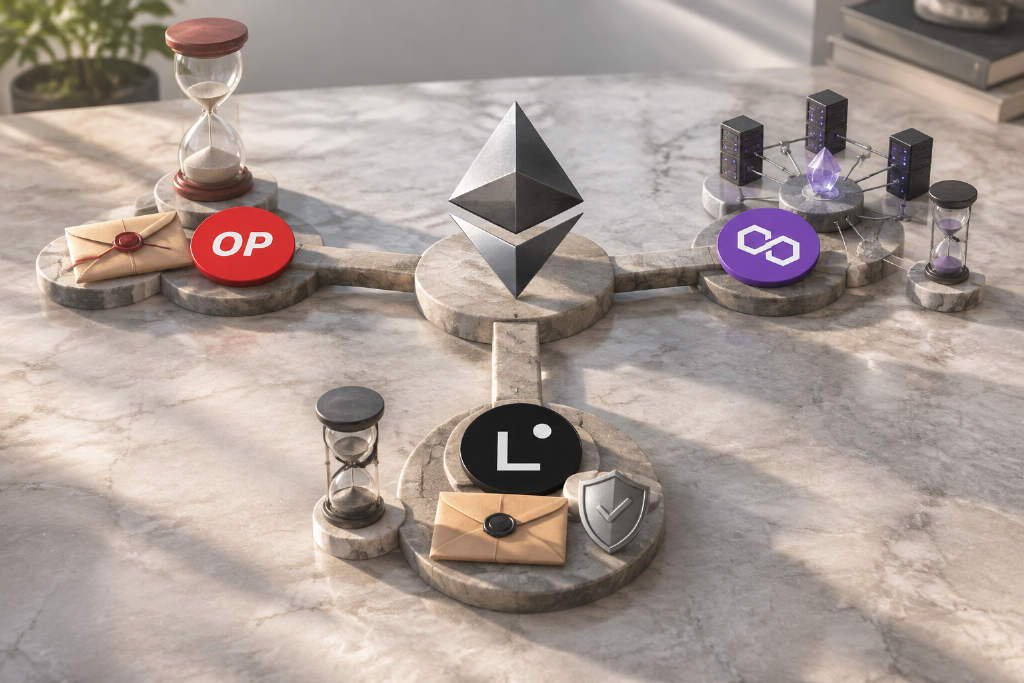
The Ethereum Economic Zone, or EEZ, is designed to let connected Rollups use Ethereum mainnet liquidity, contracts and keys within the same block. The framework is not a new chain or stack. It relies on contracts deployed on Ethereum, predefined proxy addresses, execution tables and validity proofs generated within a 12-second Ethereum slot. The design could allow a single Rollup transaction to borrow USDC from Aave, swap it for ETH on Uniswap and deposit the asset into a perpetuals margin vault. Calls can move from L1 to L2, L2 to L1 or between Rollups. EEZ examples include RollupX accessing CRV liquidity from an Ethereum Uniswap pool, Safe keeping its signers and permissions on mainnet, the Bermuda Bay privacy pool using Uniswap V3, and a Falcon signature verified on a Rollup before authorizing an L1 Safe payment. The system still has limits. Chains must choose two of fast block production, synchronous Ethereum calls and decentralized sequencing. Cross-chain calls also expose transactions to the composer and builder, creating MEV concerns. Validator-built blocks that bypass external builders cannot process synchronous calls, while 7% of Ethereum blocks currently fall into that category.
00
Ethereum Economic Zone Targets L2 Liquidity Fragmentation With Synchronous Calls
Ethereum
Nov 11, 2026

Protocols Return to Ethereum as L1 and L2 Value Roles Are Reworked

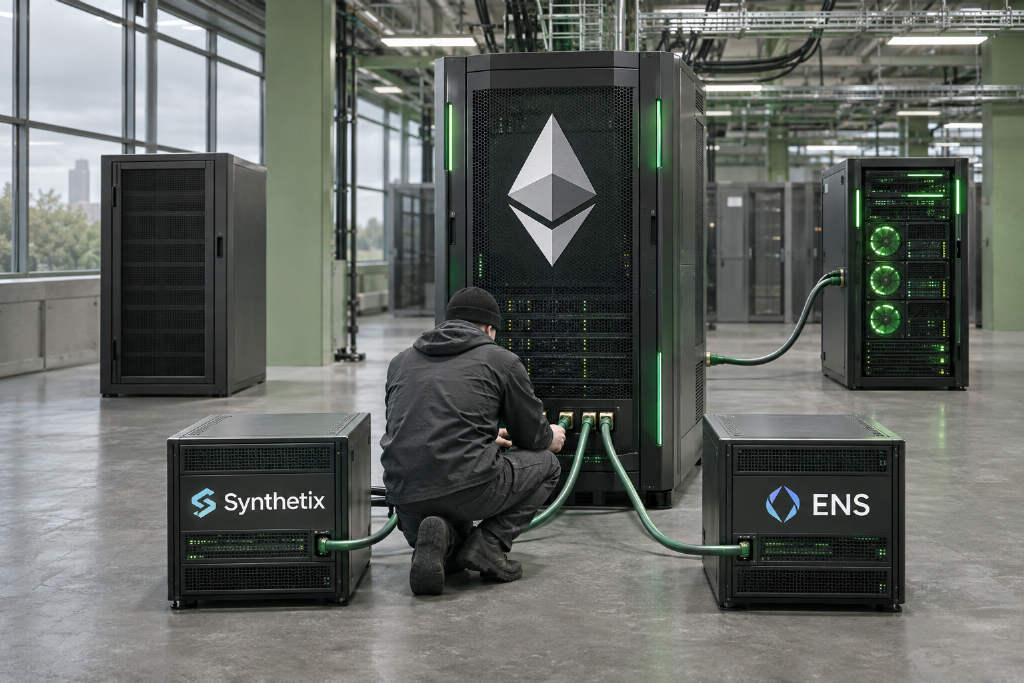
A growing group of protocols is reassessing the need to operate on a separate Ethereum Layer 2 as the mainnet becomes cheaper and more capable. Synthetix deployed its new perpetuals exchange on Ethereum, ENS halted development of its planned Namechain, and Trueo, Superseed, ShapeShift and Nillion all announced moves that bring key activity back to Ethereum or its mainnet. Blast said network maintenance costs had exceeded revenue and announced it would stop operating, while Abstract plans to shut down on December 15 despite having more than 144 applications and over 400,000 users. The shift does not mean Layer 2 networks are disappearing. Instead, it points to a different architecture: keep assets and critical state on Layer 1, while outsourcing high-frequency or complex computation to off-chain systems and other execution environments. The change also challenges ETH’s older value narrative, which relied heavily on EIP-1559 fee burning. As Dencun and Fusaka reduce data-posting costs and Ethereum raises its Gas Limit, lower fees may reduce burn even as activity expands. Vitalik Buterin has argued that ETH should be valued more as a decentralized, secure and censorship-resistant store of value, with staking, settlement and collateral demand supporting the asset.

00
Protocols Return to Ethereum as L1 and L2 Value Roles Are Reworked
Ethereum
Nov 11, 2026

Protocols Return to Ethereum Mainnet as the L1-L2 Value Model Is Reworked

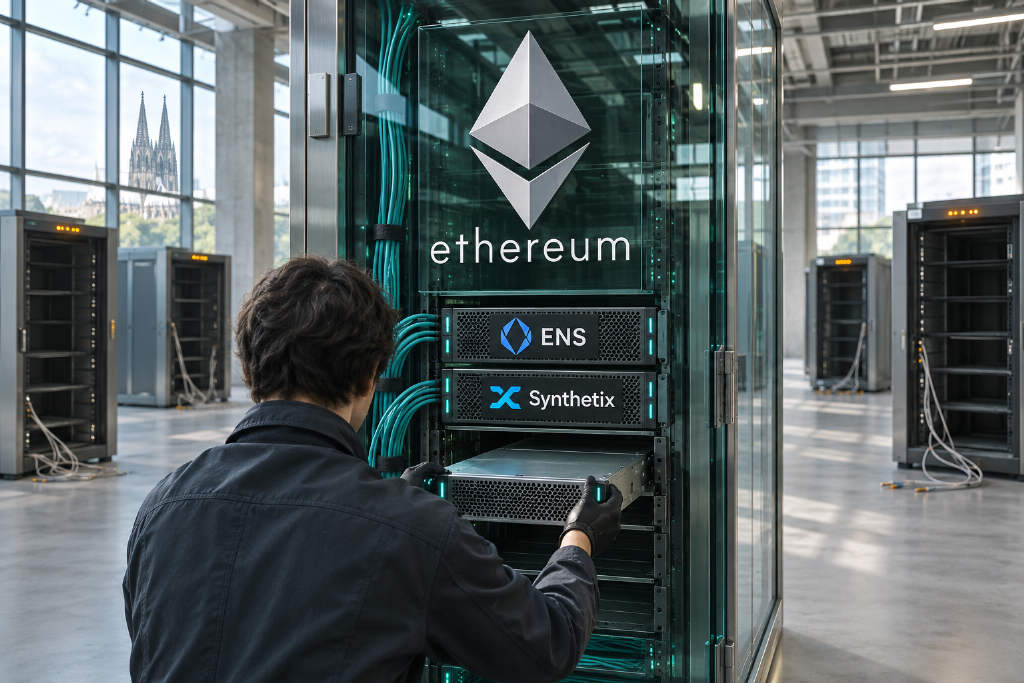
Ethereum’s scaling debate is entering a new phase. After years in which protocols moved applications and liquidity to dedicated Layer 2 networks, several projects are now returning key products to Ethereum mainnet or abandoning plans to operate their own rollups. ENS dropped Namechain, Synthetix launched a new perpetuals exchange on Ethereum, and Trueo, ShapeShift, Superseed and Nillion announced changes that put more activity back on L1. At the same time, Blast said it would stop operating and Abstract announced plans to shut down its network. The shift does not mean Layer 2 networks are becoming obsolete. It reflects a reassessment of infrastructure costs, security, liquidity fragmentation and Ethereum’s expanding mainnet capacity. The article examines a hybrid model in which assets and critical state remain on L1 while high-frequency computation runs offchain or in another execution environment. It also looks at how cheaper data publication and higher gas limits could weaken the case for relying on fee burn alone to support ETH’s value. Vitalik Buterin has argued that ETH’s long-term position as a store of value, supported by decentralization, censorship resistance, open source software, privacy and security, may be more important than a valuation model built mainly on transaction-fee destruction.

00
Protocols Return to Ethereum Mainnet as the L1-L2 Value Model Is Reworked
Ethereum
Nov 11, 2026

Ethereum’s Value Logic Shifts as Protocols Return to the Mainnet

A growing group of Ethereum projects is reconsidering the assumption that every major application should operate on its own Layer 2. ENS Labs stopped developing Namechain and plans to deploy ENSv2 on Ethereum mainnet, while Synthetix, Trueo, Superseed and Nillion have also announced moves involving Ethereum L1. The decisions reflect lower mainnet gas costs, concerns over fragmented liquidity, infrastructure expenses and the need for stronger neutrality and integration. At the same time, Blast and Abstract have announced plans to stop operating their networks, highlighting the difficulty of building a sustainable business around an independent L2. The shift does not mean that L2s are becoming obsolete. High-frequency trading, gaming, privacy computing and applications that need an independent execution environment still have reasons to use them. Instead, the emerging architecture keeps assets and critical state on Ethereum while outsourcing high-frequency computation to off-chain systems or other execution environments. This also changes the debate around ETH’s value. As upgrades reduce data costs and mainnet capacity increases, fee burning may become a less reliable standalone valuation framework. Vitalik Buterin has argued that ETH’s long-term role as a store of value, supported by decentralization, censorship resistance, open source software, privacy and security, deserves greater emphasis.

00
Ethereum’s Value Logic Shifts as Protocols Return to the Mainnet
Initia
Nov 11, 2026

Initia Says GCP Key Leak Led to $3.27M Asset Transfer

Initia has disclosed new findings from its investigation into a security incident, saying the attack began on November 9 with a leaked Google Cloud Platform (GCP) key used to configure private nodes. The attacker used command injection to gain unauthorized access to Initia’s infrastructure, then obtained access to its GitHub and GCP accounts along with additional credentials. The attacker also accessed Anvil, the hosting platform for Rollups. Using that access, the attacker forged Inter-Blockchain Communication (IBC) withdrawals for five Rollups and unlocked assets held in Initia’s Layer 1 IBC custody accounts. About $3.27 million in assets was transferred to addresses controlled by the attacker. Initia said another $2.16 million in stolen funds remains on the suspended Layer 1 and cannot be moved. The disclosure did not provide further details on the identities of the attacker or the affected private-node configuration.

00
Initia Says GCP Key Leak Led to $3.27M Asset Transfer
Initia
Nov 11, 2026

Initia Says Cloud Credential Breach Sent $3.27M in Assets to Attacker Address

Initia said a breach on Nov. 9 was caused by the compromise of cloud access credentials. The attacker forged IBC withdrawals involving five Rollups and moved roughly $3.27 million in assets to an address on Initia’s L1. About $2.16 million remains on the paused L1 and cannot currently be moved. Initia said the attacker bridged out 13,400 TIA, 8,000 USDC.inj and 597,000 Noble USDC, reaching the platform’s IBC outbound limit. No INIT was transferred out of Initia, according to the platform. Initia plans to fully replenish the reserves corresponding to the affected assets, although the specific plan is still being finalized. The team is rebuilding the affected infrastructure in an isolated environment, tightening access controls and strengthening on-chain IBC verification. Initia expects recovery to take longer than a standard network restart and has not released a timetable.

40
Initia Says Cloud Credential Breach Sent $3.27M in Assets to Attacker Address
Total 42 items
Go topage