Taurus
Aug 26, 2026

Taurus links digital asset platforms to Swift’s blockchain ledger as first client go-lives near

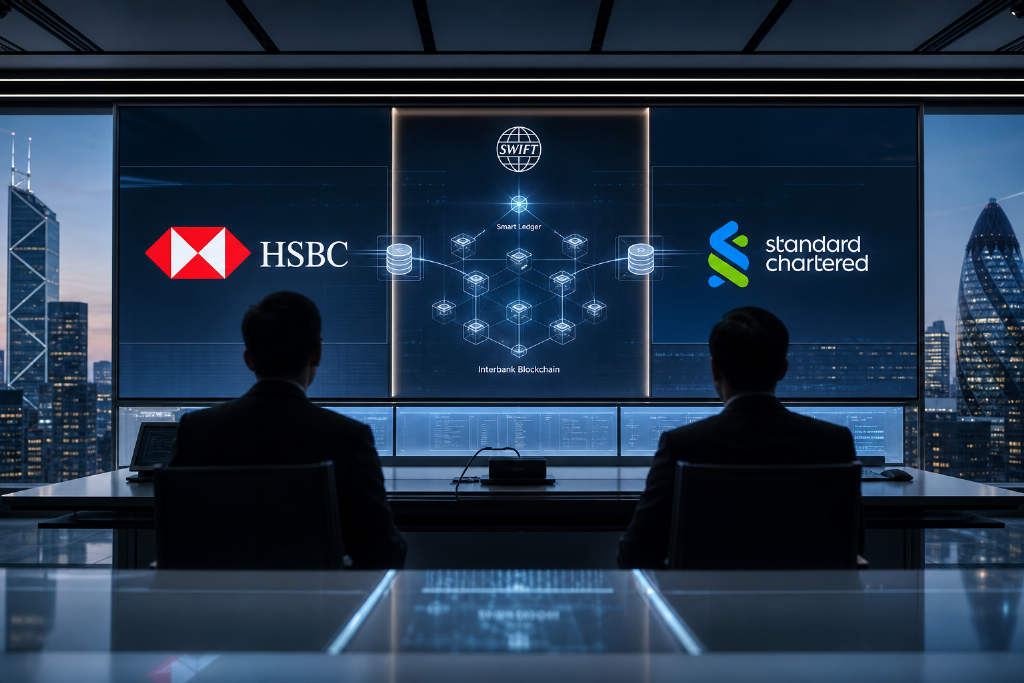
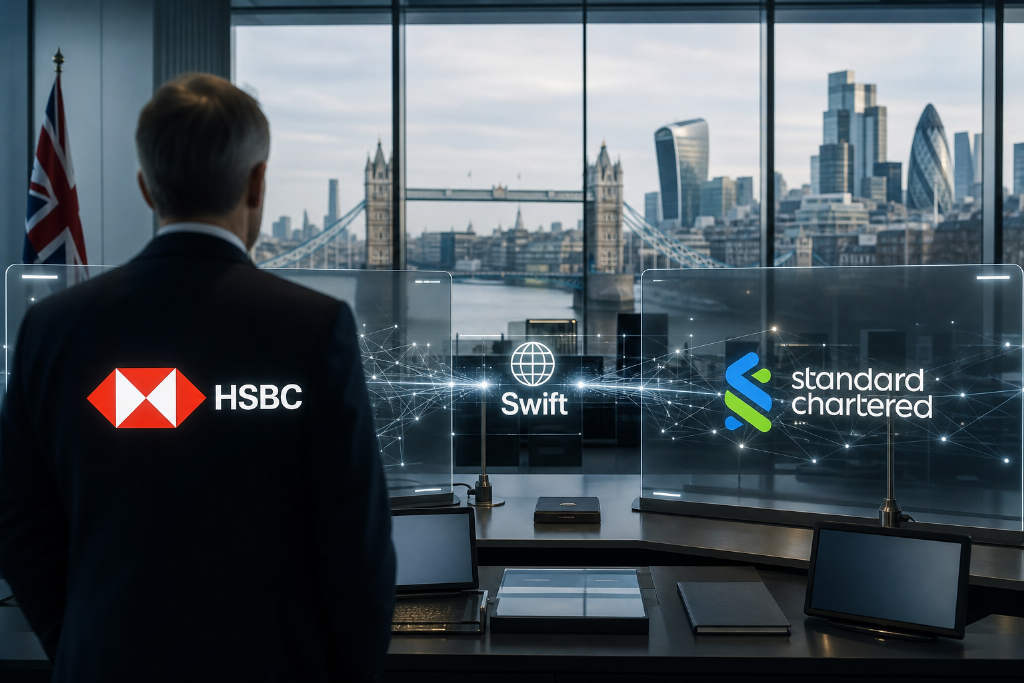
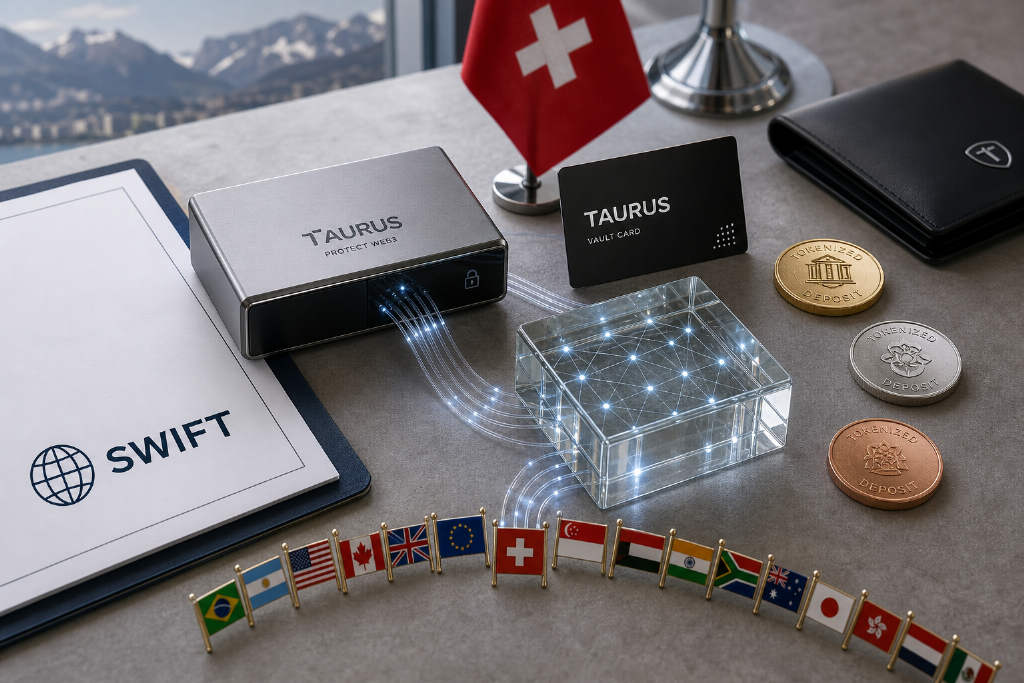
Taurus, a digital asset infrastructure provider, has connected its tokenization and custody platforms to Swift’s blockchain-based ledger, opening a path for clients to plug existing digital asset systems into payment flows built on bank-issued tokenized deposits. The company said the first institutional client integrations are expected to go live within days, while the first distributed ledger technology, or DLT, transactions routed through Taurus platforms are expected within weeks. Swift said in July that the ledger was ready for initial use, with 17 banks across six continents preparing live pilots using tokenized deposits. Since then, Standard Chartered and HSBC have completed the ledger’s first live cross-border transaction, linking their separate tokenized deposit systems. Swift’s ledger is designed as an orchestration layer for 24/7 cross-border payments, coordinating transfers between institutions before final settlement takes place through existing mechanisms such as real-time gross settlement systems.

1670
Taurus links digital asset platforms to Swift’s blockchain ledger as first client go-lives near
Policy and Regulation
Aug 26, 2026

Dallas Fed says tokenized deposits could weaken bank funding and reduce lending capacity

A report released Tuesday by the Federal Reserve Bank of Dallas says tokenized deposits may improve payment speed while also making bank funding less stable. The paper looks at how broader use of tokenized deposits could affect liquidity and banks’ ability to perform maturity transformation, or use on-demand deposits to fund longer-term loans. According to the report, a 10% increase in deposit-rate sensitivity could reduce banks’ capacity to bear interest-rate risk by about $700 billion on a 10-year-equivalent basis. In a separate estimate, a 10% decline in the weighted average life of deposits could cut the banking system’s maturity-transformation capacity by $580 billion. The report distinguishes tokenized deposits from stablecoins such as USDT and USDC, noting that tokenized deposits are regulated and can pay interest, but warns that instant settlement, smart contracts, and agentic AI could make it easier for customers to move funds in search of better yields. It also points to recent industry activity from Custodia, Vantage, Barclays, BMO, CME Group, Google Cloud, and Swift.

1580
Dallas Fed says tokenized deposits could weaken bank funding and reduce lending capacity
HSBC
Aug 19, 2026

HSBC and Standard Chartered complete first cross-border interbank tokenized deposit transaction

HSBC and Standard Chartered said they have completed what they described as the world’s first cross-border interbank transaction involving tokenized deposits on a blockchain ledger operated by SWIFT. The transaction used SWIFT’s newly built blockchain infrastructure to record and settle bank-issued tokenized deposits. It also included netting of obligations before final settlement. SWIFT, which operates the global messaging network used for international bank payment instructions, said the blockchain ledger supported interbank tokenized transactions in this case. The announcement points to another live use case for tokenized bank liabilities within existing cross-border financial infrastructure.

1940
HSBC and Standard Chartered complete first cross-border interbank tokenized deposit transaction
HSBC
Aug 19, 2026

HSBC and Standard Chartered complete first live interbank tokenized-deposit transaction on Swift ledger

HSBC and Standard Chartered have completed the first live cross-border bank-to-bank tokenized-deposit transaction on Swift’s blockchain-based ledger, moving the system from initial readiness to its first interbank use. The banks exchanged payment messages through the shared ledger and recorded the resulting obligations on HSBC’s Tokenised Deposit Service and Standard Chartered’s tokenized-deposit infrastructure. Swift then matched and netted those obligations, while final settlement was completed through existing systems. The setup is designed to let separate bank-issued tokenized-deposit platforms work together rather than forcing participants onto a single infrastructure. Swift and the two banks said the model could help corporate and institutional clients move liquidity across institutions outside conventional operating hours. The announcement did not disclose the size of the payment, the currencies involved, or the geographic corridor, and it did not say whether the transfer was routine production activity or a controlled live transaction. The deal follows Swift’s July update that its ledger was ready for initial use, with 17 banks across six continents preparing to pilot live transactions.

1180
HSBC and Standard Chartered complete first live interbank tokenized-deposit transaction on Swift ledger
Claude
Aug 9, 2026

Engineer uses Claude-built Bluetooth tracker to recover phone after MDM disabled Find My

Engineer Ben Zhang said he spent 30 minutes searching his office for a missing phone before turning to Anthropic’s Claude for help. With Apple’s Find My disabled by MDM, Claude suggested a different route: track the phone through Bluetooth signal strength and write a small utility for the job. According to Zhang, the AI produced the meter in about a minute, and he then walked around the office watching the readings rise until he found the device. Zhang later published the tool, called findphone, on GitHub. The utility is written in Swift, runs on macOS 13 or later, and reads RSSI, or received signal strength indicator, from nearby Bluetooth devices. It can also add a radar-like sound cue through a sound flag and hide Bluetooth addresses with a redact flag for screen recordings. The report notes that RSSI is not a substitute for GPS: accuracy is typically around 2 to 5 meters and can worsen in environments with metal, glass, or water, where reflection and diffraction affect readings. Even so, the episode shows how AI can cut the cost of building one-off software for narrow personal problems.

2850
Engineer uses Claude-built Bluetooth tracker to recover phone after MDM disabled Find My
Yellow Card
Aug 5, 2026

Yellow Card Raises $40M Strategic Round as Cumulative Funding Passes $120M

Stablecoin payments platform Yellow Card has completed a strategic equity round of $40 million, pushing its cumulative funding past the $120 million mark. The capital will back an expansion plan that includes scaling the Global USD Accounts product and adding stablecoin and local payment options across Latin America and the Asia-Pacific region. Four investors participated in the round: SC Ventures, Sony Innovation Fund, Polychain Capital, and Blockchain Capital. Yellow Card is also working with commercial banks worldwide to handle cross-border dollar transfers on stablecoin rails, positioning the setup as an alternative to the traditional Swift system. Its enterprise offering lets clients hold U.S. dollars, convert them into stablecoins, and send or receive local currency through local payment rails. The platform operates in more than 50 countries. CoinDesk reported the financing news.

1250
Yellow Card Raises $40M Strategic Round as Cumulative Funding Passes $120M
OKX
Jul 31, 2026

OKX rolls out tokenized U.S. stocks and details SWIFT dollar deposits

OKX launched its tokenized U.S. stock feature on July 15, 2026, giving users a way to trade stock- and ETF-linked instruments with USDT on a 24/7 basis without going through a traditional broker. In a guide published by ABMedia, the exchange’s product is described as Unified Tokenized Stocks, with instruments named by adding an “X” before the ticker, such as XAAPL, XTSLA, and XNVDA. The report says the product is supported by xStocks, a tokenized securities platform led by Kraken. The guide draws a clear line between tokenized stocks and conventional equities. Users get price exposure rather than actual ownership, which means no shareholder rights such as voting or meeting eligibility. It also compares trading hours, minimum investment thresholds, settlement time, dividend handling, and access to automation tools like grid and dollar-cost averaging bots. ABMedia also lays out the operational requirements for funding an OKX account through a SWIFT wire in U.S. dollars. Those include migrating the account entity to OKX Bahamas, clearing assets and orders across main and sub-accounts, completing KYC again, and observing transfer limits of $100 to $1,000,000 per transaction. The article then walks through the deposit flow, estimated processing time of about five business days, and the steps for placing a first tokenized stock trade inside the OKX app.

3450
OKX rolls out tokenized U.S. stocks and details SWIFT dollar deposits
DTCC
Jul 27, 2026

Crypto shifts from challenging Wall Street to rebuilding its settlement rails

A major change is taking shape in global finance: legacy institutions are starting to use crypto infrastructure not as a consumer-facing replacement for banks and brokers, but as back-end plumbing for settlement, collateral movement and cross-border money flows. The article argues that the appeal is straightforward. Old financial rails still lock up capital for hours or days, force banks to prefund accounts across jurisdictions, and leave margin idle when markets are closed. That cost is no longer trivial. DTCC, which processed $4.7 quadrillion in securities settlement last year, has now turned on blockchain technology for related transactions and on July 15 completed its first live trades in tokenized securities, including tokenized equities, U.S. Treasuries and ETFs. JPMorgan tokenized Invesco QQQ Trust and posted it as collateral to CME, while more than 30 institutions including Goldman Sachs, BlackRock, Vanguard and the New York Stock Exchange took part in the test. The same pattern is spreading elsewhere. SWIFT is preparing a tokenized deposit pilot with 17 banks from six continents. Visa has launched a platform for banks to issue, move and redeem stablecoins inside existing treasury systems. Mastercard is expanding regulated stablecoin settlement options across multiple chains. In this model, crypto firms such as Chainlink, Digital Asset, Fireblocks, BitGo, Circle, Ondo and Securitize are no longer positioning themselves as Wall Street’s replacements. They are becoming its infrastructure vendors.

2780
Crypto shifts from challenging Wall Street to rebuilding its settlement rails
Total 98 items
Go topage