Powertech
Sep 16, 2026

Powertech to invest $400 million in Broadcom JV in Singapore and spend up to NT$3.5 billion on share buybacks

Powertech Technology has approved two major capital moves at the same board meeting on Aug. 7, according to ABMedia: a $400 million investment tied to a joint venture with Broadcom in Singapore, and a treasury-share buyback program worth up to NT$3.5 billion. Under the buyback plan, the chip packaging and testing company aims to repurchase 10,000 lots of shares between Aug. 10 and Sept. 30 at a price range of NT$250 to NT$350. As of Sept. 15, it had already bought back 7,952 lots, or nearly 80% of the target. The report said the shares are intended solely for employee transfers, with the transfer price set no lower than the company’s average repurchase price. Powertech approved the plan as it moves into a new expansion phase tied to advanced panel-level packaging. The company also approved the formation of XCIP TECHNOLOGIES PTE. LTD. in Singapore with Broadcom, with Powertech taking a 30% stake. ABMedia said investor concerns have centered on whether the overseas investment and buyback could strain cash flow. The report cited company disclosures showing that funding for the Singapore venture can be injected in stages. It also pointed to first-half EPS of NT$5.5, August consolidated revenue of NT$8.56 billion, NT$17.6 billion in cash and cash equivalents at the end of the second quarter, and working capital of NT$22.7 billion.

2940
Powertech to invest $400 million in Broadcom JV in Singapore and spend up to NT$3.5 billion on share buybacks
YMTC
Sep 15, 2026

YMTC files for STAR Market IPO as China’s NAND challenger climbs into the global top three

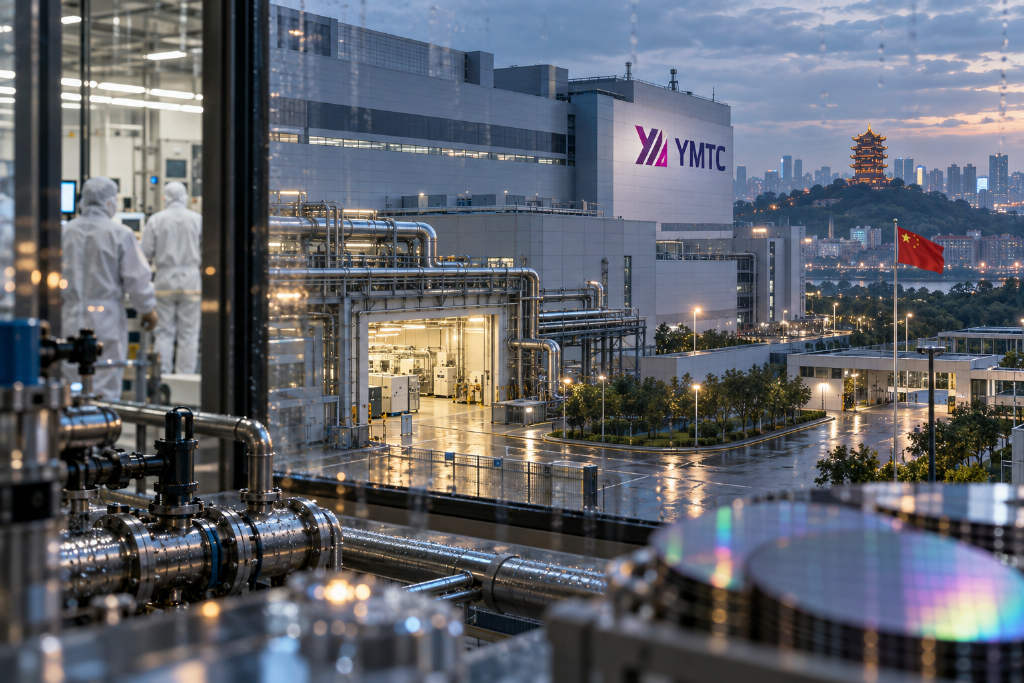
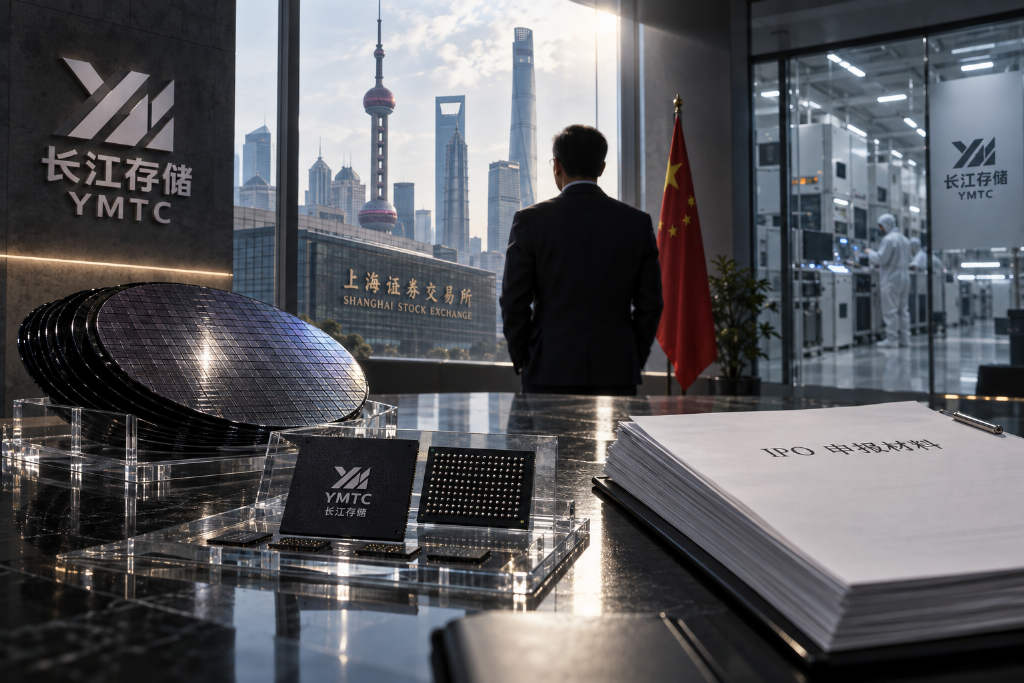
Yangtze Memory Technologies Co. (YMTC) has entered the next phase of its capital markets push after its STAR Market initial public offering was formally accepted on Aug. 21, with a planned fundraising target of 33 billion yuan. The filing, described in the source article as the largest IPO ever accepted by Shanghai’s STAR Market, moved into the exchange inquiry stage after nine trading days. The company’s listing effort comes as China’s two major memory chip players, CXMT in DRAM and YMTC in NAND, are increasingly seen as reshaping the global memory industry from different product tracks rather than competing head-on. The article traces YMTC’s path from its 2016 founding in Wuhan, through the launch of its Xtacking architecture and its rise from 64-layer to 200-plus-layer 3D NAND, to a period marked by Apple’s shelved sourcing plan, U.S. export controls, and the financial collapse of major shareholder Tsinghua Unigroup. It also details the company’s later supply-chain rebuilding, including a reported 2025 jump in domestic semiconductor equipment procurement above 50%, and cites prospectus data showing YMTC returned to profitability in 2024. Counterpoint Research’s latest report, as cited in the article, says the company has already moved into the world’s top three by NAND shipment share, behind only Samsung and SK hynix.

1920
YMTC files for STAR Market IPO as China’s NAND challenger climbs into the global top three
Nuclei System Technology
Sep 15, 2026

Shanghai RISC-V CPU Firm Nuclei System Technology Starts A-Share IPO Process, Xiaomi Fund Holds 6.12%

Shanghai-based RISC-V CPU company Nuclei System Technology has begun the A-share IPO process after filing for listing guidance registration with the Shanghai office of the China Securities Regulatory Commission on Sept. 11, according to a Sept. 14 report by Xindongxi. China Merchants Securities is serving as the tutoring institution for the listing process. Founded in September 2018, the company has registered capital of RMB 5.0937 million, no controlling shareholder, and is led by founder, chairman and general manager Hu Zhenbo. Nuclei System Technology has already been listed on the National Equities Exchange and Quotations, also known as the New Third Board. It was named a national-level specialized and sophisticated "Little Giant" enterprise in July 2023 and a national key "Little Giant" enterprise in December 2024. Its interim report shows 2026 first-half revenue of RMB 36.8745 million, up 41.09% year over year. RISC-V IP licensing revenue reached RMB 34.0062 million, accounting for 92.22% of total revenue and rising 41.52% from a year earlier. Net loss widened to RMB 57.3016 million, while R&D spending climbed to RMB 57.3041 million. Xiaomi Group-backed Xiaomi Yangtze River Fund is the company’s fifth-largest shareholder with a 6.12% stake.

2080
Shanghai RISC-V CPU Firm Nuclei System Technology Starts A-Share IPO Process, Xiaomi Fund Holds 6.12%
YMTC
Sep 15, 2026

YMTC starts equipment hook-up at Wuhan FAB3, with initial production expected by year-end

YMTC, China’s largest NAND flash maker, has started connecting production equipment at its third plant in Wuhan, known as FAB3, according to a Sept. 15 report by ETNews cited by ChainCatcher. The report said initial production at the site is increasingly in view for the end of the year. China Electronics System Engineering No. 2 Construction Co. recently selected a contractor for the "Gas Section 3" portion of the "Wuhan YMTC FAB3 Secondary Piping A Section B Package Process Equipment Piping EPC Project." That work will connect the plant’s already built utility networks, including gas and water supply systems, to manufacturing equipment. Tender requirements called for prior construction experience on YMTC or CXMT-related projects, or on semiconductor fabs of a similar 12-inch scale. The report added that Wuhan FAB3 is expected to begin early-stage production by the end of this year and reach output equivalent to 100,000 12-inch wafers per month when fully ramped. Counterpoint Research said YMTC held a 14% share of global NAND bit shipments in the second quarter, ranking third behind Samsung Electronics at 25% and SK hynix at 22%.

2550
YMTC starts equipment hook-up at Wuhan FAB3, with initial production expected by year-end
MediaTek
Sep 15, 2026

MediaTek unveils Dimensity 9600 Pro with TSMC 2nm process and higher benchmark scores

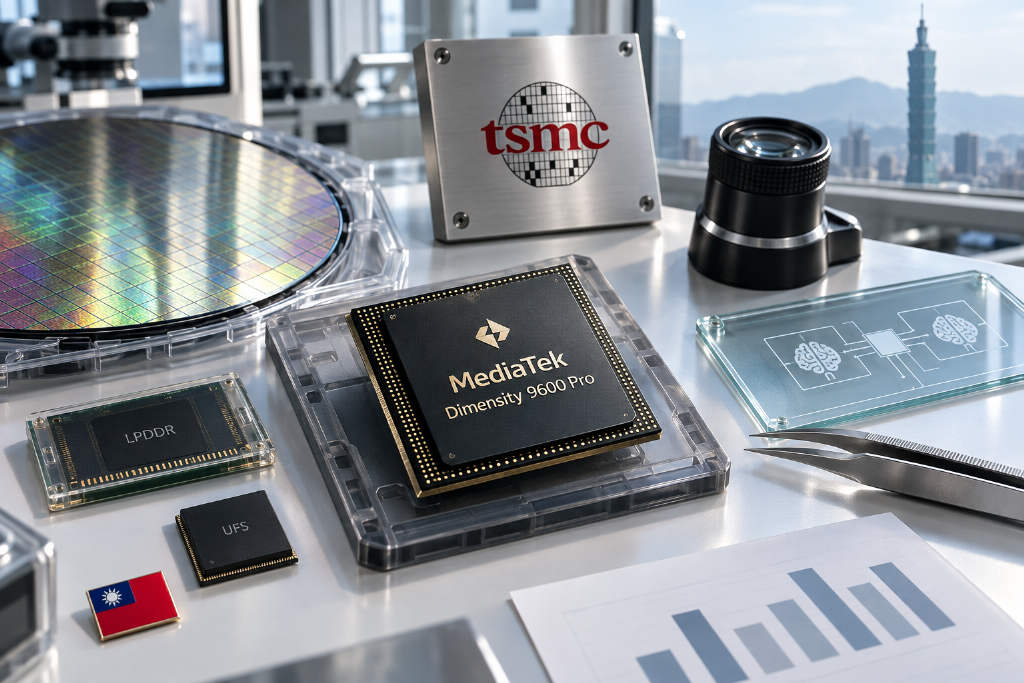
MediaTek on Sept. 15 introduced its next-generation flagship mobile chip, the Dimensity 9600 Pro, at its 2026 Dimensity flagship product launch event. According to the company, the chip is built on TSMC’s 2nm process and packs more than 33 billion transistors. It uses what MediaTek described as a fused computing architecture that integrates heterogeneous compute blocks including the CPU, GPU, NPU and ISP, with AI positioned as the core engine. The Dimensity 9600 Pro adopts an all-big-core CPU design, featuring two C2-Ultra cores clocked at 4.55GHz, three C2-Pro cores at 4.35GHz and three C2-Pro cores at 3.1GHz. It also comes with 34.5MB of combined L2, L3 and system cache, while supporting LPDDR6 memory and UFS 5.0 storage. MediaTek said power consumption for the prime core is down 37% versus the Dimensity 9500, while multi-core power consumption fell 61%. In GeekBench V6.4, the chip posted 4,276 in single-core and 12,650 in multi-core scores, representing gains of about 17% and 15%, respectively, from the Dimensity 9500. On the AI side, the chip uses a dual-NPU setup with the APU 1090, which MediaTek said lifts peak performance by 51%. The company also said it has ranked No. 1 globally in smartphone SoC market share for six consecutive years.

890
MediaTek unveils Dimensity 9600 Pro with TSMC 2nm process and higher benchmark scores
Jensen Huang
Sep 15, 2026

Jensen Huang says China could develop advanced lithography systems by 2030

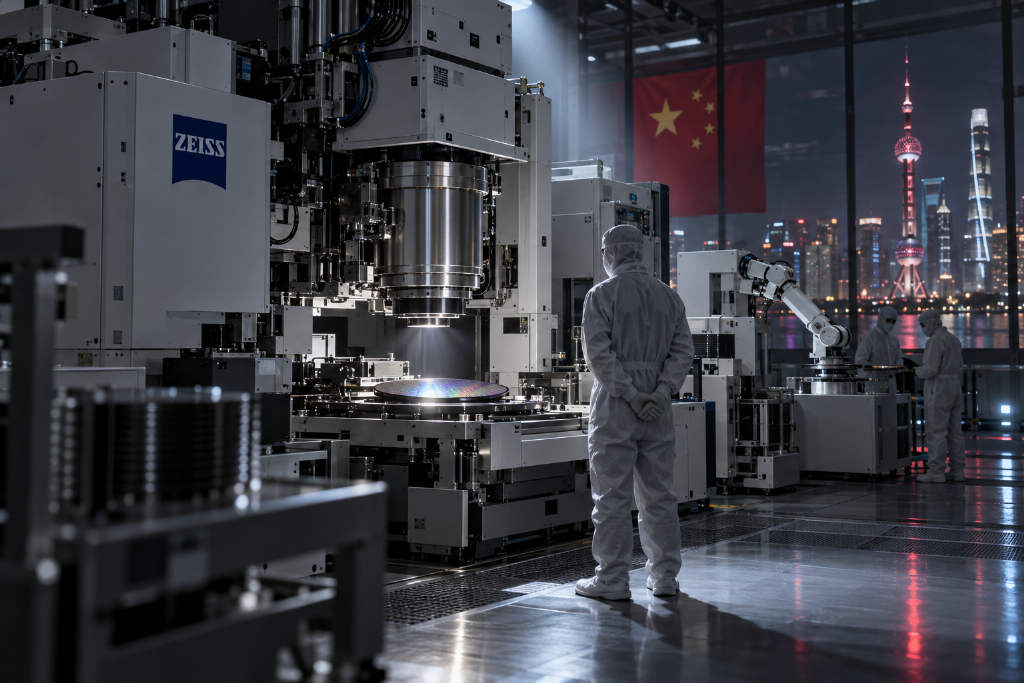
NVIDIA CEO Jensen Huang said at the All-In Summit that China could build its own advanced lithography systems by 2030. He also said that once the technology is mature, China has strong large-scale manufacturing capacity, making it only a matter of time before domestically made equipment enters local wafer fabs. His view was more optimistic than a recent estimate from Carl Zeiss SMT executive Frank Rohmund, who said China may still need about 15 years to develop a domestic EUV lithography machine. Zeiss is a core supplier of optical systems for ASML’s EUV tools. The distinction matters, though: the host’s question referred to “advanced lithography systems” and did not specifically limit the discussion to EUV, and Huang did not clarify that he was talking about EUV in his reply.

1580
Jensen Huang says China could develop advanced lithography systems by 2030
Micron
Sep 14, 2026

Micron unveils record FY2026 employee awards as Taiwan union pushes for 15% profit-sharing model

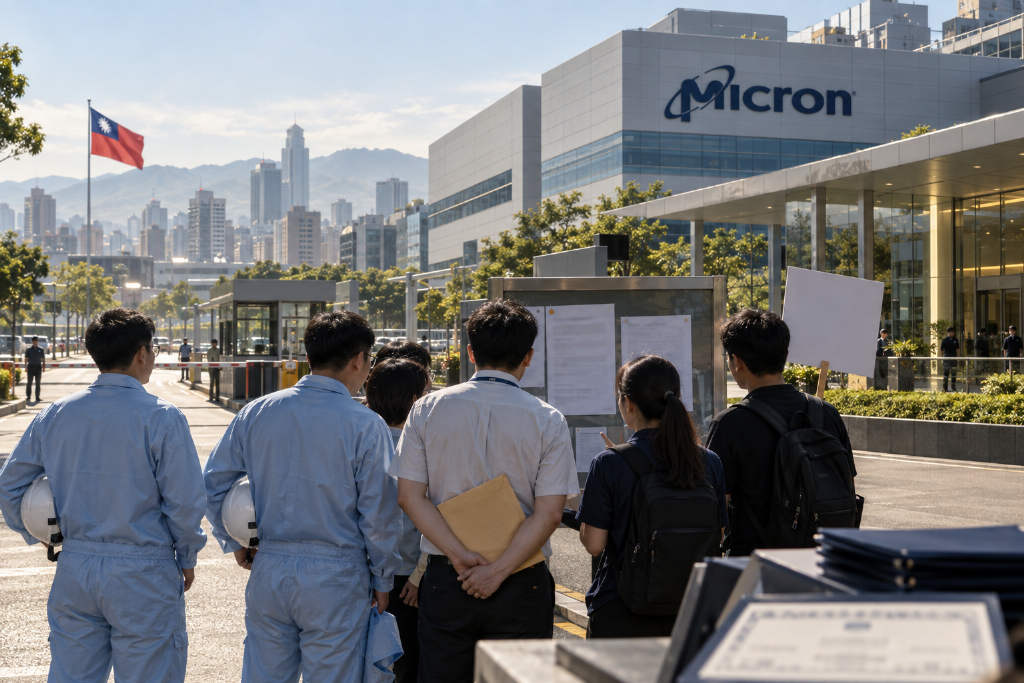
Micron said it will grant fiscal 2026 compensation awards to more than 60,000 employees worldwide, describing the package as the largest in the company’s history. Taiwan, one of Micron’s key technology hubs with about 15,000 employees and cumulative investment of more than NT$1.6 trillion, is a major part of the plan. For Taiwan staff, the package includes a NT$1 million cash appreciation bonus for employees who joined on or before Aug. 29, 2025, with later hires receiving a prorated amount based on tenure. The company also outlined an annual performance bonus of up to 500% of base target and additional stock awards. Micron said production-line employees in Taiwan will receive total compensation equivalent to 35 to 68 months of salary. Micron added that fiscal 2026 cash compensation for Taiwan employees will start from NT$1.7 million. Entry-level engineers will receive average cash compensation of NT$2.9 million, rising to average total compensation of NT$3.4 million when stock awards, calculated by grant value, are included. The company also said annual performance-based pay raises and stock awards will reach 100% coverage. After Micron released the announcement before reaching consensus with the union, the union called for reform of the IPP bonus system and demanded a 15% profit-sharing mechanism tied directly to the company’s actual profits. Taiwan’s labor authorities said they have fully grasped the situation and remain in close contact with local governments and the Central Taiwan Science Park Administration.

1420
Micron unveils record FY2026 employee awards as Taiwan union pushes for 15% profit-sharing model
SK Hynix
Sep 14, 2026

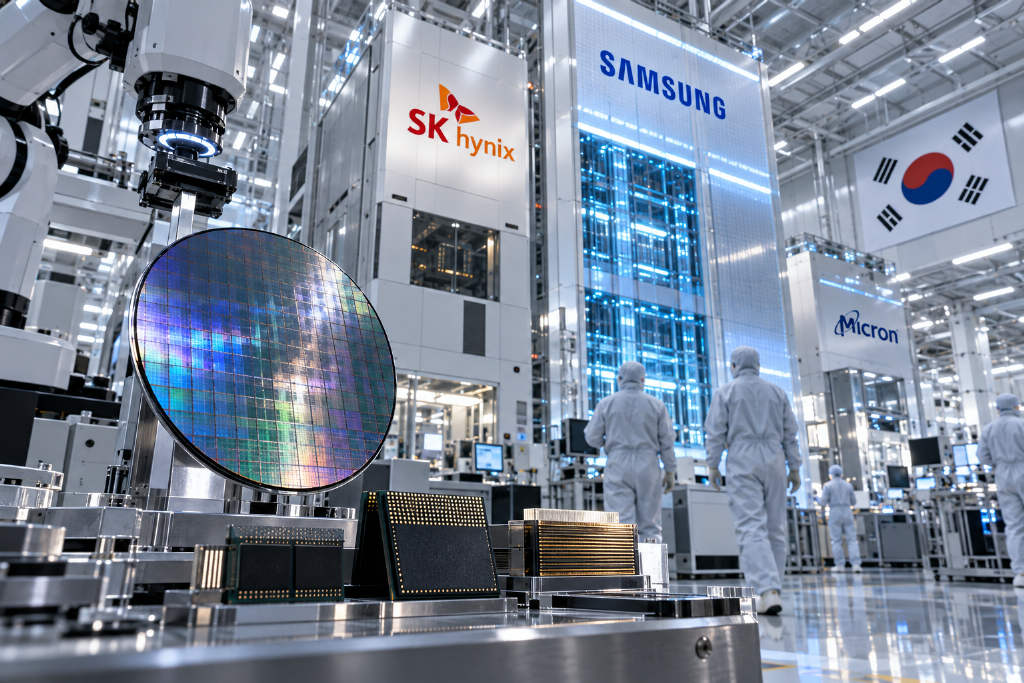
TrendForce says SK Hynix DRAM share fell to 24.9% in Q2

TrendForce data released on Sept. 14 showed that SK Hynix posted strong second-quarter DRAM revenue growth even as its share of the market declined. The company’s DRAM revenue rose 37.9% from the previous quarter to $38.59 billion, but its market share fell 3.9 percentage points from 28.8% to 24.9%. The report said the decline was not due to weak DRAM sales. Instead, it was tied to an outsized mix of high-bandwidth memory, or HBM, in SK Hynix’s product portfolio, along with a production gap versus Samsung Electronics. Samsung remained the market leader with a 39.4% share, while Micron Technology narrowed the gap with SK Hynix to 1.6 percentage points, reaching 23.3%. The item was cited by BlockBeats and attributed to Semiconductor Industry Watch.

1420
TrendForce says SK Hynix DRAM share fell to 24.9% in Q2
Total 197 items
Go topage