Li Auto
Sep 22, 2026

Li Auto chip unit seeks first outside funding at roughly 15 billion yuan pre-money valuation

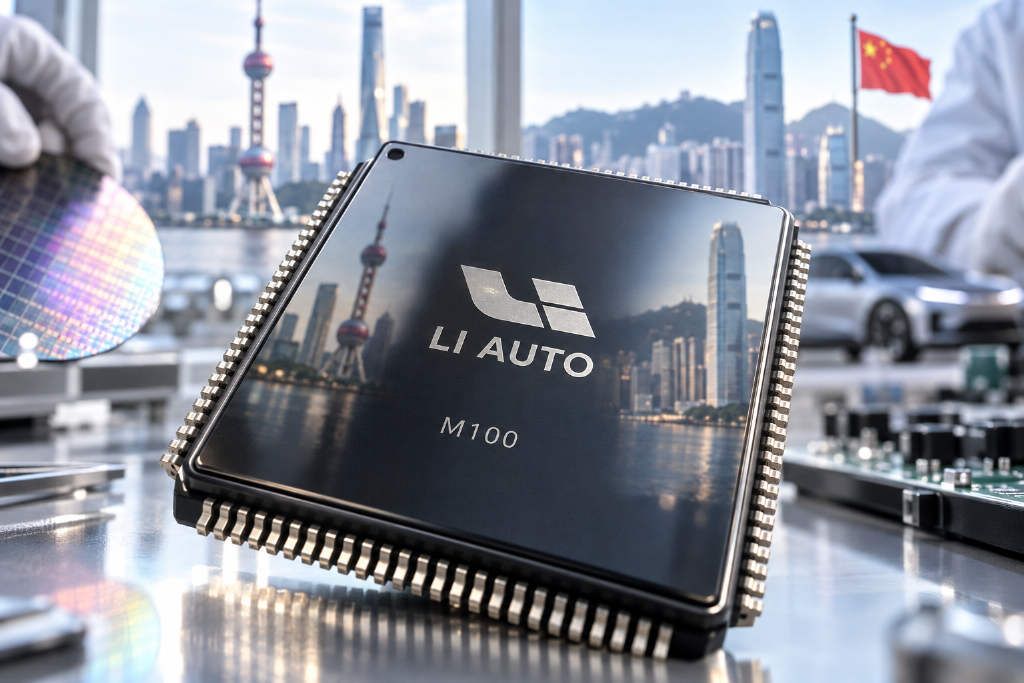
Li Auto’s chip subsidiary is moving ahead with its first external fundraising round, according to an exclusive report by LatePost Auto. The unit is said to be seeking tens of billions of yuan at a pre-money valuation of about 15 billion yuan. Corporate registration records show that Mach Intelligent Cores Limited was established in Hong Kong on July 14, and on August 4 it wholly set up Shanghai Mach Zhixin Intelligent Technology Co., Ltd., with Li Auto CTO Xie Yan listed as legal representative. Days later, it also wholly established Shanghai Mahe Xin Technology Co., Ltd., whose legal representative is Li Auto co-company secretary Wang Yang. The report said Li Auto’s in-house chip team has about 200 employees focused on AI computing architecture, chip design, and related software development. The company is working on both vehicle-side and cloud-side chip programs. Its first self-developed chip, Mach M100, has already entered mass production and is being used in several new or refreshed models launched this year. A cloud inference chip using the same dataflow architecture is also under development. The report added that domestic semiconductor financing reached about 162.7 billion yuan in the first half of the year, with AI computing among the main destinations for capital.
960
Li Auto chip unit seeks first outside funding at roughly 15 billion yuan pre-money valuation
CXMT
Sep 21, 2026

CXMT Seen Reaching Near-Micron DRAM Output by End of 2026

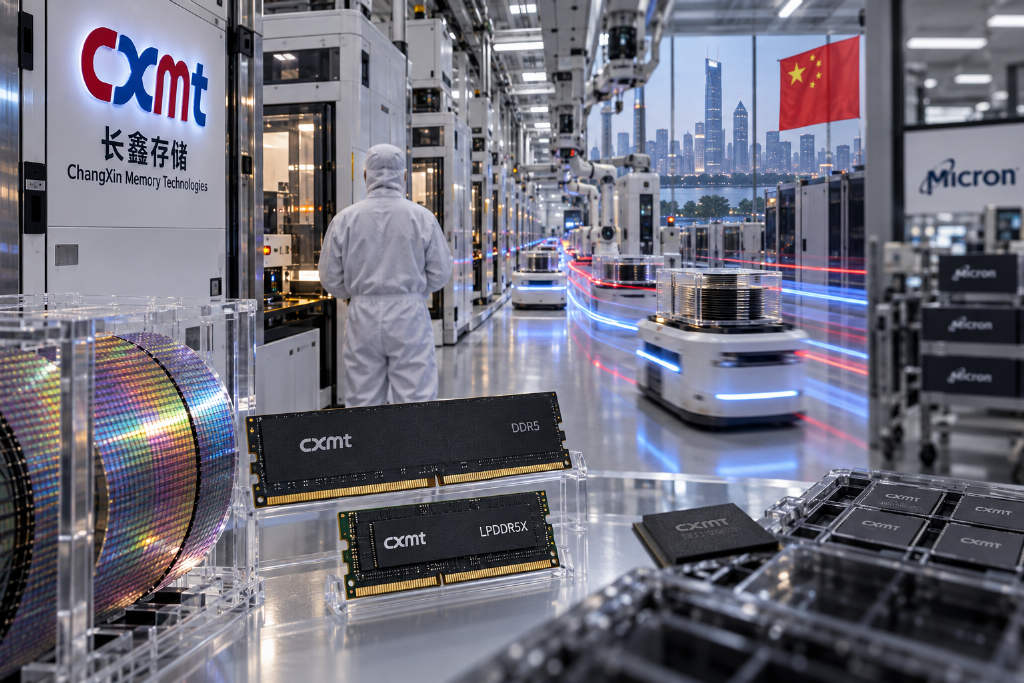
Chinese DRAM maker ChangXin Memory Technologies, or CXMT, is expected to reach monthly DRAM wafer capacity of about 350,000 units by the end of 2026, according to a report cited by TechPowerUp. The same report put Micron’s projected capacity for that period at roughly 375,000 wafers per month, placing CXMT close to one of the largest global memory suppliers in output terms. TechPowerUp said CXMT has been building cleanrooms in about 12 months, compared with an industry norm of 21 to 24 months. Because U.S. sanctions have blocked the company from obtaining EUV tools, it has relied on older DUV lithography and multi-patterning techniques instead. On products, CXMT has started shipping 16 Gb DDR5 chips rated at 8000 MT/s. The chips are reported to have a die size of 67 mm² and a density of 0.239 Gb/mm², while the G4 cell is 20% smaller than G3. The report also said 24 Gb modules are in mass production at about 6000 MT/s, and LPDDR5X-10667 modules in 12 Gb and 16 Gb versions have also entered mass production. It added that the Chinese government is encouraging CXMT to transfer DRAM IP to domestic manufacturers including JHICC, Swaysure, and XMC, a subsidiary of YMTC.

1380
CXMT Seen Reaching Near-Micron DRAM Output by End of 2026
TSMC
Sep 21, 2026

Kaohsiung’s Baipu semiconductor park breaks ground as TSMC plans advanced packaging validation site

Construction on Kaohsiung’s Baipu Industrial Park began on Sept. 21, with the project positioned as a new node in southern Taiwan’s semiconductor supply chain. The park spans 88.73 hectares across Gangshan and Qiaotou, and about 25 hectares have been reserved for equipment makers and suppliers tied to advanced back-end semiconductor processes. Taiwan Semiconductor Manufacturing Co. (TSMC) plans to build two buildings there and set up a validation line so equipment and materials can complete integration testing before entering mass-production fabs. According to the report, this is the first time TSMC has placed an advanced packaging equipment validation platform outside its production system. The company will use a modular “mini-loop” process verification line, along with scaled-down cleanrooms and labs, to shorten testing cycles that currently can take more than a year. Kaohsiung city officials estimate the park could generate about NT$300 billion in annual output and create roughly 4,500 jobs once fully developed. The first batch of tenant signings, TSMC’s construction progress, and unresolved transport links are now among the main issues being watched by the industry.

1200
Kaohsiung’s Baipu semiconductor park breaks ground as TSMC plans advanced packaging validation site
TSMC
Sep 21, 2026

TSMC speeds up Central Taiwan fab buildout for A14 process, report says

Taiwan Semiconductor Manufacturing Co. is accelerating construction of four fabs in Central Taiwan Science Park to support its 1.4-nanometer A14 process, according to a report cited by ChainCatcher from Commercial Times. As of early September 2026, work on the Phase 2 P1 plant was progressing smoothly, with completion expected in April 2027, followed by equipment move-in and trial production. The P2 plant is moving ahead in parallel and is expected to complete equipment tuning with P1 and reach readiness for mass production before the end of 2027. The report said all four 1.4 nm wafer fabs at the site are expected to be completed in the second quarter of 2028 and enter large-scale mass production. Major customers said to have reserved A14 capacity include Apple, NVIDIA, AMD, Qualcomm, MediaTek, Broadcom and cloud service providers. Monthly capacity is estimated at 120,000 to 160,000 12-inch wafers, with projected annual revenue contribution to TSMC of $45 billion to $52 billion.

1180
TSMC speeds up Central Taiwan fab buildout for A14 process, report says
CXMT
Sep 20, 2026

CXMT starts mass production on fifth-generation platform, 24GB LPDDR5X moves into volume output

Changxin Memory Technologies, or CXMT, said on Sept. 20 at the 2026 World Manufacturing Convention that its fifth-generation technology platform has officially entered mass production. The company said the platform brings the half-pitch of the active area in the memory array to 11.95 nanometers, raises the memory capacitor aspect ratio to 45:1, and lowers the height of the core dynamic area to 6,762 nanometers. CXMT also said storage density on the new process platform has increased sharply. Under the same conditions, output per wafer is more than 50% higher than on the previous-generation platform. Based on the new platform, the company’s 24GB LPDDR5X product has also entered formal mass production and is now being used across mainstream domestic flagship smartphones. The update was carried by BlockBeats, citing The Paper.

1020
CXMT starts mass production on fifth-generation platform, 24GB LPDDR5X moves into volume output
YMTC
Sep 20, 2026

YMTC’s STAR Market IPO Is Accepted After a 333.79 Billion Yuan Quarterly Profit, but the Cycle Question Remains

Yangtze Memory Technologies Co. (YMTC) has moved one step closer to a STAR Market listing after the Shanghai Stock Exchange updated its review status to "accepted." The company plans to issue 1.98 billion to 2.43 billion shares and raise 33 billion yuan, with 20.8 billion yuan earmarked for mass-production line upgrades and 12.2 billion yuan for research and development. By the proposed fundraising size, the deal is the largest IPO application ever filed on the STAR Market. The filing shows a dramatic financial turnaround. Revenue rose from 18.744 billion yuan in 2023 to 63.185 billion yuan in 2025, while attributable net profit swung from a 19.181 billion yuan loss in 2023 to a 6.771 billion yuan profit in 2024 and 14.211 billion yuan in 2025. In the first quarter of 2026 alone, YMTC posted 47.042 billion yuan in revenue and 33.379 billion yuan in net profit attributable to shareholders, more than twice its full-year 2025 profit. Still, the prospectus also lays out the tension behind those numbers: margins surged with NAND pricing, but the company remains exposed to a heavy depreciation burden, negative free cash flow in 2025, rising receivables, inventory write-down pressure, and supply-chain constraints. The filing presents YMTC as a company benefiting from an AI-driven memory upcycle while still carrying the structural risks of a capital-intensive, highly cyclical NAND business.

1940
YMTC’s STAR Market IPO Is Accepted After a 333.79 Billion Yuan Quarterly Profit, but the Cycle Question Remains
Infineon
Sep 18, 2026

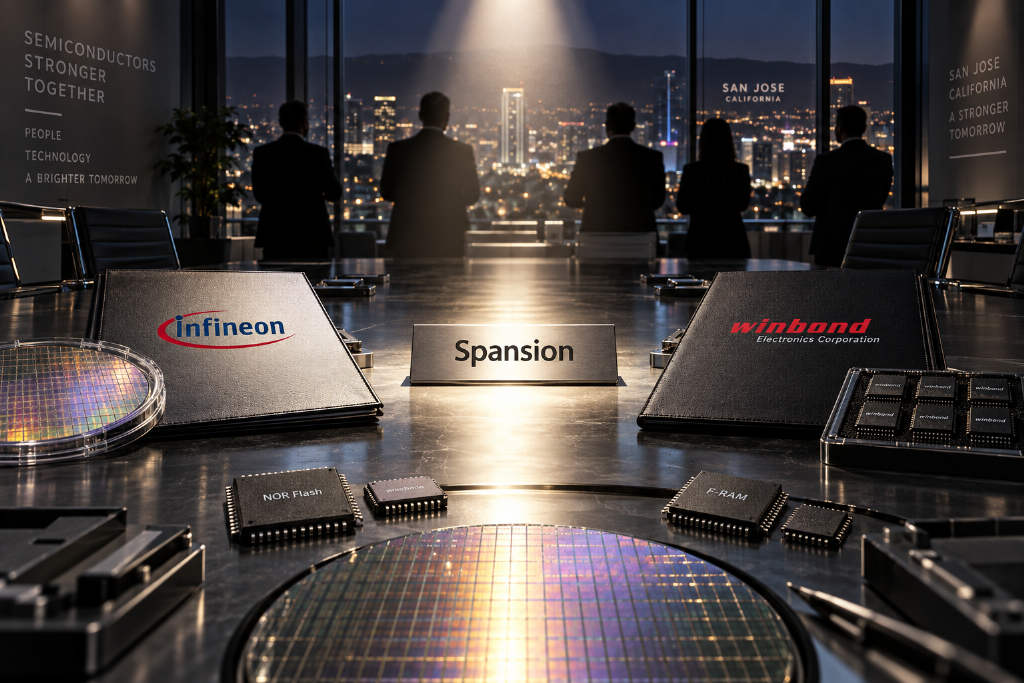
Infineon to Sell NOR Flash and F-RAM Business to Winbond for $1.12 Billion, Reviving the Spansion Name

Infineon Technologies said on Sept. 16 that it will sell its NOR Flash and F-RAM business to Winbond Electronics in a $1.12 billion deal, with closing targeted for the second half of 2027. Winbond plans to run the business as a standalone company based in San Jose, California, and bring back the Spansion brand, a name that disappeared after Spansion was folded into Cypress in 2015. The transaction does not cover Infineon’s entire memory portfolio. SRAM, HYPERRAM, nvSRAM, and radiation-hardened memory based on SONOS technology will remain with Infineon and continue serving automotive, industrial, infrastructure, aerospace, and defense markets. The report says Winbond sees strategic value in buying an established memory business with more than 30 years of experience, an existing supply chain, R&D operations, and customer relationships in sectors where qualification cycles are long. Infineon, for its part, said it will sharpen its product portfolio and capital allocation around core growth areas, as it continues to expand in automotive, power semiconductors, and AI data center power management.

1480
Infineon to Sell NOR Flash and F-RAM Business to Winbond for $1.12 Billion, Reviving the Spansion Name
SK hynix
Sep 16, 2026

SK hynix approves employee bonus plan with half cash and half treasury stock

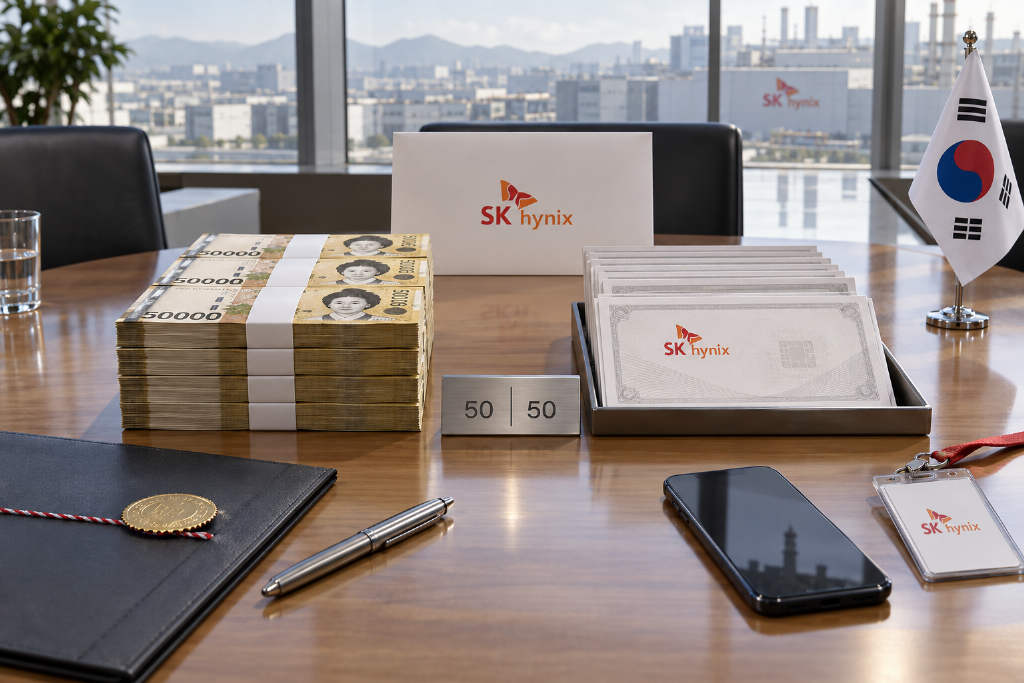
SK hynix has finalized a new employee bonus structure after its union approved the latest wage and incentive agreement on Sept. 16 with 57.08% support, according to South Korean media. The key change is the payout mix for excess profit-sharing bonuses: 50% in cash and 50% in treasury shares. An earlier proposal floated in late August, which would have split the award into 40% cash and 60% stock, was rejected after workers objected to the lower cash portion. Management later revised the package in early September, raising the cash share and giving employees more flexibility over how to receive the stock-based portion. The two sides are expected to complete the signing process before the Mid-Autumn Festival. The report added that the structure implies SK hynix will need to buy back shares equal to roughly half of the total bonus pool, aligning with the company’s recently announced treasury stock repurchase plan. The backdrop is a separate labor agreement that removed the cap on bonuses and committed 10% of annual operating profit to the employee performance bonus pool. Helped by its exclusive supply of high bandwidth memory, or HBM, to NVIDIA, SK hynix has seen its profit pool swell during the AI chip boom. Reuters calculated that average worker compensation in 2026 will reach KRW 779 million, or about $547,000.

1320
SK hynix approves employee bonus plan with half cash and half treasury stock
Total 197 items
Go topage