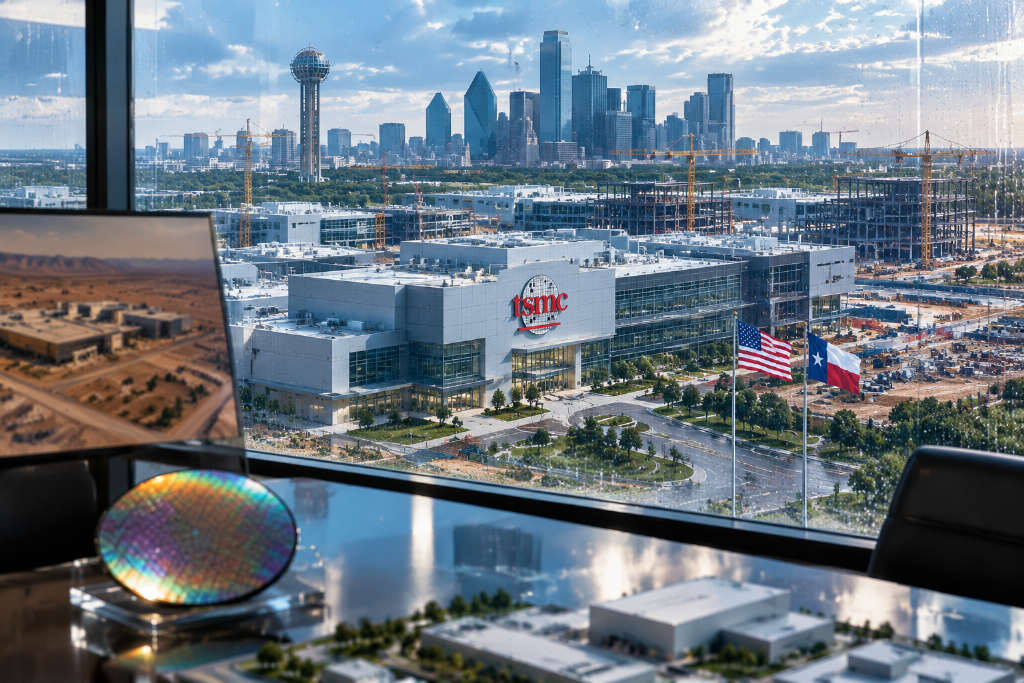
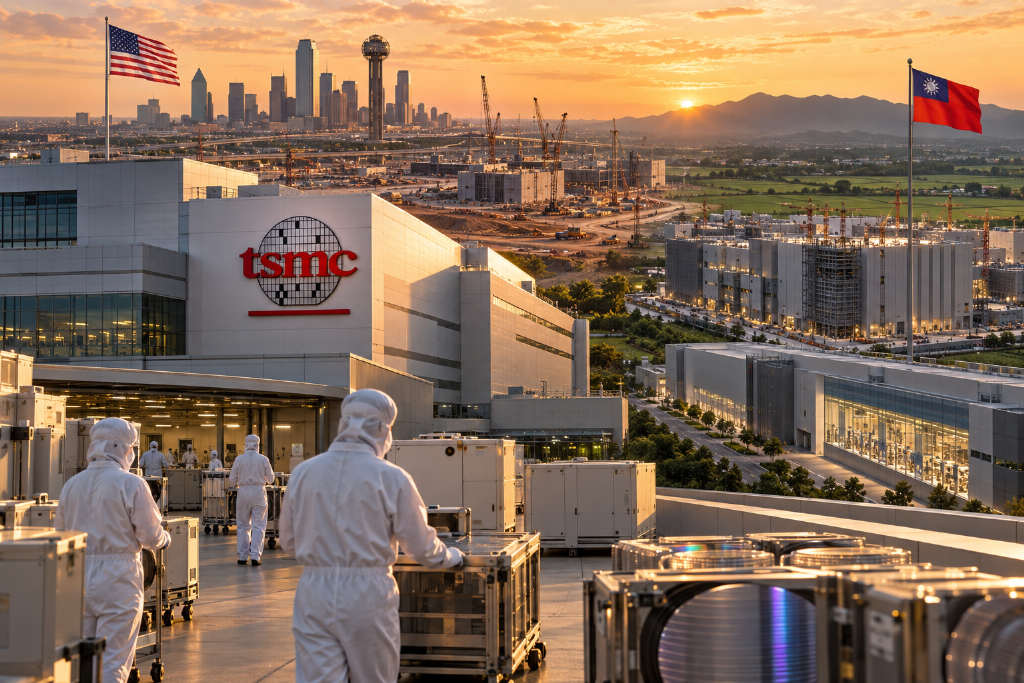
TSMC2026-09-30 09:26:06TSMC Said to Be Weighing Potential Texas Investment to Expand U.S. Chip CapacityTaiwan Semiconductor Manufacturing Co. is evaluating a potential investment in Texas to expand its chip manufacturing capacity in the United States, according to two people familiar with the matter cited in the source report. The possible move would add to the company’s previously committed $265 billion investment in Arizona, rather than replace it. The report did not disclose the size, timeline, or structure of any potential Texas project. What was described is an assessment stage tied to a broader effort to increase U.S. semiconductor production capacity. If pursued, the Texas investment would stand as an additional commitment beyond the Arizona spending already pledged by TSMC.220
MediaTek2026-09-30 03:52:08MediaTek rebounds 3% as institutions back TSMC packaging support and keep NT$7,300 targetMediaTek shares rebounded 3% on Sept. 30 after dropping nearly 7% a day earlier, as institutional investors maintained a bullish stance and cited Taiwan Semiconductor Manufacturing Co. support on advanced packaging as a key offset to market concerns. According to ABMedia, the sell-off on Sept. 29 was driven by a wave of market rumors tied to MediaTek’s Google TPU program, including claims of repeated tape-out failures, chip performance falling short of Google’s requirements, the absence of 448G SerDes IP authorization, longer debugging cycles for multi-die voltage issues, and low yield rates for Intel’s EMIB advanced packaging substrate. MediaTek rejected those claims as false rumors and said its ASIC business remains on schedule. The company said its first AI accelerator ASIC is expected to enter mass production in the fourth quarter of this year, while data center-related revenue is targeted to exceed $2 billion this year, with stronger growth expected next year. The report also noted that MediaTek completed a $3.9 billion overseas convertible bond issuance last month, with NVIDIA subscribing $3.5 billion and Google also participating. Institutional commentary cited in the report said TSMC has stepped in with CoWoS-L as a second packaging source for Google’s 2nm TPUv9, code-named Humufish, which is expected to ramp in 2028. TSMC is expected to support about 500,000 units, while Intel EMIB-T would provide about 2.5 million, bringing total capacity close to MediaTek’s annual shipment target of 3 million units.250
Jentech2026-09-30 00:42:52Jentech posts NT$1.079 billion in August profit as shares hit NT$7,160 highThermal component maker Jentech (3653) reported self-filed financial results for August of year 115, posting consolidated revenue of NT$3.226 billion, up 91% from a year earlier, and net profit attributable to the parent of NT$1.079 billion, up 101%. August EPS reached NT$7.35, a 95% annual increase, while pretax profit came in at NT$1.356 billion with a pretax margin of 42%. The company’s second-quarter figures also showed solid earnings momentum. Based on CPA-reviewed results for year 115 Q2, revenue was NT$7.275 billion, up 40% year over year, with net profit attributable to the parent at NT$2.318 billion and EPS at NT$15.80, up 101%. Over the four quarters from year 114 Q3 to year 115 Q2, cumulative consolidated revenue reached NT$22.922 billion and cumulative EPS stood at NT$44.64. ABMedia said market attention has centered on demand for high-end vapor chambers tied to high-performance computing and AI chips. TSMC has also said it is bringing microchannel cooling into its advanced packaging roadmap, putting Jentech’s related technology positioning in focus. Jentech shares rose against the broader trend and reached a record NT$7,160 on Sept. 29.170
ASML2026-09-29 08:19:18ASML says Europe has almost no sales as EUV orders stretch into 2028ASML Chief Financial Officer Roger Dassen said on a recent call that the Dutch lithography company has "almost no sales" in Europe, even though it is the only supplier of extreme ultraviolet, or EUV, lithography systems. He also said the U.S. has asked whether part of ASML’s R&D could be moved there, while China and India have been extending invitations of their own. The report says ASML’s EUV machines sell for roughly $150 million to $300 million each, while next-generation High-NA tools are priced at about $400 million per unit. ASML expects to ship around 65 Low-NA EUV systems in 2026 and raised its net sales guidance for that year to €43 billion to €45 billion. The company said EUV capacity for 2027 is close to full, with output set to rise 30% to 85 units, and a meaningful number of orders already on the books for 2028. The article argues that Europe’s problem is not a lack of semiconductor companies, but a lack of domestic advanced-node logic design, foundry capacity, and customers that actually need EUV. It also points to the European Union’s €43 billion Chips Act, a 2025 special report from the European Court of Auditors calling the bloc’s 2030 production target "very unlikely," and delays or scale-backs in Intel’s projects in Germany and Ireland as signs of a wider structural gap.170
TSMC2026-09-29 08:05:45TSMC said to be weighing a second U.S. manufacturing hub in DallasTSMC is considering a broader manufacturing footprint in the United States, according to a ChainCatcher newsflash. The company is reportedly planning a second U.S. manufacturing base in Dallas, Texas, and the project could include as many as six advanced wafer fabs. The report says total investment in the new fabs may exceed the $265 billion TSMC has already committed to its Arizona campus. TSMC has not issued an official response to the report so far. The update was published as a brief 7x24 market news item and did not include further details on timeline, construction phases, or the source of the planning information. Based on the information provided, the report frames the Dallas project as a possible expansion of TSMC’s U.S. production layout rather than a confirmed final decision.140
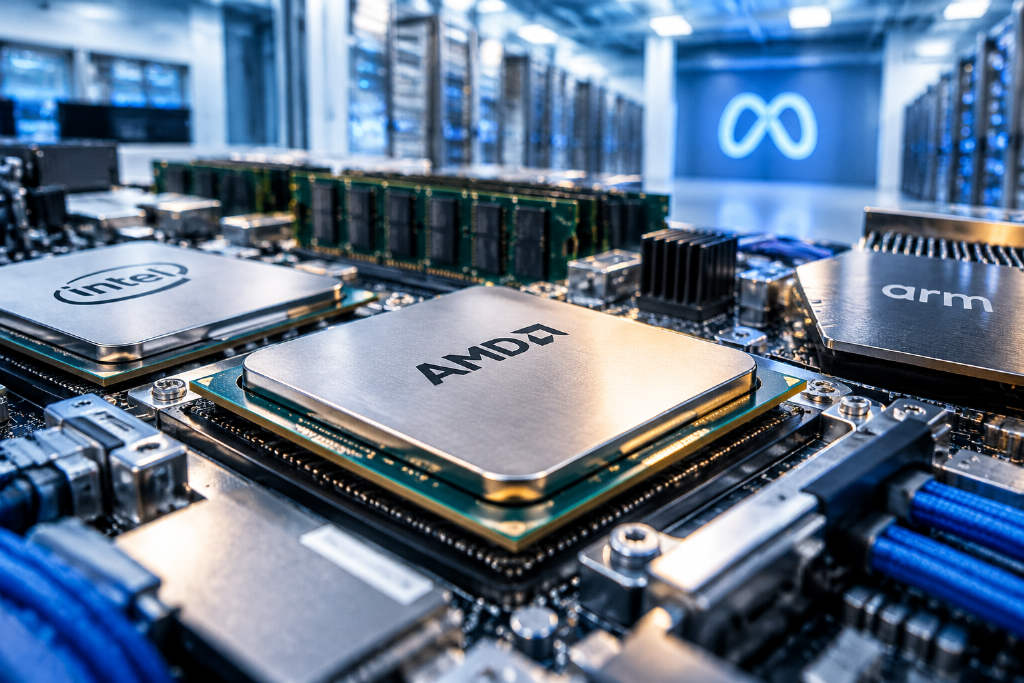
Meta2026-09-29 05:23:19Meta Muse pushes server CPU demand higher as lead times stretch to 30 weeksMeta’s AI agent Muse is shifting part of the market’s attention from GPUs to CPUs, according to a TrendForce weekly report cited by ABMedia. The report said server CPU lead times have extended from a healthy 16 to 20 weeks to 25 to 30 weeks, while DRAM lead times remain at 20 weeks versus an 8-week healthy baseline. Discussion around tighter supply and possible price increases from the fourth quarter of 2026 through the first quarter of 2027 has also intensified. TrendForce said AI agents differ from traditional request-response inference because they stay online for longer periods, retain conversational context, and carry out multi-step tasks. That architecture relies on persistent virtual machines, where CPU resources rather than GPUs sit at the center. ABMedia also noted that AMD, Intel, and Arm shares rose as the theme gained traction, with AMD reaching a $1 trillion market capitalization for the first time. The report also highlighted Micron’s upcoming September 30 earnings release, which investors are watching for margin durability, additional long-term agreements, and HBM4 shipment progress. On the manufacturing side, Qualcomm’s latest flagship chips adopted TSMC’s 2nm process, while the industry is also turning to 3D packaging as AI chips run into 2.5D density limits.210
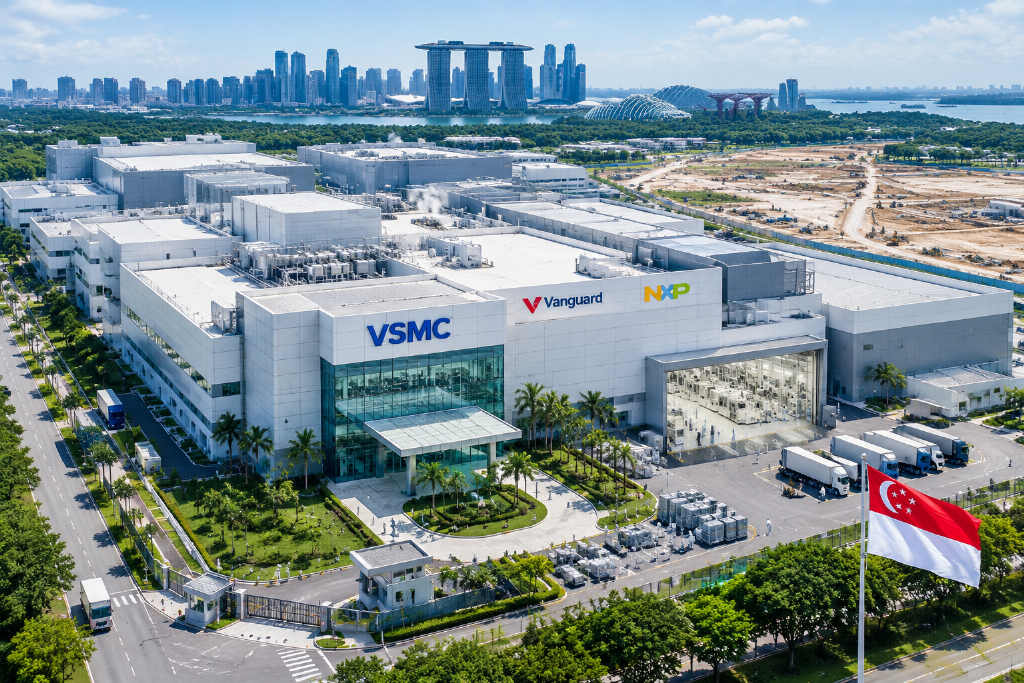
Vanguard Inte2026-09-29 03:26:16Vanguard and NXP’s Singapore fab opens fully booked as second plant moves under reviewVanguard International Semiconductor (VIS), a TSMC-backed chipmaker, and Dutch semiconductor company NXP Semiconductors have opened the first 12-inch fab of their VSMC joint venture in Singapore, with initial capacity already taken by customers. Bloomberg reported that VIS Chairman Fang Leuh is now weighing a second fab, which could use a more advanced process than the first plant. The first facility, launched on Sept. 28 in Tampines, will cover process nodes from 130 nm to 40 nm and make mixed-signal, power management, analog chips and silicon interposers. VSMC said sample wafer yields have exceeded 99%, with mass production scheduled for the first quarter of 2027. At full utilization in 2029, the fab is expected to produce about 44,000 12-inch wafers per month and create around 1,600 jobs. Fang said demand from customers has already filled the first phase, and additional silicon interposer orders have also been arranged. He said the company is collecting customer, financial and technical requirements before deciding whether to move up the timeline for a second plant. The original project plan had already left room for a second phase, but customer demand may now accelerate that decision.260
TSMC2026-09-29 02:28:07TSMC said to be weighing a second U.S. manufacturing hub and five more packaging plants in ChiayiTaiwan Semiconductor Manufacturing Co. is evaluating another major expansion in the U.S. while also considering a new round of advanced packaging capacity in Taiwan, according to supply-chain information cited in the source report. The company is said to be studying a second large manufacturing campus in the United States, with Dallas and North Texas named as possible locations and a plan that could include six advanced wafer fabs. TSMC has not officially confirmed the proposal, and details such as process nodes, capital spending and final plant configuration remain undecided. The report also said TSMC is assessing whether to add five advanced packaging plants in Phase 3 of the Chiayi Science Park expansion. If approved, that would raise the number of advanced packaging plants planned in Chiayi from five to ten. The move is tied to continuing demand for AI chips and tighter capacity in technologies such as CoWoS, which has become a critical packaging platform for integrating GPUs, CPUs, HBM and I/O chiplets. The article links both expansion tracks to the same industry shift: AI workloads are lifting demand not only for leading-edge process nodes, but also for advanced packaging, memory integration and high-speed interconnects. In the U.S., that means closer coordination with customers such as Apple, Nvidia, AMD and Qualcomm. In southern Taiwan, it means a broader supply-chain cluster spanning packaging, equipment, materials and emerging areas such as silicon photonics.220