TSMC
Nov 7, 2026

TSMC Weighs Advanced Memory Expansion and 3D DRAM Production Plan

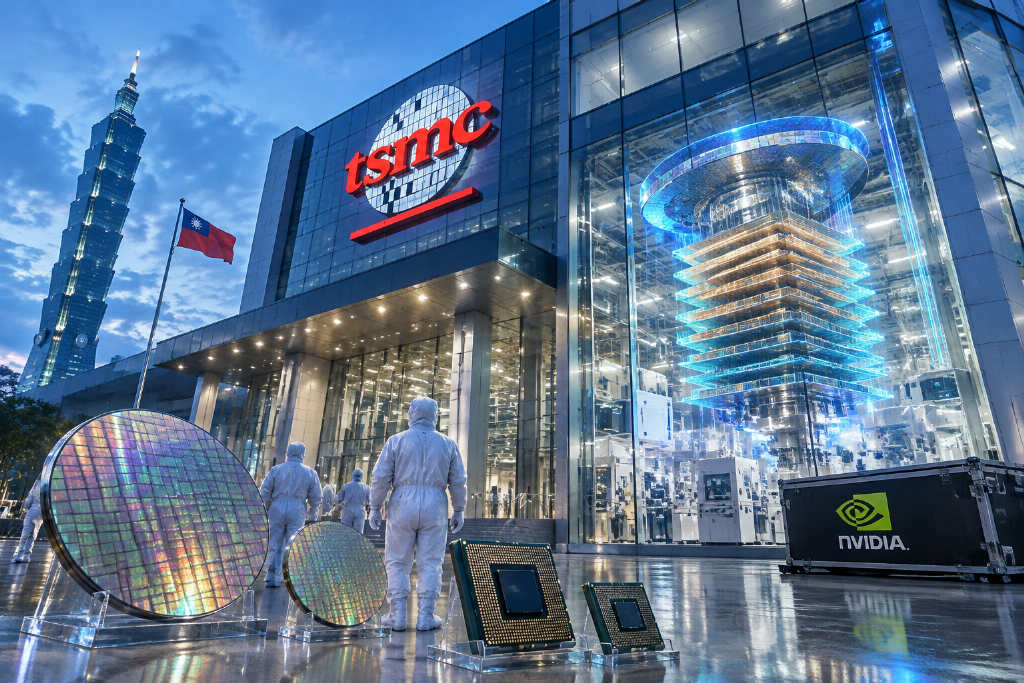
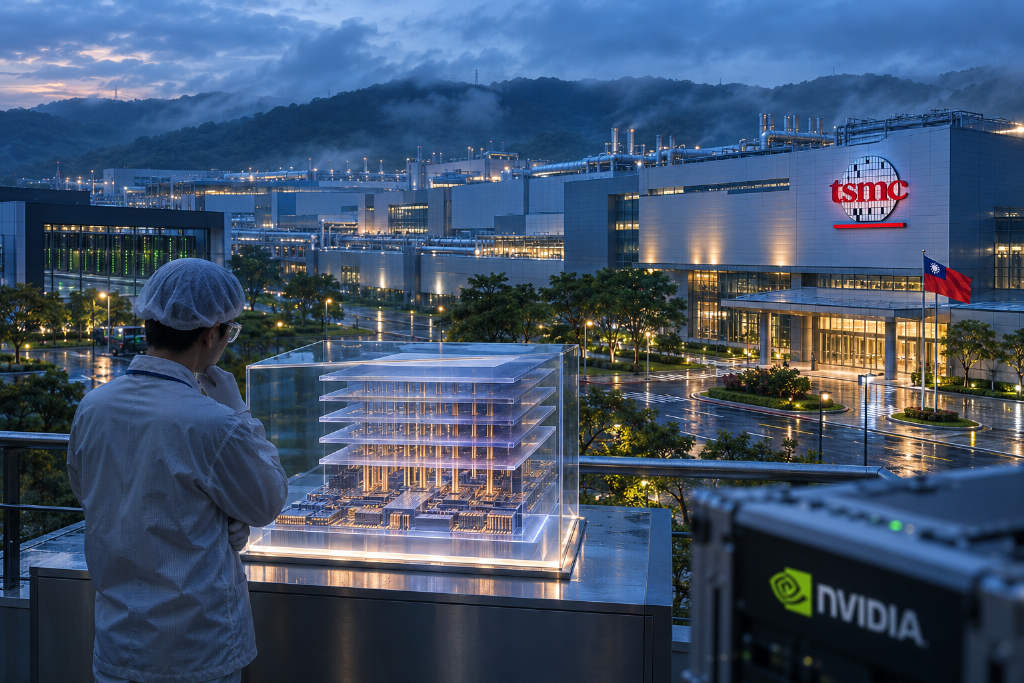
TSMC is considering expanding into advanced memory-chip manufacturing and has recently begun developing a plan to produce 3D DRAM at the request of Nvidia, its largest customer, The Information reported, citing two people familiar with the matter. The Taiwanese chipmaker could either build a new advanced memory facility or acquire an existing plant and convert it into a memory-chip production site. A launch timeline has not been set. The plan is being led by Hsu Kuo-chin, TSMC’s vice president responsible for advanced packaging. 3D DRAM uses a vertical stack of memory cells rather than arranging them in a single horizontal layer, a design intended to increase capacity. If TSMC enters the advanced memory market, it would compete with Samsung Electronics, SK hynix and Micron. TSMC and Nvidia did not immediately respond to requests for comment. The report did not state that a final investment decision had been made, and it did not provide a timetable for production.
860
TSMC Weighs Advanced Memory Expansion and 3D DRAM Production Plan
TSMC
Nov 7, 2026

TSMC Evaluates 3D DRAM Manufacturing as Nvidia Seeks More Memory Supply

TSMC has started evaluating a possible 3D DRAM manufacturing program at the request of its largest customer, Nvidia, according to The Information. The move comes as demand from the AI computing race has tightened memory supply and pushed prices higher, leaving Nvidia heavily reliant on Samsung Electronics, SK hynix and Micron for high-bandwidth memory. TSMC is considering either building a dedicated facility or converting an acquired semiconductor fab, but the available information does not establish that a production line investment has been approved. The company’s patent activity dates back to 2020, while its technology roadmap reportedly includes DRAM-on-logic for 2029, targeting bandwidth about three times that of HBM5E at energy consumption below 1 pJ/bit. TSMC has experience with wafer stacking, HBM base logic dies and CoWoS packaging, but that is different from building vertically repeated memory cells inside a DRAM array. Samsung, SK hynix and Micron have spent years developing competing 3D DRAM approaches, giving them manufacturing, yield and capacity-ramp experience that TSMC would need time to build.

740
TSMC Evaluates 3D DRAM Manufacturing as Nvidia Seeks More Memory Supply
GlobalFoundries
Nov 5, 2026

GlobalFoundries swings to Q3 loss after booking $441 million charge tied to shares issued to U.S. government

GlobalFoundries reported third-quarter revenue of $1.899 billion on Nov. 4, up 13% from a year earlier and 6% from the prior quarter, with core operating figures largely landing within the company’s guidance range. The headline result, however, flipped from profit to loss under IFRS: the chipmaker posted a net loss of $270 million, or $0.49 per share, compared with net income of $167 million in the previous quarter and $249 million a year earlier. The company said the loss was mainly driven by a non-cash charge of $441 million recorded in non-operating expenses after it issued 9.9 million common shares to the U.S. government in September. Those shares were issued under an agreement signed with the U.S. Department of Commerce on Sept. 3 at a filed issuance price of $37.85 per share, for a total of about $375 million. Excluding such items, GlobalFoundries said non-IFRS results remained profitable, with non-IFRS net income of $298 million and earnings per share of $0.53. The company also guided fourth-quarter revenue to $2 billion and disclosed updates on agreements involving Taiwan Semiconductor Manufacturing Co. and a U.S.-Japan cooperation plan.

700
GlobalFoundries swings to Q3 loss after booking $441 million charge tied to shares issued to U.S. government
TSMC
Nov 5, 2026

TSMC reportedly eyes $45 billion Sherman, Texas fab plan as Samsung expands in the state

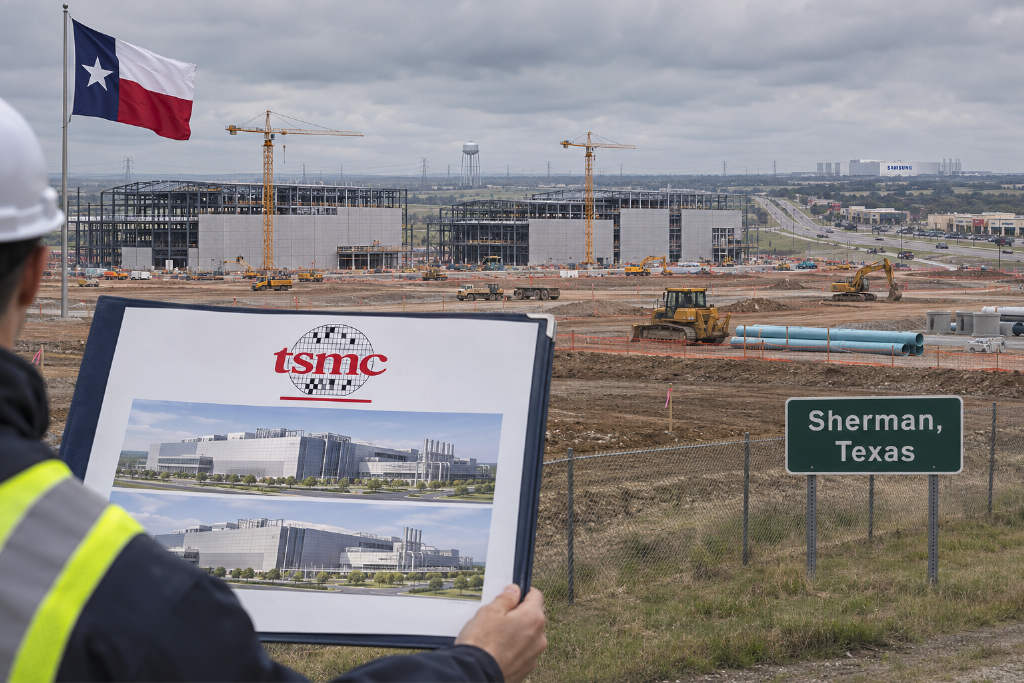
Taiwan Semiconductor Manufacturing Co. is being linked by market speculation to an anonymous investment proposal submitted to Texas authorities for a major semiconductor project in Sherman, according to BusinessKorea. The proposal calls for $45 billion in spending, two advanced wafer fabs, 5,000 hires, and mass production by the end of 2029. The identity of the applicant has not been disclosed, and TSMC said on Nov. 4 that it would not comment, adding that overseas investment information should be based on what it said during its October earnings briefing. At that briefing, Chairman C.C. Wei said the company would keep expanding U.S. capacity because multiple American customers had strongly requested it and the U.S. government was highly supportive. The report says Sherman is attractive in part because a local semiconductor cluster is taking shape, with GlobalWafers, King Yuan Electronics, and Texas Instruments all building out operations in the region. If the project moves ahead, it would place TSMC and Samsung on a more direct collision course in Texas, where they could compete for customers, engineers, construction labor, utilities, and state incentives while both push to deepen their U.S. manufacturing footprint.

800
TSMC reportedly eyes $45 billion Sherman, Texas fab plan as Samsung expands in the state
Taiwan stocks
Nov 5, 2026

Taiwan stocks drop more than 1,000 points intraday as AI data center suppliers hit limit down

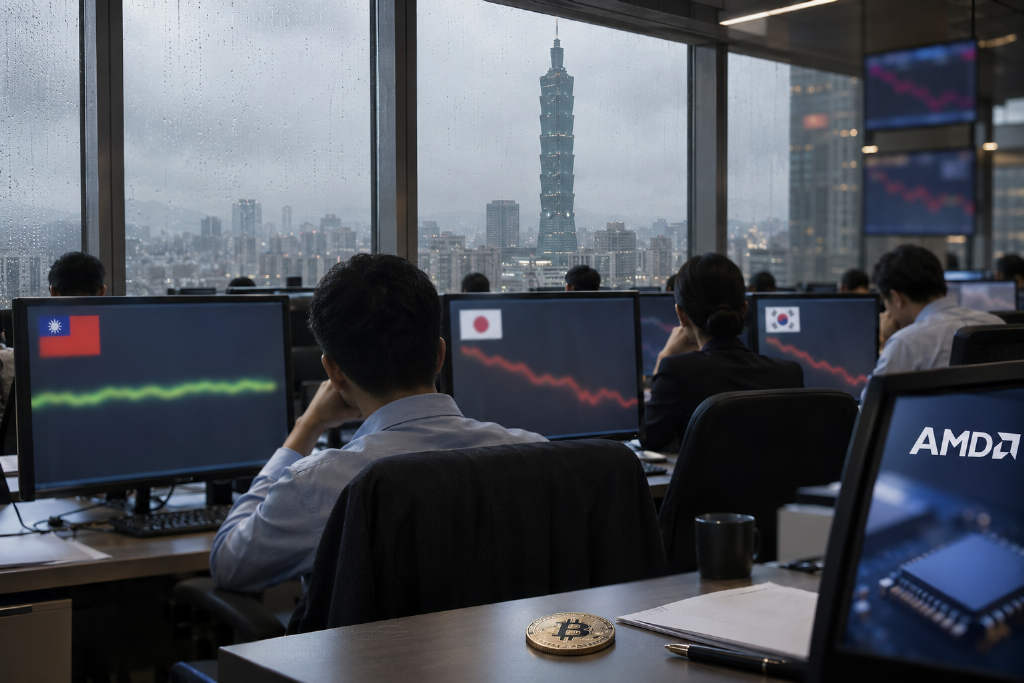
Taiwan equities sold off sharply on Nov. 5, with the benchmark index falling as much as 1,082.81 points within the first half hour of trading before trimming part of the loss. Taiwan Semiconductor Manufacturing Co. (TSMC) held up relatively well, but a wide range of AI data center supply-chain names, including memory, PCB, cooling, ASIC and server component stocks, fell to or near limit down during the session. The report tied the move to market expectations after the U.S. midterm election, where investors began pricing in a possible slowdown in data center expansion rather than an announced policy shift. U.S. trading on Nov. 4 had already shown a split: the Dow rose while the Philadelphia Semiconductor Index fell, with Microsoft, Amazon and Alphabet advancing as Micron, Dell and Vertiv dropped. The article also pointed to local ballot measures, Texas political developments and cash-flow concerns around AI infrastructure spending as factors shaping that trade. South Korean stocks fell even more sharply, while Bitcoin rose and several Bitcoin miners with AI hosting exposure posted steep losses in U.S. trading.

480
Taiwan stocks drop more than 1,000 points intraday as AI data center suppliers hit limit down
Bernstein
Nov 4, 2026

Bernstein raises TSMC price target to $600, above analyst consensus

Bernstein has lifted its price target on Taiwan Semiconductor Manufacturing Co. (TSMC) to $600 from $554 and kept its Outperform rating, according to Techub, citing Crypto Briefing. The move follows an earlier increase from $430 to $554. The brokerage said TSMC’s CPU revenue, excluding AI accelerators, could exceed $30 billion by 2027, roughly double its previous estimate of $15 billion to $16 billion. Bernstein said demand is expected to come from AMD, Intel, Apple, Amazon, Google, and Arm. TSMC reported revenue of NT$1.49 trillion in the third quarter of 2026, up 51% year over year. As of Nov. 4 Beijing time, the analyst consensus price target range stood at $529 to $558, placing Bernstein’s new target above that band. Barclays, meanwhile, has a $670 target on the stock.

600
Bernstein raises TSMC price target to $600, above analyst consensus
TSMC
Nov 4, 2026

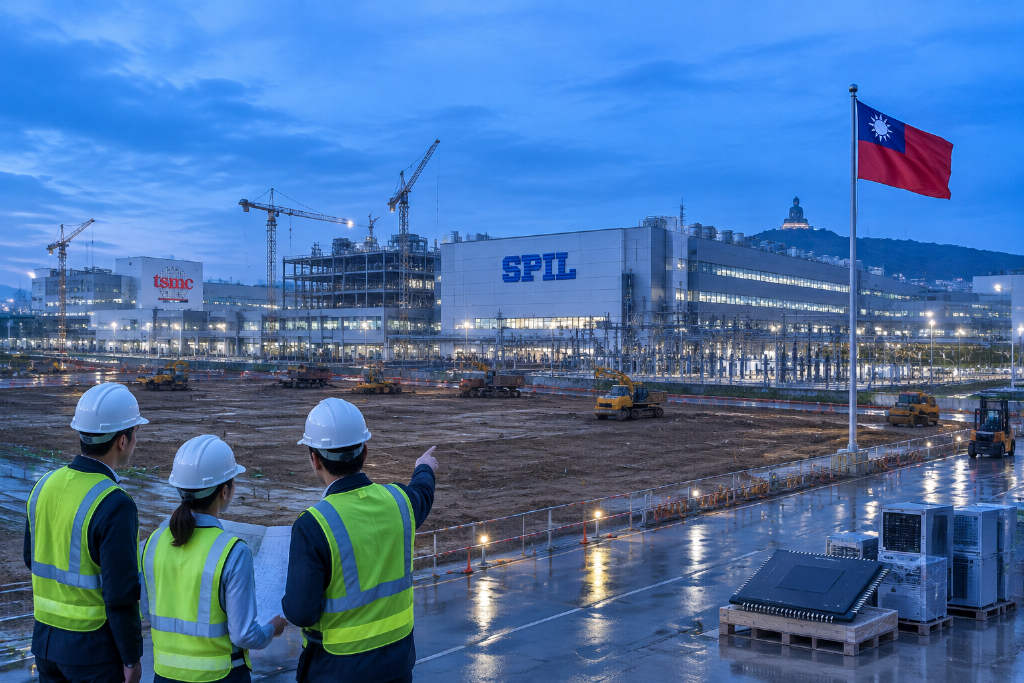
SPIL said to take over TSMC group land in Erlin with investment seen topping NT$100 billion

Taiwan’s chip packaging supply chain is reshuffling after Taiwan Semiconductor Manufacturing Co. bought two AUO plants in Central Taiwan Science Park for NT$38.8 billion. Supply chain sources cited in the report said Siliconware Precision Industries Co. (SPIL), a unit of ASE Technology Holding, is expected to take over nearly 50 hectares of land in the Erlin section of the park that had been tied to TSMC group planning. If the full site is included, the project could be developed in phases with multiple advanced packaging and testing plants, and preliminary investment estimates point to more than NT$100 billion. ASE did not comment on the market talk. Even so, the company has already raised its 2026 advanced packaging and testing revenue target. The report also ties the move to stronger demand from AI chips and high-performance computing, which has pushed TSMC to expand CoWoS capacity and increased outsourced backend demand. SPIL already has production facilities coming online in Erlin. In June, the company disclosed that it had obtained land-use rights for 11.15 hectares in the park for future expansion. If the new project moves ahead, SPIL’s cumulative investment in Erlin could reach NT$200 billion, according to the report. Nvidia has also said it will work with SPIL to expand optical engine capacity for co-packaged optics, with output targeted to reach 15 times current levels by mid-2027 and double again before the end of 2028.

750
SPIL said to take over TSMC group land in Erlin with investment seen topping NT$100 billion
U.S. midterms
Nov 4, 2026

Asian chip stocks fall as Democrats take an early lead in U.S. midterms; Nasdaq 100 futures turn lower

Asian equities tied to the technology and semiconductor supply chain moved lower on Nov. 4 after early vote counts in the U.S. midterm elections showed Democrats ahead in both chambers of Congress. Reuters reported that the election count began on Nov. 3, and the shift in political expectations coincided with weaker U.S. equity futures during Asian trading hours. CNBC data showed Nasdaq 100 futures at 27,887 around 10 a.m. Taipei time, down 1.48%, while S&P 500 futures were off 0.68%. CNBC-TV18 said Nasdaq futures had earlier risen by about 200 points on the back of Advanced Micro Devices (AMD) earnings, only to reverse and fall by more than 500 points at one stage as the vote trend pointed to a Democratic sweep. In Japan, the Nikkei 225 dropped 3.10%, with Advantest down 8.55% and Tokyo Electron down 6.09%. South Korea’s KOSPI swung from a 2.4% gain at the open to a 1.07% decline later in the morning. Taiwan’s stock market was comparatively resilient, with the benchmark index hovering near flat in late morning trade and TSMC holding at NT$2,295 at one point. Analysts cited by CNBC-TV18 and Reuters said markets were focused not just on whether Democrats would win, but on the size of the margin. Bitcoin, by contrast, showed limited movement, trading around $76,912 on Binance at 10:12 a.m. Taipei time, up about 0.2% over 24 hours.

610
Asian chip stocks fall as Democrats take an early lead in U.S. midterms; Nasdaq 100 futures turn lower
Total 352 items
Go topage