BackUS-China AI

US-China AI

artificial in
2026-09-03 04:18:25

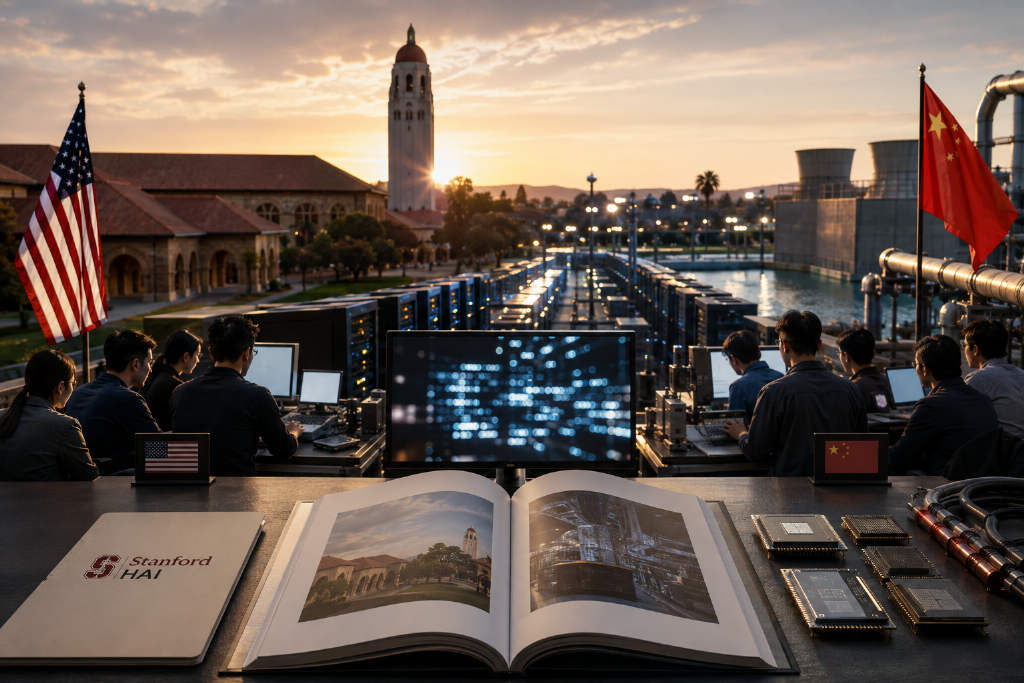
Stanford HAI 2026 AI Index Report: AI Transitions from Information Generation to Task Execution, US-China Gap Narrows to 2.7%

The Stanford HAI released the Chinese version of its 2026 AI Index Report, highlighting a shift from model capability competition to infrastructure and institutional transformation. Leading models approach 100% human performance on SWE-bench, while agent task success rates jumped from 12% to 66%. The gap between top US and Chinese models narrowed to 2.7%, with frequent leadership swaps. Global AI data center power capacity hit 29.6 GW, and chips, energy, and water are becoming critical bottlenecks.

90
Stanford HAI 2026 AI Index Report: AI Transitions from Information Generation to Task Execution, US-China Gap Narrows to 2.7%
Policy Regula
2026-08-31 10:55:00

Silicon Valley VC says China AI adapted to chip curbs with extreme efficiency, not paralysis

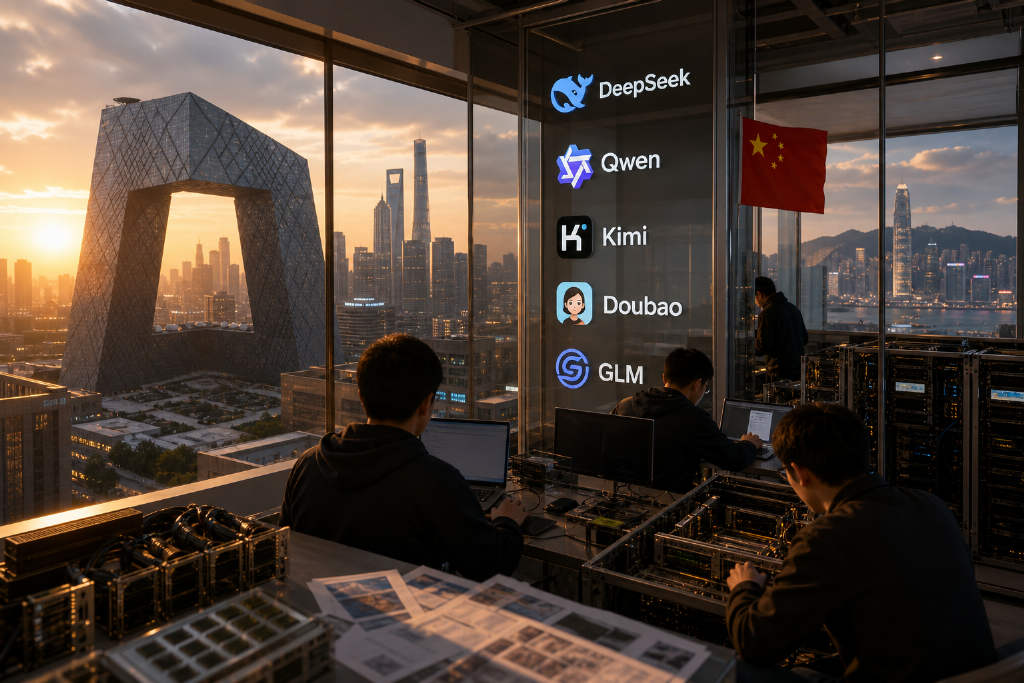
PANews, citing a TechFlow compilation of an internal letter from Silicon Valley venture firm Dimension, reported that the firm’s partners spent a week in August visiting AI labs and infrastructure players in Beijing, Shanghai and Hong Kong and came away with a sharply different view from the common “full decoupling” narrative. Their conclusion was that US chip export controls did not freeze China’s AI progress. Instead, the restrictions forced Chinese teams into unusually deep engineering work at the systems level, from kernel optimization to communications design, in order to squeeze more performance from limited hardware. The report highlighted several themes from the letter: intense competition among leading Chinese labs including DeepSeek, Qwen, Kimi, Doubao and GLM; the rise of startups focused on AI evaluation and validation rather than simple data labeling; and hands-on researcher intervention used to compensate for scarce compute. It also contrasted the commercial gap between US and Chinese model companies while describing Chinese firms as more pragmatic on monetization. Finally, the letter argued that even if semiconductors are separating at the hardware layer, software, distillation, open weights and data flows still bind the US and China into a shared AI cycle.

160
Silicon Valley VC says China AI adapted to chip curbs with extreme efficiency, not paralysis
DeepSeek
2026-07-27 00:08:35

DeepSeek reportedly pauses new funding round after Liang Wenfeng’s remarks on US-China AI competition draw scrutiny

DeepSeek has reportedly told potential investors it is pausing agreements for its second funding round, according to Bloomberg. The Chinese artificial intelligence startup had moved to raise at least RMB 10 billion after closing a $7 billion first round in June 2026, with a pre-money valuation target of more than RMB 480 billion. Bloomberg said the pause followed online attention around comments by founder Liang Wenfeng at an internal meeting, where he discussed China’s dependence on Nvidia chips for AI development and the gap between Chinese and US technology. After records of the meeting circulated online and were widely covered by media outlets, management orally informed some prospective investors that the planned financing agreements would not be signed for now. The talks, however, remain fluid and the process could still be restarted. Despite the reported delay in private fundraising, DeepSeek is also preparing for an initial public offering and could submit an IPO application as early as the end of this year. The company, founded in 2023 and backed by Tencent Holdings, CATL and China’s state-backed AI industry fund, has said it will prioritize breakthrough AI research and open-source model development aimed at artificial general intelligence.

1180
DeepSeek reportedly pauses new funding round after Liang Wenfeng’s remarks on US-China AI competition draw scrutiny
AI data cente
2026-07-23 05:00:14

Trump Admin Pushes AI Data Center Energy Pledge; Amazon, Google, Meta to Self-Power

The Trump administration is set to sign an AI Data Centers Energy Pledge with tech giants including Amazon, Google, and Meta, requiring them to self-generate power. The move aims to protect ratepayers while ensuring AI infrastructure growth, with speculation it could later extend to Bitcoin mining.

240
Trump Admin Pushes AI Data Center Energy Pledge; Amazon, Google, Meta to Self-Power