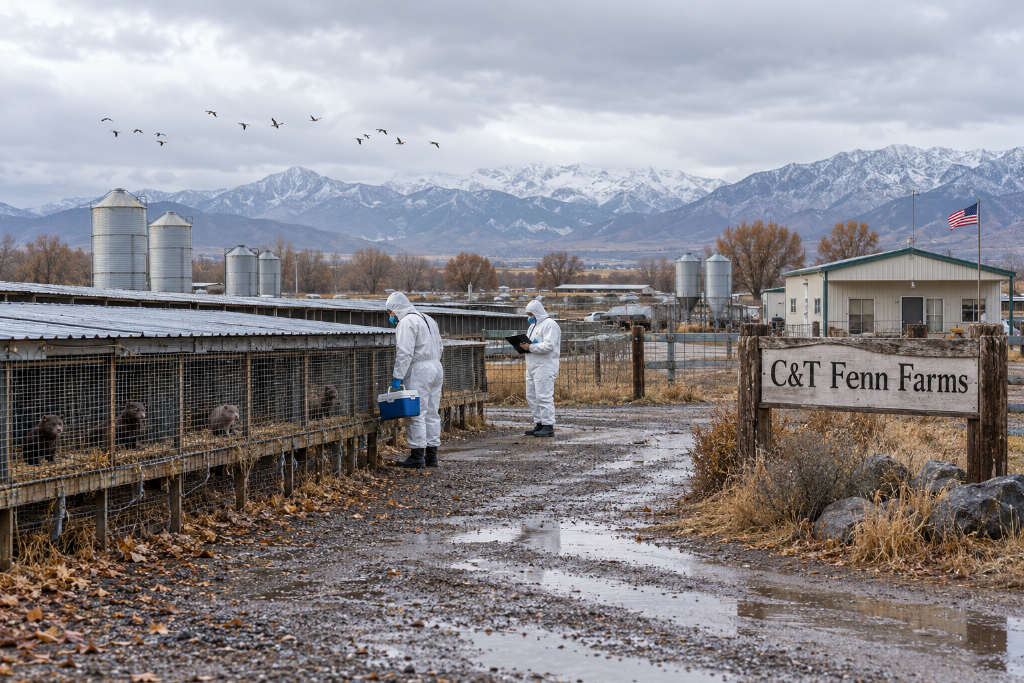
H5N1 spreads for more than two months at Utah mink farm, raising cross-species transmission concerns
An H5N1 outbreak at C&T Fenn Farms, a mink fur farm west of Provo, Utah, has continued for more than two months since authorities became aware of it around mid-August, according to a ProPublica investigation later followed by The Guardian. The virus has kept spreading among thousands of mink on the farm, while state and federal authorities have not ordered a full cull, a step commonly used in poultry outbreaks. Workers also were not placed under active monitoring in line with U.S. Centers for Disease Control and Prevention guidance. Experts cited in the reports said mink are a particular concern because their respiratory receptors resemble those of humans. That makes fur farms a possible setting for viral mutation or reassortment with seasonal human influenza. Genetic sequencing linked the farm strain to the lineage circulating in U.S. dairy cattle, though it remains unclear whether raw beef byproducts used as feed played a role. Early U.S. Department of Agriculture samples did not show especially alarming mutations, but specialists said the virus is still evolving in mink. There is still no evidence of human-to-human transmission and no confirmation that the outbreak has triggered a human pandemic, but experts warned that failing to cull infected mink or actively monitor exposed workers amounts to taking a serious risk.