crypto payment cards
Nov 2, 2026

Crypto card issuers push rich rewards, but underlying yields sit at just 3.5% to 4%

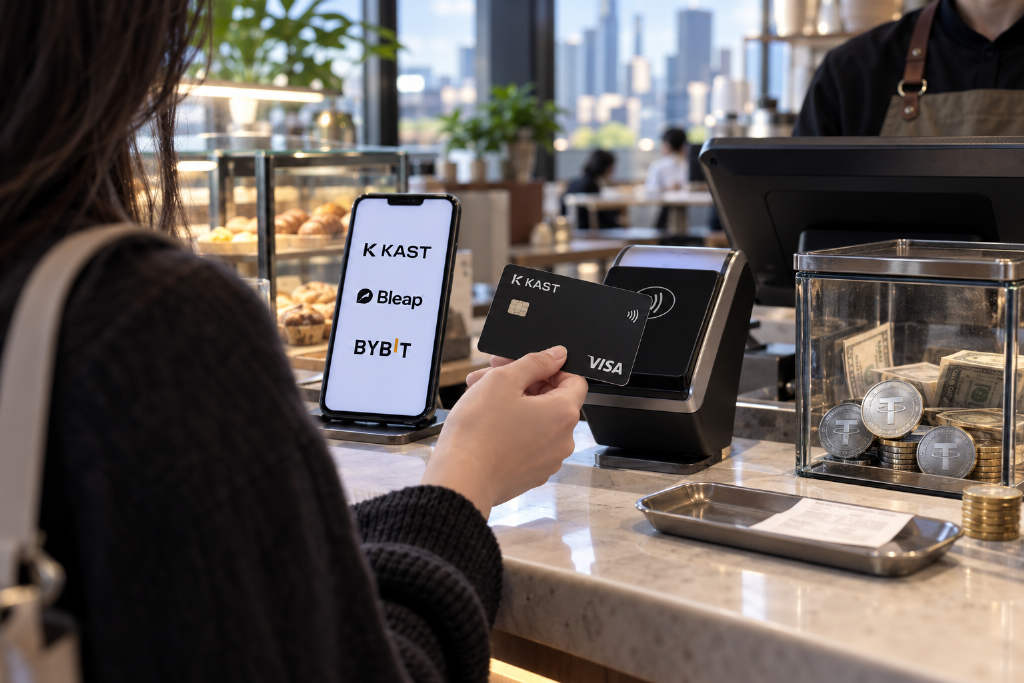
Crypto payment cards are offering unusually rich incentives to win users, with KAST and Bleap advertising rewards that reach as high as 20% cash back and, in some cases, double-digit yield on balances. The economics underneath look far thinner. KAST said the assets backing its Reserve product generate only 3.5% to 4%, leaving the company to absorb the gap between that return and the 8% to 12% reward rate offered to users. CEO Pathy said the company has moved from near break-even into losses as it spends more aggressively for growth. Bleap has acknowledged a similar trade-off. CEO Timofejevs said customers who mainly spend and collect rewards may not be profitable on their own, with the company instead looking to scale and additional services such as trading. At the same time, some issuers have already started cutting benefits. Bybit EU changed its non-VIP cashback structure from 2% to 10% with monthly caps to an uncapped 1%, while Bleap also revised its program toward a 1% base rate. The shift puts attention on whether users will stay once subsidies begin to fade.

850
Crypto card issuers push rich rewards, but underlying yields sit at just 3.5% to 4%
Visa
Oct 30, 2026

Visa signs two-year digital payments cooperation framework with Senegal

Visa has signed a memorandum of understanding with Senegal’s Ministry of Telecommunications and Digital Affairs, setting up a two-year strategic cooperation framework tied to the country’s digital transformation goals. The item was reported by Techub News, citing Finextra. The brief did not disclose additional terms, financial details, or implementation milestones. What is clear from the announcement is the structure of the arrangement: a memorandum of understanding between Visa and a government ministry, a two-year cooperation period, and a stated focus on supporting Senegal’s broader digital transition agenda. No further operational details were provided in the source text.

500
Visa signs two-year digital payments cooperation framework with Senegal
x402
Oct 29, 2026

x402 Adds Card Networks to Governance, but AI Agent Payments Still Lack Chargeback Rules

The Linux Foundation launched the x402 Foundation in July, putting governance of the AI-agent payment standard under a new structure whose top tier includes Visa, Mastercard, and American Express. The setup has drawn attention because x402 was designed without a standard dispute-resolution layer: once a payment settles on-chain, there may be no issuer, no chargeback path, and no clear way to challenge a bad outcome. That gap matters as AI agents begin buying data, calling APIs, and renting compute on their own, often in transactions worth only a few cents or less. A recent column by GenLayer Labs co-founder Albert Castellana highlighted the contrast between card networks’ long history of dispute handling and their presence in the governance of a system that does not yet offer an equivalent mechanism. A July study from EPFL and Zhejiang University tested 15 x402 facilitators and found that every one of them violated at least one of eight security rules defined by the researchers. The paper also said roughly 2% of settlement attempts on Base had failed and rolled back by the end of 2025, equal to about 1.9 million payments that did not actually complete. On the merchant side, Coinbase’s seven official seller examples were also described as lacking a way to roll back actions after failed settlement.

770
x402 Adds Card Networks to Governance, but AI Agent Payments Still Lack Chargeback Rules
Visa
Oct 29, 2026

Visa reports FY2026 and fourth-quarter results with $45.903 billion in annual revenue

Visa released its results for fiscal year 2026 and the fourth quarter on Oct. 28, according to ChainCatcher. The company said fiscal 2026 covered the period from Oct. 1, 2025 to Sept. 30, 2026, while the fourth quarter ran from July 1, 2026 to Sept. 30, 2026. For the full fiscal year, Visa posted total operating revenue of $45.903 billion, up 15% year over year. Operating profit reached $28.11 billion, up 17.15%, with an operating margin of 61.24%, an increase of 1.25 percentage points from a year earlier. Net profit attributable to shareholders came in at $23.504 billion, up 17%, while operating cash flow totaled $23.728 billion. Basic earnings per share were $12.34 and diluted earnings per share were $12.32, both up 21%. Its debt-to-asset ratio was 61.73%. In the fourth quarter, revenue was $12.139 billion, up 13% from a year earlier and 4.35% from the previous quarter. Operating profit was $7.262 billion, up 18.12%, and operating margin was 59.83%, up 2.5 percentage points year over year. Net profit attributable to shareholders was $6.002 billion, up 18% year over year and 6.65% quarter over quarter. Basic and diluted EPS both stood at $3.19, up 22%.

860
Visa reports FY2026 and fourth-quarter results with $45.903 billion in annual revenue
stablecoins
Oct 29, 2026

Stablecoin card spending hit $1.231 billion in September as RedotPay share fell to 33%

Global spending through stablecoin payment cards reached about $1.231 billion in September 2026, according to Odaily, putting a single month above the full-year total recorded in 2024. The figure pushed third-quarter spending to roughly $3.394 billion, showing how quickly this payment segment has expanded. RedotPay accounted for about $403 million of September volume. Its market share, which was previously around 85% in the early stage of the market, dropped to about 33% during the month. The data points to a much less concentrated market than before, even as RedotPay remained a major participant. Odaily also said stablecoin card transactions still rely heavily on traditional card networks. Visa handled the vast majority of those transactions, indicating that crypto-linked payment activity at the consumer level continues to run largely on existing financial infrastructure rather than fully independent rails.

750
Stablecoin card spending hit $1.231 billion in September as RedotPay share fell to 33%
Visa
Oct 29, 2026

Visa says annualized stablecoin settlement volume has topped $25 billion

Visa said on its fiscal fourth-quarter 2026 earnings call that its annualized stablecoin settlement volume has surpassed $25 billion, marking a 10x increase year over year. The company said the service now supports 10 blockchains and is operating across all five regions. Visa also disclosed that its stablecoin platform is available in the United States, Mexico, Puerto Rico, Colombia, Switzerland, and the United Kingdom, with more than 300 partners in the pipeline. In addition, Open USD launched on Sept. 30, and its circulating supply exceeded $800 million as of Oct. 15. Visa added that it now has more than 225 stablecoin-linked card programs, up more than 70% year over year, while transaction volume has risen by more than 150%, covering 5 million cards across more than 50 countries.

710
Visa says annualized stablecoin settlement volume has topped $25 billion
PayGlass
Oct 28, 2026

PayGlass pitches a clearer way to compare crypto cards as issuance accelerates

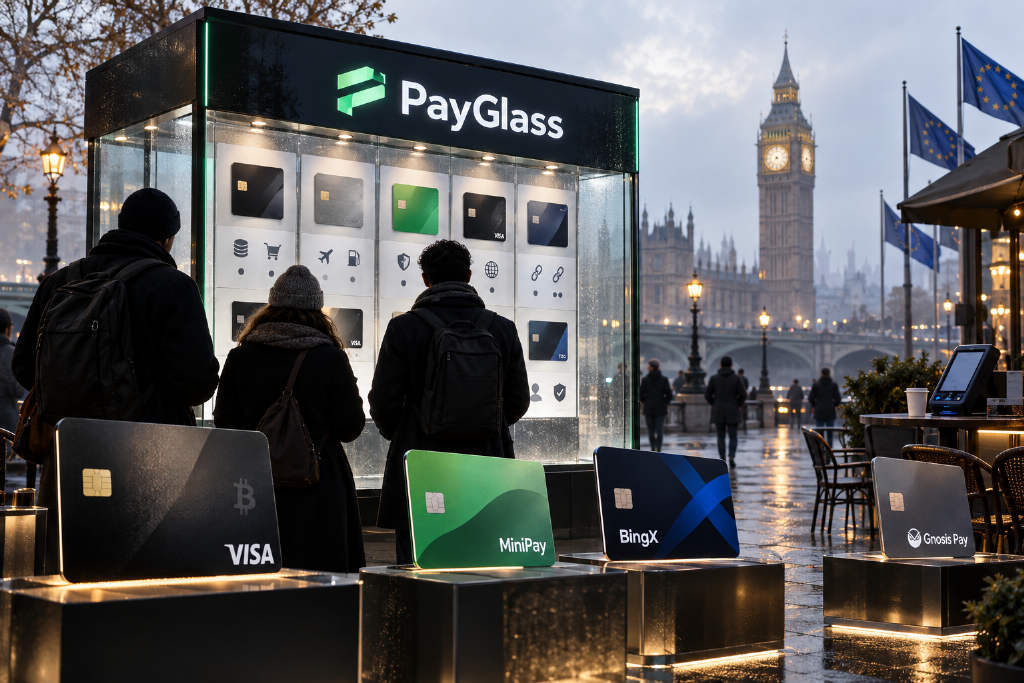
Crypto cards have moved from a niche product to one of the fastest-growing segments in digital assets. CoinDesk reported in August that monthly payment volume for crypto cards had topped $1 billion, up more than threefold year over year, versus less than $1 million in October 2023. As wallets, exchanges and blockchain projects rush to launch cards, users are facing a market where headline cashback rates often say little about actual cost. The article argues that the real challenge is not card availability but comparability. Fees can span application charges, FX spreads, crypto top-up fees, refund charges, ATM withdrawal costs and annual subscriptions, while rewards are often capped or tied to membership tiers. PayGlass says it is trying to standardize that information in one place. The platform lists more than 35 crypto card projects and organizes data across four tracks: fee structures and rules, card specifications, transaction data and project background. According to the piece, PayGlass also tracks on-chain payment flows and 30-day trends. As of Oct. 24, 2026, cards on the platform with complete 30-day transaction data had generated a combined $825 million in volume, with RedotPay, ether.fi and KAST accounting for 80.4%. The broader pitch is to make the crypto card market easier to search, compare and verify, shifting competition away from oversized marketing claims and toward actual product economics.

1040
PayGlass pitches a clearer way to compare crypto cards as issuance accelerates
Visa
Oct 27, 2026

Visa and Mastercard face UK class actions over card fees

Visa and Mastercard are facing two class action lawsuits in the United Kingdom over allegedly unlawful consumer card fees, according to Techub News, citing Finextra. The claims target fees charged to consumers and seek damages worth billions of pounds. The report did not disclose additional details on the timing of the cases, the plaintiffs involved, or the specific fee structures being challenged. The development places both payment companies at the center of a major legal dispute in the UK tied to consumer card charges.

650
Visa and Mastercard face UK class actions over card fees
Total 349 items
Go topage