CLARITY Act
Sep 20, 2026

Why the CLARITY Act Failed to Advance in the Senate, According to The Wall Street Journal

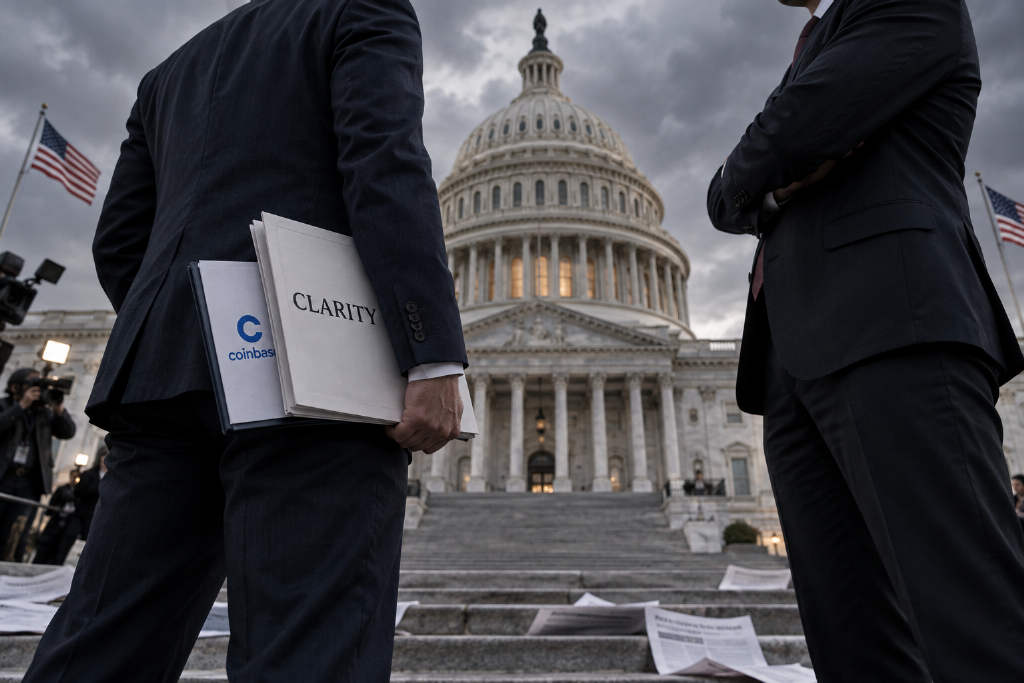
The Wall Street Journal traced the collapse of the CLARITY Act to a long chain of disputes that stretched across much of 2026, with Coinbase CEO Brian Armstrong at the center of the fight. The bill, designed to create a broader legal framework for digital assets in the US, stalled after failing to secure the 60 votes needed in a key procedural Senate vote this week. The report says negotiations were strained by a clash between crypto firms and banks over yield-like rewards tied to stablecoins, repeated breakdowns between Republicans and Democrats, and growing political pressure after President Donald Trump disclosed $1.4 billion in 2025 income from family meme coin and crypto businesses. Democrats then pushed for ethics provisions that would bar public officials from holding crypto and sought to apply those rules to Trump and his family. Armstrong’s role drew particular scrutiny. The Journal reported that he lobbied aggressively, traveled to Washington 13 times between the 2024 election and the September vote, and at times objected to compromise proposals that negotiators believed could have moved the bill forward. Coinbase defended his actions, saying the company accepted repeated compromises and that withdrawing support in January was in the industry’s best interest. The bill’s failure was followed by a drop of more than 10% in Coinbase shares, before the stock rebounded 12% on Friday after the SEC opened the door to tokenized stock trading in the US.

750
Why the CLARITY Act Failed to Advance in the Senate, According to The Wall Street Journal
Stablecoins
Sep 18, 2026

Banks Turn to Tokenized Deposits as SWIFT Pushes Weekend Cross-Border Transfers

Banks are using tokenized deposits and shared ledgers to keep cross-border payments moving outside normal banking hours, without replacing decades-old core systems. On Saturday, Sept. 5, DBS and Citi completed a U.S. dollar transfer from Singapore to New York in minutes using tokenized deposits and SWIFT’s new ledger. The article argues that the bottleneck in cross-border transfers has long sat with bank operating systems and settlement windows, not message delivery alone. Rather than rebuilding core banking infrastructure across dozens of jurisdictions, banks are creating parallel “side-core” systems that let balances move 24/7 while preserving legacy architecture underneath. The piece also frames this buildout as a direct response to stablecoin competition. Shared ledgers give banks a way to coordinate obligations, payment states, and net settlement across institutions, while keeping corporate clients inside the banking stack for credit, FX, treasury management, and support. At the same time, stablecoins still hold an edge in payments beyond the banking network, especially where banking access is weak or expensive. The emerging picture is not a winner-takes-all market, but a split model: bank deposits become programmable and always available, while stablecoins remain useful for open, cross-network transfers.

1420
Banks Turn to Tokenized Deposits as SWIFT Pushes Weekend Cross-Border Transfers
Clarity Act
Sep 15, 2026

Banks may benefit more than crypto firms from the Clarity Act, Alex Tapscott argues

A CoinDesk opinion piece by Alex Tapscott, CEO of CMCC Global Capital Markets, argues that the U.S. Senate could soon take up the Clarity Act and that the bill would do more than set rules for crypto. In his view, a federal framework for cryptoassets and clearer oversight of exchanges, brokers, issuers, and other intermediaries could also support a more innovative and competitive U.S. financial system. The article says parts of the banking industry, including the American Bankers Association and other banking groups, have warned that the legislation could give crypto companies an edge by letting stablecoin users receive rewards that resemble deposit interest. Tapscott counters that the GENIUS Act already bars stablecoin issuers from paying interest or yield directly to holders, and he points to White House Council of Economic Advisers estimates showing only limited lending effects under baseline assumptions. He also argues that regulatory ambiguity, not competition, is the bigger risk for banks considering multibillion-dollar commitments to tokenized deposits, stablecoins, custody, trading, and infrastructure. The piece says firms such as BlackRock, Fidelity, and Goldman Sachs support the bill, and notes that 21 financial institutions, including Bank of America, Citi, and Deutsche Bank, announced plans on Sept. 1 to create a company that would issue a U.S. dollar stablecoin, targeting a launch in the first half of 2027.

1300
Banks may benefit more than crypto firms from the Clarity Act, Alex Tapscott argues
Shanghai Financial Regulator
Sep 14, 2026

Shanghai regulator backs AI and blockchain use in banking and insurance tech finance plan

Shanghai’s financial regulator has issued a new opinion on improving the quality and efficiency of technology finance across the city’s banking and insurance sectors, according to ChainCatcher. The document calls for a bigger role for artificial intelligence and other emerging technologies in financial services tied to science and technology enterprises. Under the plan, eligible financial institutions are encouraged to build enterprise-level AI platforms. The regulator also said banks and insurers should make broader use of digital technologies including big data, blockchain, the Internet of Things, and quantum computing in product development, business decision-making, and risk management, with the stated goal of improving digital and intelligent operations in technology finance. The opinion also addresses how financial institutions assess technology companies. It supports shifting evaluation methods away from a traditional focus on financial indicators and toward a greater emphasis on innovation capability. The document says institutions should rely on databases in the technology finance field, make use of the "Huke Score," build dedicated evaluation systems for technology finance, create more precise profiles for tech talent and tech companies, and speed up the development of financial products tailored to those groups.

1460
Shanghai regulator backs AI and blockchain use in banking and insurance tech finance plan
Bank for International Settlements
Sep 12, 2026

BIS report says AI is shrinking banks’ window to patch software flaws

According to Decrypt, the Bank for International Settlements said in a new report that advanced AI is cutting the amount of time banks have to fix software vulnerabilities before attackers exploit them. The report warned that periodic security reviews and scheduled patch cycles are becoming less effective against the speed of the threat. It said the gap between the discovery of a vulnerability and its exploitation has fallen from weeks to minutes. The report focused on how banks respond, arguing that financial institutions need to accelerate software remediation and speed up related authorization decisions if they want to keep up with the shorter timeline.

1230
BIS report says AI is shrinking banks’ window to patch software flaws
Canada
Sep 12, 2026

Canada’s OSFI says tokenized deposits are legally the same as traditional deposits

Canada’s Office of the Superintendent of Financial Institutions, or OSFI, said Thursday that tokenized deposits are not legally distinct from traditional deposits. The regulator said the underlying technology used in a financial product or service does not determine its legal character. According to OSFI, financial institutions can conduct tokenized deposit business under the current financial regulatory framework, with no need for additional rules created specifically for that activity. The statement also said institutions, along with third parties acting on their behalf, must ensure that any related business complies with applicable laws and regulations. OSFI asked financial institutions to speak with their supervisory contacts before launching new products or services and recommended obtaining legal advice before going live. The agency oversees nearly 350 financial institutions and 1,200 pension plans.

1390
Canada’s OSFI says tokenized deposits are legally the same as traditional deposits
UniCredit
Sep 11, 2026

UniCredit seeks infrastructure partner for crypto trading, custody and tokenized products

UniCredit is seeking a technology provider to support infrastructure for digital asset trading, custody and access to tokenized investment products, according to Bloomberg, which cited people familiar with the matter. The report said discussions at the Italian bank remain at an early stage and are focused on several areas: crypto custody, brokerage capabilities, tokenized investment products, and stablecoin-based fixed-income securities. Cointelegraph said it had contacted UniCredit for comment on which provider could fill the infrastructure gap. The report places UniCredit alongside other large banks exploring digital asset rails. U.S. Bank, described as America’s fifth-largest commercial bank, completed a live cross-border payment using its proprietary USBDC stablecoin on Wednesday. Standard Chartered launched spot Bitcoin and Ether trading for institutional clients in the United Arab Emirates on Sept. 3, after previously rolling out digital asset custody services in the region in September 2024. In August, Israel’s largest bank, Leumi, partnered with Galaxy Digital to offer Bitcoin, Ether and Solana trading through its investment platform, with the launch expected in early 2027.

1490
UniCredit seeks infrastructure partner for crypto trading, custody and tokenized products
UniCredit
Sep 11, 2026

Bloomberg: UniCredit Weighs Broader Digital Asset Services

UniCredit SpA, the Italian bank, is considering an expansion of its digital asset-related services, according to Bloomberg. The effort includes early-stage work around digital asset custody and brokerage capabilities. People familiar with the matter said the bank is screening technology providers as it looks to build infrastructure that can hold digital assets and support buying and selling activity. The report indicates the work remains at an early stage, with UniCredit exploring the technology stack needed for those services. The move, as described by Bloomberg, centers on custody and brokerage functions rather than a fully detailed product rollout. No launch timeline, partner names, or financial terms were disclosed in the report cited by ChainCatcher.

1270
Bloomberg: UniCredit Weighs Broader Digital Asset Services
Total 146 items
Go topage