Strategy
Oct 15, 2026

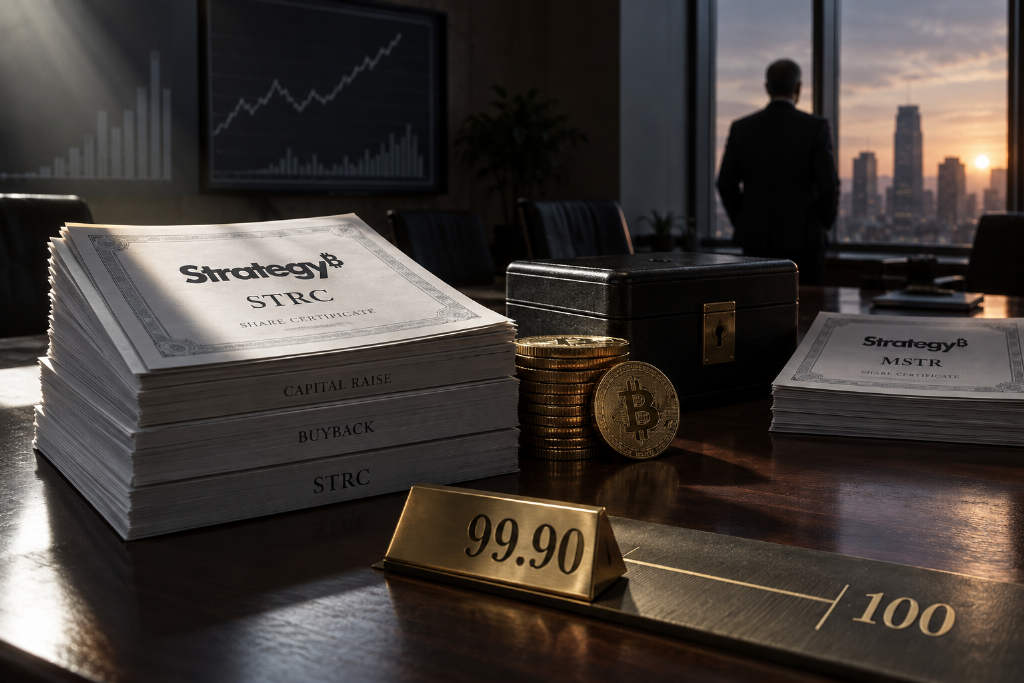
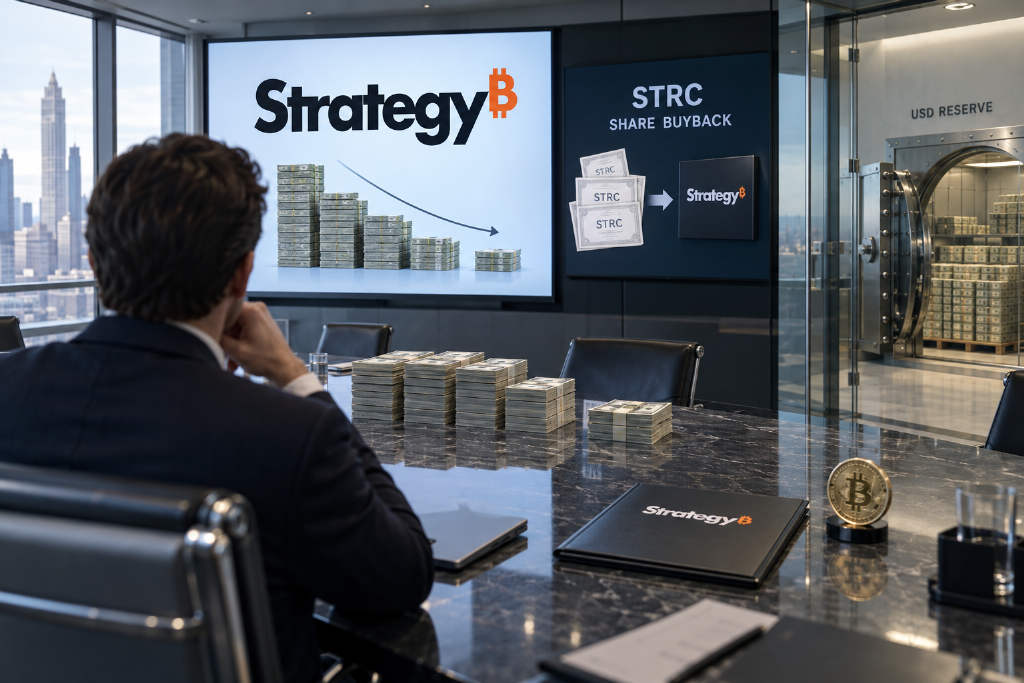
Strategy Spends $1.6 Billion Buying Back STRC as the Preferred Stock Nears Its $100 Target

Strategy’s preferred stock STRC, built to fund bitcoin purchases and carrying a 12% annual dividend, has not raised fresh capital since May after slipping below its intended $100 trading level. Unchained, citing the company’s weekly filings, said Strategy began repurchasing STRC in late July and has continued every week since, spending about $1.6 billion in total. The campaign has pushed the stock back toward par: STRC closed at $99.90 on Tuesday after falling as low as $74.57 in late June. The latest week marked Strategy’s largest STRC buyback yet, with $192.4 million spent on the preferred stock, roughly nine times what the company spent on bitcoin during the same period. Under Strategy’s current policy, it will not issue new STRC shares until the stock returns to $100, the level at which the security is designed to function as a capital-raising tool. Unchained said the existing board-approved repurchase budget would last about two more weeks if buying continues at last week’s pace, though the board could expand that authorization as it did in September, when it doubled the limit to $2 billion. The report also said Strategy has largely funded the buybacks by selling MSTR shares directly or using cash previously generated from those sales, and that it has additional capacity to do so.
830
Strategy Spends $1.6 Billion Buying Back STRC as the Preferred Stock Nears Its $100 Target
Strategy
Oct 14, 2026

Strategy’s USD Cash fell 60% in seven weeks, dropping to $640.5 million by Oct. 11

Strategy, the bitcoin treasury company associated with Michael Saylor, saw its USD Cash balance fall from $1.61 billion on Aug. 30 to $640.5 million on Oct. 11, according to the company’s latest disclosure cited by Protos. The report said most of that cash was spent on buybacks of STRC, a high-yield dividend stock that Strategy had sold to investors at $100.03 per share before it briefly slid to $71.25. Protos said the cash drawdown reflects the cost of supporting STRC near its intended $100 trading level. The outlet added that much of the money used for that effort had effectively been raised through dilution borne by common shareholders. Based on the change over less than seven weeks, the average pace of depletion comes to roughly $970 million, and Protos noted that USD Cash could run out in about four weeks if that pace continues and no new funds are added. The report also pointed to a separate USD Reserve earmarked for bond coupons and dividend payments. That reserve stood at $4.88 billion as of Oct. 11, down from $5.10 billion on Aug. 30. Combined, the two dollar reserves were down by about 18%, according to the report.

900
Strategy’s USD Cash fell 60% in seven weeks, dropping to $640.5 million by Oct. 11
Pump.fun
Oct 14, 2026

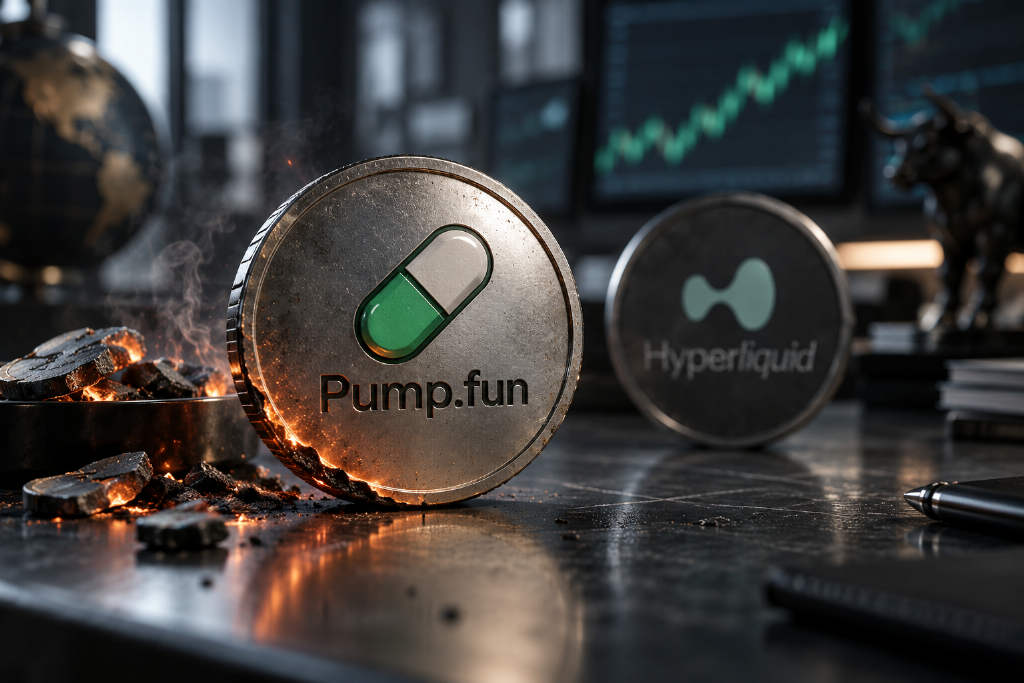
Pump.fun tops Hyperliquid in weekly revenue as PUMP buybacks and valuation gap draw fresh scrutiny

Pump.fun is still generating outsized revenue even as the broader meme-token frenzy cools. Data cited from DefiLlama shows the platform brought in $65.63 million in protocol revenue over the past 30 days, close to Hyperliquid’s $71.05 million, while its seven-day revenue of about $16.63 million exceeded Hyperliquid’s $14.3 million. Yet the valuation gap remains wide: PUMP’s circulating market cap is put at roughly $2.325 billion, versus $18.198 billion for HYPE. On a simple annualized revenue basis using the latest 30-day figures, the article says the circulating market cap-to-annualized revenue multiple is about 3x for PUMP and 21x for HYPE. The report also points to continued token buybacks, with roughly $29.48 million spent over the past 30 days, or about $980,000 a day, alongside official figures showing cumulative buybacks and burns of around $484 million. It adds that the largest unlock has already passed and did not trigger broad selling in the tracked sample, while upcoming monthly unlocks are much smaller. Attention is now shifting to product changes such as Callout Rewards adjustments and a reported perpetual futures feature tied to Hyperliquid.

1760
Pump.fun tops Hyperliquid in weekly revenue as PUMP buybacks and valuation gap draw fresh scrutiny
Sui
Oct 8, 2026

Sui pushes deeper into AI with Google Cloud tie-up, but SUI still lacks fresh buying support

Sui is trying to turn AI infrastructure into a paying business line, yet token holders have not seen a new wave of sustained demand in SUI. On Oct. 6, Mysten Labs said it is working with Google Cloud on a verifiable agentic arbitration platform designed to record AI permissions, actions and outcomes in a way enterprises can audit. A day later, Sui said an offchain channel test reached 40,614,180 interactions per second, beating its 20 million target. Both announcements point to the same commercial pitch: cheaper machine-to-machine transactions and clearer records for enterprise users. The market response has been muted. SUI closed at about $1.214 on Oct. 5, $1.178 on Oct. 6 and $1.129 on Oct. 7, a cumulative drop of roughly 7% across the two days when the announcements landed. At publication time on Oct. 8, CoinGecko showed SUI near $1.14 with about $610 million in 24-hour trading volume. The article argues that SUI already has a real buyback mechanism, but the money currently comes from stablecoin reserve yield rather than new AI revenue. According to Sui’s official explanation, the foundation uses yield from stablecoin reserves to buy SUI on the open market, then redistributes those tokens to validators, DeFi participants and other ecosystem actors. Public records cited by the article show about 830,300 SUI bought for roughly $646,600 as of Oct. 6. The next question is whether enterprise AI usage can expand that income stream.

1120
Sui pushes deeper into AI with Google Cloud tie-up, but SUI still lacks fresh buying support
Sui
Oct 8, 2026

Sui’s Google Cloud AI push adds a new narrative, but SUI buy pressure still hinges on revenue

Mysten Labs said on Oct. 6 that it is working with Google Cloud on a verifiable agent arbitration platform designed to record AI permissions, actions, and outcomes in a way enterprises can audit. A day later, Sui said an offchain channel test reached 40,614,180 interactions per second, beating its 20 million target. The two announcements point to the same commercial pitch: cheaper machine-to-machine transactions and clearer records for enterprise review. The market response has been muted. SUI closed at about $1.214 on Oct. 5, $1.178 on Oct. 6, and $1.129 on Oct. 7, a roughly 7% drop across the two days when the announcements landed. At the time of publication on Oct. 8, CoinGecko showed SUI near $1.14 with about $610 million in 24-hour trading volume. The article argues that SUI already has real buybacks, but the money comes from yield on stablecoin reserves rather than the newly announced AI business. According to Sui’s official description, the foundation uses that yield to buy SUI on the open market and then distributes the tokens to validators, DeFi participants, and other ecosystem actors. Public records cited by the article show about 830,300 SUI bought for roughly $646,600 as of Oct. 6. The key question is whether enterprise usage will add enough paid demand to expand that buyback flow.

970
Sui’s Google Cloud AI push adds a new narrative, but SUI buy pressure still hinges on revenue
Orca
Oct 8, 2026

Orca’s Loopscale merger pushes into AI and defense finance as ORCA rally puts buyback changes under scrutiny

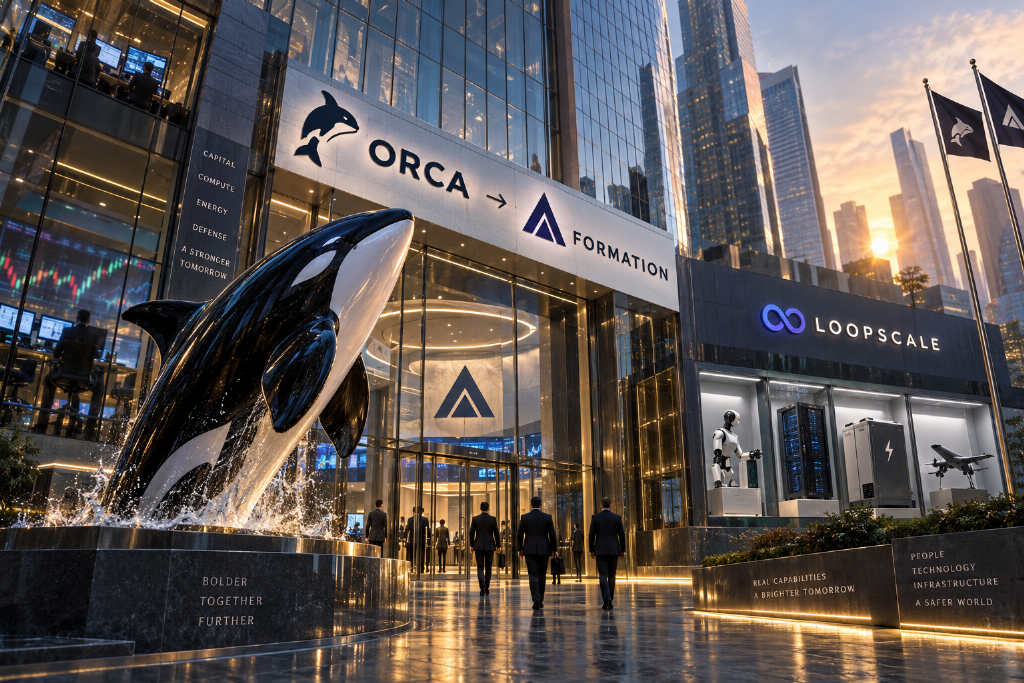
Orca, a long-running decentralized exchange on Solana, is merging with lending protocol Loopscale and will operate under the new name Formation, according to a report published by The Block on Oct. 8 Beijing time. The combined business is pitching a broader model that links trading, lending and on-chain financing, with AI, robotics, energy and defense listed as target sectors. The announcement landed after ORCA had already surged sharply. CoinGecko daily close data cited in the source shows the token rising from $1.65 on Sept. 30 to $3.21 on Oct. 6, a gain of about 94.5%, before easing to roughly $3.07 at publication time. Over the prior 24 hours, it was down about 3.5%, while still up around 73.4% over seven days. The rally did not emerge in a vacuum. On Sept. 29, Orca’s governance forum posted a proposal saying the team had agreed terms to acquire a Solana DeFi protocol, adding lending and yield products. That proposal moved to an on-chain vote on Oct. 5. At the same time, investors are also weighing a separate issue: Orca is proposing to cut the share of protocol revenue used for automatic ORCA buybacks into xORCA from 40% to 10%, while redirecting more funds to operations, growth and acquisitions. The setup leaves token holders balancing two different bets — expansion into a larger business line, and a weaker fixed buyback stream than the one currently in place.

1220
Orca’s Loopscale merger pushes into AI and defense finance as ORCA rally puts buyback changes under scrutiny
Orca
Oct 8, 2026

ORCA nearly doubled before the Orca-Loopscale merger. The market may have already priced in the new story.

ORCA rallied sharply before Orca’s merger with lending protocol Loopscale was formally reported, raising the question of whether the token’s latest narrative shift had already been priced in. According to The Block, the combined team will operate under the name Formation and plans to bring trading and lending together while targeting financing demand tied to AI, robotics, energy, and defense. That headline gave the market a fresh angle on a long-running Solana protocol, but the token had already moved from $1.65 on Sept. 30 to $3.21 on Oct. 6, based on CoinGecko daily closes. The move also overlaps with a governance proposal that was already public before the merger announcement. Orca said on Sept. 29 that it had agreed terms to acquire a Solana DeFi protocol, and the proposal moved to onchain voting on Oct. 5. At the same time, the proposal would materially change how protocol revenue is allocated. Orca currently routes 40% of protocol revenue to automatic buybacks for xORCA, but the new plan would cut that share to 10%, assign another 10% to team-directed market buybacks, and leave 80% for operations and growth. That creates a split between two ways of owning the token. Buyers chasing the merger and expansion story are betting on future business growth. Existing stakers, by contrast, face a possible reduction in the fixed buyback flow that had supported the old investment case.

1090
ORCA nearly doubled before the Orca-Loopscale merger. The market may have already priced in the new story.
Pyth DAO
Oct 9, 2026

Pyth DAO approves rule to use all of its product revenue share for PYTH buybacks

Pyth DAO has passed proposal OP-PIP-136, directing 100% of the revenue share it receives from Pyth-owned products into open-market purchases of PYTH. Pyth Network said the first purchases under the new rule were executed on Sept. 30, while the approval was announced on Oct. 8 and marked as passed on the DAO governance forum. The change replaces the DAO’s previous system, under which monthly PYTH purchases were funded at one-third of its non-PYTH treasury balance and required a separate vote each time. The new standing authorization also applies to non-PYTH assets the DAO already holds. According to proposal author KemarTiti, monthly purchases had been declining, from about 2.75 million PYTH in March to 669,662 in August. Pyth also said its overall annual recurring revenue reached $11.5 million in September, up 86% quarter over quarter. The proposal does not alter existing revenue splits: Pyth said the DAO receives 60% of revenue from products it owns, while Douro Labs keeps its contractual share. Stablecoin revenue sent to the DAO will be converted into PYTH under existing trading limits.

920
Pyth DAO approves rule to use all of its product revenue share for PYTH buybacks
Total 59 items
Go topage