U.S. stocks
Oct 3, 2026

Q4 short-squeeze setup in U.S. stocks builds as CTA exposure drops and buybacks near restart

A Wall Street Journal report cited data from Goldman Sachs and other institutions showing a sharp reset in U.S. equity CTA positioning, with Rubner’s positioning Z-score falling from +2.35 at the end of August to -0.80. The move, more than three standard deviations in a month, suggests previously accumulated long exposure has largely been cleared out. At the same time, U.S. companies have authorized about $1.3 trillion in stock buybacks this year, with some programs expected to resume after October 15 as third-quarter earnings blackout periods end. Historical data also points to stronger buyback activity in November. Rubner’s seasonality data shows the S&P 500 has averaged a 5.6% gain in fourth quarters of U.S. midterm election years since 1930, compared with 2.9% across all years. Tech remains in focus as Nasdaq 100 futures approach 31,200 and the Philadelphia Semiconductor Index trades near record levels. Goldman, Morgan Stanley, and JPMorgan also flagged funding capacity, balance-sheet strength, semiconductor pricing, and AI demand as key factors, while oil remains another major variable for the quarter.

920
Q4 short-squeeze setup in U.S. stocks builds as CTA exposure drops and buybacks near restart
SEC
Oct 1, 2026

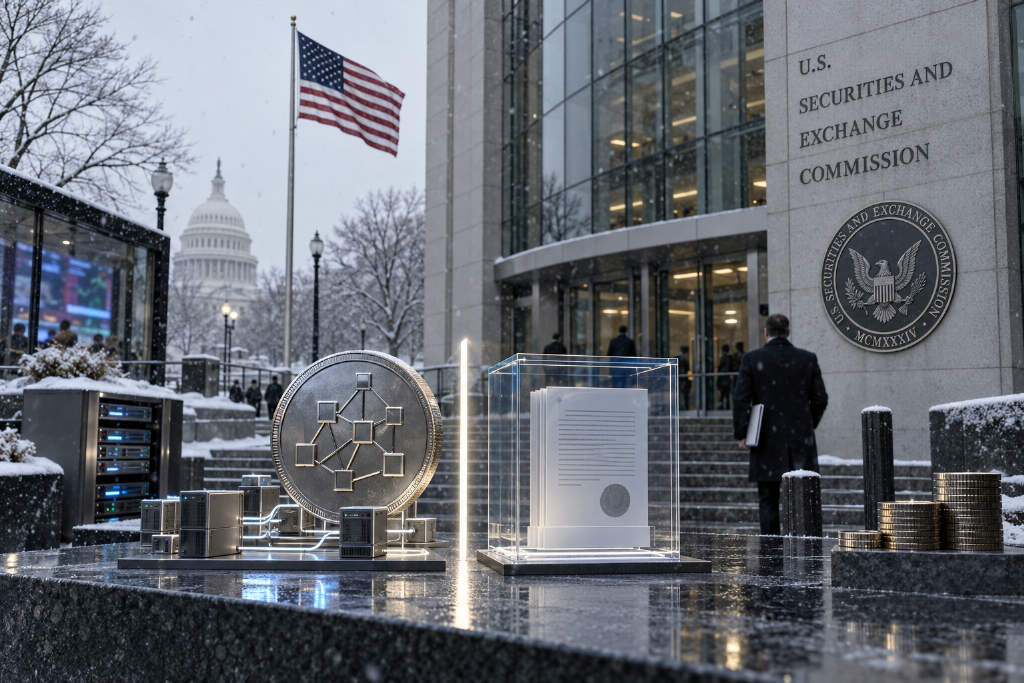
SEC FAQ lays out nine answers on crypto assets, functional networks and investment contracts

The U.S. Securities and Exchange Commission’s Division of Corporation Finance has issued a new FAQ on how federal securities laws apply to certain crypto assets and related transactions, offering a more detailed view of where the agency sees the line between non-security crypto assets and investment contracts. The document does not carry legal force and is not a formal SEC rule or statement, but it addresses several questions that have remained central to the industry. The FAQ covers how to think about functional and decentralized networks, the classification of staking receipt tokens, the meaning of receipts, when marketing statements may amount to promises of essential managerial efforts, and whether post-functionalization maintenance, upgrades, and network-effect activities still matter under the Howey framework. It also addresses whether a new investment contract can arise in a functional system, how buyback programs should be viewed, and when a secondary-market trading platform could be treated as a promoter. A key thread runs through the entire release: once a crypto system is functional and no longer subject to centralized control, certain ongoing activities by issuers or other participants may no longer count as the kind of essential managerial efforts that support an investment contract analysis. The FAQ also cites Regulation Crypto Assets, Release No. 33-11434, dated Aug. 18, 2026, and the Federal Register citation 91 FR 54510, 54525 dated Aug. 21, 2026.

880
SEC FAQ lays out nine answers on crypto assets, functional networks and investment contracts
Standard Chartered
Sep 30, 2026

Standard Chartered Starts Coverage on Ethena With $2 Target as 1.4 Billion ENA Unlock Nears

Standard Chartered initiated coverage on Ethena on Sept. 30, with Geoff Kendrick, the bank’s global head of digital assets research, setting a $2 price target for ENA by the end of 2028. The report’s thesis rests on three pillars cited in the source article: projected growth in on-chain real-world assets from $40 billion to $2 trillion by late 2028, the expansion of yield-bearing stablecoins, and Ethena’s revised tokenomics that would direct protocol net revenue toward ENA buybacks and burns. The article argues that the long-term case does not remove near-term execution and supply risks. Under Ethena’s current design, the revenue-sharing mechanism that can support ENA buybacks does not begin until USDe circulating supply reaches $7.5 billion. The source says USDe is currently around $4.9 billion, meaning the buyback mechanism has not yet started. Even after that threshold is crossed, only 5% of total revenue at the first tier would be allocated to the foundation, with 95% of that net income used for ENA buybacks. A more immediate issue is token supply. According to the article, 1.4 billion ENA, equal to about 14% of current circulating supply and worth more than $300 million, is scheduled to unlock on Oct. 5 after a restructuring of investor release terms described by the Ethena Foundation.

1020
Standard Chartered Starts Coverage on Ethena With $2 Target as 1.4 Billion ENA Unlock Nears
Micron
Sep 29, 2026

JPMorgan Keeps Overweight on Micron, Sets $1,540 Price Target Ahead of Earnings

Micron is scheduled to report fiscal fourth-quarter 2026 results on Sept. 30 for the period ended in August, and JPMorgan says the setup still points to upside. In its latest note, the bank kept an Overweight rating on the company and set a $1,540 price target, versus Micron’s $1,082.28 share price on Sept. 25. JPMorgan expects revenue, gross margin and EPS for the quarter to come in above consensus, with next-quarter guidance also likely to move higher. The bank’s thesis goes beyond another earnings beat. It argues that tight supply conditions across HBM, DRAM and NAND may last longer than the market had expected, while Micron is using long-term supply agreements to lock in a larger share of future demand. JPMorgan estimates DRAM and NAND ASPs each rose about 20% sequentially this quarter, and says the HBM market could remain undersupplied through 2028. It also believes Micron’s supply commitment agreements may now cover more than 35% of DRAM and NAND bit production, with a path to more than 50%. JPMorgan also highlighted Dec. 9, 2026, when Micron is set to begin gradually returning 100% of excess cash to shareholders under its commitments, primarily through buybacks. With free cash flow rising, the bank sees capital returns as a potential new valuation driver alongside pricing and HBM demand.

1260
JPMorgan Keeps Overweight on Micron, Sets $1,540 Price Target Ahead of Earnings
Strategy
Sep 28, 2026

Strategy’s Bitcoin Holdings Climb Back Above Pre-Summer Sale Level After Two Straight Weekly Purchases

Strategy said its bitcoin holdings have moved back above the level it reported before starting a round of summer sales in late June. In a Form 8-K filed Monday, the company disclosed that it bought 1,665 BTC between Sept. 21 and Sept. 27 for $142.7 million, paying an average of $85,681 per coin including fees. That brought total holdings to 847,666 BTC, slightly above the 847,363 BTC it reported as of June 21. The company had sold a combined 6,916 BTC between June 29 and Aug. 9, according to earlier filings, and said those proceeds were used to fund preferred dividends, replenish its dividend reserve, and repurchase STRC preferred stock. Strategy said the latest bitcoin purchase was funded through sales of MSTR Class A shares under its at-the-market program. It sold 1,469,165 shares for $246.2 million in net proceeds, allocating $142.7 million to bitcoin purchases and $103.5 million to STRC buybacks. Strategy also disclosed that it repurchased 1,534,530 STRC shares for $151.7 million, or about $98.86 per share, and drew an additional $48.1 million from its USD Cash account for those buybacks. The company said $723.5 million remains under a repurchase authorization that it expanded to $2 billion this month. Shareholders are also being asked to vote on daily dividends for STRC and three other preferred stocks at a special meeting scheduled for Oct. 28.

890
Strategy’s Bitcoin Holdings Climb Back Above Pre-Summer Sale Level After Two Straight Weekly Purchases
UBS
Sep 28, 2026

UBS keeps Buy on Micron, sees $5.24 billion FQ4 revenue and buyback limits ending in December

UBS reiterated its Buy rating on Micron Technology in a Sept. 23, 2026 preview note for FQ4:26, setting a $162.5 price target and saying that implied about 48% upside from the Sept. 22 close of $109.6. The bank said the market debate has shifted from whether the cycle has peaked to how long favorable conditions can last, with DRAM supply tightness expected to extend through 2027 and, in UBS’s view, at least into the second quarter of 2028. UBS forecast Micron’s FQ4:26 revenue at $5.24 billion, slightly above the top end of company guidance, with gross margin at 87.6%, around 160 basis points above guidance. It expects FQ1 revenue guidance at $5.8 billion to $5.9 billion, with gross margin improving another 100 basis points sequentially. The note said FQ4 upside came almost entirely from pricing, with DRAM revenue seen at $3.97 billion and NAND at $1.27 billion. The report also pointed to the Dec. 9, 2026 expiration of CHIPS Act restrictions on stock buybacks. UBS expects Micron to begin repurchases in FQ2:27, or February 2027, at roughly $2 billion per quarter before rising to $4 billion to $5 billion. UBS analyst Timothy Arcuri also raised EPS forecasts for calendar 2027 through 2029 to $21.2, $27.7 and $21.9.

2350
UBS keeps Buy on Micron, sees $5.24 billion FQ4 revenue and buyback limits ending in December
Aave
Sep 22, 2026

AAVE buyback restart faces balance-sheet pressure after rsETH fallout

Aave tokenholders have been watching for signs that the protocol might restart AAVE buybacks, but DeFi researcher Chado argues the path is far less straightforward than the market may hope. The overhang traces back to the April 18 rsETH incident tied to Kelp DAO’s LayerZero bridge route, which left Aave dealing with a large hole after undercollateralized rsETH was used to borrow WETH on the protocol. While asset freezes, recoveries and expected liquidations reduced the shortfall, Aave still ended up committing 25,000 ETH from its treasury and taking on a long-term financing facility from Mantle of up to 30,000 ETH. Chado’s analysis focuses on what that means for cash flow. Over the 144 days after the incident, Aave generated about $181.2 million in protocol fees, but only around $24 million was retained by Aave DAO, or roughly $167,000 per day. That was down about 41% from the prior 144-day period. Using ETH at about $2,639 and assuming the full 30,000 ETH Mantle facility, the loan would equal roughly $79 million. At the recent retained-income pace, repaying that amount would theoretically take about 473 days. Chado frames that as a static stress test rather than a fixed repayment plan, but the conclusion is clear: until Aave’s balance sheet is repaired, protocol income may struggle to flow back to AAVE holders.

2460
AAVE buyback restart faces balance-sheet pressure after rsETH fallout
Derive
Sep 22, 2026

Derive takes 87.4% of on-chain options premiums as buybacks outpace token issuance for nine straight months

Derive has emerged as the clear leader in on-chain crypto options, collecting $362.5 million in options premiums this year and accounting for 87.4% of the market, according to a report by Alea Research translated by TechFlowPost. The figure marks a 191.9% jump from the platform’s $124.2 million total for all of 2025. The report argues that Derive’s growth is not limited to one product line: its perpetual futures business generated $1.76 million in fees this year, or 39.1% of the platform total, and briefly overtook options in February. The token side is drawing equal attention. Derive kept $3.37 million of the $4.51 million in fees generated this year and used 35% of that retained amount to buy back DRV. Over the first nine months, 16.6 million DRV were burned, compared with 6.1 million issued as staking rewards. In April, the DAO raised the buyback allocation from 25% and cut weekly staking emissions from 250,000 DRV to 100,000 DRV, lowering the annualized inflation rate from 3.8% to 1.5%. The report also points to upcoming structural changes. A Sept. 14 proposal laid out plans for Derive V3, with matching and sequencer state transitions running inside a zero-knowledge virtual machine and settlement on Ethereum. Two days later, Derive said it had appointed former FalconX executive Alex van Voorhees as chief legal and compliance officer.

2670
Derive takes 87.4% of on-chain options premiums as buybacks outpace token issuance for nine straight months
Total 59 items
Go topage