Access Protoc2026-10-02 07:34:40Access Protocol’s Leo Wong says tokenization’s next phase is turning creator relationships into ownable rightsAccess Protocol APAC lead Leo Wong used his KBW appearance to argue that tokenization is moving beyond putting stocks, bonds, and real estate on-chain. In his view, the more consequential shift is the creation of economic rights around things that historically were not treated as assets at all, including creator-fan relationships, user data, and community participation. He framed the change in simple terms: subscriptions make users customers, while tokenized participation can make them stakeholders. Wong said access can only function as capital if it develops in a specific order. First, it must become ownable rather than rented. Second, it must become productive, with staking turning access from a cost into a yield-bearing position. Third, it must become transferable and liquid so markets can price it. He said Access Protocol has already built that stack through compressed NFTs stored in users’ wallets and through Access Hub, an in-platform marketplace for subscription NFTs and creator-minted NFTs. He also argued that clear ownership is the foundation of any functioning market, ahead of liquidity, interoperability, trust, or regulation. For long-lasting economic rights, Wong listed four requirements: verifiability, self-custody, real utility, and the ability to survive after token incentives fade. On Korea, he said the market is one of the most promising in APAC and noted that about 30% of ACS trading volume currently comes from Korean exchanges.540
Sparkonomy2026-09-30 00:19:57Sparkonomy launches Open Creator Graph to test how accurately AI describes creatorsSingapore-based AI startup Sparkonomy has introduced Open Creator Graph, a new initiative aimed at evaluating and improving how accurately AI models describe creators. According to the brief cited by Techub News, the company tested five AI engines and found that only one creator was described accurately by all of them. The result points to uneven performance across current AI systems when handling creator profiles and related descriptions. Sparkonomy focuses on AI content analysis, and the update was attributed to Tech in Asia in the source material. No additional technical details, methodology, or model names were disclosed in the item.490
TikTok2026-09-21 08:59:42TikTok creator agencies turn to AI to cut costs and improve efficiencyTikTok creator management agencies are increasingly adopting artificial intelligence tools to reduce operating costs and improve efficiency, according to a Techub News brief citing Tech in Asia. The reported use cases span several parts of the business rather than a single workflow. Agencies are using AI to identify new creators, develop virtual singers, and automate routine operational tasks. The shift points to a broader push by creator-focused firms to streamline day-to-day work while lowering overhead. No additional financial details or company names were disclosed in the brief.570
Roblox2026-09-11 16:06:42Roblox to let creators deploy games as standalone cross-platform appsRoblox said it will allow creators to deploy their games as standalone applications that can run across PC, console, and mobile devices, including outside the Roblox platform. The company said the move is intended to lower barriers to game development and broaden distribution for creators. Roblox also said it will roll out more AI tools to make game building easier, with support for generating code, assets, and level designs. The update was cited by Techub, which referenced TechCrunch. No further rollout timeline or product details were disclosed in the source brief, but the announcement points to a wider push by Roblox to give creators more flexibility in how their games are built and distributed.680
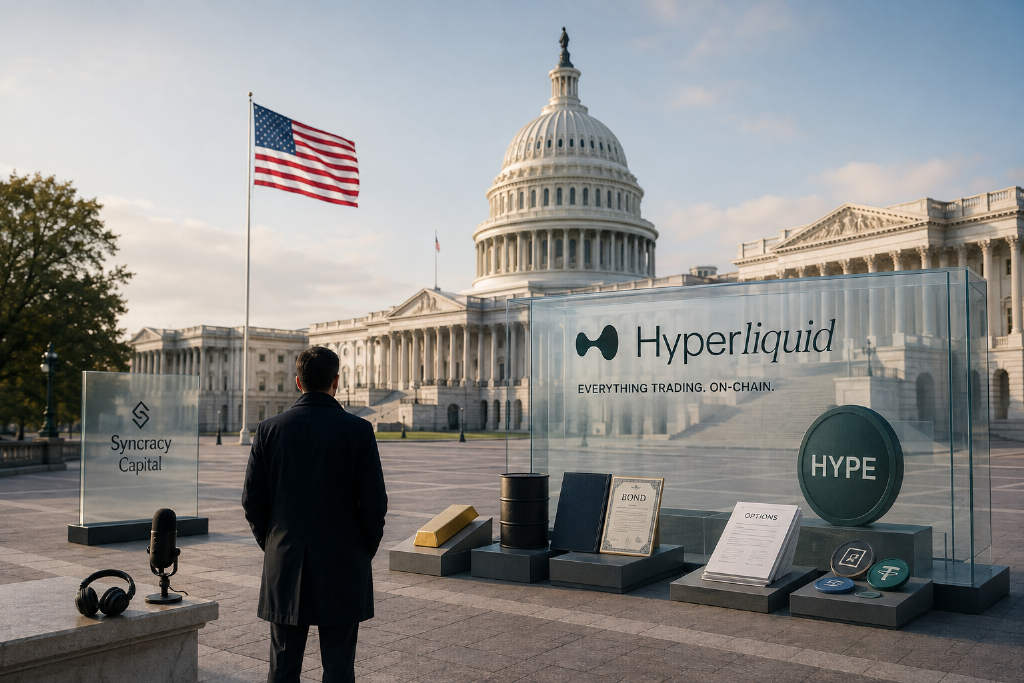
Hyperliquid2026-09-07 06:39:00Syncracy Capital co-founder says HYPE rally is only the start as Hyperliquid pushes toward an onchain market for everythingRyan Watkin, co-founder of Syncracy Capital, used a recent appearance on The Rollup to lay out why he believes Hyperliquid and its token HYPE are still in the early innings. He said one of the biggest overhangs on the project had long been the question of U.S. regulation: strong growth was visible, but investors kept asking what would happen if access to the American market were constrained. In his view, that concern has started to ease after political attention turned directly to Hyperliquid and after Stars-related features had already appeared on public testnet months earlier. Watkin retraced Syncracy’s early thesis, pointing to Hyperliquid’s roughly $3 billion valuation at launch, about $200 million in annualized revenue, and a token acquisition path that required users to bridge funds onto the platform itself. He said the more important benchmark was never just share against onchain rivals, but share captured from centralized exchanges such as BN, Coinbase and Bybit, with the longer-term target extending even to incumbent financial venues like CME. He also argued that Hyperliquid’s roadmap now points beyond perpetuals. With portfolio margin, spot markets, HIP-3 and regulated frameworks around HIP-3 and HIP-4, he described the platform as moving toward a unified venue where users can post mainstream assets as collateral and trade a wide range of financial products on a single permissionless ledger.1260
AI betting2026-09-04 10:57:10How AI Betting Disputes Turned Into Public Trials for CreatorsA MarsBit article examines the rise of so-called "AI betting" disputes in online creator communities, using illustrator Xiaolin’s six-hour livestream as its starting point. In that case, Xiaolin was accused on social media of using AI to generate an artwork and was challenged to repaint it live. The wager was 4,100 yuan: if he succeeded, the accuser would pay; if he failed, he would have to compensate, apologize, and absorb the damage to his reputation. The report says this format has spread across platforms such as Xiaohongshu, where similar posts have become common. A recurring structure has emerged: the accused creator, the person raising the accusation, and a middleman holding the stake. According to the article, what began as a form of self-verification has increasingly become a public spectacle in which thousands of viewers scrutinize every pause, brushstroke, or wording choice as possible proof of AI use. MarsBit’s piece argues that the problem goes beyond online hostility. It says current AI detection logic is fundamentally unstable because neither an image nor a text can reliably prove whether it was made by a human or generated by AI. The author frames the trend as a mix of group psychology, social identity, and a broader trust crisis over what originality means in the AI era.980
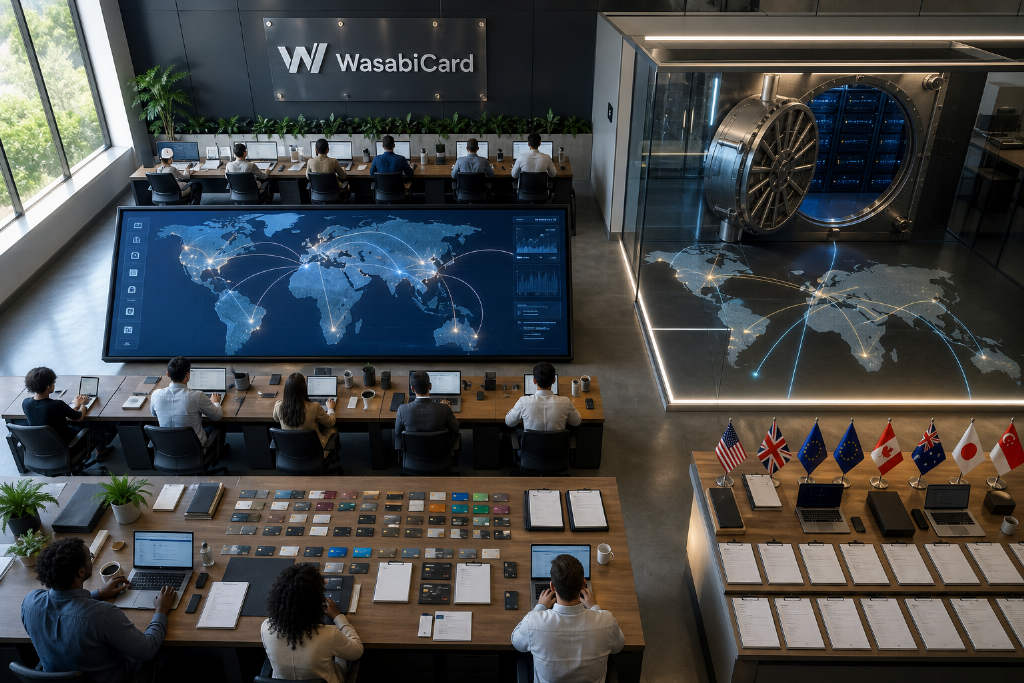
WasabiCard2026-09-03 07:39:08WasabiCard expands stablecoin payment rails for global payroll and creator payoutsWasabiCard said it is extending its stablecoin-based payment infrastructure to the global creator economy, targeting businesses operating across more than 200 countries and regions. The company said its unified platform and API can handle bulk payouts, local fiat settlement, direct bank transfers, card spending and transaction management across markets. The supported use cases include payroll for regional teams, payments to streamers and signed creators, commissions and revenue sharing for creator and affiliate networks, service fees for production crews and contractors, and day-to-day business spending such as travel, equipment, software, advertising and content production. Companies can fund eligible payments with stablecoins and initiate bulk disbursements through the WasabiCard platform or API. Funds can then be converted into supported local fiat currencies based on the recipient’s market and settled directly into bank accounts held in the recipient’s own name. WasabiCard said it currently supports cross-border payouts in more than 30 fiat currencies and offers both virtual and physical cards in supported markets. Co-founder and CEO Ray Yang said the company aims to connect the flexibility of moving funds globally with stablecoins to local payment infrastructure that can deliver money to specific people and business workflows.1230
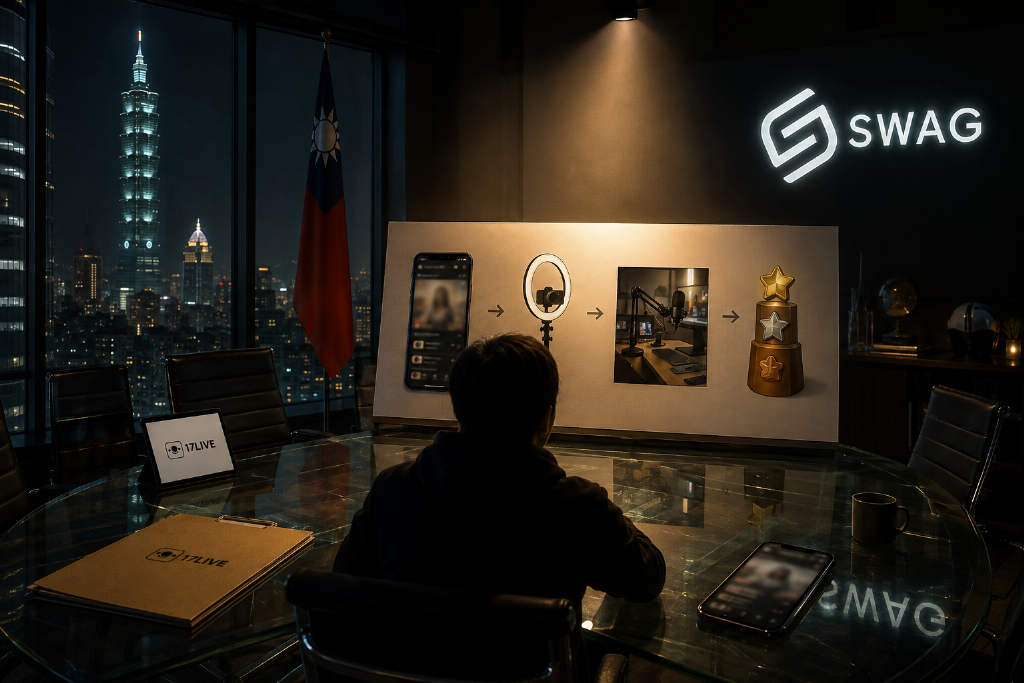
SWAG2026-09-03 04:33:21SWAG founder Sam lays out how the platform pivoted and grew into a NT$1 billion businessABMedia reported that SWAG founder Sam used a long-form interview with Chen Hsiu-ping’s "Master Business School" to explain how the platform grew from a small paywalled creator project under 17 Media into a business with revenue at the NT$1 billion scale. In the interview, Sam said SWAG did not start as an adult platform. The shift came after creators themselves pushed content in a more explicit direction, after which he introduced ranking-based cash incentives to encourage more production. He argued that in the adult business, live streaming and social connection — not video alone — are what keep users paying. The discussion also covered SWAG’s split from 17 Live when the parent company was preparing for a listing and wanted to avoid valuation and asset-mix issues tied to adult content. Sam described the platform’s product evolution from 30-second paid clips to longer videos and then live streaming, a legal episode involving a large police search on April Fools’ Day, and a revenue-sharing model that differs sharply from OnlyFans. He also outlined why SWAG sees global expansion as difficult, pointing to entrenched incumbents in the West and Japan, plus payment barriers in Southeast Asia.1160