Treasury yiel2026-09-07 01:32:23Rick Bensignor says 10-year Treasury yield could reach 6.07%, putting Bitcoin in untested conditionsRick Bensignor, founder of Bensignor Investment Strategies, told CNBC that the yield on the 10-year U.S. Treasury could climb to 6.07%, up from about 4.78% at present. He said the yield remains in a multi-year uptrend and added that even 5.6% would only represent a minimum upside target. The call is not framed as a forecast for next week, but it points to a rate environment Bitcoin has never traded through before. According to the report, rising yields tend to pull capital toward safer, income-producing assets and away from speculative trades. That shift could put pressure on Bitcoin’s narrative as a hedge against currency debasement. As Treasury yields move toward levels the crypto market has not previously seen alongside Bitcoin, traders may soon get a clearer read on whether the asset behaves more like digital gold or like another rate-sensitive risk asset.900
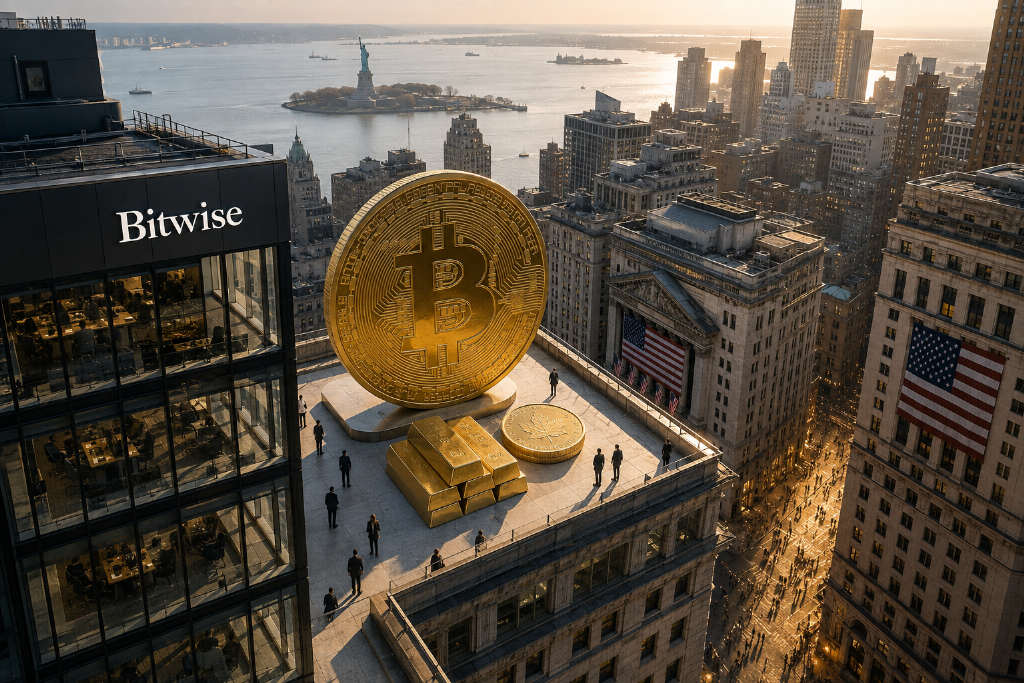
Bitcoin2026-09-03 05:56:07Bitwise says Bitcoin is decoupling from stocks and moving into a digital-gold pricing cycleBitcoin is starting to trade less like a leveraged tech proxy and more like a hard asset, according to André Dragosch, head of research for Europe at Bitwise. In a market note translated by Foresight News, Dragosch argued that a key shift took place after a major macro event in August: U.S. 10-year and 30-year Treasury yields moved higher, and Treasury Secretary Scott Bessent stepped in by increasing purchases of long-dated bonds. After that intervention, Bitcoin posted its strongest weekly gain since March 2024, rising 22.4%, while gold climbed about 5% and U.S. equities fell. Bitwise said the more important signal was in cross-asset behavior. Bitcoin’s three-month rolling correlation with gold rose to its highest level in nearly six years, based on data from Bitwise Asset Management and the Bloomberg Terminal covering April 13, 2015 to Aug. 31, 2026. At the same time, Bitcoin’s correlation with U.S. stocks fell to a one-year low, while its relationship with the U.S. Dollar Index stayed notably negative. The firm’s view is that investors are increasingly holding both gold and Bitcoin as hedges against currency debasement, rather than treating them as competing choices.1330
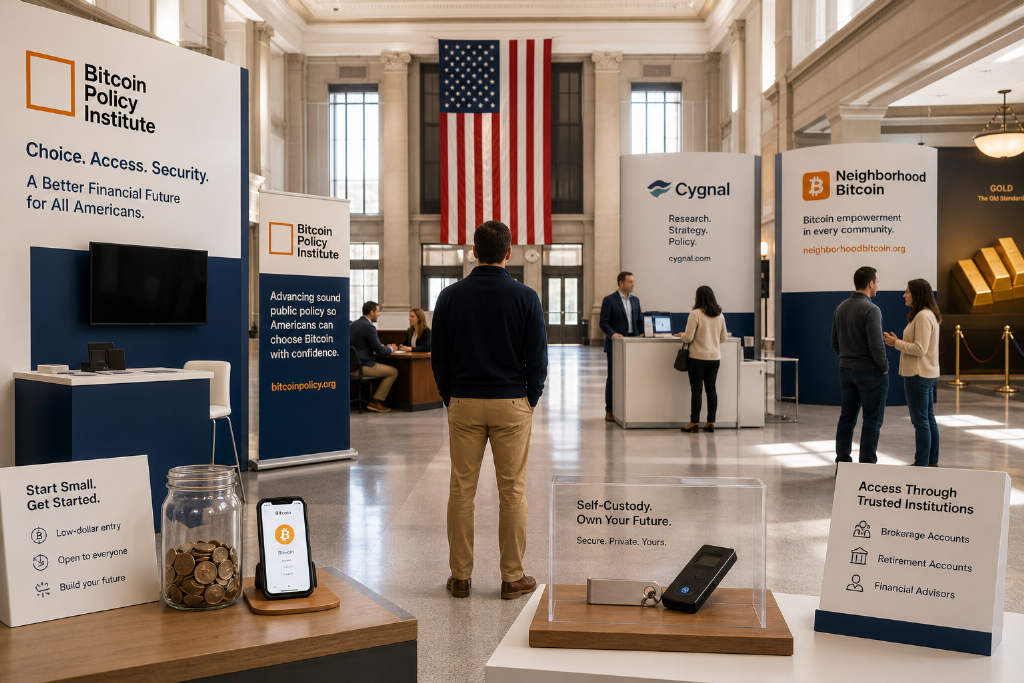
Bitcoin2026-08-30 08:14:56BPI survey finds U.S. respondents respond more to control and small allocations than the 'digital gold' pitchA new study from the Bitcoin Policy Institute, conducted with pollster Cygnal and education group Neighborhood Bitcoin, suggests the long-running "Bitcoin as digital gold" message is losing traction with U.S. audiences. The research covered 1,516 respondents through eight in-person focus groups in Ohio and Tennessee, plus a 1,000-person message validation test, and evaluated 19 different Bitcoin narratives. "Digital gold" ranked near the bottom and often caused confusion in focus groups. The messages that performed best centered on three ideas: personal control, the ability to start with a small amount such as $10, and Bitcoin’s historical performance across four-year cycles. Messaging around safety and ease of access also improved responses when it referenced established financial firms including Fidelity and Charles Schwab. The study identified 52% of respondents as a persuadable middle, including people who were curious but still watching and those under financial pressure with no current crypto exposure. It also found that financial advisors, retirement planning specialists, and friends or relatives who already own Bitcoin were more persuasive messengers than celebrities or influencers.1080
Bitcoin2026-08-29 15:00:00BPI Study Says 'Digital Gold' Narrative Loses Ground With Everyday AmericansBPI research suggests Bitcoin's familiar world-changing sales pitches miss the mark with most prospective buyers. The survey finds everyday Americans prefer control and micro-investing, while the 'digital gold' narrative is being dropped.1100
Bitcoin2026-08-15 13:21:05Michael Saylor says Bitcoin is the monetary energy of the digital ageStrategy founder Michael Saylor described Bitcoin as the first monetary network designed in digital form, saying it combines computing, digital networks, and cryptography into a system that turns economic value into information that can move securely across global communications infrastructure. He said Bitcoin fully dematerializes monetary assets and replaces discretionary supply decisions with an open protocol. Saylor contrasted Bitcoin with gold, arguing that Bitcoin is harder to inflate, easier to integrate with software, and faster to transmit. He also said every participant in the network has an incentive to help protect it. In his view, proof of work ties Bitcoin to the physical world by using real energy to secure the ledger, raising the cost of rewriting history and drawing miners, energy providers, and investors into a shared defense structure. He also framed Bitcoin as an adaptive system made up of miners, nodes, developers, capital, and users, rather than static software. Saylor said its deliberately simple base layer focuses on maintaining a secure ledger for a scarce digital asset, while higher-layer applications handle complexity. He added that private keys give individuals permissionless control over economic energy, creating a new form of digital sovereignty based on mathematics instead of institutional verification.1260
Bitcoin2026-08-15 13:20:04Michael Saylor says Bitcoin monetizes digital scarcity and recasts value transferStrategy founder Michael Saylor said Bitcoin merges computing, digital networks and cryptography into what he described as the first natively digital monetary network in human history. In his view, the system dematerializes monetary assets, replaces discretionary supply control with an open protocol, and turns economic value into information that can move securely across global communications networks. He contrasted Bitcoin with gold, saying it is harder to inflate, easier to integrate with software and faster to transmit, while also giving every participant an incentive to help protect the network. Saylor also argued that proof of work ties Bitcoin to the physical world by using real energy to secure the ledger, raising the cost of rewriting history and drawing in miners, energy providers and investors to reinforce the system. He described Bitcoin as digital gold, but said "digital monetary energy" is a more accurate framing. He added that Bitcoin keeps its base layer deliberately simple, focusing on a secure ledger for scarce digital assets while leaving complexity to higher-layer applications that can support payments, credit and other financial services.1210
Tether2026-07-27 12:13:30Tether’s Gold-Backed Token XAUT Receives Shariah CertificationTether said on July 27 that its gold-backed digital asset XAUT has received Shariah compliance certification from Amanah Advisors, a move the company says opens a compliant digital gold investment route for Muslim users, Islamic banks, and institutional investors worldwide. According to Tether, the certification confirms that XAUT aligns with core Islamic finance principles and lets users hold physical gold in digital form through blockchain infrastructure. Each XAUT token represents direct ownership of physical gold stored in a Swiss vault, and the structure does not include interest, leverage, or speculative derivatives. Amanah Advisors said issuer TG Commodities, S.A. de C.V. meets Islamic finance requirements, including actual ownership of physical gold, transparent and verifiable reserves, no interest-based mechanism, and no use of leverage or speculative derivatives. Tether added that gold has long held an important role in Islamic finance and said the certification is expected to support XAUT adoption across GCC countries, South Asia, parts of Africa, and global Islamic finance centers.1660
Bitcoin2026-07-26 11:28:20Bitcoin’s “digital gold” narrative faces renewed scrutiny as it diverges from goldA WuBlockchain-reposted opinion article argues that Bitcoin’s long-running “digital gold” label is coming under fresh pressure after a trading session in which Bitcoin and gold moved in opposite directions. The piece says Bitcoin fell for a fourth straight day to $59,701, while the Crypto Fear & Greed Index dropped to 12, a reading categorized as extreme fear. Gold, by contrast, rose $46.5 to $4,036.8 an ounce, while copper turned higher and China’s three major A-share indexes extended gains. The article cites data from Mudrex and CoinDesk saying Bitcoin’s correlation with the Nasdaq shifted from -0.68 to +0.72 within two weeks in February 2026. It also says Bitcoin’s correlation with gold at one point fell close to -0.88, based on Mudrex data. The article argues that this behavior makes Bitcoin look closer to a high-beta tech asset than to a traditional safe-haven instrument. It also contrasts gold’s role in official reserves with the regulatory treatment of cryptocurrencies in China. Citing the World Gold Council, the article says global central banks added about 634 tons of gold in the first three quarters of 2025. It also cites Securities Times and Eastmoney as saying the People’s Bank of China increased its gold holdings for 17 consecutive months to about 74.38 million ounces. The article notes that China continues to classify virtual currency exchange and trading-related activities as illegal financial activity under a joint notice issued by eight authorities including the PBOC.2070