Samsung Electronics
Sep 11, 2026

Samsung-Qualcomm AP foundry talks delayed over pricing gap

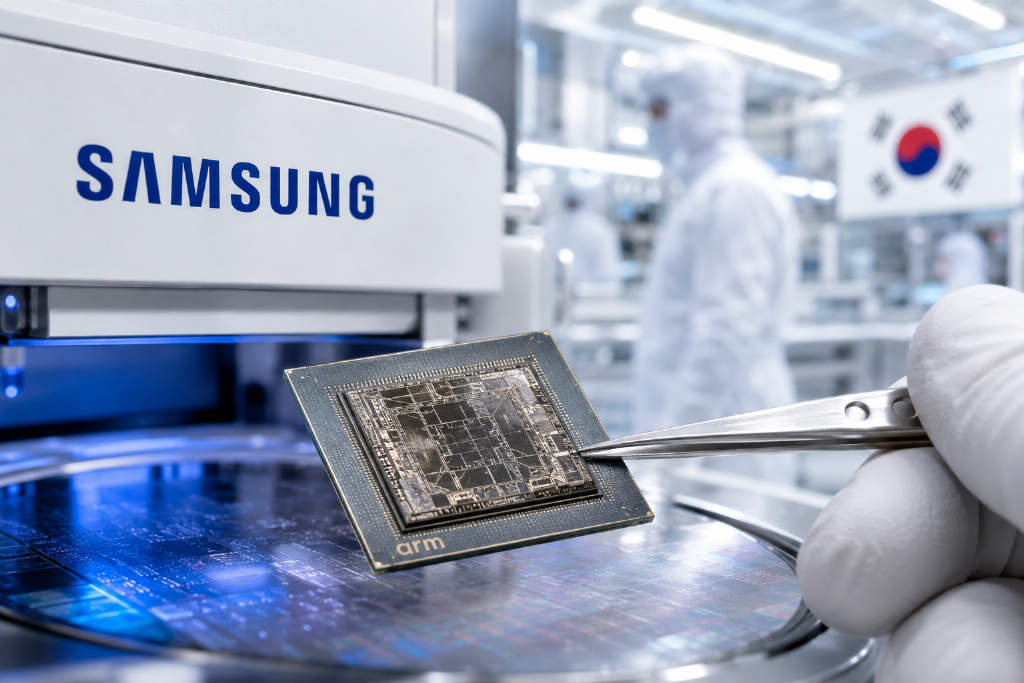
Samsung Electronics’ foundry division and Qualcomm have delayed negotiations over an application processor foundry contract because the two sides have not narrowed differences over per-unit production pricing, according to a report from The Bell cited by ChainCatcher. The report said there have been no major technical issues in the discussions, and Samsung’s 2-nanometer process under review has been assessed as having reached a considerable level of stabilization. Industry sources said Qualcomm’s AP production using Samsung’s 2-nanometer process may be pushed to next year, while it remains unclear whether production can begin within this year. Qualcomm had previously relied on Samsung to manufacture advanced AP chips before 2021. In recent years, Samsung has been trying to win back that business and has already secured customers including Tesla and Broadcom. A person cited in the report said the contract delay makes it difficult for Samsung to produce Qualcomm AP chips within the year, and the two sides may instead revisit cooperation around a next-generation product. The report also said Samsung is no longer accepting low-priced orders as it did in the past after landing strategic customers.

1300
Samsung-Qualcomm AP foundry talks delayed over pricing gap
TSMC
Sep 10, 2026

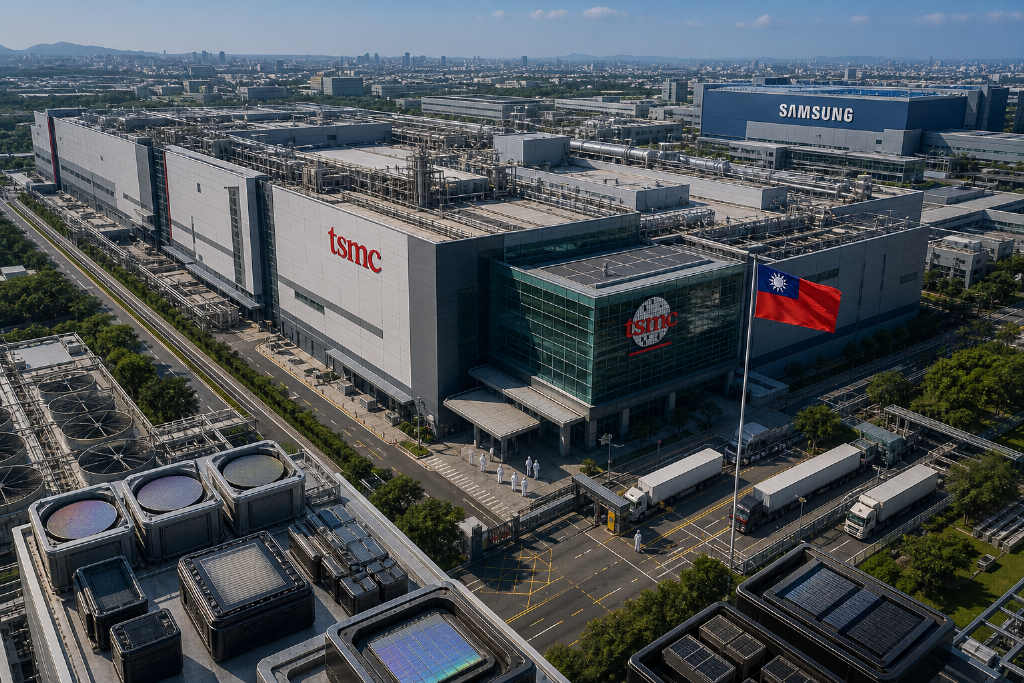
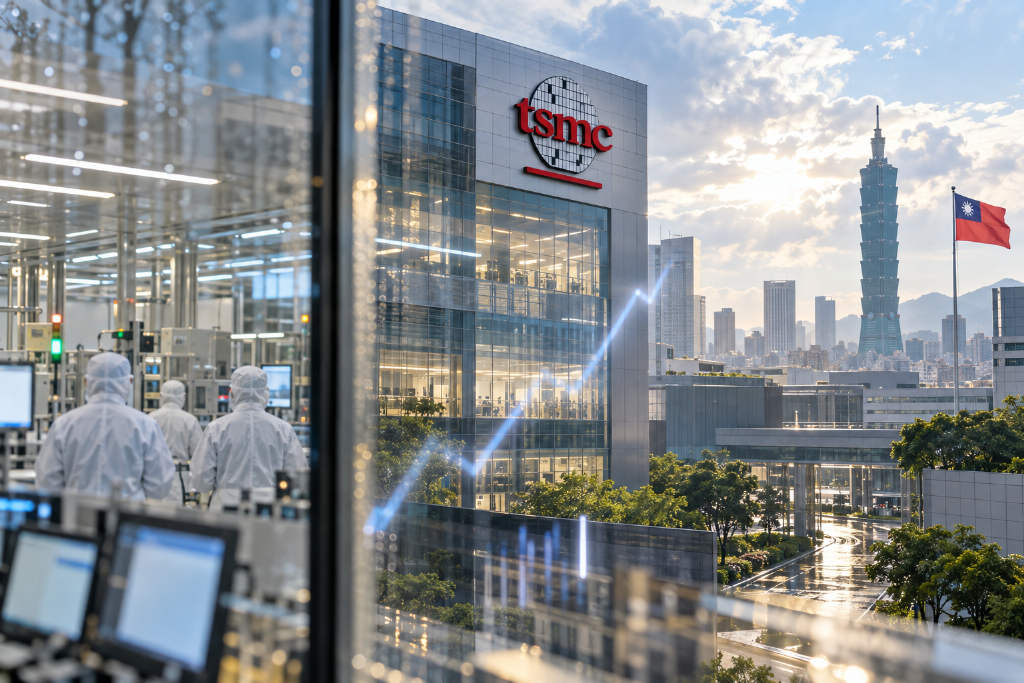
TSMC reports NT$3.39 trillion in revenue for the first eight months, up 39.3% year over year

Taiwan Semiconductor Manufacturing Co. (TSMC) released its latest monthly data on Sept. 10, showing combined revenue of about NT$3.38687 trillion for January through August 2026. That compared with roughly NT$2.432 trillion in the same period of 2025, marking a 39.3% increase. In absolute terms, revenue for the first eight months rose by more than NT$950 billion from a year earlier. BlockBeats also said TSMC posted August revenue of NT$514.8 billion, up 53.3% year over year. The figures were presented in BlockBeats’ technology update, which linked the jump in revenue to continued demand for AI chips.

1560
TSMC reports NT$3.39 trillion in revenue for the first eight months, up 39.3% year over year
Samsung
Sep 9, 2026

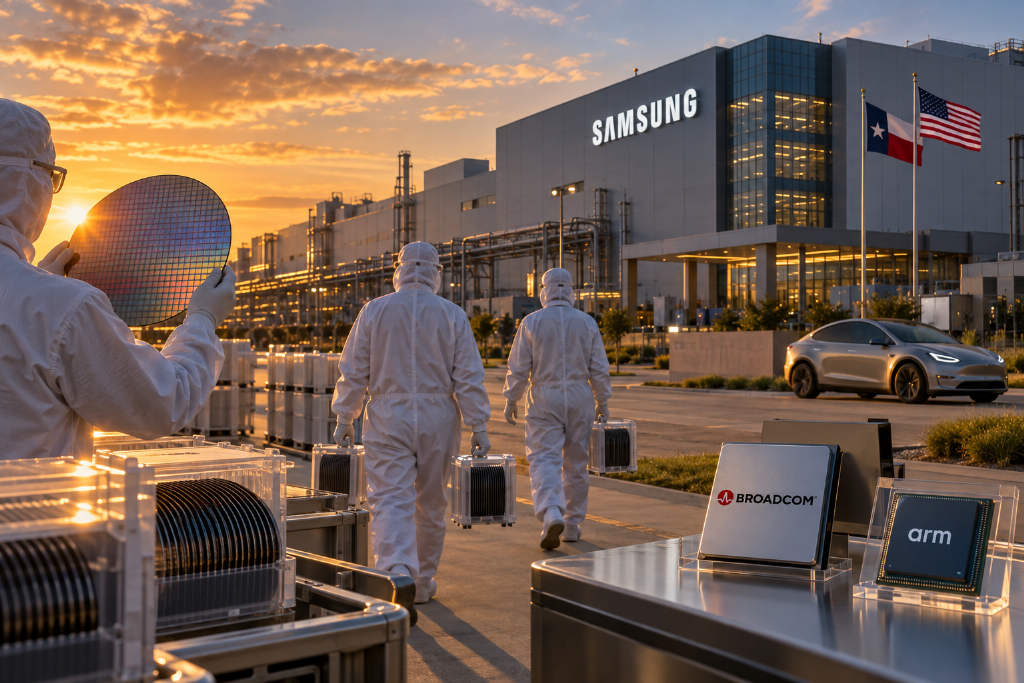
Samsung’s Taylor fab books out 2 nm capacity before startup, with Tesla, Broadcom and Arm named as customers

Samsung’s wafer fab in Taylor, Texas has already allocated its baseline 2 nanometer capacity before operations begin, according to a Sept. 8 report by BusinessKorea. The report said the site’s monthly capacity of 50,000 wafers has been fully booked by customers, with pilot production possibly starting as early as the end of September. Among the customers identified in the report are Tesla, Broadcom and Arm. The reported orders cover several product categories: Tesla’s next-generation AI chip AI5, Broadcom’s next-generation communications semiconductor, and Arm’s AI chip for smart devices. Samsung has invested about $37 billion in the Taylor facility since construction began in 2022. Mass production is scheduled for 2027. BusinessKorea also said Samsung’s 2 nm yield improved from about 60% at the beginning of this year to the 80% range, a level described as suitable for mass production. The report linked that improvement to stabilized yields in advanced processes including 4 nm and 5 nm. A second Taylor plant is expected to break ground by the end of this year, with mass production targeted for 2030.

1100
Samsung’s Taylor fab books out 2 nm capacity before startup, with Tesla, Broadcom and Arm named as customers
Samsung Electronics
Sep 8, 2026

Samsung allocates over half of its 4nm capacity to HBM4 base dies, with monthly output at about 15,000 wafers

Samsung Electronics has assigned more than half of its 4nm foundry capacity to HBM4 base dies, according to a DigiTimes report cited by ABMedia. The production lines are said to be running at full load as the company speeds shipments to major AI chip customers. Of Samsung’s roughly 30,000-wafer monthly 4nm capacity across its S5 and S6 foundry lines in Pyeongtaek’s second and third campuses, about 15,000 wafers are being used for HBM4 base dies, the report said. The base die sits at the bottom of the HBM stack and handles communication with the main processor while controlling the memory package. With HBM4, that layer has shifted from a memory process to a logic foundry process, which means it now consumes foundry resources directly. That creates internal competition for capacity between Samsung’s foundry and memory divisions, while leaving less room for other 4nm customers seeking orders on the same node.

990
Samsung allocates over half of its 4nm capacity to HBM4 base dies, with monthly output at about 15,000 wafers
Samsung Electronics
Sep 8, 2026

Samsung's Taylor Fab to Start Trial Run End of Month as 2nm Orders Surge

Samsung Electronics' Taylor wafer fab in Texas is expected to begin trial operation around the end of this month, according to a report from South Korea's Munhwa Ilbo. The fab, which has attracted $37 billion in cumulative investment since 2022, is already near full capacity due to a surge in 2nm orders from clients including Tesla, Broadcom, and Arm. It will produce Tesla's AI5 chip, Broadcom's communication chips, and Arm's AI chips. Initial monthly capacity is about 50,000 wafers, approaching TSMC's level. Samsung's 2nm yield has improved from 60% to 80%, and the company expects 2nm orders to more than double this year. The firm also raised 4nm foundry prices by up to 15%. Meanwhile, Intel issued $20 billion in new shares to expand its 2nm and 1.4nm investments, and Japan's Rapidus completed its 2nm fab. Global competition in advanced foundry is heating up.

2100
Samsung's Taylor Fab to Start Trial Run End of Month as 2nm Orders Surge
TSMC
Sep 1, 2026

TSMC seen raising process prices after Samsung moves first on foundry quotes

Samsung Electronics has raised prices for some advanced and mature process nodes, and the market now expects Taiwan Semiconductor Manufacturing Co. (TSMC) to follow with broader increases. According to a report cited by ChainCatcher from Anue, TSMC’s process pricing could rise by 10% to 15% across multiple nodes. TrendForce and Nomura reports said TSMC had already completed a new round of pricing talks with customers in the middle of this year, with some supply-constrained 3 nm N3 process capacity for the second half seeing increases of as much as 15%. Market expectations extend beyond that. By early 2027 at the latest, prices for advanced nodes including N2, N3 and N5 could climb another 5% to 10%. Mature nodes such as N12, N16 and N28, which have not seen price increases for three straight years, may also move higher by as much as 10%. The report also said nearly all N2 and N3 capacity has been booked by Apple and NVIDIA. Separately, CLSA estimates TSMC’s capital expenditure will reach $80 billion in 2027 and $90 billion in 2028, after this year’s capex was raised to $52 billion to $56 billion. TSMC also announced in July that it would expand its U.S. investment to $265 billion.

1100
TSMC seen raising process prices after Samsung moves first on foundry quotes
SK Hynix
Aug 31, 2026

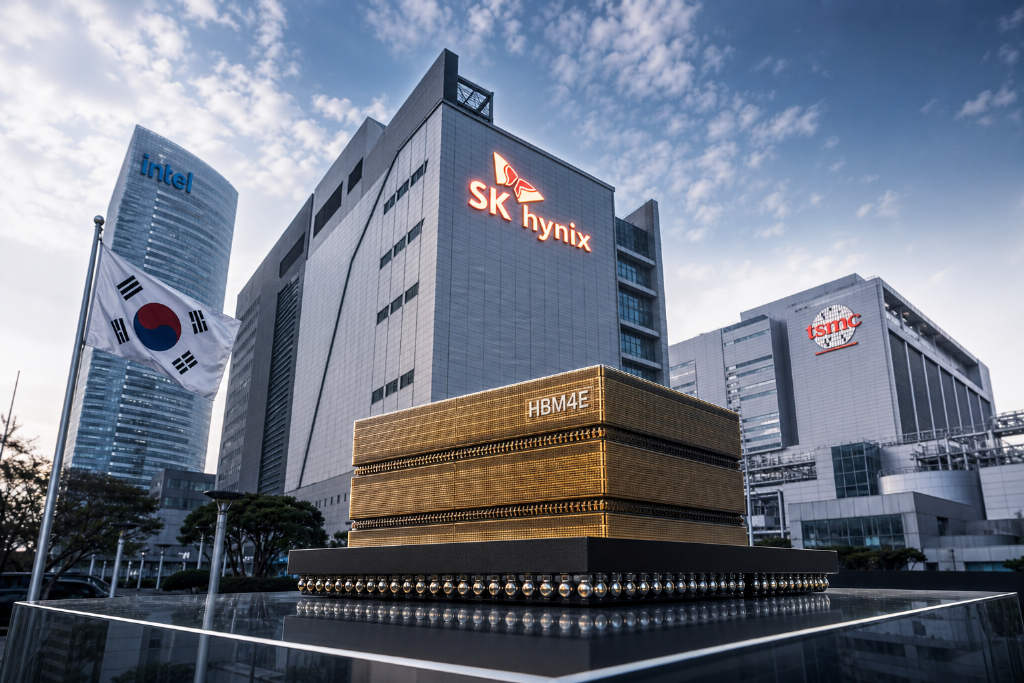
SK Hynix may have Intel make some HBM4E base dies, report says

SK Hynix is considering Intel as a second foundry source for the base dies used in its high-bandwidth memory (HBM) products, according to Citrini analyst Jukan on Aug 31. The company is looking at outsourcing part of the base-die production for HBM4E, the seventh-generation HBM, to Intel's foundry business. So far, SK Hynix has relied entirely on TSMC for outsourced base-die manufacturing. The potential addition of Intel is viewed as part of a push to build a multi-supplier foundry strategy, one that would reduce the supply chain's concentration around TSMC and improve SK Hynix's pricing leverage. Industry sources said SK Hynix is working on a plan where TSMC and Intel jointly produce HBM4E base dies, possibly starting as early as the HBM4E generation. HBM is built by stacking memory chips vertically on a base die. Market expectations point to higher base-die costs for HBM4E. Since HBM products are largely covered by long-term supply agreements, SK Hynix cannot quickly pass higher foundry costs to clients through price increases. Industry observers believe that if Intel eventually joins the base-die supply chain, SK Hynix would gain more options in both cost competitiveness and supply stability.

1380
SK Hynix may have Intel make some HBM4E base dies, report says
Total 88 items
Go topage