TSMC
Aug 19, 2026

TSMC validates A16 backside power platform as NVIDIA lines up Feynman on the node

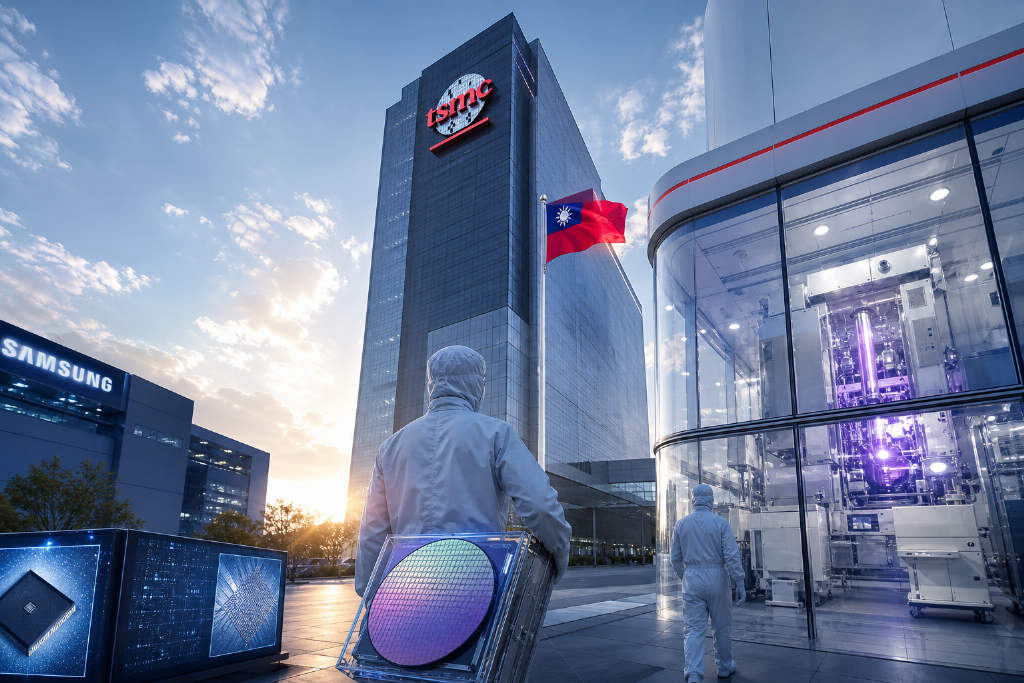
TSMC has completed development and validation of its A16 process platform built with Super Power Rail, or SPR, a backside power delivery network that ETNews said preserves compatibility with existing design ecosystems. The report says TSMC is the first foundry to bring backside power supply technology to the Angstrom-class era while keeping current design infrastructure largely intact, a point that matters for large chip customers already invested in the N2 and N2P ecosystem. According to the report, the move addresses a growing bottleneck in sub-2 nm chip design, where power and signal routing compete for limited front-side space, raising routing congestion and voltage drop risks. TSMC’s SPR architecture shifts power delivery to the back of the chip and uses dedicated backside contacts to feed each transistor’s source and drain, while leaving front-side gate structures, cell size, and layout area nearly unchanged. ETNews said A16 can deliver 8% to 10% higher performance at the same power, or cut power use by 15% to 20% at the same speed, with chip density also rising 8% to 10% versus N2P. The report also said NVIDIA’s next-generation AI accelerator platform, Feynman, will use A16 and aims for mass production in the second half of 2028, alongside large-scale use of CPO and SoIC 3D stacking.
2030
TSMC validates A16 backside power platform as NVIDIA lines up Feynman on the node
Samsung
Aug 19, 2026

Samsung pushes 1.4nm mass production to 2029 as TSMC moves ahead with A16

Samsung has pushed back its 1.4nm mass-production target from 2027 to 2029, extending its focus on the 2nm platform for at least three more years. The shift puts more weight on yield improvement, process maturity and customer adoption, rather than rushing into another node transition. The article argues that Samsung is still developing its 2nm family rather than standing still. In addition to standard SF2, the company is working on derivative 2nm processes for different use cases and plans to introduce backside power delivery in more advanced versions. Samsung has also taken a cautious stance on High-NA EUV, with Vice President Park Chang-min saying the technology still needs to mature and may only become essential for production at A10 and below, or the 1nm class and beyond. That caution stands out as TSMC keeps advancing. According to the article, TSMC’s N2 has already entered mass production, and A16, its first post-2nm node, is scheduled for mass production in the second half of 2026. A16 will use TSMC’s SPR backside power delivery technology. TSMC says that versus N2P, A16 can deliver an 8% to 10% speed gain at the same power, a 15% to 20% power reduction at the same speed, and up to about 10% higher chip density. The piece frames the latest roadmap shift as a sign that leading-edge competition is no longer just a race to the next number. Cost, yield, power delivery, packaging and ecosystem execution are becoming just as important as transistor scaling itself.

2170
Samsung pushes 1.4nm mass production to 2029 as TSMC moves ahead with A16
Samsung
Aug 14, 2026

Samsung Shifts Giheung NRD-K Line 2 to Foundry Role for Nvidia HBM 2nm Chips

Samsung Electronics is changing the planned use of its NRD-K 2 production line at the Giheung campus, converting it from an R&D facility into a wafer foundry line, according to South Korean outlet ZDNet Korea. The line will chiefly target 2nm base chips needed for Nvidia's HBM products, and is expected to come online in the second half of 2028 under a 「Send-Fab」 model, receiving wafers from other mass-production lines and handling specific processes. NRD-K is Samsung's most advanced compound R&D campus, built to secure future semiconductor technology, with total investment of roughly 20 trillion Korean won and three planned lines; the first was completed at the end of 2024. The adjustment is meant to get ahead of HBM demand growth driven by AI infrastructure spending, and Samsung plans to apply 2nm technology first to custom HBM and HBM5 to hold its performance edge. Industry insiders say the NRD-K 2 line is relatively small, well suited to Send-Fab operations, but with about two years until launch its final use could still change with market conditions. Samsung had previously weighed DRAM production for the line; after those plans were revised this month, DRAM output will be concentrated more at the Pyeongtaek campus. Equipment purchase orders have not yet been formally issued.

1830
Samsung Shifts Giheung NRD-K Line 2 to Foundry Role for Nvidia HBM 2nm Chips
Intel
Aug 14, 2026

Citrini cites Guosen report backing Intel after $20 billion stock sale

Citrini analyst Jukan said a recent overseas electronics report from Guosen Securities viewed Intel’s $20 billion equity offering as a positive signal, pointing to direct participation by CEO Chen Liwu and his family of about $12 million. Guosen reiterated a Buy rating and a $136 target price, while lifting its 2026 and 2027 EPS forecasts by 3% and 1%, respectively. The report said the offering was upsized from an initial $15 billion to $20 billion, priced at $95 per share, with the greenshoe fully exercised and reported institutional demand exceeding $100 billion. Guosen also said management participation could support Intel’s 2027 capital spending plans. On operations, the report projected Intel’s foundry business would break even in the fourth quarter of 2027, with margin leverage expanding in 2028. It also cited an estimated 18A yield of about 80%, volume ramp progress for Clearwater Forest, and potential high-volume progress for Apple 14A. In advanced packaging, the report said Intel’s EMIB customer base continues to widen, with AWS Trainium3 expected to adopt EMIB-T in 2027 and additional programs from Google, AWS and Microsoft possibly contributing from late 2027 into 2028.

2510
Citrini cites Guosen report backing Intel after $20 billion stock sale
Intel
Aug 13, 2026

Intel shares face pressure after $20 billion stock sale as AI spending and foundry expansion draw scrutiny

Intel’s shares came under pressure after the company expanded its planned common stock offering from $15 billion to $20 billion, pricing roughly 210.5 million new shares at $95 each. Reuters reported that the stock fell 4.1% on Aug. 10 after the original deal was announced, with dilution emerging as the clearest near-term concern for investors. Intel’s latest SEC filing said the company had about 5.044 billion shares outstanding as of July 17, making the base offering equal to roughly 4.2% of the existing share count, not including an underwriter option for up to 31.6 million additional shares. Intel said the proceeds will go to general corporate purposes, including capital expenditures and working capital, and estimated net proceeds of about $19.7 billion before any exercise of the additional share option. The fundraising comes as AI-related infrastructure demand lifts Intel’s server and manufacturing business. In the second quarter of 2026, Intel reported $16.1 billion in revenue, up 25% year over year. Data Center and AI revenue rose 59% to about $6.3 billion, while Intel Foundry revenue climbed 31% to $5.8 billion. The company has also raised its 2026 capital spending forecast from $18 billion to $20 billion as AI server demand runs above expectations.

1900
Intel shares face pressure after $20 billion stock sale as AI spending and foundry expansion draw scrutiny
Intel
Aug 12, 2026

BofA Says Intel's $20B Offering Will Dilute EPS by 4%-5%, Reaffirms Buy

Bank of America issued a research report on Aug. 12 covering Intel's plan to raise $20 billion through an equity offering. The bank estimated that the issuance would dilute Intel's earnings per share by approximately 4%-5% because of the expanded share count. Rather than viewing the dilution as negative, BofA called the financing a good leading indicator that management's conviction in its foundry business is strengthening. The bank assessed the overall capital raise as a net positive, reasoning that increased foundry scale and growing customer confidence should lift long-term revenue and improve operational efficiency, more than offsetting the moderate dilution in the near term. The covering analyst reaffirmed a Buy rating on Intel shares while trimming the price objective from $160 to $145. The reduction was attributed to the mild EPS dilution and the recent repricing of valuation multiples among peers in AI computing. The note reflects the bank's view that Intel's push into advanced foundry services, while costly in the short run, is consistent with its longer-term growth strategy. The report contrasts the immediate accounting impact of the share issuance with the strategic benefits that management expects from scaling its foundry operations.

2150
BofA Says Intel's $20B Offering Will Dilute EPS by 4%-5%, Reaffirms Buy
Samsung
Aug 11, 2026

Samsung to Bring High-NA EUV to 1nm A10 Node, Eyes 2030 Mass Production

Samsung Electronics plans to adopt High-NA EUV lithography starting with its 1nm (A10) process node, targeting mass production around 2030, according to a ChainCatcher report. The roadmap was outlined by a member of the Foundry process development team at Samsung's Semiconductor Research Institute during the '2026 Next-Generation Lithography + Patterning Academic Conference.' Samsung currently relies on 0.33 NA EUV multipatterning for 2nm and below, and plans to mass-produce 1.4nm in 2029 before moving on to 1nm. High-NA EUV raises the lens numerical aperture from 0.33 to 0.55, delivering higher resolution that could turn multipatterning into a single patterning step. That would help cut manufacturing costs, raise productivity and add design flexibility. The same researcher expects 1.4nm and 1nm to remain on 0.33 NA EUV multipatterning, with High-NA patterning becoming the core technology for the generation that follows. The catch: the technology is hard to master, equipment is expensive, and material technology needs to be upgraded in step.

3070
Samsung to Bring High-NA EUV to 1nm A10 Node, Eyes 2030 Mass Production
Intel
Aug 11, 2026

Intel share sale draws more than $100 billion in demand, deal may expand to $20 billion

Intel’s planned common stock sale has drawn more than $100 billion in investor orders, according to people familiar with the matter, giving the chipmaker room to consider increasing the size of the deal from $15 billion to about $20 billion. The company announced the offering on Aug. 10, and the response has been far stronger than expected. People familiar with the sale said the shares are being marketed at around $95 each or higher, a discount of roughly 6.5% to the previous Friday’s close. JPMorgan, Goldman Sachs, Morgan Stanley and Citigroup are acting as underwriters. The syndicate also has a 30-day option to purchase up to $2.25 billion in additional shares. Intel said the proceeds would be used for general corporate purposes, including capital expenditures and working capital, with spending focused on physical AI, custom chips, advanced packaging and foundry operations. CFO Sinsner said the company wants to send a signal to customers that it has confidence across all of its businesses, while CEO Chen Liwu said AI demand is outpacing supply and CPU orders already exceed current manufacturing capacity.

860
Intel share sale draws more than $100 billion in demand, deal may expand to $20 billion
Total 88 items
Go topage