BMO
Oct 2, 2026

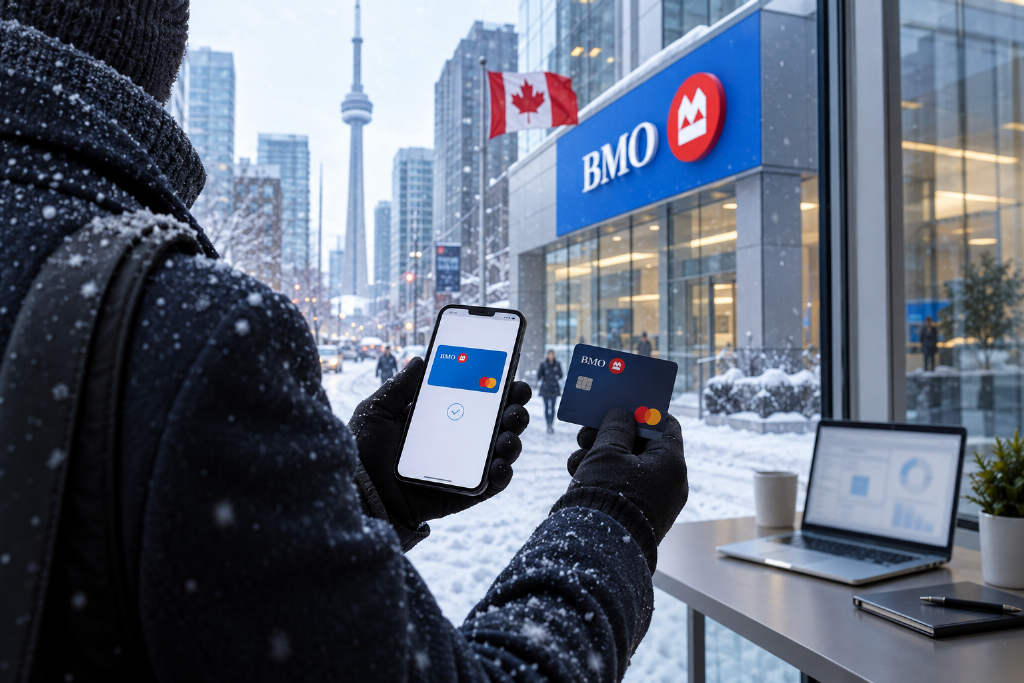
BMO and Mastercard roll out embedded virtual card payment management for business clients

Bank of Montreal (BMO) and Mastercard have launched a new embedded commercial payments feature for eligible corporate card customers in Canada. The offering allows those clients to initiate and manage BMO commercial virtual card payments directly within their operational software platforms, rather than handling the process outside their existing systems. According to the announcement cited by Techub News, the partnership makes BMO the first Mastercard issuer in Canada to deliver an integrated embedded finance and virtual card payment experience through participating platform integrations. The item was attributed to Finextra’s crypto channel.

730
BMO and Mastercard roll out embedded virtual card payment management for business clients
Open Standard
Sep 30, 2026

Coinbase, Visa and three others become Open Standard founding partners

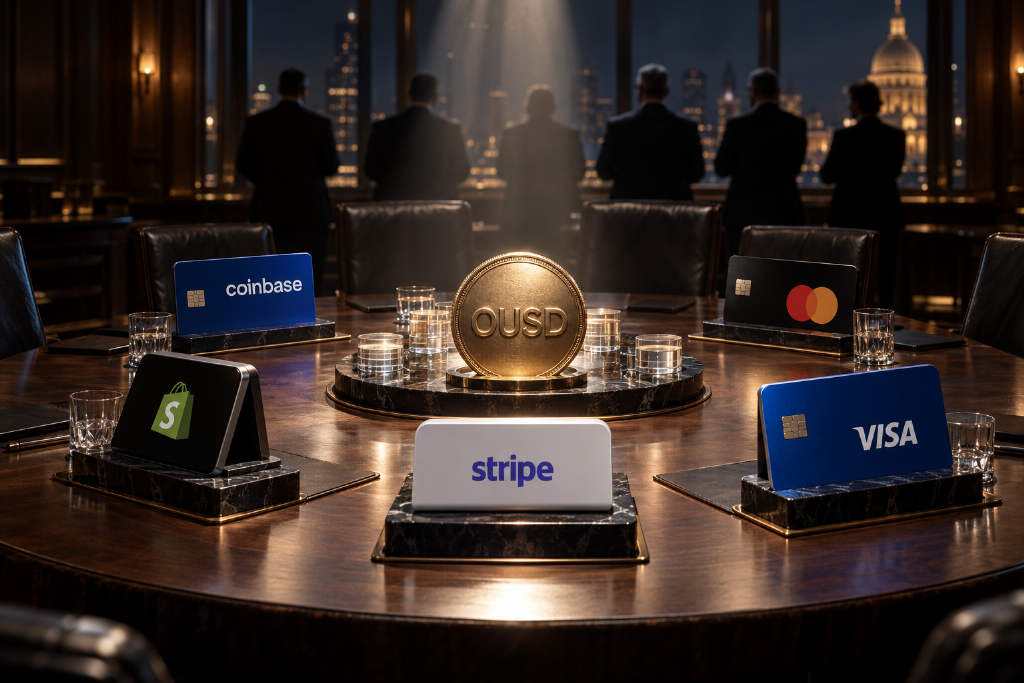
Open Standard has named Coinbase, Mastercard, Shopify, Stripe and Visa as its first five founding partners, according to comments from CEO Zach Abrams on Sept. 30. Abrams said the company is not structured as a consortium run by hundreds of participants. Instead, day-to-day operations are handled by management, while a smaller group of founding partners holds ownership and governance rights. Other partners will be rewarded based on their contribution to OUSD supply and transaction activity. Abrams said the five companies invested to become founding partners and each received an equal share of the initial equity. He also said they committed more than $1 billion over the coming months to build liquidity for OUSD. The exact amount invested by each company and their specific ownership stakes were not disclosed. At present, those five firms are the only investors in Open Standard. He added that the founding partner group is expected to expand to around 10 to 12 companies, with a board made up of founding partners also planned. Separately, the number of partners planning to integrate OUSD has grown from more than 140 in June this year to more than 200, with recent additions including SBI Holdings, UBS and fintech company Jeeves.

1260
Coinbase, Visa and three others become Open Standard founding partners
Open Standard
Sep 30, 2026

Open Standard says OUSD governance rests with founding partners as first five backers commit over $1 billion

Open Standard CEO Zach Abrams said the company is not a consortium run by hundreds of participants, according to CoinDesk. Instead, day-to-day operations are handled by management, while a smaller group of founding partners holds ownership and governance rights. Other partners are rewarded based on how much they help expand OUSD supply and trading activity. Abrams said Coinbase, Mastercard, Shopify, Stripe, and Visa have invested as the first five founding partners and each received an equal share of the initial equity. He added that the five companies have committed more than $1 billion over the coming months to build liquidity for OUSD, though the exact amount invested by each firm and their individual ownership stakes were not disclosed. At present, those five companies are Open Standard’s only investors. Abrams said the number of founding partners is expected to grow to around 10 to 12, with plans to form a board made up of those founding partners. He also said the number of partners planning to integrate OUSD has risen from more than 140 in June this year to more than 200, with SBI Holdings, UBS, and fintech company Jeeves among the latest additions.

1100
Open Standard says OUSD governance rests with founding partners as first five backers commit over $1 billion
Morph
Sep 30, 2026

Morph joins Mastercard crypto partner program to explore stablecoin payments

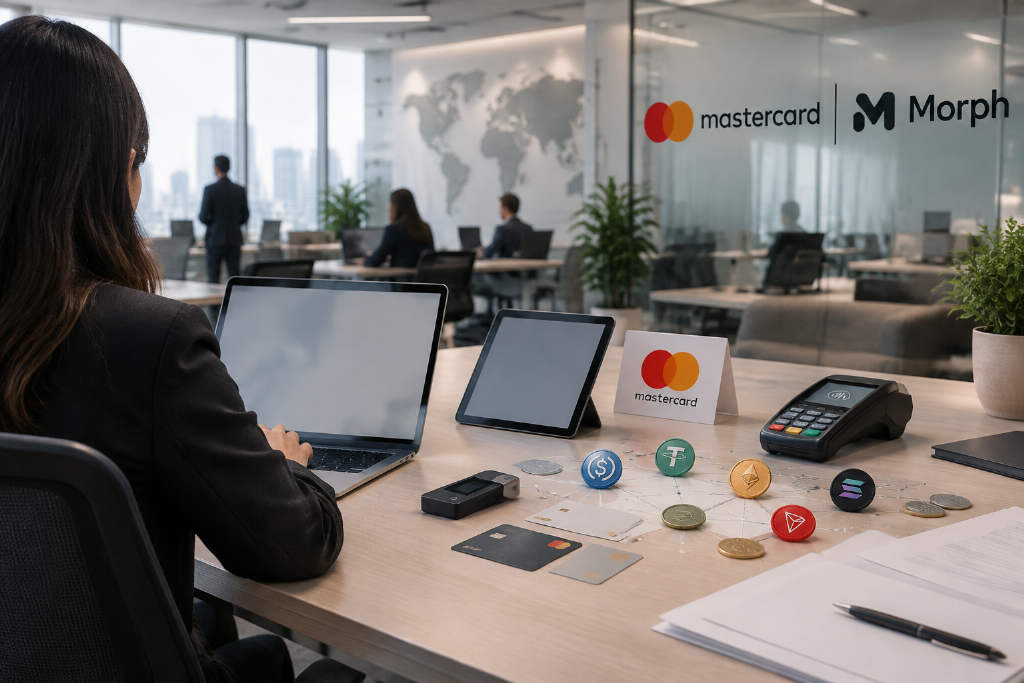
Morph said it has joined Mastercard’s crypto partner program, a network designed to connect digital asset companies, payment service providers, and financial institutions. Through the program, Morph plans to work with Mastercard and other participants on stablecoin use cases covering collections, payouts, and settlement. The company said the effort is aimed at Web3 businesses, institutions, and freelancers that serve customers globally. Morph also disclosed that its stablecoin payment platform, Morph Payments, currently supports six EVM-compatible networks as well as TRON and Solana. Businesses can receive stablecoins directly through self-custodial wallets and track payment status through a dashboard. The announcement centers on payment infrastructure and does not include additional financial terms or launch dates in the source material.

880
Morph joins Mastercard crypto partner program to explore stablecoin payments
Mastercard
Sep 29, 2026

Mastercard launches AI-powered B2B analytics platform

Mastercard has launched Mastercard Advanced B2B Analytics, an AI-powered platform aimed at narrowing the information gap between business buyers and suppliers that accept card payments. The update was cited by Techub News, which attributed the information to Finextra’s crypto channel. The brief report did not disclose additional product details, launch markets, pricing, or rollout timing beyond the announcement itself. Based on the information provided, the platform is positioned around improving visibility between the buyer side of corporate purchasing and suppliers that take credit card payments. No further comments from Mastercard were included in the source material.

960
Mastercard launches AI-powered B2B analytics platform
Mambu
Sep 29, 2026

Mambu partners with Mastercard to streamline cross-border payments for financial institutions

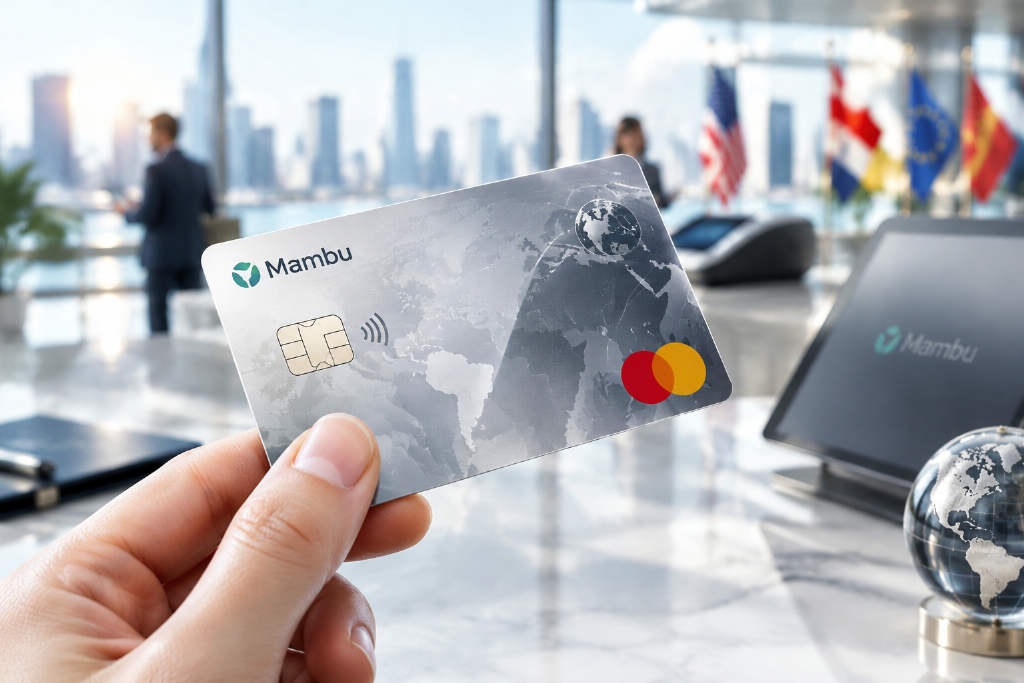
Cloud-native banking platform Mambu has entered a strategic partnership with Mastercard, a move aimed at making cross-border payments easier for financial institutions using Mambu’s platform. According to the announcement cited by Techub News, the cooperation is designed to help those institutions offer payment services that are faster, more secure, and more transparent. Mambu provides core banking services through a cloud platform for banks and fintech companies. With the new partnership, its customers will be able to tap into Mastercard’s payment network and related technology. The announcement frames the deal as a way to simplify how financial institutions deliver cross-border payment capabilities through Mambu’s existing platform. No additional financial terms or rollout timeline were disclosed in the source material. The item was attributed to Finextra’s crypto channel.

600
Mambu partners with Mastercard to streamline cross-border payments for financial institutions
Mastercard
Sep 27, 2026

Mastercard’s view on stablecoins, agentic commerce and AI: settlement can split across rails, but trust stays at the center

Mastercard CEO Michael Miebach used the company’s second-quarter earnings call and a later Motley Fool podcast appearance to sketch a consistent view of three closely watched themes in payments: stablecoins, agentic commerce and artificial intelligence. His position was not that stablecoins are irrelevant, but that they still lack the reliability, safety and interoperability needed for broad payment adoption, especially in everyday merchant transactions. He drew a harder line between AI agents buying on behalf of people or businesses, where Mastercard argues card credentials and dispute protections still work, and machine-to-machine commerce, where the underlying settlement rail may shift to stablecoins or other systems while Mastercard tries to own the trust and interoperability layer above it. The company’s August 3 completion of its $1.8 billion acquisition of BVNK, five months earlier than originally planned, fits that strategy. BVNK gives Mastercard stablecoin transaction volume, licenses, MiCA authorization and direct SEPA connectivity, helping fill the settlement role that member banks play in fiat card systems. Across all three discussions, Miebach’s core message was the same: payments may become multi-rail, but customers and merchants still need someone to guarantee outcomes when something goes wrong, and Mastercard intends to keep selling that layer.

1290
Mastercard’s view on stablecoins, agentic commerce and AI: settlement can split across rails, but trust stays at the center
Mastercard
Sep 18, 2026

Mastercard at 60: How a Bank Alliance Became a Global Payments Network

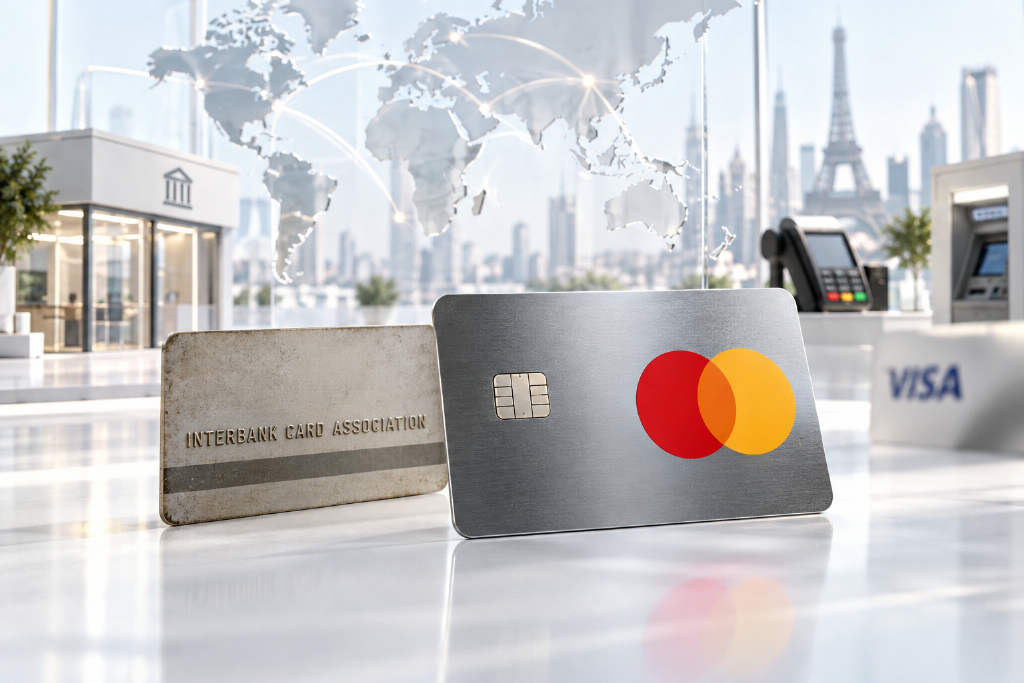
Mastercard did not begin as a single bank’s card product. It started in 1966 as the Interbank Card Association, a structure built by multiple banks that chose to create a shared network rather than join BankAmericard alone. Over the next six decades, that network expanded through overseas partnerships, a unified Mastercard brand, debit and ATM products, and later a shift from a member-owned association to a listed company on the New York Stock Exchange under ticker MA. The company also moved beyond card payments through acquisitions in account-to-account infrastructure, financial data connectivity, and cybersecurity. The article traces how Mastercard’s history has been shaped by both competition and overlap with Visa. The two networks shared member banks for years, helped develop common technical standards such as EMV, and at the same time faced legal disputes over exclusivity rules. It also shows that Mastercard’s global reach has always depended on local conditions. In China, its joint venture with NetsUnion, Wan Shi Wang Lian, received a bank card clearing license in 2023 and began domestic operations in May 2024. In the Netherlands, banks have been replacing Maestro debit cards with Debit Mastercard, extending existing relationships. Across markets, the same question keeps returning: why would local banks, merchants, and partners choose this network?

1240
Mastercard at 60: How a Bank Alliance Became a Global Payments Network
Total 258 items
Go topage