Strategy
Oct 20, 2026

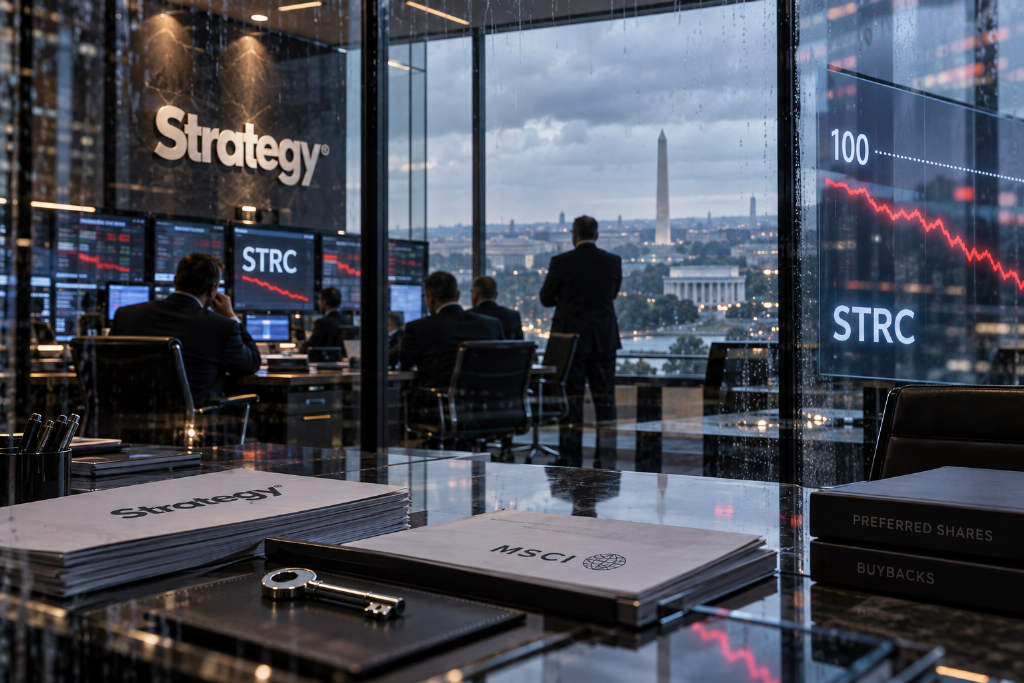
Strategy’s STRC remains below par five months after slipping under $100

Strategy has yet to bring STRC, its variable-rate perpetual preferred stock, back to par despite repeated efforts that included buying back hundreds of millions of dollars’ worth of the shares, according to Protos. The security has stayed below $100 since May 15, leaving the company short of its stated goal even after what the report described as numerous promises from senior management and the board. Protos said Strategy had tried to support STRC through a mix of issuing new MSTR shares, occasionally selling a small portion of its large BTC holdings, and repurchasing a significant amount of available STRC. At the time of writing, however, STRC was still trading below $100. The report also pointed to fresh pressure from MSCI’s decision to classify MSTR as a “non-operating business” and remove it from the Global Investable Market Indexes. In September, the failure of the CLARITY Act to pass in the US coincided with a 7% drop in MSTR and a move in STRC from roughly $0.99 to $0.97. Earlier, Strategy and its perpetual shares had already fallen sharply after the company reported an $8 billion loss in its second-quarter earnings.

810
Strategy’s STRC remains below par five months after slipping under $100
Joe Lubin
Oct 20, 2026

Consensys exits SharpLink stake after 94% collapse from peak

Consensys, the software company controlled by Joe Lubin, has sold its entire 5.7 million-share common stock position in SharpLink for about $48 million, according to the report and regulatory disclosures cited by Protos. The sale was executed at $8.39 per share, far below SharpLink’s May 2025 peak, and Lubin-linked holders told regulators they were liquidating their position. Lubin serves as SharpLink’s chairman and had previously argued that ETH treasury stocks such as SharpLink could evolve into "Berkshire Hathaway-style" vehicles. SharpLink, once a gambling marketing company, became tied to an ETH treasury narrative that sent the stock sharply higher in 2025. After announcing its ETH deal on May 27, 2025, the shares jumped 412% in one session to roughly $34 and later hit an intraday high of $124.12 on May 30. The stock later fell hard. As of the latest close cited in the report, shares finished at $7.46, with another 11% decline noted from the prior close. The company’s financial picture has also weakened. Protos said SharpLink lost $735 million in 2025 and has already posted quarterly losses in 2026. MSCI has added the company to its removal watchlist under rules aimed at limiting non-operating companies in its indexes by November 2026, a move that could cut off some passive investment flows.

1360
Consensys exits SharpLink stake after 94% collapse from peak
MSTR
Oct 20, 2026

Why some investors may still choose MSTR over a spot Bitcoin ETF

MSCI’s rule change has put MicroStrategy, now operating as Strategy, under fresh pressure after the company was included in a preliminary list of non-operating firms that could be removed from the MSCI Global Investable Market Indexes. The final decision is due on Nov. 11 and would take effect after the close on Nov. 30. Following the announcement, MSTR fell sharply, reviving a familiar question for crypto-linked equity investors: if spot Bitcoin ETFs are already well established, why own MSTR at all? In Murphy’s analysis, the immediate issue is the potential passive selling tied to index deletion. Funds tracking MSCI-related indexes are estimated to hold about 13 million MSTR shares, worth nearly $1.8 billion at the Oct. 16 close, or roughly 60% of the stock’s average daily trading volume over the prior 30 days. That is meaningful, but not necessarily too large for the market to absorb. The bigger question is whether Strategy can keep attracting active demand by increasing net BTC exposure per share through premium-funded capital raises. The article argues that MSTR’s future relative performance versus BTC depends on three variables: Bitcoin’s price, net BTC per share after liabilities, and mNAV, the premium investors are willing to pay over the company’s net Bitcoin asset value.

1020
Why some investors may still choose MSTR over a spot Bitcoin ETF
Indonesia stocks
Oct 20, 2026

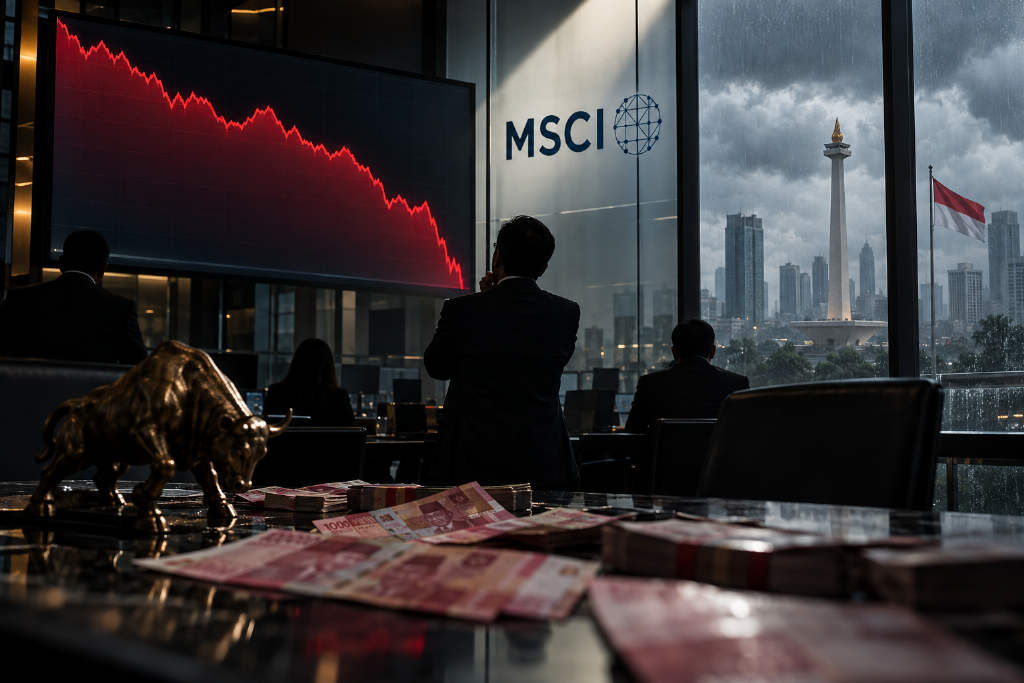
Indonesia Tightens Daily Down Limit to 7%, but MSCI Downgrade Risk Still Hangs Over Market

Indonesia’s stock exchange has cut the daily downside limit for listed shares from 15% to 7% through the end of the year after a sharp selloff triggered by MSCI’s proposal to reclassify the country from an emerging market to a standalone market. The move came after the Jakarta Composite Index fell 14.91% in a week, including an 11.6% one-day drop on Oct. 16 that triggered a 30-minute trading halt. The exchange said the tighter limit is meant to give investors more time to assess information, and it later added a special rule for low-priced shares trading at 11 to 14 rupiah, capping daily declines at 1 rupiah. But the core issues raised by MSCI remain unchanged: opaque ownership structures, suspected coordinated trading, and a lack of meaningful enforcement. MSCI’s consultation runs through April 30, 2027, with a final decision due by June 30, 2027. Goldman Sachs estimates a full removal from MSCI indexes could trigger $5.6 billion in passive outflows, while foreign investors have already sold a net $4.88 billion of Indonesian equities this year. The rupiah has also weakened to 18,040 per U.S. dollar, close to its June record low of 18,190.

790
Indonesia Tightens Daily Down Limit to 7%, but MSCI Downgrade Risk Still Hangs Over Market
Strive
Oct 19, 2026

Strive buys 4,045 BTC for about $335 million as warrant exercise brings in $369.2 million

Strive, the Nasdaq-listed company that uses Bitcoin as a treasury reserve asset, said in a regulatory filing published Monday that it bought 4,045 BTC between Oct. 12 and Oct. 16 at an average price of about $82,803 per coin. The purchase was worth roughly $335 million and lifted the company’s total Bitcoin holdings to 36,818 BTC, up from 32,773 a week earlier. At current prices, that stockpile is worth a little more than $3 billion. The filing said the cash largely came from investors exercising warrants. On Oct. 12 and 13, holders exercised 273,493,909 warrants for 13,674,703 new Class A shares, generating about $369.2 million. The remaining warrants expired unexercised on Oct. 13, and the company said no traditional warrants remain outstanding. Over the same week, Class A shares outstanding rose from 101.2 million to 114.8 million, while cash on hand reached $317.5 million. The disclosure also comes as other digital-asset treasury companies remain active. Strategy bought 267 BTC last week and expanded its preferred-stock buyback program, while Bitmine added 12,535 ETH. Separately, Strive priced a 7 million-share offering of new 15% Series A perpetual preferred stock, called SATS, at $90 per share, for expected gross proceeds of about $630 million.

700
Strive buys 4,045 BTC for about $335 million as warrant exercise brings in $369.2 million
Strategy
Oct 19, 2026

Strategy buys 267 more BTC, lifting October bitcoin spending to $73 million

Strategy, the largest corporate holder of bitcoin, added another 267 BTC last week for a little over $22 million, according to a filing released Monday. The purchase lifted the company’s total holdings to 848,517 BTC, valued at roughly $69.5 billion at current prices. It was the company’s third bitcoin purchase in October and brought its spending on the asset this month to $73 million. The filing also showed that Strategy repurchased $193.1 million of its STRC preferred stock. The company has been buying back STRC this year as those preferred shares traded below their $100 face value, a move the report linked to market volatility and index changes. In equity trading Monday morning in New York, Strategy shares rose nearly 2% to about $139, though the stock remained down 17% over the past month and 11% year to date. Formerly known as MicroStrategy, the company began buying bitcoin in August 2020 and has since spent around $64 billion on the asset. The report also noted a potential risk ahead: MSCI said last week it was advancing a proposal that would classify non-operating companies as ineligible for inclusion in the MSCI Global Investable Market Indexes, a change that could eventually remove Strategy from the index.

850
Strategy buys 267 more BTC, lifting October bitcoin spending to $73 million
Strategy
Oct 19, 2026

Strategy Faces Possible MSCI Removal as $2.8 Billion in Passive Flows Comes Into Focus

Strategy, the largest corporate holder of Bitcoin, has been placed on a potential removal list under new MSCI rules that screen whether index constituents qualify as operating companies. The index provider said companies that fail an initial review may face five financial ratio tests, and those triggering at least four exclusion conditions could lose eligibility. Strategy remains part of indexes including MSCI USA and MSCI World, according to Reuters, but the company has previously warned that exclusion could force passive funds tracking those benchmarks to sell about $2.8 billion worth of MSTR shares. The stock closed at $136.83 on Oct. 16, down 9.56% on the day. Strategy disclosed on Oct. 12 that it held 848,250 BTC, equal to about 4.04% of Bitcoin’s 21 million supply cap. Using Binance pricing of roughly $82,593 on Oct. 19, that stash was worth about $70.06 billion, above the company’s roughly $64.3 billion equity market value from the prior trading day. Reuters also said Metaplanet and SharpLink are among other companies being watched under the new framework.

1800
Strategy Faces Possible MSCI Removal as $2.8 Billion in Passive Flows Comes Into Focus
MSCI
Oct 19, 2026

MSCI proposes removing Indonesia from emerging markets as Jakarta stocks sink again

MSCI has opened a consultation on reclassifying Indonesia from an emerging market to a standalone market, a move that could remove the country from major global equity benchmarks. The index provider said keeping Indonesia in the emerging markets category is no longer appropriate, citing persistent concerns over investability, opaque ownership structures, suspected coordinated trading, and a lack of evidence that reforms have been enforced consistently across the market. Indonesian authorities had announced measures including disclosure of shareholders with stakes above 1%, more detailed investor classification disclosure, high shareholding concentration reporting, and a roadmap for a minimum 15% free float, but MSCI said institutional investors still saw limited progress. The market reaction was sharp. After the announcement, the Jakarta Composite Index fell 8% at the open on Oct. 16, triggering a 30-minute trading halt, and at one point dropped more than 11%, according to Bernama. On Oct. 19, the index fell more than 5% again, reaching its lowest level since early October 2020, CNBC reported. Goldman Sachs estimated that a full removal from the MSCI Emerging Markets Index could trigger about $5.6 billion in passive outflows. The bank also said a separate scenario in which FTSE Russell follows could lead to another $2.7 billion in outflows, while active funds benchmarked to MSCI and FTSE hold more than $8 billion in Indonesian equities.

780
MSCI proposes removing Indonesia from emerging markets as Jakarta stocks sink again
Total 86 items
Go topage