Microsoft
Nov 7, 2026

Microsoft Moves to End Oracle AI Computing Deal as Cloud Strategy Faces Review

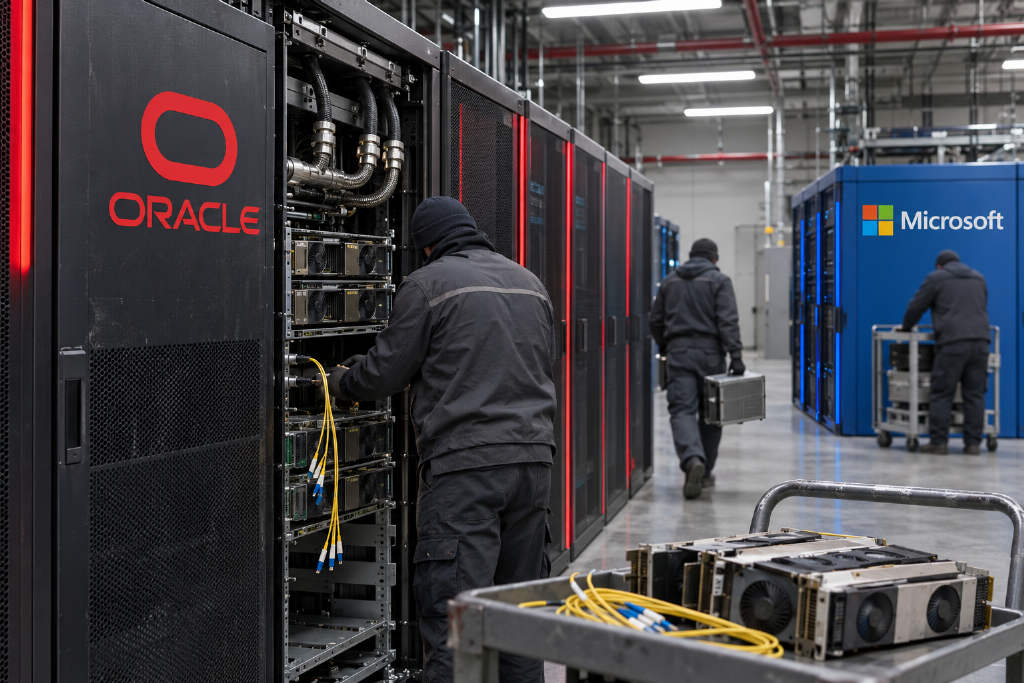
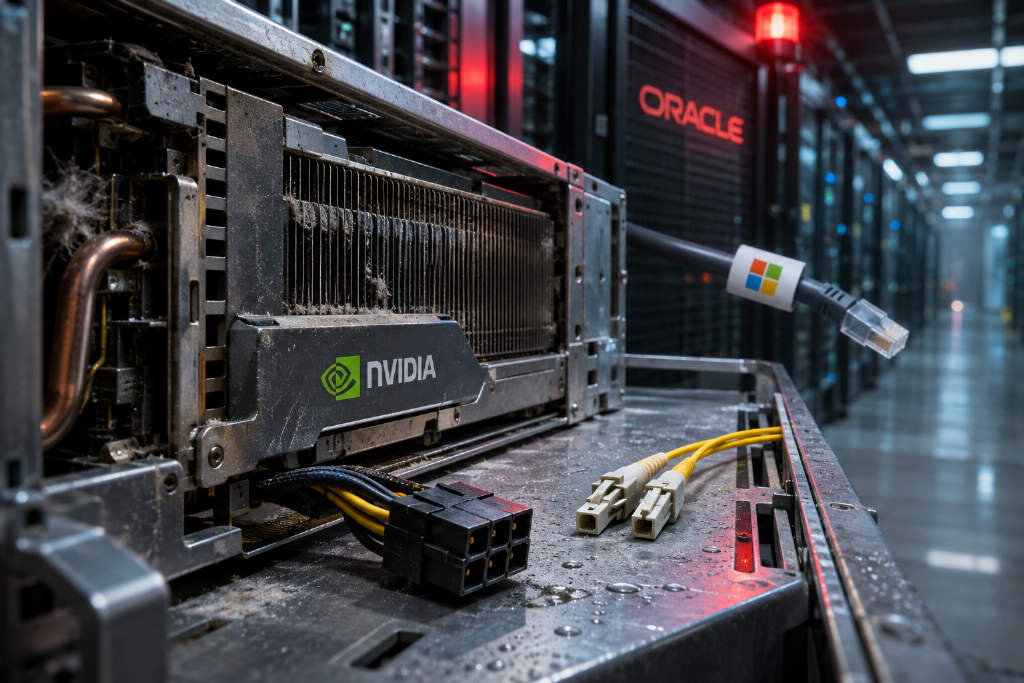
Microsoft is gradually winding down an arrangement to lease artificial-intelligence computing capacity from Oracle after declining to renew the contract, according to a report carried by MarsBit. The change is part of Microsoft’s review of cloud partnerships worth tens of billions of dollars. The company has spent the past several months shutting down computing resources previously rented from Oracle because the hardware, which uses older-generation Nvidia chips, no longer meets Microsoft’s current technical specifications. Oracle said demand for AI infrastructure remains strong, including for earlier-generation graphics processors. In September, the company said it was renewing four-year-old GPU server contracts at a 20% premium to their original prices. Oracle shares fell about 3% during the session before closing in a deep V-shaped move. The report also said Microsoft is reassessing contracts with emerging cloud providers such as CoreWeave, Nscale and Nebius after internal managers raised concerns about high costs and delayed project delivery.
510
Microsoft Moves to End Oracle AI Computing Deal as Cloud Strategy Faces Review
Microsoft
Nov 7, 2026

Microsoft Moves to End Oracle AI Cloud Computing Arrangement

Microsoft has begun winding down computing resources rented from Oracle after declining to renew the related contract, according to a report published on Nov. 7. The move is part of Microsoft’s review of cloud-computing arrangements worth tens of billions of dollars. People familiar with the matter said the rented capacity had become less useful over time because the hardware, which uses a previous-generation Nvidia chip, no longer met Microsoft’s current technical specifications. Oracle said demand for AI infrastructure remains strong, including for previous-generation graphics processors. The company said in September that it was renewing a four-year-old GPU server contract at a 20% premium to the original contract price. Oracle shares fell about 3% during the session before staging a deep V-shaped recovery by the close. The 2023 arrangement gave Microsoft access to Oracle servers to support a new AI-assisted version of Bing. Microsoft has also signed large resource-rental agreements with CoreWeave, Nscale and Nebius, but some internal managers have raised concerns about high costs and delivery delays. Oracle’s cloud revenue reached $18 billion in the fiscal year through May 2026, while heavy infrastructure spending has pushed its free cash flow into negative territory.

500
Microsoft Moves to End Oracle AI Cloud Computing Arrangement
Goldman Sachs
Nov 3, 2026

Goldman Sachs raises 2030 global data center capacity forecast to 273GW

Goldman Sachs said in a research note that it has lifted its forecast for global data center capacity in 2030 to 273GW from 217GW. The bank said that would mark a sharp increase from roughly 103GW in 2025, implying a compound annual growth rate of about 21%. The note also projected that around 170GW of new data center capacity will be added worldwide over the next five years. Using an assumed investment benchmark of $50 billion per GW, Goldman Sachs estimated potential capital expenditure at about $8.5 trillion. For the United States, the bank raised its 2030 capacity forecast to 152GW from 125GW. It expects 103GW of cumulative additions after 2025, accounting for about 60% of global additions over the same period. Goldman Sachs said rapid expansion by newer cloud providers such as Neocloud, driven by demand for GPUs, was one of the key reasons behind the higher U.S. forecast.

640
Goldman Sachs raises 2030 global data center capacity forecast to 273GW
AI funding
Oct 31, 2026

Cheap capital for U.S. AI is getting harder to secure as Anthropic and OpenAI hit funding friction

Funding conditions for the U.S. artificial intelligence sector are getting tighter after years of easy money. Two of the industry’s most closely watched companies ran into fresh resistance this week: Blackstone told investors Anthropic is more likely to land in the BB range or above after its IPO rather than secure an investment-grade rating, while OpenAI cut its latest fundraising target to about $20 billion from $30 billion. The shift is showing up across debt, equity and private credit markets. Investors and lenders are weighing several risks at once, including growing resistance to data centers, uncertainty over how quickly AI profits will materialize, and heavy concentration in AI-related holdings after a flood of stock and bond issuance. The pressure is most visible among “neocloud” companies that finance AI infrastructure with debt, many of them former crypto miners, but even top-rated giants such as Meta, Amazon, Alphabet and Microsoft are facing higher borrowing costs and limits on how much investors are willing to absorb. The broader issue is that AI buildout is relying more heavily on external capital. Reuters’ analysis of LSEG consensus forecasts shows capital spending at Microsoft, Alphabet, Amazon, Meta and Oracle is expected to exceed free cash flow by 2027, making market access a central constraint for the next phase of AI expansion.

630
Cheap capital for U.S. AI is getting harder to secure as Anthropic and OpenAI hit funding friction
US stocks
Oct 26, 2026

U.S.-listed AI compute rental firms open lower, with Nebius down 5%

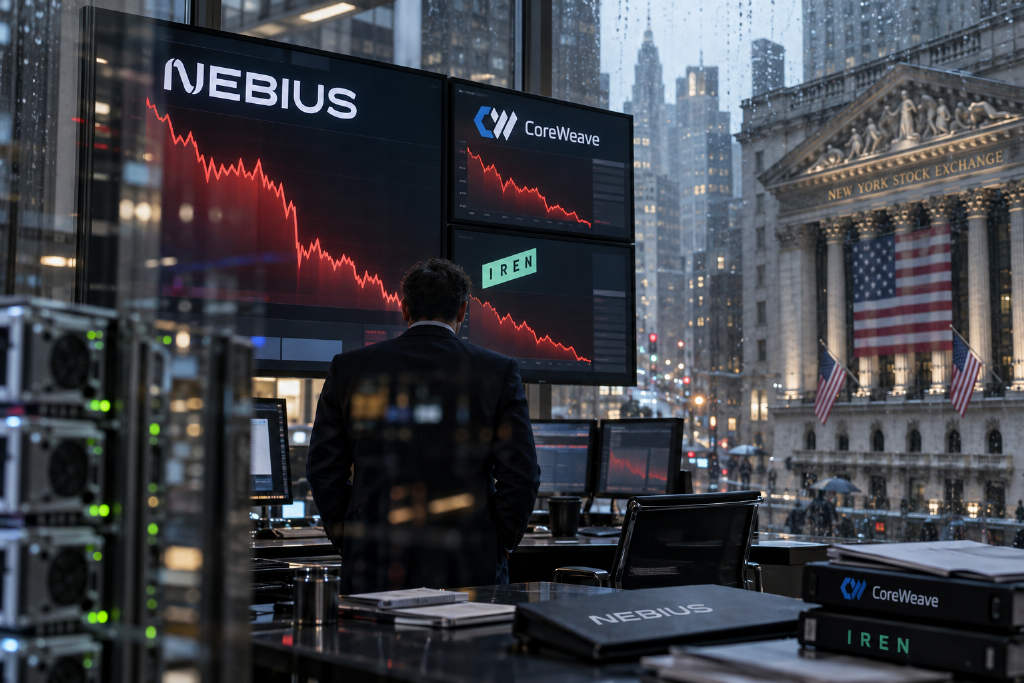
U.S.-listed AI compute rental companies fell in early trading, according to data from MSX.COM. Nebius dropped 5%, CoreWeave fell 4.1%, and IREN declined 3.3%. The move came as the market digested earlier remarks from Tesla CEO Elon Musk, who said neocloud companies could face broad industry consolidation in the future and that some firms may fail. The report did not provide additional company-specific catalysts beyond those comments. The declines were reported at the market open and involved a group of AI compute rental names trading lower at the same time.

1150
U.S.-listed AI compute rental firms open lower, with Nebius down 5%
SenseTime
Oct 26, 2026

Report says SenseCore holds nearly 50% of China’s neocloud market

A new report from Frost & Sullivan and LeadLeo Research Institute said SenseTime’s SenseCore has captured nearly 50% of China’s neocloud market, according to a Techub News brief citing Quantum Bit. The report, titled China Full-Stack AI Cloud Service Market Report 2026H1, also tracked a sharp rise in SenseCore’s average daily token service volume. It said the figure climbed from about 400 billion at the start of 2026 to 2.42 trillion by the end of July, then to 6 trillion by the end of September, with a target of 10 trillion per day in the fourth quarter. The same report said Agentic AI requires more than 10 times the computing power of traditional large models. Separately, data from China’s National Data Administration showed that, as of March 2026, China’s average daily token call volume had exceeded 140 trillion. The figures point to rapid growth in AI cloud demand and token usage in the domestic market.

1020
Report says SenseCore holds nearly 50% of China’s neocloud market
Elon Musk
Oct 26, 2026

Musk says 200-plus AI neoclouds may face failure or consolidation

Elon Musk said more than 200 specialist AI cloud providers could be headed for failure or consolidation as lenders pull back from companies that lack meaningful revenue outside AI data centers. Writing on X, Musk said financing has largely dried up for firms without broader business lines, contrasting that with SpaceX, which he said secured $40 billion in GPU debt financing thanks to its investment-grade status and revenue from Starlink and its rocket business. He added that the sector now faces what he called "guppy-level death and consolidation," with only a limited number of firms likely to survive. His comments line up with an earlier forecast from Gartner, which said more than 80% of neocloud providers will stop operating independently by 2030. Gartner argued that the industry may struggle to earn adequate returns on the enormous sums being committed to AI infrastructure, including nearly $1 trillion in 2026 and another $6 trillion from 2027 through 2030. The report also pointed to possible spillover for Bitcoin miners that have moved into AI infrastructure, including IREN and Core Scientific. Days before Musk’s post, SpaceX reported that its "Super Intelligence" unit generated $7.6 billion in third-quarter revenue, up 830% year over year.

860
Musk says 200-plus AI neoclouds may face failure or consolidation
Elon Musk
Oct 26, 2026

Musk says debt financing is tightening for AI data center firms, with 200+ neoclouds at risk

Elon Musk said in a post on X that debt financing has become far harder to access for companies whose revenue is concentrated in AI data center operations. According to Musk, over the past few weeks, the debt market has almost completely shut off funding for businesses that lack meaningful income sources outside that segment. He contrasted that with SpaceX, which he said has completed $40 billion in GPU-related debt financing. Musk attributed that outcome to the company’s investment-grade credit rating and to revenue generated by Starlink and its rocket launch business. He also said the current field of more than 200 emerging cloud service providers, often referred to as neoclouds, could face a broad wave of failures and consolidation. In his view, only a small number of those companies are likely to survive as financing conditions tighten.

810
Musk says debt financing is tightening for AI data center firms, with 200+ neoclouds at risk
Total 51 items
Go topage