Citi
Aug 13, 2026

Citi keeps Buy/High Risk rating on Nebius, says capacity timing remains the key constraint

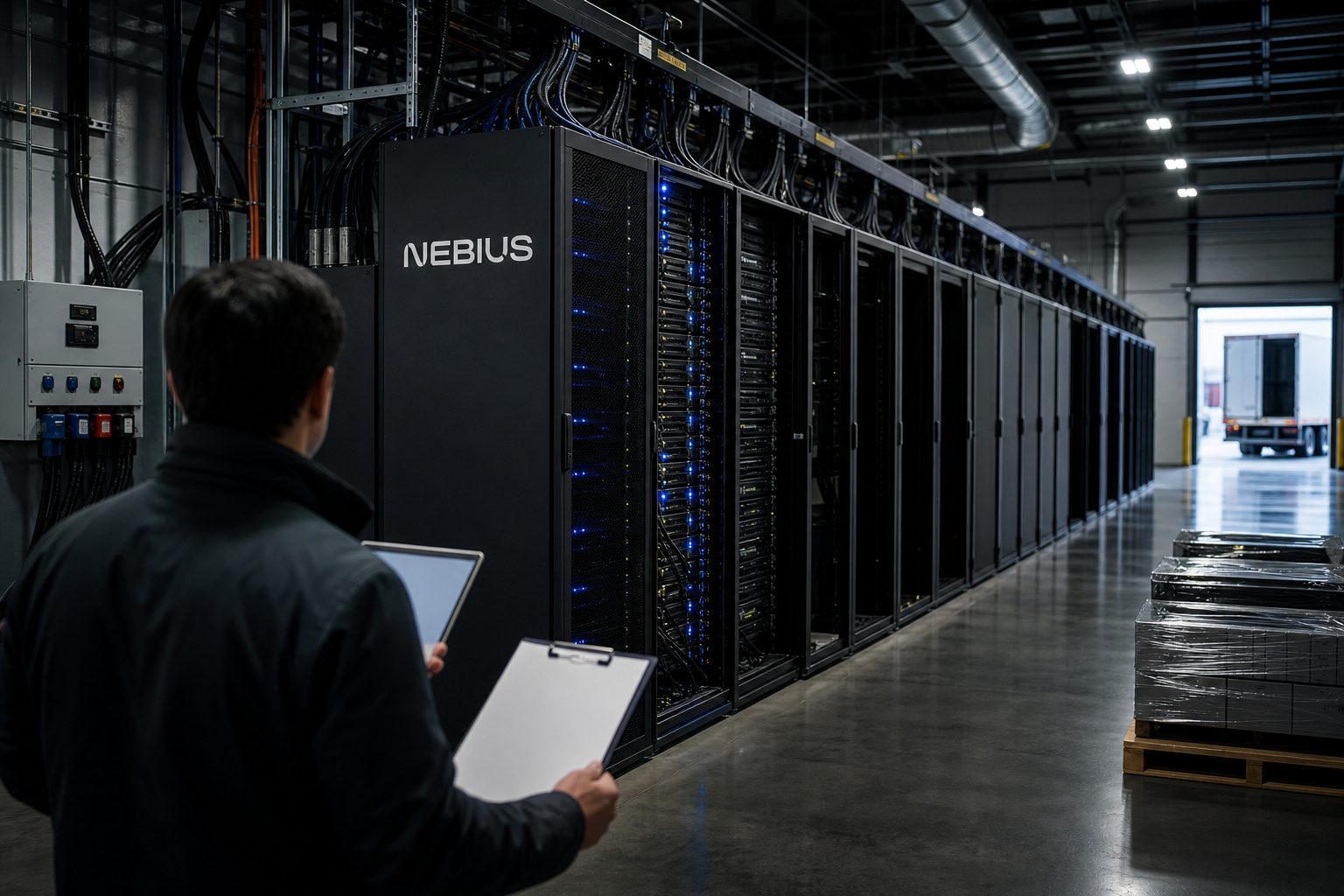
Citi said in its latest report that Nebius is not facing a demand problem, but a capacity ramp timing issue, and it maintained a Buy/High Risk rating with a $278 price target. The bank pointed to strong second-quarter revenue, driven by asset SLA revenue, Token Factory, Tavily, higher utilization, and on-demand demand. Management said demand remains very strong, with multiple buyers behind every GPU, while backlog growth has come from larger average order sizes and more mid-term contracts in the core AI cloud business. Citi also highlighted that roughly 50% to 60% of Nebius’ infrastructure capital expenditure is supported by customer prepayments. On a cash basis, project payback can come in at under one year, around 10 months, which the bank said helps ease concerns about funding pressure in the neocloud model. Still, Citi said the real test will come in the second half, when signed capacity starts moving toward deployment and revenue recognition. Nebius expects most contracted capacity to come online in the second half of 2026, with Microsoft-related deployments following a similar timeline. Citi added that the company’s 800MW to 1GW connected power target remains achievable, though converting that into active power still requires network testing, integration, and commissioning. The bank also flagged customer concentration, heavy capex, GPU supply, and financing conditions as key risks.
2060
Citi keeps Buy/High Risk rating on Nebius, says capacity timing remains the key constraint
Nvidia
Aug 13, 2026

VC partner says Nvidia is becoming a “synthetic hyperscaler” in the AI compute stack

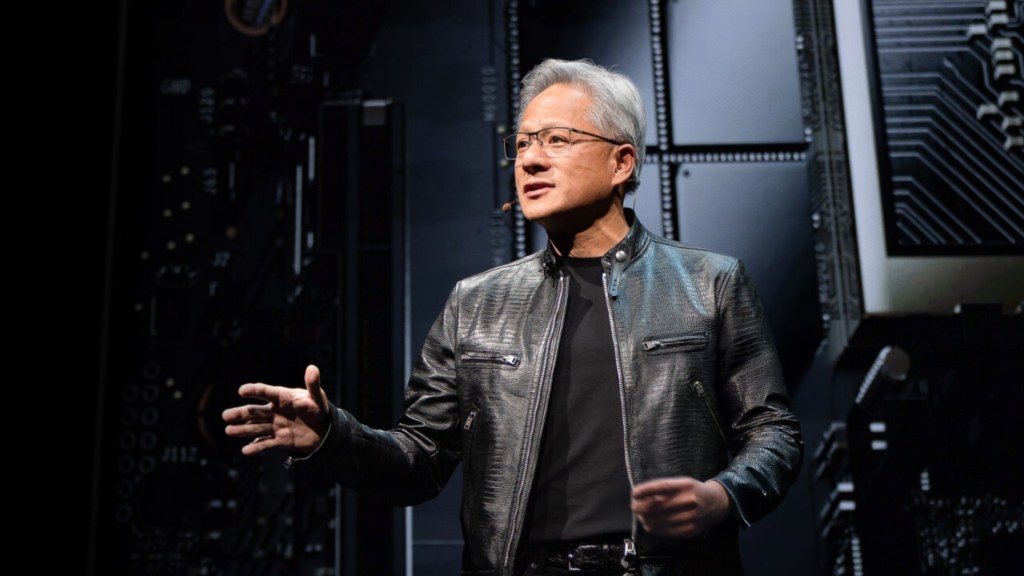
Altimeter Capital partner Clark Tang argues that Nvidia is no longer just a chip supplier to the AI industry. In his view, the company has been building the two pillars that historically defined hyperscalers: an operating layer that abstracts and manages infrastructure, and a financing layer that funds capacity ahead of demand. Tang says this combination is turning Nvidia into a “synthetic hyperscaler,” one that is starting to displace Amazon, Microsoft, and Google in parts of the AI compute supply chain. His thesis begins with a shift in infrastructure economics. Traditional hyperscalers built strong margins by converting enterprise capex into opex and using software to maximize utilization of shared hardware. Tang says AI workloads break that model. Large-scale training depends on tightly synchronized GPU clusters, while inference is highly sensitive to tokens per watt and time to first token. In that setup, virtualization and networking layers that worked well in the cloud era can become a drag on GPU performance. He also points to the rise of neocloud providers, which offer lower-margin, AI-focused infrastructure but often lack the balance sheet strength to finance aggressive buildouts. Tang says Nvidia has moved to close that gap with software such as DSX OS, Mission Control, Omniverse, and Dynamo, while also standardizing hardware and bringing in third-party capital from firms including Apollo, BlackRock, Blackstone, Goldman Sachs, and KKR.

1960
VC partner says Nvidia is becoming a “synthetic hyperscaler” in the AI compute stack
Market Analysis
Aug 13, 2026

CPI Lands on Target as Market Shifts to Neocloud for the Next AI Trade

U.S. CPI came in at 3.4%, matching expectations and leaving little new macro impulse for markets. Attention instead turned to where the next leg of the AI trade might move after the storage-chip theme cooled. Earnings from CoreWeave and Nebius pushed that conversation toward Neocloud, or next-generation AI cloud providers, after the two stocks finished up 19% and 34%, respectively. The article points to a common message in both reports: compute capacity is effectively sold out, and demand still exceeds available supply. CoreWeave posted quarterly revenue of $2.58 billion, a backlog of $104.2 billion, and another $25 billion in newly signed contracts early in the third quarter. Nebius reported $582 million in quarterly revenue, 454% year-over-year growth, a $3 billion annualized run rate for its AI cloud business, and its first positive EBITDA. It also argues that the sector’s moat is moving away from simply securing GPUs and toward securing power. Pricing data cited for Nebius showed short-duration, rapid-delivery compute selling for $40 million to $50 million per megawatt, versus $20 million to $25 million per megawatt for long-term contracts. The piece further says recent company disclosures challenge short arguments around GPU depreciation, useful life, and profitability, especially for older clusters that continue generating renewal revenue after their original asset costs have already been recovered.

2120
CPI Lands on Target as Market Shifts to Neocloud for the Next AI Trade
NeoCloud
Aug 13, 2026

Why NeoCloud names are leading the tech rebound as investors reprice contracted AI capacity

NeoCloud stocks such as CoreWeave and Nebius have emerged as one of the strongest groups in the latest U.S. tech rebound, according to MarsBit, as investors place a premium on contracted AI compute capacity that can be delivered quickly. The article argues that the market is no longer focused only on access to GPUs. What matters more now is whether a provider can combine GPUs, power, data center buildout, networking and operations into clusters that can go live within months. That shift changes how investors view these businesses. Revenue tied to multi-year capacity contracts, minimum commitments and, in some cases, customer prepayments is being treated less like ordinary IT services and more like infrastructure-style cash flow. Recent earnings helped reinforce that view. CoreWeave reported $2.575 billion in Q2 revenue and disclosed roughly $104 billion in backlog, while Nebius said its AI Cloud ARR reached $3 billion and pointed to several large long-term contracts. MarsBit says the appeal comes from three layers of leverage: operating leverage from high fixed-cost assets, financing leverage supported by long-term contracts, and equity leverage because a large new contract can sharply alter revenue expectations, utilization and access to capital. Investors are also watching power capacity closely, arguing that usable electricity and deliverable data center space remain harder to scale quickly than GPUs themselves.

1990
Why NeoCloud names are leading the tech rebound as investors reprice contracted AI capacity
Nebius
Aug 12, 2026

Nebius Stock Jumps 34%, Biggest Gain Since Last September

Shares of Nebius (NBIS), a leading neocloud company, closed up 34.14% on Aug. 13 — the biggest one-day percentage gain since September 2025 — according to BIT (bit.com) market data. The stock slipped 2.01% in after-hours trading. BlockBeats previously reported Nebius's second-quarter results. Q2 revenue rose 454% year over year to $582.3 million, up from $105.1 million in the same period of 2025. Adjusted EBITDA swung to a positive $236.2 million from a $21 million loss. Adjusted net loss narrowed 64% to $33.2 million, compared with $91.5 million a year earlier. Even so, the company posted a net loss of $190.4 million from continuing operations in the second quarter, flipping from a net profit of $502.5 million in the year-ago period. In the first half of 2026, Nebius recorded cumulative revenue of $981.3 million, up 529% year over year, with adjusted EBITDA of $365.7 million versus a $74.7 million loss in the prior-year period.

2380
Nebius Stock Jumps 34%, Biggest Gain Since Last September
US stocks
Aug 12, 2026

US Stocks Open Higher on Mild Inflation Data; Storage, Chip, Optical and neocloud Names Rally

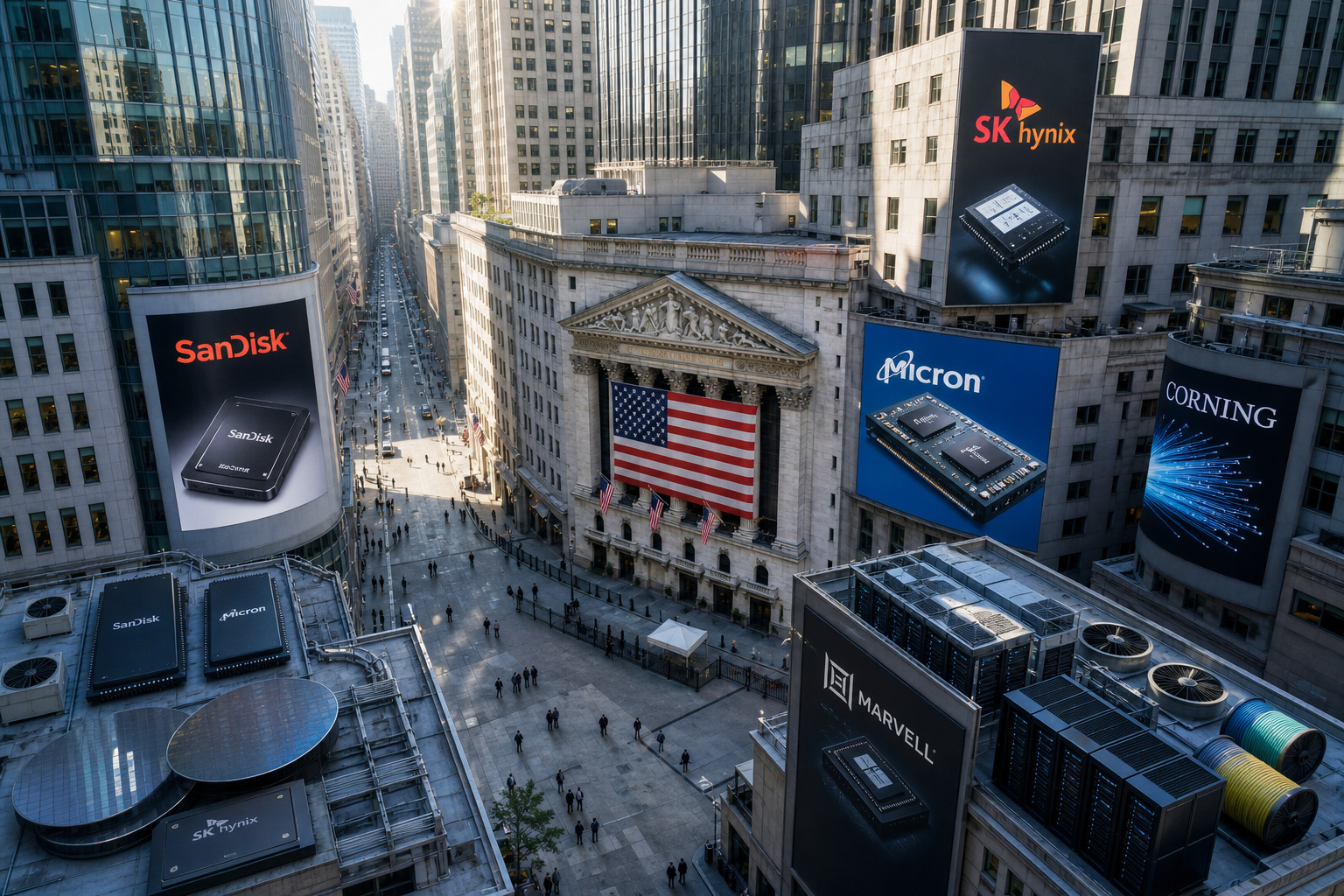
US markets opened higher on Aug 12 as investors embraced mild inflation data. The Dow rose 0.33%, the S&P 500 gained 0.49%, and the Nasdaq climbed 0.9%, according to Bitget data. Storage, chip, optical communications and neocloud stocks all strengthened. SanDisk jumped 6.9%, SK Hynix rose 5.8% and Micron added 5.5%. Among neocloud names, CRWV surged 22%, NBIS climbed 15.21% and IREN gained 10%. Optical names also advanced, with LITE up 9.88%, GLW up 5.64%, AAOI up 4.71% and MRVL up 6%.

2190
US Stocks Open Higher on Mild Inflation Data; Storage, Chip, Optical and neocloud Names Rally
Serenity
Aug 12, 2026

Serenity Stays Bearish on CRWV as $640M Interest Bill Erodes Cash Flow

According to BlockBeats, Serenity said on Aug. 12 that it has maintained a public bearish view on CRWV, the neocloud company. Serenity's post cited strong demand and an order backlog above $100 billion, plus an adjusted EBITDA margin of 59%. Even so, the company's interest expense stood at $640 million, equal to roughly 42% of EBITDA. Serenity said debt interest is seriously squeezing cash flow and that CRWV's net loss has been expanding. The remarks were part of a post dated Aug. 12 and carried by BlockBeats. Serenity described its bearish position as consistent over time. The figures named by Serenity include a backlog of more than $100 billion, a 59% adjusted EBITDA margin and $640 million in interest expense. That interest expense represents about 42% of EBITDA, according to the statement. Serenity's stance hinges on the gap between these strong operating metrics and the company's interest burden, which it said is worsening the net loss.

2510
Serenity Stays Bearish on CRWV as $640M Interest Bill Erodes Cash Flow
Nebius
Aug 12, 2026

Nebius Q2 Revenue Soars 454%, Shares Jump 12% in Pre-Market

According to BlockBeats, Nebius (NBIS), a neocloud company, announced its second-quarter financial results on Aug. 12. Revenue for the quarter totaled $582.3 million, a 454% surge from $105.1 million reported a year earlier. Adjusted EBITDA came in at $236.2 million, swinging to a profit from a $21 million loss in the same period last year. Adjusted net loss narrowed by 64% to $33.2 million, down from $91.5 million in the prior-year quarter. Meanwhile, the company posted a net loss of $190.4 million from continuing operations, compared with a net income of $502.5 million in the year-ago period. For the first half of 2026, Nebius generated $981.3 million in cumulative revenue, up 529% year over year, and adjusted EBITDA reached $365.7 million, reversing a $74.7 million loss in the first half of the previous year. According to market data from BIT (bit.com), NBIS was trading up 12.05% in pre-market at $217.5 as of press time.

2790
Nebius Q2 Revenue Soars 454%, Shares Jump 12% in Pre-Market
Total 51 items
Go topage