rwa

crypto stocks
2026-08-20 05:03:01

How Major CEXs Are Building Crypto Stock Products Across Brokerage, Tokenization and Perpetuals

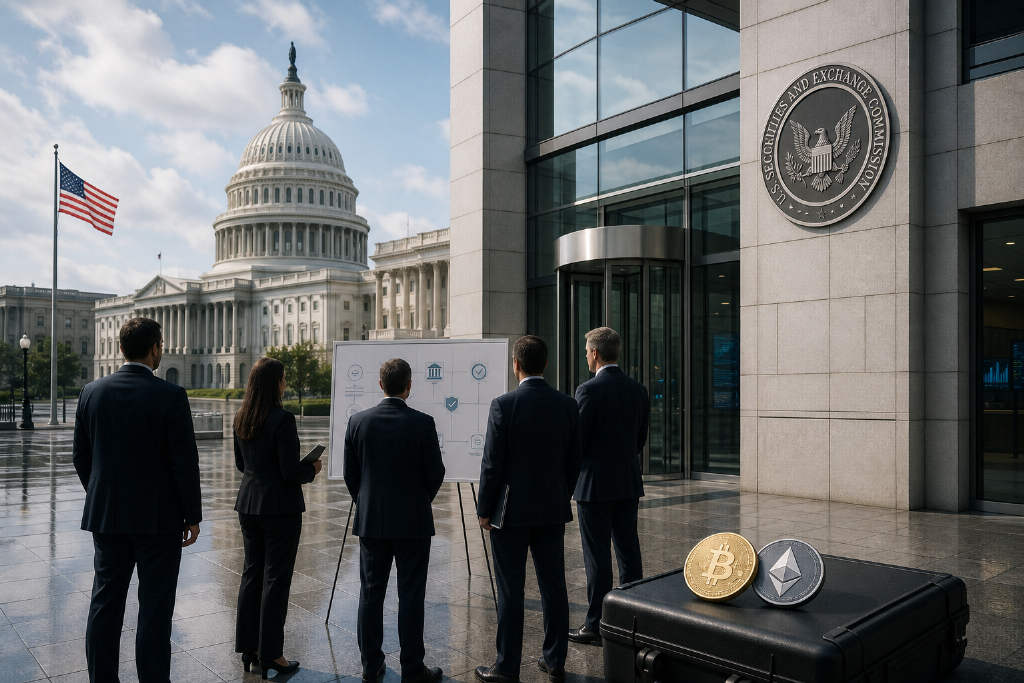
Crypto stock products are turning into one of the clearest expansion paths for centralized exchanges as they push beyond digital assets and into traditional finance. The competitive set is no longer limited to synthetic price exposure. By 2026, major platforms had rolled out a mix of real stock brokerage, tokenized equities, stock perpetuals, CFDs and pre-IPO products, often inside a single account system. According to CoinGecko figures cited in the source article, monthly trading volume for stock perpetuals across the top 13 crypto trading platforms climbed from about $831 million in July 2025 to roughly $34 billion in May 2026, an increase of nearly 40 times in less than a year. The article also notes that cumulative stock-perpetual volume in the first five months of 2026 had already surpassed the whole of 2025. On the tokenized spot side, xStocks had logged more than $35 billion in cumulative trading volume by July 2026 and nearly 200,000 holders globally, while expanding beyond U.S. stocks and ETFs into Hong Kong, the U.K., Europe and South Korea. The report reviews how Binance, OKX, Bitget, Gate, Kraken, Coinbase and Backpack approach the market through different legal and product structures. It argues that the category now spans four distinct models: traditional brokerage access to real shares, tokenized securities backed by underlying stocks, total-return or synthetic equity tokens, and stock perpetuals or CFDs that do not require 1:1 share backing. The result is a market that is still early by global equity standards, yet increasingly central to how exchanges compete for the next phase of user growth.

40
How Major CEXs Are Building Crypto Stock Products Across Brokerage, Tokenization and Perpetuals
Apple
2026-08-20 04:49:42

Apple’s camera-equipped AirPods are still slated for 2027, not the 2026 lineup

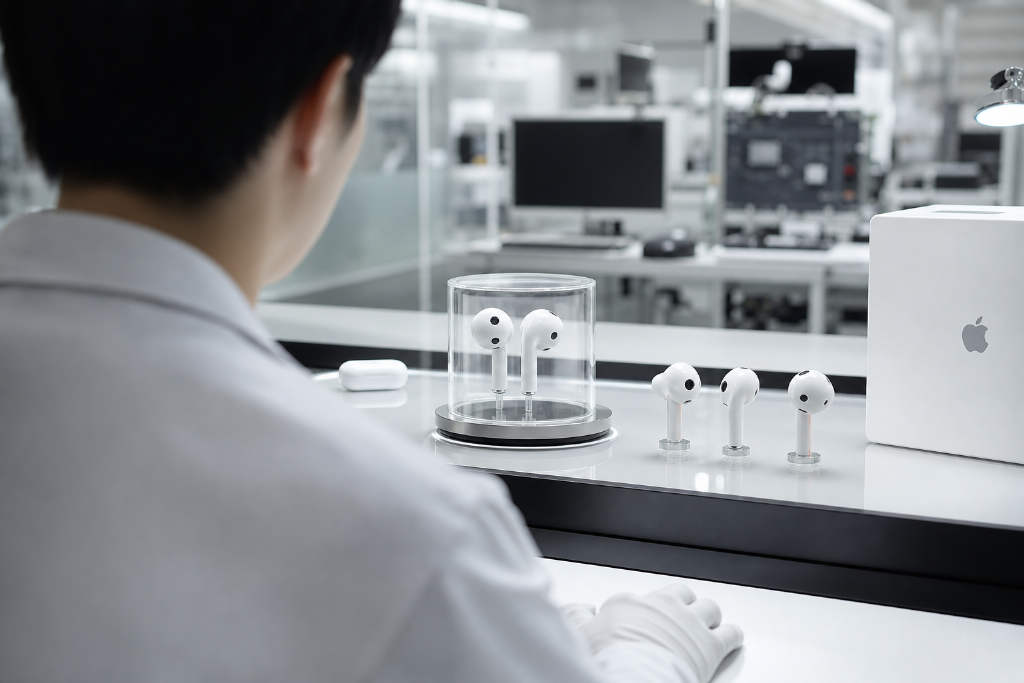
A leaked demo video inside an Apple developer software test build has fueled speculation that AirPods with cameras could arrive earlier than expected. But according to Bloomberg, citing people familiar with the matter, the AI-focused wearable is still targeted for a 2027 release and is not part of Apple’s 2026 product schedule. Apple had reportedly moved the project forward in early 2026 and started internal testing in the spring, with an initial plan to unveil the device in 2026. That timeline slipped after the company ran into problems on two fronts during the summer: supply-chain preparation for mass production and software integration. The product is expected to use Apple’s Visual Intelligence features, with built-in cameras scanning and interpreting the surrounding environment to feed contextual data to Siri and other AI tools. The leak, which appeared in a Mac software test update for developers, included a demonstration of the new AirPods taking photos and spread quickly online just ahead of Apple’s September iPhone event, prompting talk of an earlier debut. Sources cited in the report rejected that idea. The device has also drawn privacy criticism, including the mocking nickname “pervertpods.” People familiar with the product said the built-in camera is a low-resolution sensor designed for environmental awareness rather than photography or video recording.

40
Apple’s camera-equipped AirPods are still slated for 2027, not the 2026 lineup
Bitcoin
2026-08-20 04:08:44

27 Billion in Short Liquidations Fueled Bitcoin Spike, New Huo Institute Says

Bitcoin surged from the $64,000 range to above $69,000 intraday on Aug. 19, posting a daily gain of more than 7% and triggering more than $2.7 billion in short liquidations across the crypto market, according to New Huo Institute. The institute said the move was not driven by a single headline. Instead, it described the rally as a concentrated price release caused by an overcrowded short setup colliding with several catalysts at once, including friendlier U.S. regulatory signals, falling long-end Treasury yields, and capital rotation back into crypto from other sectors. New Huo Institute said the immediate trigger came from leveraged short positions built up during roughly half a year of Bitcoin trading near $60,000. Once price pushed through key liquidation zones, forced cover buying amplified the advance. The institute also pointed to earlier signs of spot accumulation, saying on-chain data showed institutions with listed-company backgrounds and old-whale characteristics buying around the $60,000 area, while New Huo Group’s OTC business recorded a 257% month-on-month jump in July trading volume. It also cited a new SEC crypto asset framework, a White House crypto summit, Trump’s renewed call to advance the CLARITY Act, a drop in the 30-year Treasury yield from 5.337% to 5.189%, and a 4.33% rise in gold as part of the backdrop for the rally.

20
27 Billion in Short Liquidations Fueled Bitcoin Spike, New Huo Institute Says
short-form dr
2026-08-20 04:51:56

US short-form drama market heads toward $1.5 billion as audiences and ad spending climb

Short-form drama apps are growing quickly in the United States, with industry estimates cited by Reuters putting monthly active viewers at 66 million in 2025, up from 26 million in 2024. Market revenue is projected to reach $1.5 billion in 2026 and approach $2 billion in 2027. These shows typically run 45 seconds to two minutes per episode, with 50 to 75 episodes per title and production budgets often ranging from $100,000 to $300,000. ABMedia says the format combines soap-opera cliffhangers, mobile-game style paid unlocks, and highly targeted distribution on social platforms. That mix is shifting attention away from simple content cost and toward how much viewing time, app installs, and paid conversion each dollar can generate. Data from Omdia shows ReelShort’s daily mobile viewing time hit 35.7 minutes in the fourth quarter of 2025, above Prime Video, Netflix, and Disney+, before rising to about 38 minutes in the second quarter of 2026, according to Reuters. ABMedia also points to public companies that may benefit from the trend, including Meta, Google, and Apple, alongside media groups such as Fox and NBCUniversal that are testing vertical video and original micro-dramas.

40
US short-form drama market heads toward $1.5 billion as audiences and ad spending climb
SEC
2026-08-20 04:19:51

SEC’s Reg Crypto Draft Puts Public Token Fundraising Back in Play

On Aug. 20, crypto bulls regained control of the tape, with BTC holding near $69,000 and ETH around $2,240. Traders linked the move not only to Treasury’s expanded long-dated buybacks, but also to the SEC’s newly proposed "Regulation Crypto Assets" draft. The proposal outlines a dedicated issuance framework for certain crypto-related investment contracts, including two registration exemptions, a conditional safe harbor, and a potential path for tokens to move out of the "investment contract" category if issuers complete or permanently stop the key managerial efforts promised in the contract. SEC Chair Paul Atkins said the proposal is meant to give crypto entrepreneurs and market participants a clear path to raise money under federal securities law and reduce the incentive to operate offshore. Coinbase CEO Brian Armstrong called the move a long-awaited step toward modernizing the U.S. financial system, while Coinbase policy chief Faryar Shirzad said the industry had long been told to "come register" without a door suited to how crypto networks actually develop. Crypto lawyer Jake Chervinsky said Reg Crypto could create exemptions for public token sales and a safe harbor from the investment-contract label. a16z crypto general counsel Miles Jennings said it gives builders a new route for fundraising and transparent operations, while urging Congress to advance the CLARITY Act. Still, the draft remains in public consultation, and the safe harbor depends on disclosure and on whether the issuer’s commitments are completed or permanently stopped.

50
SEC’s Reg Crypto Draft Puts Public Token Fundraising Back in Play
Unitree Robot
2026-08-20 04:09:00

Unitree founder Wang Xingxing says embodied AI could hit its ChatGPT moment in as little as two to three years

Wang Xingxing, founder of Unitree Robotics, said at the 2026 World Robot Conference that the biggest constraint on embodied intelligence is still weak generalization, and that the industry’s “ChatGPT moment” could arrive in as little as two to three years, or as long as five to ten years. Speaking a day after Unitree’s listing, Wang framed the next major milestone in simple terms: if a robot can be placed in a completely unfamiliar environment and complete roughly 80% of tasks through voice or language instructions alone, embodied AI will have crossed a key threshold. His speech also reviewed Unitree’s 10-year path from quadruped robots to humanoids and outlined a broad product lineup, including the G1 humanoid launched in 2024, the H1 platform, the GD01 mass-produced passenger-carrying transforming mech, the As2-W wheeled-quadruped robot, and the lightweight R1 humanoid. Wang said Unitree has been testing robots in auto factories and in its own facilities, but large-scale rollouts remain limited because robot efficiency and task transfer still lag. He also spent considerable time on data and model training, arguing that humanoid AI needs large volumes of human or internet data for pretraining, combined with real-robot data to align models with the physical world. Wang said the company is also exploring AI-driven self-improving robot development loops, where large models write control code, validate it in simulation, deploy it to physical machines, and refine it through model and human evaluation.

40
Unitree founder Wang Xingxing says embodied AI could hit its ChatGPT moment in as little as two to three years
Whale Movemen
2026-08-20 02:22:00

Crypto overnight roundup: whale liquidations, Treasury buybacks, and a heavy CFTC agenda

A dense 24-hour stretch across crypto and macro markets brought a mix of token airdrops, policy signals, whale liquidations, and AI-related capital flows. Binance Alpha opened the third round of its STABLE airdrop, while Berachain rebranded its stablecoin HONEY to Bera USD, with no contract change but a required re-signing for some permits because of EIP-712 domain separation. In macro markets, the U.S. Treasury said it will at least double the size of liquidity-support buybacks for long-dated nominal coupon securities, lifting the cap per operation from $2 billion to at least $4 billion starting Sept. 9, 2026. After the announcement, Bitcoin briefly rose to $69,749, its highest level since June 2, even as Bitfinex said the rally still lacks stablecoin support. On the regulatory side, the CFTC secured supplemental consent orders against former Alameda Research CEO Caroline Ellison and FTX co-founder Gary Wang, while also scheduling the first meeting of its Innovation Advisory Committee and seeking public comment on computing-power derivatives contracts. In markets, major leveraged positions were wiped out across BTC and ETH, including a 1,800 BTC short that was fully liquidated. Hyperliquid’s HYPE token climbed more than 20% after President Donald Trump said CFTC Chair Michael S. Selig was working to bring the platform into the U.S. in a fully compliant way, even as FalconX and Multicoin Capital moved large amounts of HYPE to exchanges.

50
Crypto overnight roundup: whale liquidations, Treasury buybacks, and a heavy CFTC agenda
remote work
2026-08-20 03:33:29

CU Boulder study finds fully remote workers report the highest wellbeing and lower turnover

A new study led by researchers at the University of Colorado Boulder found that fully remote employees scored highest on wellbeing, ahead of hybrid workers and those who go into the office every day. The paper, published in the July 2026 issue of Frontiers in Psychology, analyzed survey responses from 7,704 employees and later checked actual turnover records one year after the 2023 survey. The sample included 1,869 fully remote workers, 2,099 hybrid employees, and 3,736 people working on site every day. Average wellbeing scores came in at 4.22 for remote workers, 4.12 for hybrid staff, and 3.89 for employees in the office full time. Researchers also found that remote workers used positive cultural descriptors such as teamwork, inclusion, and support at slightly higher rates than the other groups. Lead researcher Stefanie Johnson said the results challenged a common management assumption that remote work weakens connection and raises attrition. Still, she noted the study did not explain exactly why remote workers reported higher wellbeing, and the sample came from a single large healthcare institution, which limits how broadly the findings can be applied across industries.

10
CU Boulder study finds fully remote workers report the highest wellbeing and lower turnover