OpenUSD
Nov 3, 2026

OpenUSD sets payment fee model and equity incentive pool for partners

OpenUSD, or OUSD, has formalized a fee structure and partner incentive framework through its governance body, Open Standard. According to internal documents cited in the report, the stablecoin will charge a 0.1 basis point management fee on payment volume, equal to 0.001%, with a maximum fee of $0.01 per transaction. Payments of $1,000 or more will hit that cap, while smaller transactions will be charged at the stated rate. The management fee will be paid to Open Standard. The report also says OUSD plans to distribute reserve income to partners after deducting the management fee, a structure presented in contrast to USDT and USDC, where reserve asset interest is retained by the issuers. In addition, Open Standard will offer equity incentives tied to the amount of OUSD that partners hold and circulate. Partners will receive a share of an annual equity incentive pool each month based on holdings and transaction flow. Eligibility requires at least $50 million in holdings or scale, and any single partner will be capped at a 5% ownership stake. OUSD was launched with participation from Stripe, Visa, Mastercard, Coinbase, and Shopify, with the stated aim of lowering cross-border settlement costs and reducing fiat conversion needs to near zero.

1270
OpenUSD sets payment fee model and equity incentive pool for partners
Stripe
Nov 3, 2026

Stripe Tries to Build a Payment Network Outside Visa, but User Adoption Is in Question

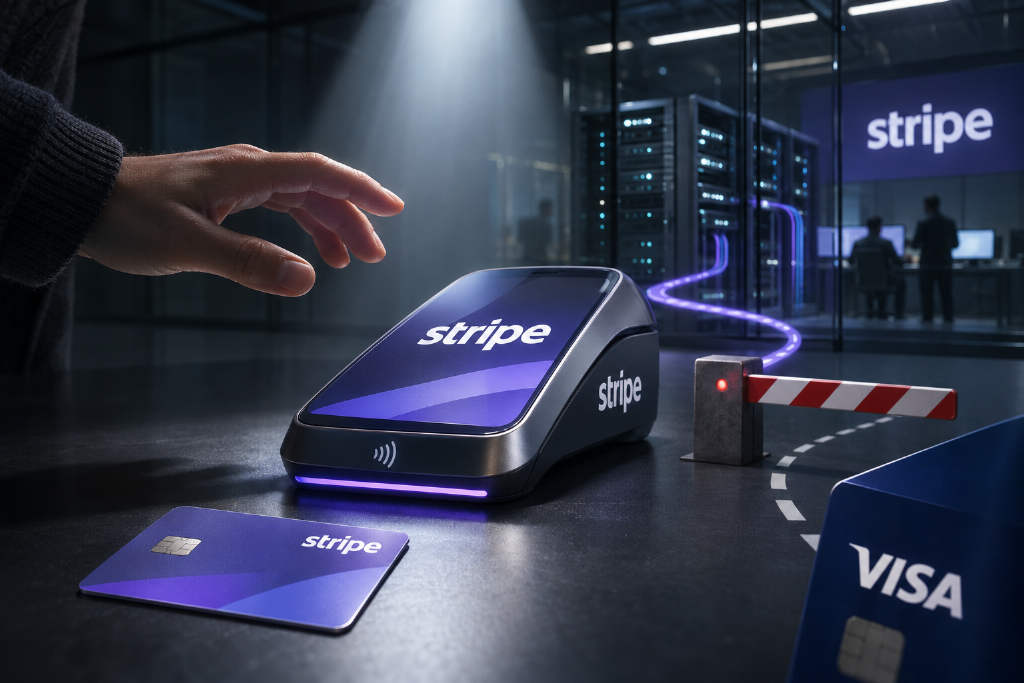
Stripe is trying to sidestep Visa and build a new payment network of its own, according to the source material. The idea points to a direct challenge to the existing card-payment structure, with proxy payments at the center of the discussion. Still, the effort may face a basic obstacle: users may not be willing to support it. Based on the limited information available, the issue is not only whether Stripe can construct an alternative network, but whether that model can gain real traction with end users. The current source does not provide further operational details, timelines, or adoption data, but it frames the debate around a simple tension: building around Visa is one thing, getting users to follow is another.

770
Stripe Tries to Build a Payment Network Outside Visa, but User Adoption Is in Question
India
Nov 2, 2026

India central bank and FIU review offshore crypto payment cards

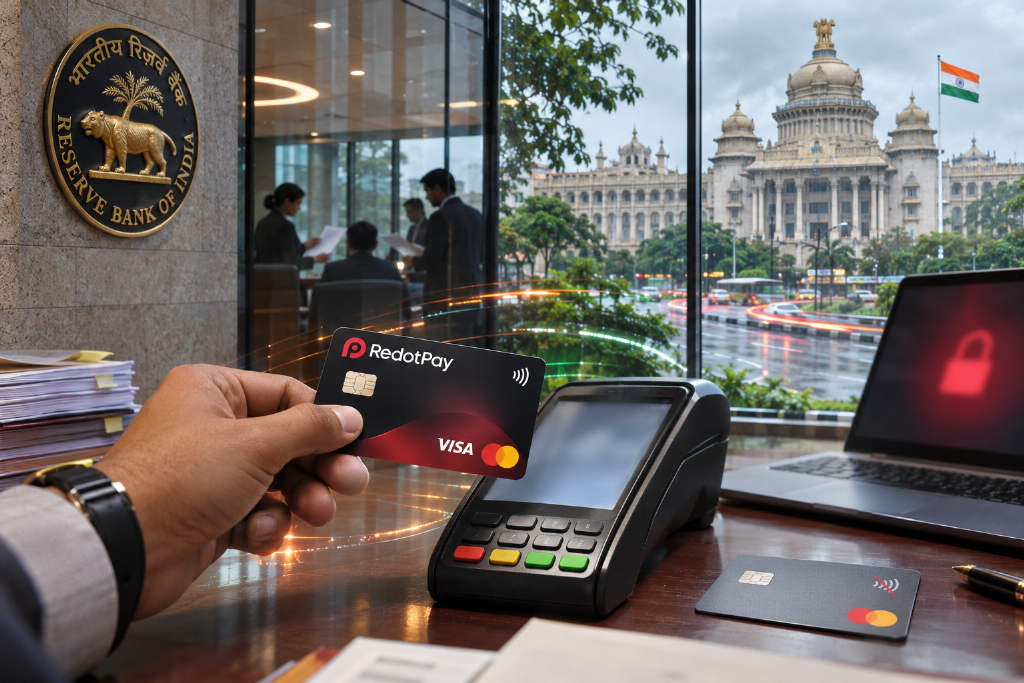
India’s central bank and the Financial Intelligence Unit are reviewing offshore crypto payment cards that let users convert cryptocurrency into rupees for spending through Visa and Mastercard networks, according to a Techub News brief citing Crypto.news. The products under review include cards linked to RedotPay and similar services. Some users in India said they have recently run into card suspensions or have been unable to access related websites. The review trail was linked to Digital South Trust, a blockchain research group based in Bengaluru. The group said it had obtained a RedotPay virtual card and completed a domestic transaction in India. The report also said RedotPay is still preparing for a potential U.S. IPO. Visa, Mastercard, and the Reserve Bank of India did not respond to requests for comment, according to the source material.

1240
India central bank and FIU review offshore crypto payment cards
Gate Card
Nov 2, 2026

Gate Card launches limited-time spending campaign with 11% cashback voucher reward

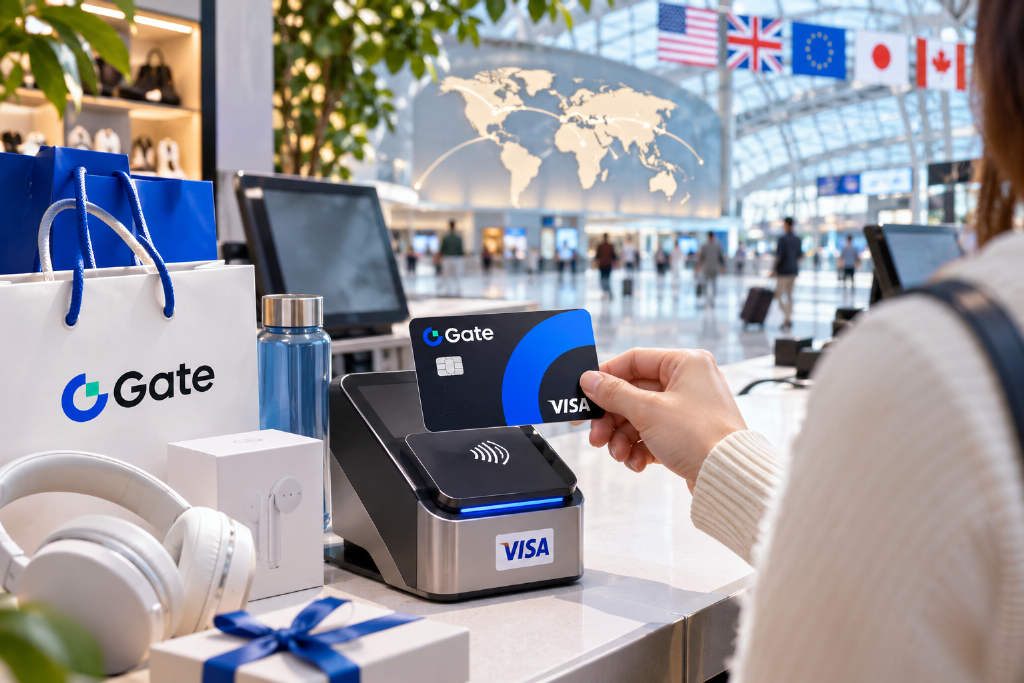
Gate Card has rolled out a limited-time spending rewards campaign that runs until 08:00 UTC+8 on Dec. 1, according to an official announcement cited by Odaily. The promotion is open to both new and existing users, with different transaction-count requirements for each group. New users must apply for and activate a Gate Card for the first time, then complete at least three eligible purchases. Existing users must complete at least five eligible purchases. In both cases, cumulative spending must reach 100 USDT to qualify for a chance to receive an 11 USDT cash voucher, equivalent to an 11% reward on that threshold. The total prize pool is 100,000 USDT and will be distributed on a first-come, first-served basis. Gate has also previously said it partnered with Visa to expand its crypto-linked card service to more than 40 markets worldwide. Visa’s payment network spans more than 200 countries and regions and includes over 175 million merchant acceptance points. Gate Card also supports Apple Pay and Google Pay, offers a six-tier T0-T5 cashback system with up to 8% cashback on eligible spending, capped at 150 USDT per transaction and 400 USDT per month, and recently upgraded its auto top-up function across multiple account types.

1420
Gate Card launches limited-time spending campaign with 11% cashback voucher reward
crypto payment cards
Nov 2, 2026

Crypto card issuers push rich rewards, but underlying yields sit at just 3.5% to 4%

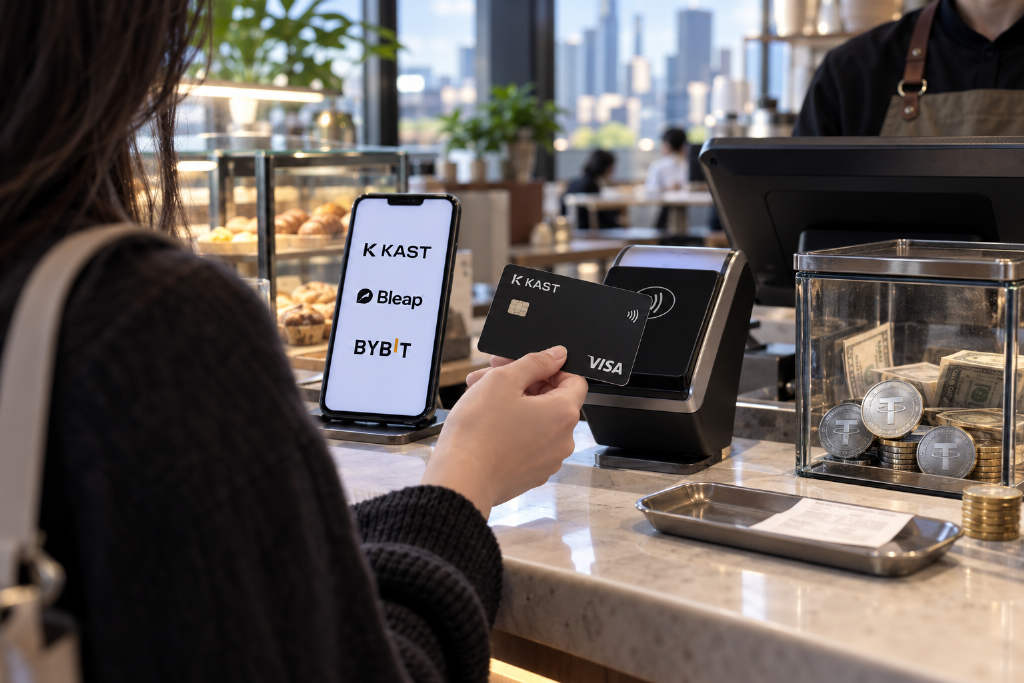
Crypto payment cards are offering unusually rich incentives to win users, with KAST and Bleap advertising rewards that reach as high as 20% cash back and, in some cases, double-digit yield on balances. The economics underneath look far thinner. KAST said the assets backing its Reserve product generate only 3.5% to 4%, leaving the company to absorb the gap between that return and the 8% to 12% reward rate offered to users. CEO Pathy said the company has moved from near break-even into losses as it spends more aggressively for growth. Bleap has acknowledged a similar trade-off. CEO Timofejevs said customers who mainly spend and collect rewards may not be profitable on their own, with the company instead looking to scale and additional services such as trading. At the same time, some issuers have already started cutting benefits. Bybit EU changed its non-VIP cashback structure from 2% to 10% with monthly caps to an uncapped 1%, while Bleap also revised its program toward a 1% base rate. The shift puts attention on whether users will stay once subsidies begin to fade.

1350
Crypto card issuers push rich rewards, but underlying yields sit at just 3.5% to 4%
Visa
Oct 30, 2026

Visa signs two-year digital payments cooperation framework with Senegal

Visa has signed a memorandum of understanding with Senegal’s Ministry of Telecommunications and Digital Affairs, setting up a two-year strategic cooperation framework tied to the country’s digital transformation goals. The item was reported by Techub News, citing Finextra. The brief did not disclose additional terms, financial details, or implementation milestones. What is clear from the announcement is the structure of the arrangement: a memorandum of understanding between Visa and a government ministry, a two-year cooperation period, and a stated focus on supporting Senegal’s broader digital transition agenda. No further operational details were provided in the source text.

670
Visa signs two-year digital payments cooperation framework with Senegal
x402
Oct 29, 2026

x402 Adds Card Networks to Governance, but AI Agent Payments Still Lack Chargeback Rules

The Linux Foundation launched the x402 Foundation in July, putting governance of the AI-agent payment standard under a new structure whose top tier includes Visa, Mastercard, and American Express. The setup has drawn attention because x402 was designed without a standard dispute-resolution layer: once a payment settles on-chain, there may be no issuer, no chargeback path, and no clear way to challenge a bad outcome. That gap matters as AI agents begin buying data, calling APIs, and renting compute on their own, often in transactions worth only a few cents or less. A recent column by GenLayer Labs co-founder Albert Castellana highlighted the contrast between card networks’ long history of dispute handling and their presence in the governance of a system that does not yet offer an equivalent mechanism. A July study from EPFL and Zhejiang University tested 15 x402 facilitators and found that every one of them violated at least one of eight security rules defined by the researchers. The paper also said roughly 2% of settlement attempts on Base had failed and rolled back by the end of 2025, equal to about 1.9 million payments that did not actually complete. On the merchant side, Coinbase’s seven official seller examples were also described as lacking a way to roll back actions after failed settlement.

1010
x402 Adds Card Networks to Governance, but AI Agent Payments Still Lack Chargeback Rules
Visa
Oct 29, 2026

Visa reports FY2026 and fourth-quarter results with $45.903 billion in annual revenue

Visa released its results for fiscal year 2026 and the fourth quarter on Oct. 28, according to ChainCatcher. The company said fiscal 2026 covered the period from Oct. 1, 2025 to Sept. 30, 2026, while the fourth quarter ran from July 1, 2026 to Sept. 30, 2026. For the full fiscal year, Visa posted total operating revenue of $45.903 billion, up 15% year over year. Operating profit reached $28.11 billion, up 17.15%, with an operating margin of 61.24%, an increase of 1.25 percentage points from a year earlier. Net profit attributable to shareholders came in at $23.504 billion, up 17%, while operating cash flow totaled $23.728 billion. Basic earnings per share were $12.34 and diluted earnings per share were $12.32, both up 21%. Its debt-to-asset ratio was 61.73%. In the fourth quarter, revenue was $12.139 billion, up 13% from a year earlier and 4.35% from the previous quarter. Operating profit was $7.262 billion, up 18.12%, and operating margin was 59.83%, up 2.5 percentage points year over year. Net profit attributable to shareholders was $6.002 billion, up 18% year over year and 6.65% quarter over quarter. Basic and diluted EPS both stood at $3.19, up 22%.

1040
Visa reports FY2026 and fourth-quarter results with $45.903 billion in annual revenue
Total 353 items
Go topage