Visa
Oct 24, 2026

Visa Said to Be in $2.5 Billion Fireblocks Talks, but Fireblocks Denies Report

Visa has been reported to be in late-stage acquisition talks with crypto custody and stablecoin infrastructure firm Fireblocks at a price of about $2.5 billion, according to Axios. Fireblocks quickly pushed back on the claim, with a spokesperson telling Cointelegraph that the report was new to the company and "not true at this time." Visa declined to comment on what it described as rumor or speculation. The reported price drew attention because it sits far below Fireblocks’ last public valuation of more than $8 billion from its January 2022 Series E round. Fireblocks, founded in 2018, provides institutional infrastructure for storing and moving digital assets and counts BNY Mellon, Worldpay, Revolut, and Galaxy among the names mentioned in the report. The company has also expanded in stablecoin payments, launching its own stablecoin payments network in September 2025 with more than 40 initial participants, including Circle, Bridge, Zerohash, and Yellow Card. The report lands as major payment companies step up crypto infrastructure deals, with Mastercard previously announcing an acquisition of BVNK and Visa expanding stablecoin capabilities through Visa Direct and Zerohash.
970
Visa Said to Be in $2.5 Billion Fireblocks Talks, but Fireblocks Denies Report
crypto payments
Oct 23, 2026

Crypto payments push deeper into the mainstream, with compliance emerging as the key competitive line

Crypto-linked card payments are growing quickly, but the sector’s compliance gaps are drawing sharper scrutiny. Data cited in the article shows monthly stablecoin card spending topped $1.2 billion in September 2026, roughly triple the level a year earlier, while the total stablecoin market cap has nearly doubled over the past two years to more than $300 billion. At the same time, a Crystal Intelligence report published in April said nearly 70% of crypto card providers had weak KYC requirements or none at all, and TRM Labs estimated illicit crypto flows exceeded $158 billion last year. The piece argues that weak KYC is not accidental. It stems from a mix of offshore licensing, intermediary issuing structures, and product designs built around minimal verification. It also links those gaps to sanctions evasion risks, workarounds for geographic restrictions on U.S. AI services, pressure on weaker-currency economies, and reputational exposure for card networks and banks. Against that backdrop, the article says regulators in the U.S., Europe, and Hong Kong, along with Visa and Mastercard, are tightening standards. For compliant providers, the shift changes the role of compliance from a cost center into a market access requirement, affecting banking relationships, issuance capacity, merchant quality, and long-term operating viability.

1490
Crypto payments push deeper into the mainstream, with compliance emerging as the key competitive line
CodeCoin
Oct 23, 2026

CodeCoin launches Visa card combining licensed stablecoin and quantum encryption

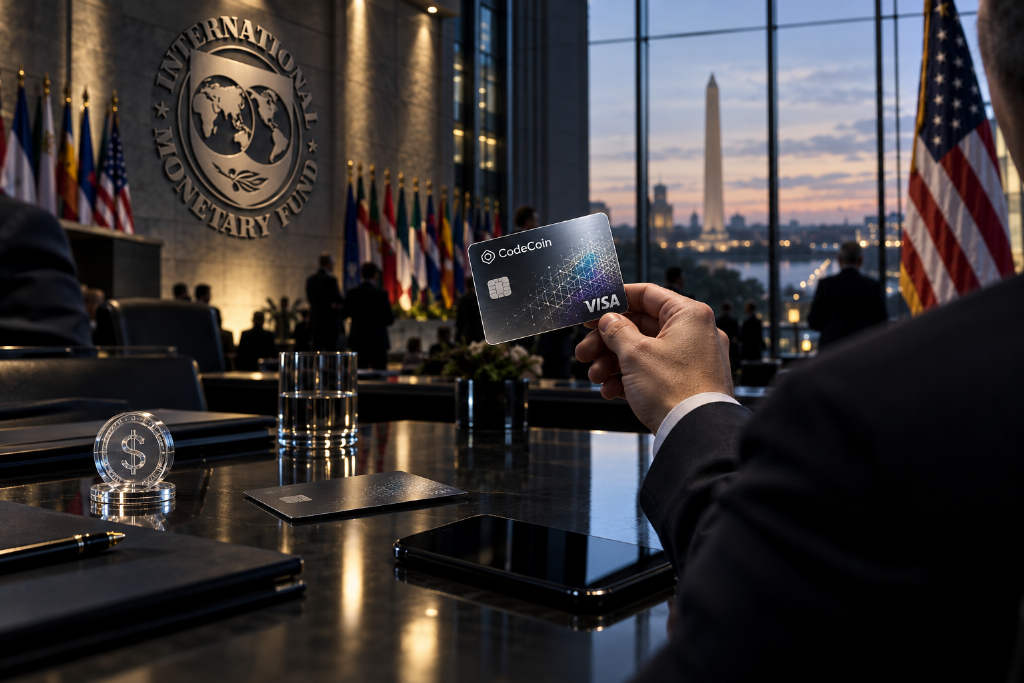
CodeCoin has introduced what it described as the world’s first Visa payment card that combines a licensed stablecoin with quantum encryption technology. The launch took place during the International Monetary Fund annual meeting, according to a Techub report citing Reuters. The brief announcement did not disclose additional product details, including rollout plans, supported markets, or technical specifications. What was stated is limited to the card’s positioning, the technologies involved, and the timing of the launch during the IMF event. Reuters was cited as the source in the original item carried by Techub.

1500
CodeCoin launches Visa card combining licensed stablecoin and quantum encryption
Fireblocks
Oct 22, 2026

The Block: Fireblocks says Visa takeover rumor is not true at this stage

Fireblocks has denied a report-driven market rumor that Visa may be preparing to acquire the company. According to The Block, a spokesperson for Fireblocks said the firm had seen the speculation about a possible Visa acquisition, but said it was the first time the company had heard of it and that, based on what it knows now, the claim is not true. The response directly pushes back on an earlier report circulated by Axios. In that report, Axios cited multiple sources as saying Visa had entered the late stages of talks to acquire Fireblocks, a company focused on stablecoin infrastructure and custody. The reported deal value was about $2.5 billion. The latest statement leaves the acquisition claim unconfirmed and disputed, with Fireblocks publicly rejecting the rumor as presented.

1610
The Block: Fireblocks says Visa takeover rumor is not true at this stage
Visa
Oct 22, 2026

Axios says Visa is in talks to acquire Fireblocks at about $2.5 billion valuation

Visa is in talks to acquire crypto custody infrastructure company Fireblocks in a deal valued at about $2.5 billion, according to Axios. If completed, the transaction would expand Visa’s presence in digital asset custody and blockchain-based payments infrastructure. The report has not been independently confirmed, and no details have been disclosed on the terms of the talks or how far discussions have progressed. Fireblocks is known for providing infrastructure tied to crypto asset custody, while Visa has continued to build out its footprint in digital asset-related payment rails. At this stage, the reported negotiations remain preliminary in public disclosure, with key deal information still unavailable.

1020
Axios says Visa is in talks to acquire Fireblocks at about $2.5 billion valuation
Reserve Bank of Australia
Oct 22, 2026

RBA says card surcharges on eftpos, Mastercard and Visa will be removed from October 2026

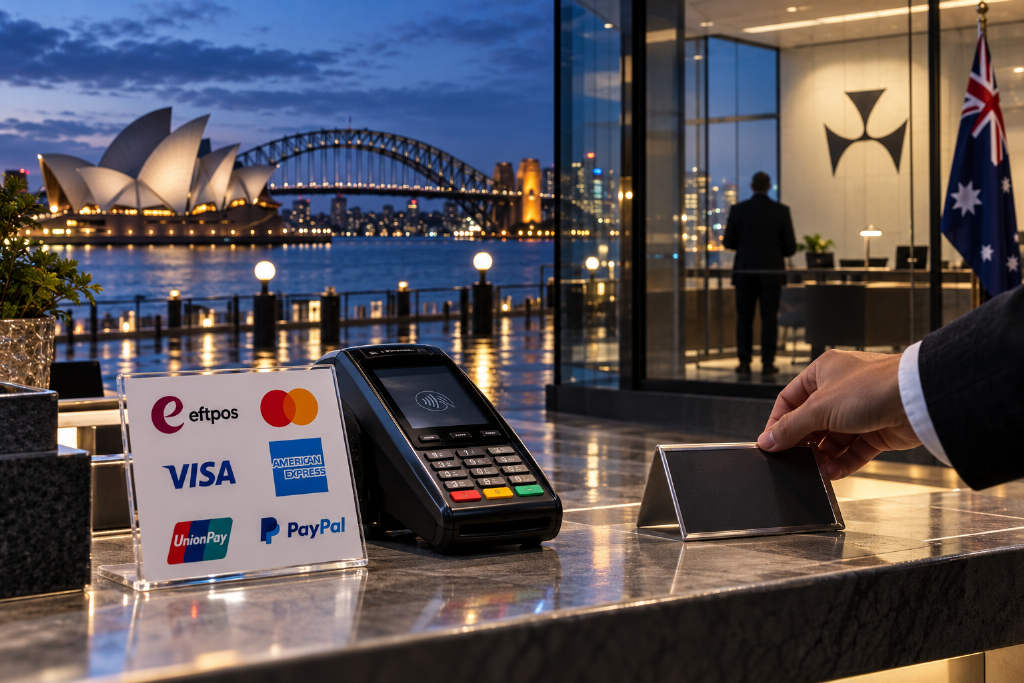
The Reserve Bank of Australia said in an FAQ attached to its retail payments regulation conclusions that removing card payment surcharges on eftpos, Mastercard and Visa from Oct. 1, 2026 would be in the public interest. From that date, the central bank will also lift the ban that had prevented those designated card networks from enforcing no-surcharge rules, under changes tied to Standard No. 3 of 2016 and the 2026 revisions to merchant card payment costs and surcharging standards. eftpos, Mastercard and Visa have each decided to introduce no-surcharge rules from Oct. 1, 2026, generally covering credit, debit and prepaid cards, including cards issued overseas. American Express, UnionPay and PayPal have also decided to remove surcharges, though they are not currently subject to formal RBA regulation. American Express and UnionPay will exit their existing undertakings with the RBA on Oct. 1, 2026, while PayPal’s no-surcharge rule will take effect on Oct. 5, 2026. The change applies only to fees added because a customer pays by card. It does not cover weekend or public holiday surcharges, booking fees or service fees. The reform will be rolled out in stages, including lower interchange caps for domestic card transactions, new disclosure requirements for card payment costs, and later application of interchange caps to overseas-issued cards acquired in Australia.

1540
RBA says card surcharges on eftpos, Mastercard and Visa will be removed from October 2026
Mesh
Oct 20, 2026

Mesh and Visa aim to bring wallet balances into everyday payments, but rollout questions remain

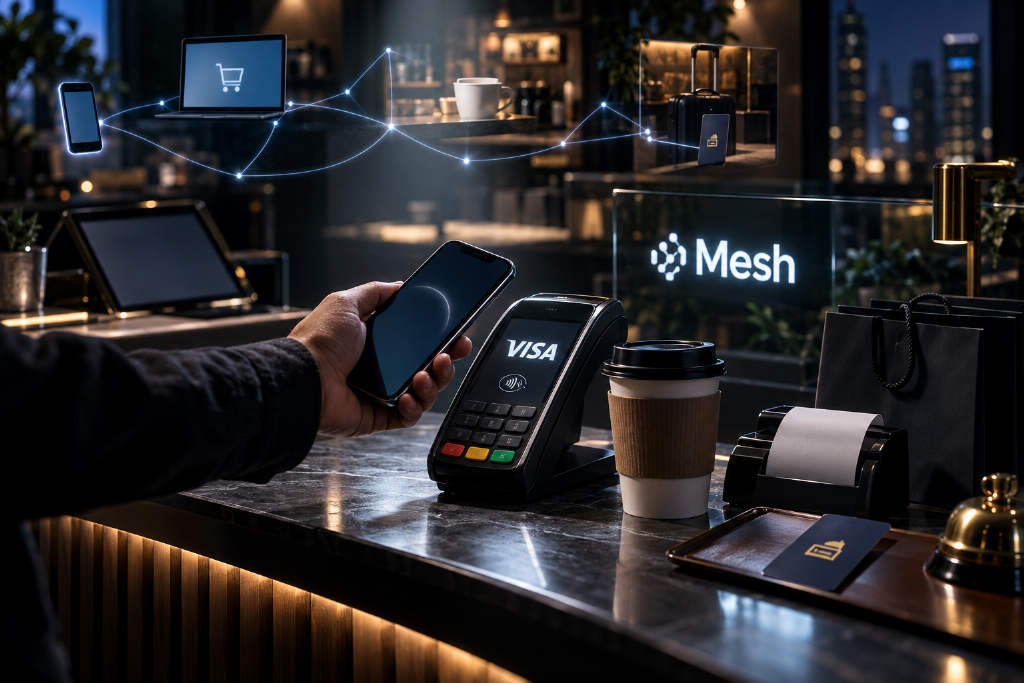
Mesh has announced a partnership with Visa that would let users of participating wallets and platforms pay with crypto, stablecoin, or fiat balances across Visa-supported online and in-store checkout flows. Under the plan released on Oct. 19, Mesh would handle fund routing and asset conversion in the background, while merchants would continue to get paid through Visa’s existing network. The structure matters: the effort is not about replacing card rails or building a new merchant network from scratch, but about connecting digital asset accounts to payment infrastructure that consumers and merchants already use. The announcement, however, leaves several key details open. Neither company has disclosed a launch date, the first participating platforms, the supported devices, nor the full list of eligible assets. Visa’s scale — more than 200 countries and territories, roughly 175 million merchant locations, and $14.2 trillion in payments volume in fiscal 2025 — points to potential reach, not immediate availability. The article argues that actual adoption will depend less on headline network size and more on whether the service can clear practical hurdles around cost, exchange rates, refunds, compliance, and dispute handling. It also frames the partnership as part of a broader shift in crypto payments: from standalone crypto cards toward deeper infrastructure integration, where wallets become the payment entry point and specialized providers manage the conversion layer behind the scenes.

1370
Mesh and Visa aim to bring wallet balances into everyday payments, but rollout questions remain
Visa
Oct 20, 2026

Visa, Bill and Billtrust launch live pilot for AI agent invoice payments

Visa has started a live pilot with Bill and Billtrust that allows trusted AI agents to initiate and complete approved buyer invoice payments through a vendor portal. The item, cited by Techub from Finextra, describes the program as the first live pilot of its kind among the three companies. The available source text is brief and does not provide details on the pilot’s scale, participating customers, rollout timeline, transaction volume, or technical setup. What is clear from the report is the scope of the test: approved invoice payments can be handled end to end through the supplier-facing portal by trusted AI agents within the pilot framework.

1620
Visa, Bill and Billtrust launch live pilot for AI agent invoice payments
Total 353 items
Go topage