
What software do you need to mine Bitcoin? The short answer is this: you need mining software, but in practice that usually means a full setup that includes miner management, pool connection settings, a Bitcoin wallet, and monitoring tools.
Many beginners picture Bitcoin mining as installing one program on a laptop and pressing start. That is not how the real process works today. A better comparison is a nonstop bookkeeping contest: hardware does the heavy computation, while software tells the device what work to do, where to submit results, how to report status, and which address should receive payouts.
What mining software actually does
If you think of the Bitcoin network as an open contest to add the next page to a shared ledger, miners are competing to produce valid block data under the network rules. Software does not create Bitcoin by itself. Its job is to connect your equipment to that process and keep the operation organized.
In practical terms, “Bitcoin mining software” can refer to several different layers. One layer runs the mining device itself. Another handles pool configuration so the machine can receive work and submit shares. Another watches temperature, uptime, and errors. Separate from all of that, wallet software receives mined Bitcoin, even though it does not perform mining calculations.
This is why the question is bigger than a single app name. When people ask what software they need to mine Bitcoin, the useful answer is usually a stack of tools rather than one download.
The four software categories most miners deal with
1. Mining device software or firmware
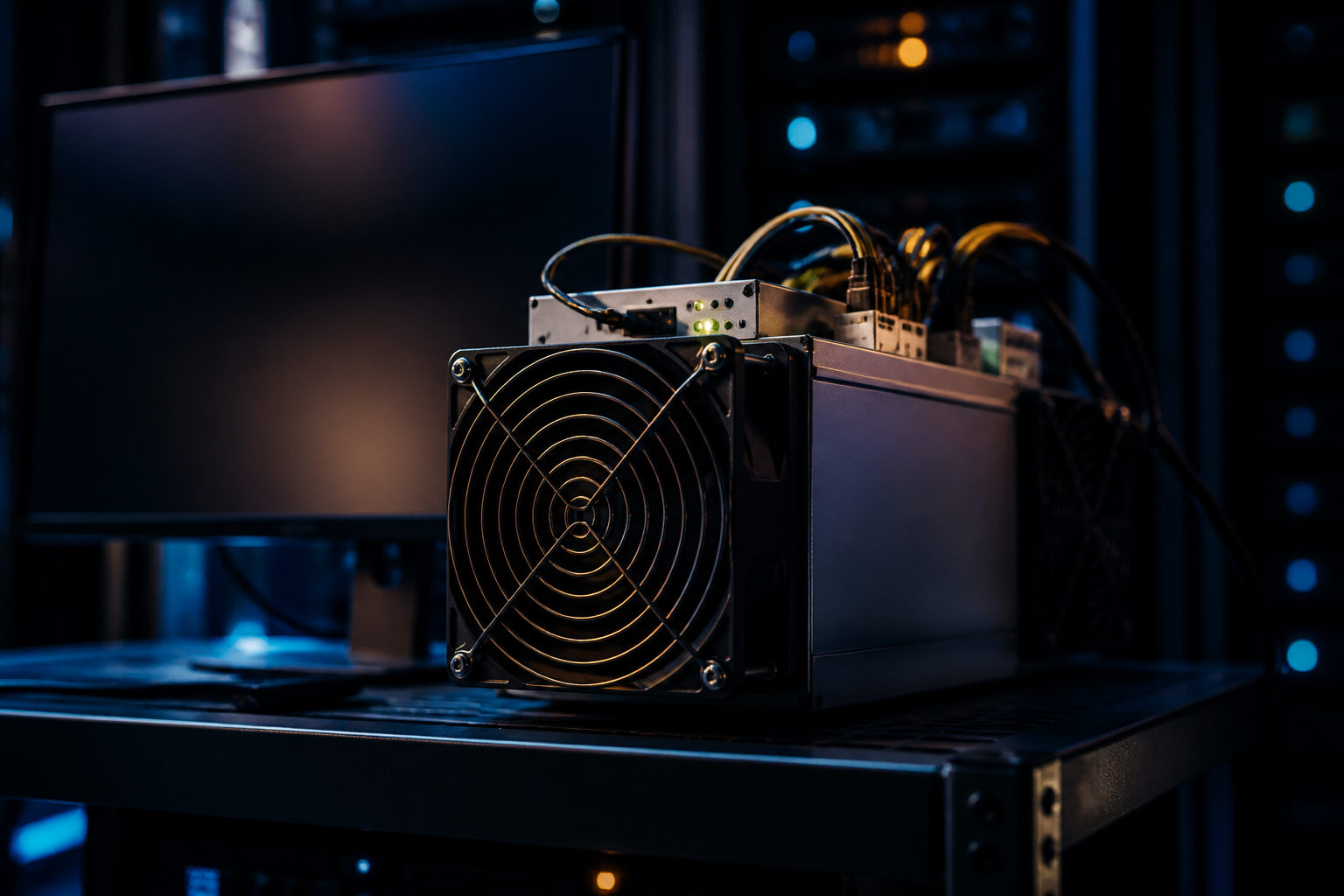
For Bitcoin, the common setup is not a regular home computer. It is specialized mining hardware built for the task. That hardware usually comes with its own operating environment or firmware, which controls startup, fan behavior, basic tuning, fault handling, and the local management interface.
So in many real-world cases, the first “software” you need is already inside the machine. You access it through a browser on your local network, log in, and enter the settings that let the device begin working. If that firmware is unstable or poorly maintained, the whole setup suffers even if every other part looks fine.
2. Mining pool connection settings
Solo mining exists, but the competition is intense, so many participants choose a pool. A pool coordinates work across many machines and distributes rewards according to its rules. To join one, you need software or a management panel where you can enter the pool server information, worker name, and other required settings.
This may not appear as a separate desktop app. On many machines it is just a section of the miner’s web interface. What matters is understanding the role: a mining pool is for coordinated participation, not long-term storage of your bitcoin and not the same thing as an exchange account.
3. Bitcoin wallet software
If mining rewards are going anywhere, they need a receiving address. That is the role of wallet software. It creates and manages addresses and gives you control over access to your bitcoin. It does not increase hash power, and it does not make the machine mine faster, but it is necessary if you want payouts to reach an address you control.
Wallets come in different forms, including mobile apps, desktop software, and tools that work with hardware wallets. For mining, the big issue is not fancy design. It is whether you can back up access safely, verify the receiving address, and keep control separate from the mining device itself.
4. Monitoring and management tools
Mining is an uptime business. Even if the machine starts correctly, problems can still show up through heat, connection loss, fan faults, power issues, or configuration mistakes. Monitoring tools help you catch those problems early instead of discovering them after long downtime.
Some monitoring features are built into miner firmware. Others come through local network tools or fleet management dashboards. These tools are not the same as the software doing the actual mining work, but they matter a lot once you care about stability.
Why “just install software and mine” is usually the wrong idea
Older discussions about Bitcoin mining can give the impression that any computer can join with the right program. That view is out of date for most people. Today, Bitcoin mining is dominated by specialized hardware, and software alone cannot make a general-purpose computer competitive in the actual mining race.
The reason is simple. Mining is not won by whoever opens a program first. It depends on effective computation, power delivery, cooling, maintenance, and the ability to keep equipment running over time. Software connects you to the process, but it does not erase physical constraints.
So if your real question is whether a normal PC can mine Bitcoin once you install the right software, the more accurate response is that software is only one piece of the picture. It may let the machine participate in theory, yet that does not mean the setup makes sense in practice.
How to prepare in the right order
If you are starting from zero, do not begin by collecting random downloads. Start by mapping the workflow. That makes the software question much easier to answer.
- Identify the hardware first. Are you using specialized Bitcoin mining hardware, or are you only learning how the process works? The software path changes depending on the device.
- Choose the participation method. Are you studying solo mining mechanics, or do you plan to join a pool? Many first-time users look at pooled mining because it is the more common route.
- Set up a wallet before payouts exist. Create a Bitcoin receiving address and back up access carefully.
- Open the miner interface or management tool. Enter the pool details, worker information, and any basic operating settings.
- Check network and cooling. A machine that powers on is not the same as a machine that can run reliably.
- Turn on monitoring. At minimum, you should be able to see whether the device is online and whether errors appear.
This order matters because Bitcoin mining is not really a single-software task. It is a coordinated system of hardware, pool participation, payout setup, and ongoing maintenance.
What to look for when choosing mining software
- Compatibility with your hardware. Different miners, control boards, and operating environments do not always work with the same tools.
- Clear configuration options. You should be able to review pool information, worker names, operating status, and fault messages without guessing.
- Useful monitoring data. “Running” is not enough. Temperature, error logs, disconnections, and restarts all matter.
- Stability over long sessions. Mining is continuous work, so dependable software is more valuable than flashy extras.
- Security. Be careful with download sources, management passwords, local network access, and the separation between wallet control and miner access.
One point causes confusion again and again: wallet software is not mining software. A wallet receives and controls bitcoin. Mining software manages computation and submissions. They often appear in the same setup, but they do very different jobs.
FAQ
Do I only need one program to mine Bitcoin?
Usually no. A complete setup often includes miner firmware or control software, pool settings, a wallet for payouts, and some way to monitor the machine. The installation step may look simple, but the full process is wider than a single app.
Can a normal computer mine Bitcoin with the right software?
A normal computer can run certain mining-related programs in theory. In real conditions, though, software does not close the gap between general-purpose hardware and specialized Bitcoin mining equipment.
Is wallet software the same thing as mining software?
No. Wallet software manages receiving addresses and access to bitcoin. Mining software manages the device, connects to a pool or mining process, and handles the computational workflow.
Do I still need software if I join a mining pool?
Yes, in most cases. Sometimes that software is built into the miner’s own interface rather than installed as a separate application on your computer, but you still need the configuration layer that connects your machine to the pool.
What should a beginner check before choosing software?
Start with the practical side: hardware suitability, power and cooling conditions, wallet setup, and access security. Once those basics are clear, it becomes much easier to judge which mining tools actually fit your setup.
If you plan to go beyond research and try mining for real, verify your device type first, prepare a wallet you control, keep management passwords separate, and make sure you can monitor uptime. Those steps matter more than chasing a “one-click” Bitcoin mining app.
Disclaimer: This article is for informational and educational purposes only and is not investment, financial, or legal advice. Crypto assets are highly volatile and you could lose your entire investment. Do your own research and decide carefully.