


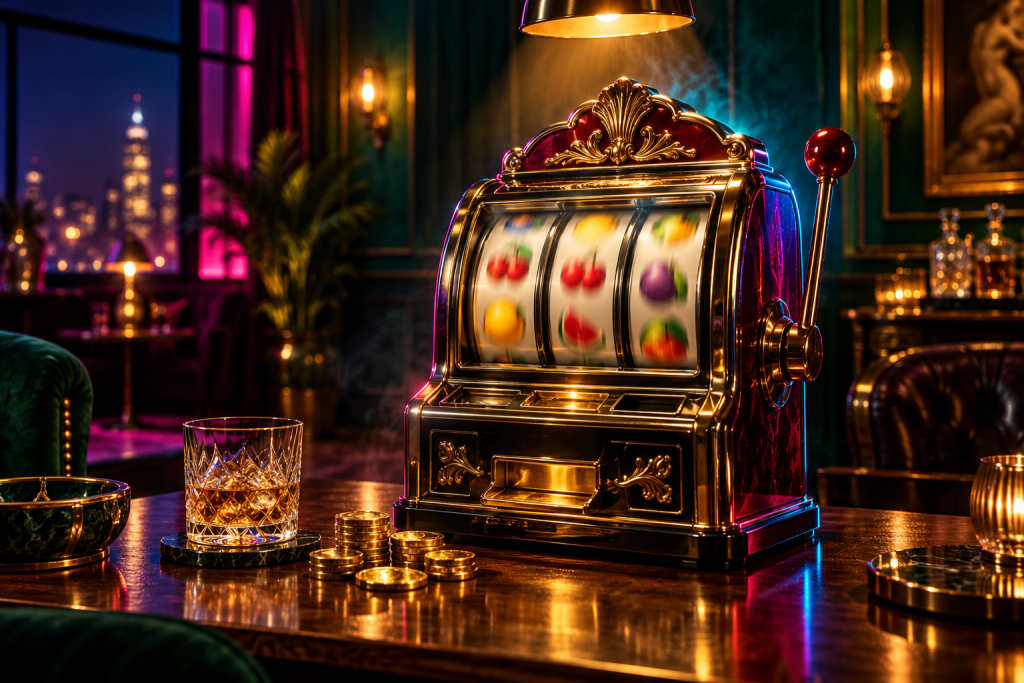
The question starts with your state, not the machine
Whether a private individual can buy a slot machine depends almost entirely on the state where that person lives or intends to keep the machine. A machine that one state treats as a harmless collectible can be treated by a neighboring state as illegal gambling equipment. The machine itself does not carry a universal answer.
This article explains the general legal architecture around private slot machine ownership and names the official channel where a reader can check the rules for a specific state. It does not state that any purchase is legal, permitted, or safe in any named jurisdiction.
How the rules are organized
In the United States, slot machine ownership is governed primarily by state law, not by a single federal statute. Each state sets its own definitions for what counts as a gambling device, what exceptions exist, and what a private person may own. Some states prohibit private ownership of any slot machine regardless of age or condition. Others permit ownership of machines manufactured before a certain date, typically treated as antiques or collectibles. Some states allow ownership but prohibit operation, while others restrict possession to machines that have been permanently disabled or converted for home amusement use.
The key variables that change the answer are the age of the machine, whether it is operable, where it is kept, and whether it is used for gambling or display. A machine that pays out nothing and sits in a basement may be treated differently from a machine that accepts coins and awards prizes.
What makes a machine a slot machine in the eyes of the law
State statutes typically define a slot machine by its mechanical or electronic function: a device that, upon insertion of money or a token, offers a chance to receive something of value based on an element of chance. The definition often extends beyond classic reel-spinning machines to include video poker terminals, electronic pull-tab devices, and other coin-operated amusement devices that award a prize.
A machine that has been altered to remove any chance of winning, or that operates purely as a decorative piece, may fall outside the statutory definition in some states. In other states, the physical presence of the machine is enough to trigger the law, regardless of whether it works.
| Factor | How it changes the answer | Where to check |
|---|---|---|
| State of residence | Each state sets its own possession rules; the same machine may be legal in one state and prohibited in another | State gaming authority or attorney general's office |
| Machine age | Many states exempt machines made before a specific year as antiques, but the cutoff year differs | State statute or gaming authority guidance |
| Operability | A working machine that accepts money and pays out is treated more strictly than a disabled display piece | State statute definitions |
| Intended use | Home display, private collection, or commercial operation trigger different rules | State gaming authority or local law enforcement |
| Interstate transport | Moving a machine across state lines can implicate federal law and the laws of every state crossed | Federal statutes and state gaming authorities |
The antique exception is not uniform
Many people assume that old slot machines are automatically legal to own. That assumption is not supported by a single uniform rule. Some states do exempt machines manufactured before a certain year, often because those machines are considered historical artifacts rather than gambling devices. The specific cutoff year, the documentation required to prove the machine's age, and the conditions attached to the exemption all vary from state to state.
A buyer who sees an antique machine listed for sale should not assume the sale is lawful in their state simply because the listing exists. Online marketplaces and auction houses may operate from states with different rules, and the seller may not know or care about the buyer's local law.
Federal law enters when machines cross state lines
Federal law generally addresses the interstate transportation of gambling devices rather than private possession within a single state. A person who buys a machine in one state and drives it home to another state may be subject to federal registration and labeling requirements that apply to the transport of gambling devices. The Johnson Act and related statutes create a federal framework that operates alongside state law.
This means the purchase question is not only about where the machine will sit, but about how it gets there. A buyer who arranges shipping across state lines should verify the federal requirements for transporting the device, as well as the possession rules of every state the shipment passes through.
Can you buy one from a casino?
Casinos generally do not sell used slot machines directly to the public. When a casino replaces its machines, the old devices are typically sold through licensed distributors or auction houses that specialize in gaming equipment. These sellers may impose their own conditions on the sale, such as requiring the buyer to certify that the machine will be used lawfully or that it will be disabled before delivery.
A private buyer should treat any sale listing as a starting point for research, not as proof of legality. The seller's willingness to complete a transaction does not transfer legal authority to possess the machine in the buyer's state.
What to confirm before you buy
Before purchasing a private slot machine, confirm the following items through the official channels for your state:
- Whether your state permits private ownership of slot machines at all, and under what conditions.
- Whether the specific machine you are considering falls within any antique or collectible exemption, and what documentation proves its age.
- Whether the machine must be disabled, converted, or modified before you may possess it.
- Whether transporting the machine across state lines triggers federal registration or labeling obligations.
- Whether your local government imposes any additional restrictions beyond state law.
The authoritative current answer for any state lives with that state's gaming authority or equivalent regulatory body, and with the state attorney general's office for statutory interpretation. These agencies publish guidance documents, advisory opinions, and statutes that define the exact terms. A buyer should read the current statute and, where uncertainty remains, consult a licensed attorney in the relevant state.
FAQ
Can I buy a slot machine for my home?
The answer depends on your state's law. Some states prohibit private possession of any slot machine, while others permit ownership of antique or disabled machines. Check the statute and any guidance from your state's gaming authority before buying. The seller's location does not determine your legal position.
Are old slot machines legal to own?
Not automatically. Many states have an antique exemption, but the cutoff year, documentation requirements, and conditions differ. A machine that qualifies as an antique in one state may not qualify in another. Verify the specific exemption in the state where the machine will be kept.
Do I need a license to own a private slot machine?
Some states require no license for a qualifying antique or disabled machine, while others require registration, a permit, or prohibit ownership entirely. The requirement depends on the machine's age, operability, and your state's statute. Check with your state gaming authority for the current requirement.
Play responsibly
Gambling should be treated as paid entertainment, never as a way to earn income or recover losses. 1-800-MY-RESET (1-800-697-3738)
18+ or 21+ depending on where you are; follow the minimum age that applies to you.
This article is general information about how these mechanics work. It is not legal advice and not a recommendation to gamble or to use any particular operator. Availability and legality differ by jurisdiction — check the rules that apply where you are.