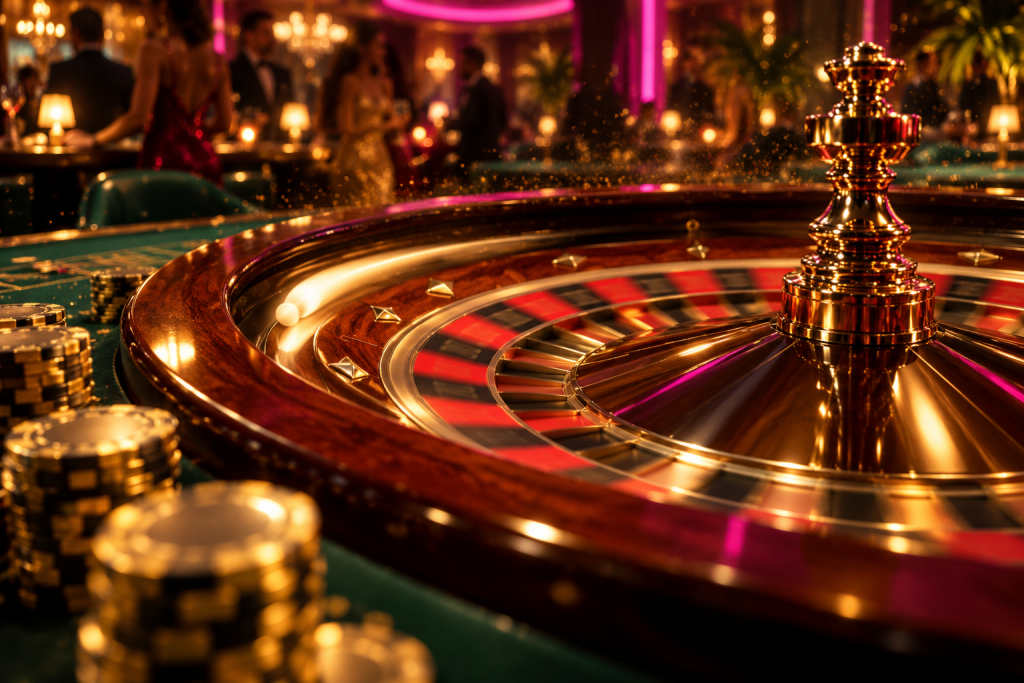
What's the Luckiest Number in Roulette?
The idea of a lucky roulette number comes from culture and short-term memory, not from the wheel itself. Every pocket has the same chance on each spin, though some numbers carry a heavier history than others.
Learn what happens between pressing spin and seeing a result on a 5-reel turkey luck slot, including how paylines, volatility and jackpots work, and how to read the game's paytable.
A practical framework for verifying an online casino game's fairness and security posture, from RNG certification to reading terms clauses and spotting cloned sites.
Roulette outcomes are produced by a random process, so no skill changes where the ball lands. What a player controls is bet selection, speed of play, and session length, which change variance and total exposure but not the built-in edge.
Roulette outcomes are random from spin to spin, but the payouts are not. This article explains how the wheel's layout builds in a mathematical edge that works steadily over time, and why short winning or losing sessions are mostly variance.
Roulette outcomes are decided by chance, but the house edge is built into the wheel itself. Here is how luck, probability, and the long-run math interact.
Slots are built on chance, but the way that chance is engineered changes what you should expect from a session. This explains how the house edge is built into every spin and why short sessions rarely look like the long-run average.
Learn how slot machines built around the Press Your Luck theme resolve outcomes through RNGs, reel mapping, and volatility, and how to read the game's information panel.