
a16z crypto says DUNA, or the decentralized unincorporated nonprofit association, could emerge as a next-generation organizational form for internet-native networks, especially for DAOs that do not sit comfortably inside conventional legal structures.

In a lengthy essay, the firm frames the issue as part of a much older story. The basic problem of commerce, it writes, has not changed for centuries: how to get people with different roles, uneven access to information, and misaligned incentives to work toward a shared objective. Each major business era answered that problem with a new organizational structure that redistributed risk, reward, and responsibility in ways the previous era could not.
From merchant networks to corporations
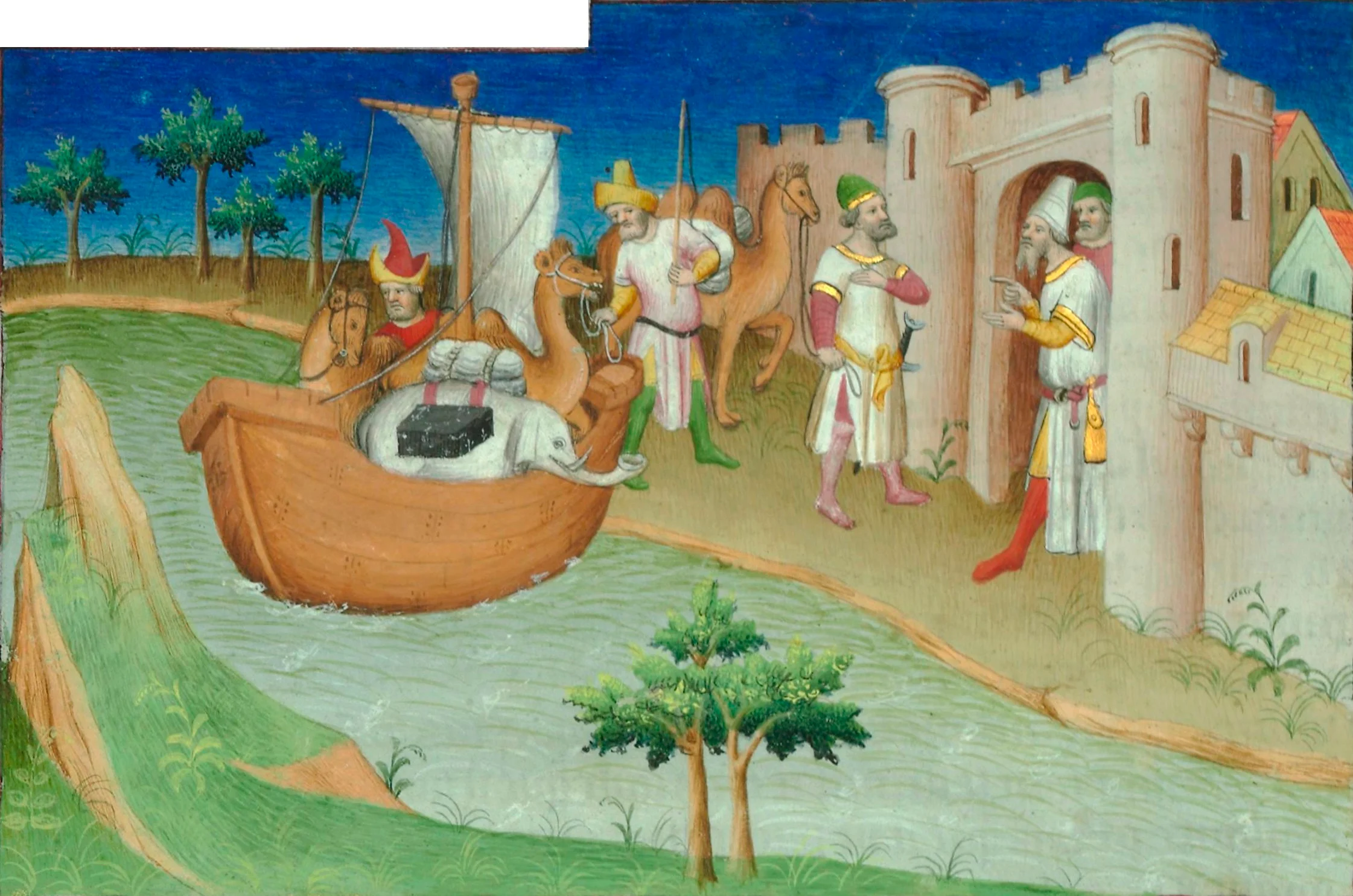
The essay starts before the modern corporation existed. It points to long-distance trade in the time of Marco Polo, when commerce was largely personal and family-based. In that environment, merchants and their relatives often put their own assets, and sometimes their lives, on the line. If a contract failed or a voyage went wrong, the damage did not stop at the business itself.
a16z says merchants in that era relied on two imperfect forms of protection. One came from geopolitics, such as the relative peace associated with the Pax Mongolica. The other came from reputation and merchant custom, including Lex Mercatoria, described in the piece as a self-enforcing code of honor used by merchants from roughly 1100 to 1600. In the absence of strong institutions, a merchant's word carried extraordinary weight, and losing that credibility could mean exclusion from trade networks stretching from Quanzhou to Timbuktu.
The firm then turns to one of the oldest structural tensions in business: the relationship between investors and operators, or principal and agent. It describes the medieval commenda as an early innovation that offered a form of limited liability. Investors were generally exposed only to the capital they contributed, merchants were theoretically protected in similar fashion, and profits were divided according to the original capital contribution.
That arrangement had limits. A commenda usually ended when a voyage ended, a bankruptcy occurred, or a participant died. It was fragile and hard to scale.
The next step, the essay says, was the Florentine compagnia, with the Medici bank serving as the best-known example. This structure was more durable and operationally complex than the commenda, but it still depended on the personal liability of its partners. Churches and universities already had a legal identity through the Roman concept of universitas, yet commercial enterprises still lacked a fully independent legal personality.

According to a16z, that gap was not meaningfully closed until the 17th century, when early modern Europe developed the corporate form. The essay says the key breakthrough was legal protection that made it easier to raise capital, distribute ownership through shares, and shield owners from business liabilities. It highlights the Dutch East India Company, or VOC, as the best-known example. While the English East India Company was founded a few years earlier, the essay says its structure was less developed because it raised capital for specific voyages and did not use a public share model in the same way.
By lowering operating risk and reducing coordination costs, the corporate form made large, capital-intensive enterprise possible, the article argues.
Scale created new agency problems
The piece does not treat the corporation as a perfect endpoint. It says the corporate form solved real problems while creating new ones. Its first major achievement was to make participants care about each other's outcomes by tying shareholders, directors, and operators to the same legal entity and the same profit line. But common interest did not produce identical incentives.
The VOC is again used as the example. Shareholders were Dutch citizens seeking returns but had neither the time nor the capacity to manage day-to-day operations or set company strategy. The board, known as the Heeren XVII, had to make decisions for the enterprise as a whole. Captains and merchants in Southeast Asia had to act with incomplete information and limited resources while carrying out business in the field.
Those interests did not always line up. One group could still benefit at the expense of another. That is the setting in which tools such as options, dividends, audits, oversight, and efficiency wages emerged, alongside state-backed legal protections intended to support fair dealing, according to the essay.
a16z argues that, despite those flaws, the corporate form remains the strongest existing mechanism for coordinating incentives, reducing collaboration costs, generating profits, and protecting participants. The essay traces the US corporate timeline from a system of special charters to broader adoption. It points to the First Bank of the United States, chartered by Congress in 1791, as one of the earliest and most prominent cases. New York introduced the first general incorporation law in 1811. By the mid-19th century, more states allowed incorporation without a special legislative act, and limited liability became increasingly standardized. The number of corporations surged during late-19th-century industrialization, with the Delaware General Corporation Law of 1899 presented as a landmark.
The article also reviews alternatives. Cooperatives gained ground in the 19th century by emphasizing member ownership and democratic governance. They worked in certain sectors, including agriculture, where the essay names Land O'Lakes, but remained specialized overall. Limited liability companies came later. While a16z notes earlier precursors such as the German GmbH and the UK Ltd., it says the LLC itself did not enter statute in Wyoming until 1977. The structure combined limited liability with pass-through tax treatment and greater flexibility, making it attractive to startups, small businesses, and investment vehicles.

Other variants followed, including LLPs in 1991, L3Cs in 2008, and public benefit corporations in 2010. Those were refinements, the essay says. The more dramatic shifts tend to happen when technology changes what coordination can look like.
Why DAOs ran into legal and governance limits
That is where decentralization enters the story. a16z describes it as a genuinely new coordinating idea: large groups can work together without centralized management or a trusted intermediary. Before crypto, and before Satoshi Nakamoto introduced the blockchain, that idea was mostly philosophical. With crypto, it became operational.
The DAO, or decentralized autonomous organization, is presented as one of the earliest major organizational breakthroughs in the sector. Its rules are encoded in software, and governance is handled collectively by participants rather than by a central management team or a board. No Heeren XVII.
Yet DAO governance has proved difficult. The essay says getting token holders to vote on important matters has turned out to be even harder than getting individual shareholders to vote for corporate directors, and shareholder participation is already notoriously low, roughly comparable in the article's phrasing to US municipal election turnout. Preventing power from concentrating among a small group of token holders is another persistent challenge.
The legal climate, it argues, made those governance problems harder. a16z says the US Securities and Exchange Commission under the prior administration did not provide clear rules for crypto projects and instead weaponized ambiguity through aggressive enforcement. Entrepreneurship struggles under that kind of uncertainty, the essay says.
The center of the legal issue is the Howey test. The article summarizes the relevant prongs as an investment of money, a common enterprise, and profits derived entirely from the efforts of others. In public companies, those “efforts of others” are the efforts of management. In crypto, a16z says the SEC has taken the position that continued protocol development, even when carried out by an unaffiliated group whose members may or may not hold tokens, can still pull a token into securities law. In the firm's view, that makes broad participation and onchain trading much harder to sustain.
There is another problem. Because DAOs are generally not formally recognized by the state, project participants do not automatically get the protections associated with modern legal entities, including limited liability. The essay says DAO members can therefore face unlimited personal liability, which from a legal standpoint pushes crypto governance back toward a medieval condition.

Offshore foundations were a workaround, not a clean fix
Given those constraints, crypto projects have often followed lawyers' advice and chosen one of two workarounds. Some set up offshore foundations to oversee protocol development and create separation from US business activity. Others put the operating entity itself outside the United States.
a16z says both approaches come at a cost to US innovation, jobs, and tax revenue.
The article is especially critical of the offshore foundation model. It calls these structures a roundabout solution crafted to move power and continuing development into an “independent” entity in hopes of avoiding securities regulation. The firm says the strategy was understandable during a period of regulatory hostility, but it also exposed structural weaknesses: poor incentive alignment, limited ability to drive growth, and a tendency to reinforce centralized control.
That left many projects with a narrow choice set: risk SEC litigation or adopt an awkward organizational structure that creates its own incentive problems.
DUNA as a legal wrapper for decentralized governance
This is the point where the essay introduces DUNA as a serious alternative. The structure, a16z says, draws on the long history of business entities and governance design while aiming at the same broad objective every enterprise has faced: coordinating people efficiently around a common purpose. The difference is that it does so without relying on centralized managerial control, which in the firm's view reduces traditional principal-agent problems and information asymmetry.
That distinction matters for securities analysis, the article says, because DUNA departs from a core assumption embedded in Howey: that participants rely on someone else's managerial efforts to create value.

Before DUNA, the essay says, crypto projects organizing around decentralized governance had only three main options. They could remain as DAOs without legal recognition and accept potentially severe liability risk for participants. They could use traditional corporate entities and force the project into a mismatched hierarchy while still facing SEC action. Or they could use offshore foundations that were cumbersome in both legal and practical terms and that pushed much of the industry abroad.
Until recently, a16z says, there was no clear way for a group of users to govern a decentralized network while enjoying at least some of the protections associated with a company. DUNA is presented as the structure that fills that gap.
“Put simply, DUNA turns a group of people into a legal entity,” the essay says. It notes that three states have now authorized the structure by statute: Alabama, West Virginia, and Wyoming. In the firm's telling, DUNA combines legal advantages found in existing organizational forms with the ability to maintain decentralized control, making it fundamentally different from a traditional corporation.
The essay lists the protections DUNA can provide: legal personhood, limited liability, perpetual existence, and state recognition. Those are the same basic elements that let modern companies function. Legal personhood lets the entity sign contracts on behalf of participants. Limited liability separates organizational obligations from members' personal assets. Combined with continuity and state recognition, the model is meant to allow large, loosely connected groups to raise capital, hold assets, hire managers, pay taxes, and enter transactions without exposing members to crushing personal risk.
Wyoming moved first, and some crypto groups have already adopted it
a16z says organizational forms usually spread slowly. States compete. Lawyers become familiar with the structure. Founders gradually learn to trust it. The essay notes that New Jersey once led in corporate charters before Delaware became the preferred venue, and it says Texas and Nevada are now trying to catch up. LLCs first appeared in Wyoming and, once their tax treatment became clear, spread to all 50 states by 1997.
DUNA, the article says, is following a similar path. Wyoming again acted as the pioneer by passing DUNA legislation in March 2024. The essay adds that crypto protocols and communities including Uniswap Governance and Nouns DAO have already adopted the structure.
In that sense, a16z draws a direct parallel with the corporate form. Just as corporations gave large-scale enterprise a native legal structure, DUNA could give open, internet-scale decentralized networks a native legal structure of their own.

What DUNA can and cannot do
The article describes DUNA as a legal shell that allows decentralized networks to conduct business without importing a traditional management hierarchy. It is built on the framework for an unincorporated nonprofit association, or UNA, which the essay says has been adopted in 17 states and Washington, DC. That framework has long been used by homeowners associations, civic groups, recreational sports leagues, religious congregations, and hobby clubs. It offers lighter governance than a corporation or LLC while still allowing a group to hold property, sign contracts, sue, and be sued in its own name.
DUNA is meant to apply that logic to token-governed networks. It allows token holders or contributors to govern through onchain rules or token-based voting rather than through a board or a management team. Members get limited liability protection, and the organization can be understood and engaged by courts, regulators, and counterparties.
But the firm is explicit about the limits. DUNA does not solve governance problems. It does not guarantee decentralization, although the article says a DAO must have at least 100 active members to qualify. It also does not magically bypass securities law. What it does do, in a16z's view, is fill a specific institutional gap by making decentralized organizations recognizable legal organizations.
The essay closes by placing DUNA inside a longer history of organizational change. From informal merchant networks to partnerships, corporations, LLCs, and now DAOs, each new form emerged when people needed a new way to coordinate. DUNA may mark the start of a new era in organizational design, the firm says, but it will not replace everything that came before it. It expands the menu. More importantly, it gives decentralized networks a way to be represented by a fully legible legal entity for the first time.
The article also includes several related observations. It says cooperatives may look culturally close to internet-native organizations such as DAOs, but cooperatives assume a relatively stable, identifiable membership and a layered leadership structure that many decentralized networks do not have. It notes that Wyoming tried to address the issue in 2021 by allowing DAOs to organize as LLCs, but says the LLC model still assumes a clear member list, K-1 tax filings, and a profit-making purpose, making it awkward for anonymous, permissionless, mission-driven networks and not especially helpful on the Howey question. The essay also says trusts may seem like a natural home for decentralized groups but are poorly suited in practice because they are built around identifiable trustees and beneficiaries.
a16z ends on a broader historical point. For most of human history, organizing at scale meant exposing individuals to severe personal risk. The corporation changed that equation by separating the fate of the enterprise from the fate of the people behind it. DUNA, the firm argues, extends that separation into community governance for blockchain-based networks, allowing a loosely organized group of strangers on the internet to act as a single entity, sign agreements, hold assets, and take on risk without forcing any one participant to gamble their livelihood.