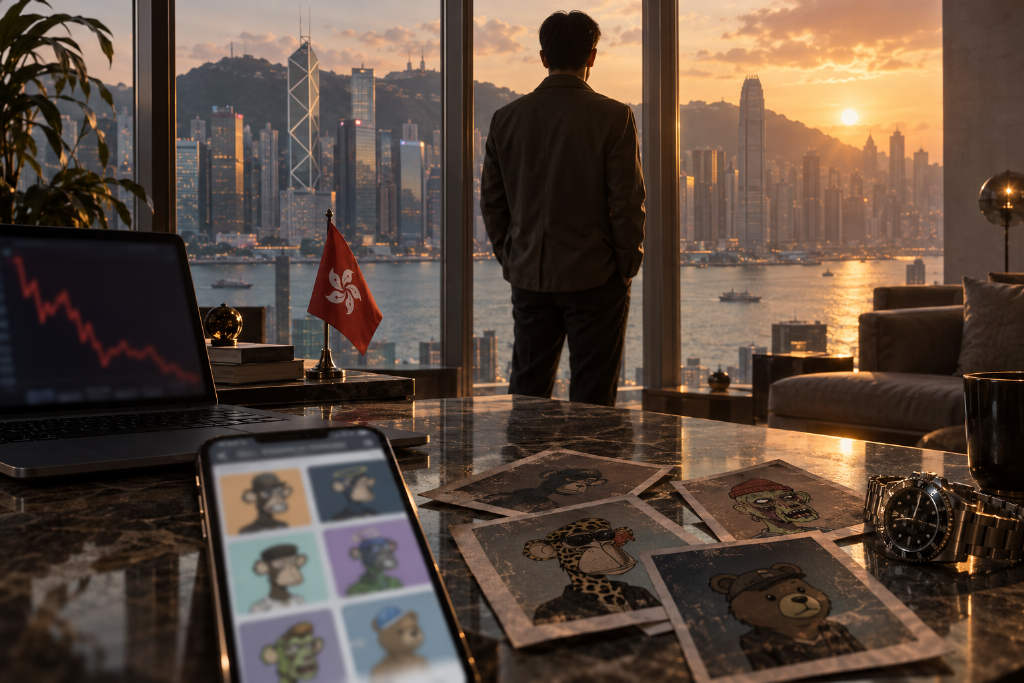
Hong Kong actor and singer Alex Fong said on the web program Chill Good in October 2026 that he bought NFTs during the pandemic after purchasing a home and then seeing acting work dry up. With no income coming in, he entered a market that was then in fashion. Fong said the loss ended up exceeding what he had previously lost trading stocks, and that the amount was so large he did not dare tell his family. His wife repeatedly asked how many digits were involved, but he did not answer.

He also described another kind of spending from that period. The worse work was going and the tighter money became, the more he wanted luxury watches to make others think he was doing fine. He said he bought watches priced from more than HK$100,000 to HK$200,000, but rarely wore them, partly because he worried about scratches and partly because he did not want others to notice how little work he had.
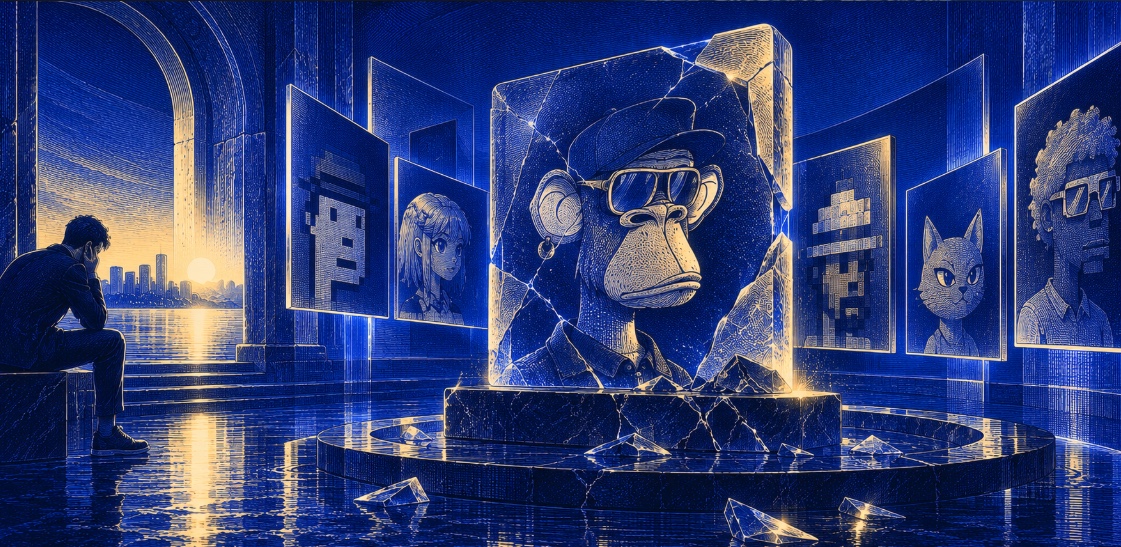
That recollection points back to the other side of the last NFT cycle. In 2021 and 2022, profile-picture NFTs spread across social accounts, and prices climbed with collecting fever. Owning a specific avatar also became a way to signal membership in a certain collector circle. Bored Ape Yacht Club, a collection of 10,000 ape images, drew in singers, actors and athletes. Social media avatars, celebrity networks and limited supply kept attention flowing, while fans did not necessarily need to understand wallet addresses, copyright boundaries or liquidity. Recognizing the celebrity behind the avatar was often enough.
From Fong’s account of his pandemic low point to the public high-priced avatar purchases made by overseas celebrities such as Justin Bieber and Kevin Hart, the investment bill from the last NFT boom is still being revisited years later.
Phanta Bear sold out in 40 minutes, but the costs were not shared equally
In January 2022, streetwear brand PHANTACi, founded by Jay Chou, and Ezek released 10,000 Phanta Bear NFTs at a mint price of 0.26 ETH. The collection sold out in 40 minutes. Jay Chou and Hannah Quinlivan publicly used the avatars, and artists including Ashin of Mayday, JJ Lin and Edison Chen helped spread the project further.
JVR Music soon clarified that Chou had only received a gifted NFT from PHANTACi, had not taken part in planning or operating the project, and had not received any proceeds.

That distinction mattered. Chou received a gift and did not bear the purchase cost, while ordinary buyers paid ETH. The issuing team collected mint revenue, and operators promised concerts, merchandise, membership access and community events. When the market was rising, those roles combined to amplify attention. After prices fell, the losses mainly stayed in wallets still holding the NFTs and unable to find buyers.
Projects tied to Shawn Yue, Edison Chen and Stephen Chow later showed how fast prices could fade
In 2021, Shawn Yue consigned private holdings including CryptoPunks, BAYC and Meebits to Christie’s. CryptoPunk #9997 sold for HK$33.85 million. In March 2022, ZombieClub, a project he helped lead, issued 6,666 NFTs at 0.666 ETH each, and the average transaction price at one point rose above 2 ETH after launch.
By Oct. 14, 2026, the OpenSea page showed a floor price of about 0.0064 ETH for the collection, roughly 99% below the mint price, with zero trading volume over the previous 24 hours.
Edison Chen-led 2426C brought together eight creator groups in 2022, including CLOT and tattoo artist Dr.Woo, to release 8,888 RED NVLPE NFTs priced at 0.1888 ETH. The launch was hit by technical disputes, including delayed image reveals and duplicate NFT receipts. Public reporting in May 2024 said the project’s social account had not been updated since April 2023.
Stephen Chow took part in launching 10,000 Nobody NFTs in 2024 at a reference issue price of about 0.195 ETH. The floor price briefly moved above 0.8 ETH after trading opened. On Oct. 14, 2026, OpenSea showed a floor price of about 0.02 ETH, or around $50, with zero 24-hour trading volume. Celebrity attention could still sell out a profile-picture collection quickly, but later pricing depended on continued operations and real buying demand.

Some Taiwan entertainers tried to turn NFTs into fan membership cards
The list of entertainers from Taiwan also included Nine Chen and Show Lo. Nine Chen released 999 YOLO Cat NFTs and attached holder benefits including dining discounts, concert tickets, community interaction and collaborative creation. Show Lo served as art director for LION HEART, which issued 7,300 NFTs. The team had said it would buy back tokens if the price fell below 0.1 ETH.
Both projects tried to position NFTs as celebrity membership cards. But YOLO Cat currently shows inconsistent supply and pricing across different aggregation platforms, and LION HEART does not have verifiable active market data for 2026. The original report therefore did not estimate holder losses for either project.
Justin Bieber paid about $1.3 million for an ape. Four years later, floor-based estimates put it near $12,000
In January 2022, Justin Bieber bought Bored Ape #3001 for 500 ETH, worth about $1.3 million at the time. The ape wore a black T-shirt and had a downcast expression, with traits that were not rare within the collection. Even during the market frenzy of that year, the purchase drew questions because the price was far above that of ordinary apes from the same series.
By February 2026, Decrypt estimated that the NFT was down about 99% from the purchase price, based on a collection floor of roughly $12,000 at the time. A floor price is the lowest listing among NFTs for sale in the same collection, and Bieber’s ape did not actually trade at that level. Whether a celebrity-owned piece can command any premium still depends on finding a buyer willing to pay it.
Kevin Hart’s former Bored Ape #9258 did produce a later sale record. According to The Block, the U.S. comedian bought the NFT in January 2022 with help from MoonPay for 79.5 ETH, then worth more than $200,000. The ape changed hands several times over a weekend in March 2024 and sold on March 25 for about 13.26 ETH, or $46,200. Compared with Hart’s original purchase, the sale price in ETH terms was down about 83%.

Brazilian footballer Neymar also bought two Bored Apes in January 2022. Boardroom recorded the purchase prices at 189.6 ETH and 159.9 ETH, for a combined value of about $1.07 million at the time. He later displayed the pieces on social media. For expensive avatars like these, buyers can look to the latest comparable sale when entering, but selling still requires a new buyer. A collection having million-dollar sales in the past does not mean every item can exit at a similar level.
Celebrity endorsement was visible on television. Exits were not
In January 2022, Paris Hilton appeared on The Tonight Show hosted by Jimmy Fallon. The two showed their Bored Apes on air and discussed the looks of the avatars. Hilton also introduced her NFT work with Superplastic and announced an NFT giveaway for the studio audience.
In a single television appearance, buying collectibles, showing collectibles and promoting newly issued work all happened at once. Viewers could easily read celebrity participation as approval of the broader market. For ordinary collectors who followed celebrities into avatar NFTs, returns depended mainly on whether they could later sell at a higher price. Once buyers thinned out, listing prices could remain on screen while actual trades failed to happen for long stretches.
Fong said in the interview that he now has a family and is more careful with spending. In the past, if he had 10 dollars in hand, he might spend 8 or 9. Now he keeps spending closer to 6. Looking back on the investment episode he felt unable to explain to his family, the lesson he publicly acknowledged was simple: he used to think too much about getting rich overnight.