

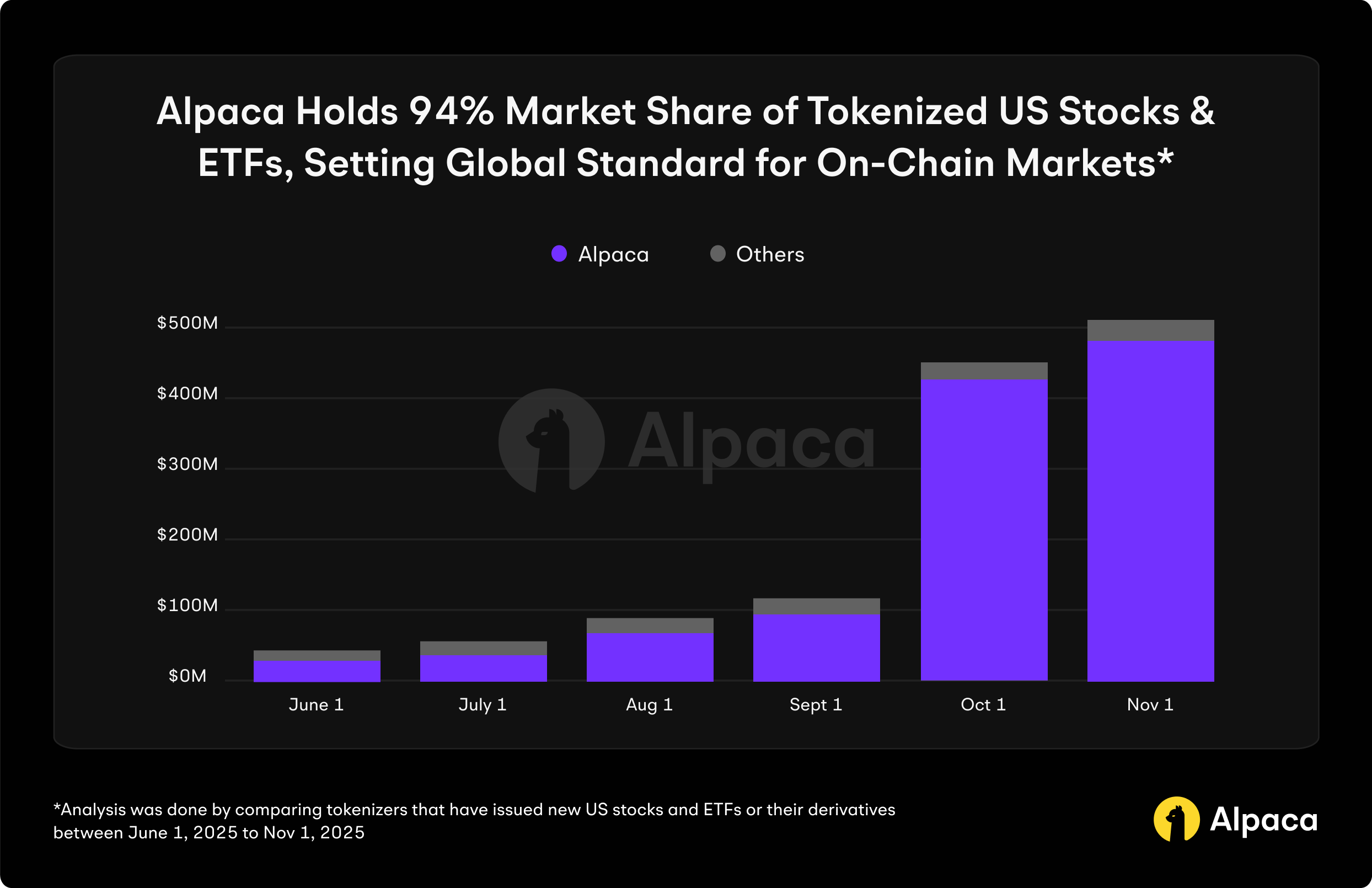
On June 1, Binance officially opened trading in over 8,000 US stocks and ETFs to non-US users, allowing fractional share purchases starting at just $5 with zero commission using USDC, USDT, and BNB. Behind this sweeping move is Alpaca, a US-licensed broker-dealer responsible for asset custody, dividend payments, and corporate actions. Odaily Planet Daily observes that Alpaca’s market position in the stock tokenization narrative is far more dominant than meets the eye — it counts Bitget, Gate, Ondo, xStocks among its clients and commands an astonishing 94% market share in tokenized US equity and ETF assets.

Exchanges and DeFi Protocols Flock to Stock Tokenization
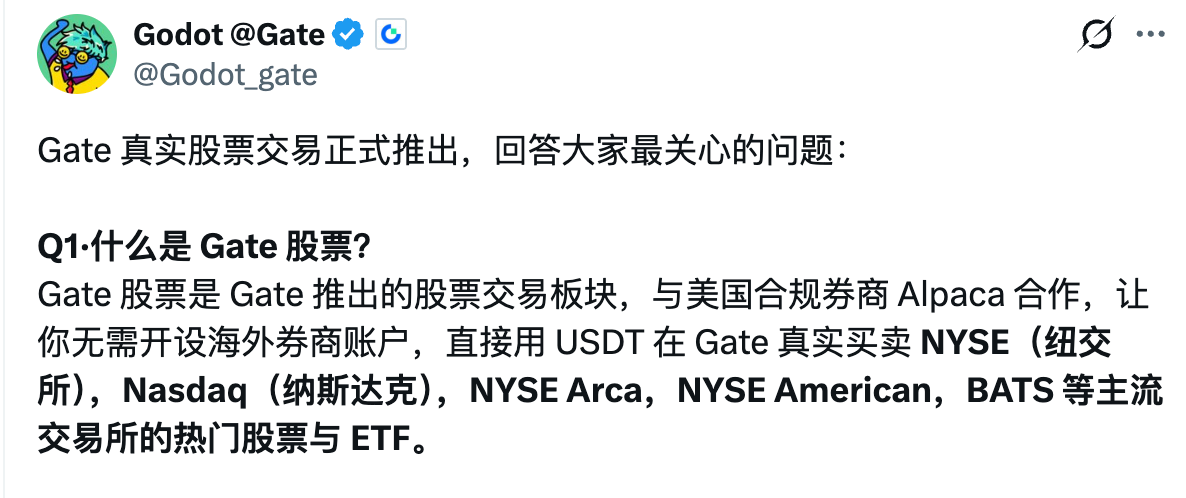
Just days before Binance’s announcement, Bitget unveiled plans on May 28 to launch Reality, a stock token platform issuing rTokens 1:1 backed by real shares. Bitget’s Chinese-speaking head Xie Jiayin confirmed that Alpaca serves as the underlying broker. Similarly, on June 1, Gate introduced real stock trading, enabling users to access major US equities and ETFs with USDT directly. Gate official Godot also confirmed Alpaca as the brokerage partner. The DeFi side is no different. Ondo, the leader in tokenized stocks, partnered with Alpaca last September to bring US stocks and ETFs on-chain, while its competitor xStocks, incubated by Kraken, announced in December that it would work with Alpaca to accelerate global expansion. Whether centralized or decentralized, almost every platform venturing into stock tokenization has chosen Alpaca.
The 94% Market Share Powerhouse
According to Alpaca’s December 4 disclosure, it holds a staggering 94% share of the tokenized US stock and ETF market. That means Alpaca effectively dominates the infrastructure layer connecting crypto with traditional equities.

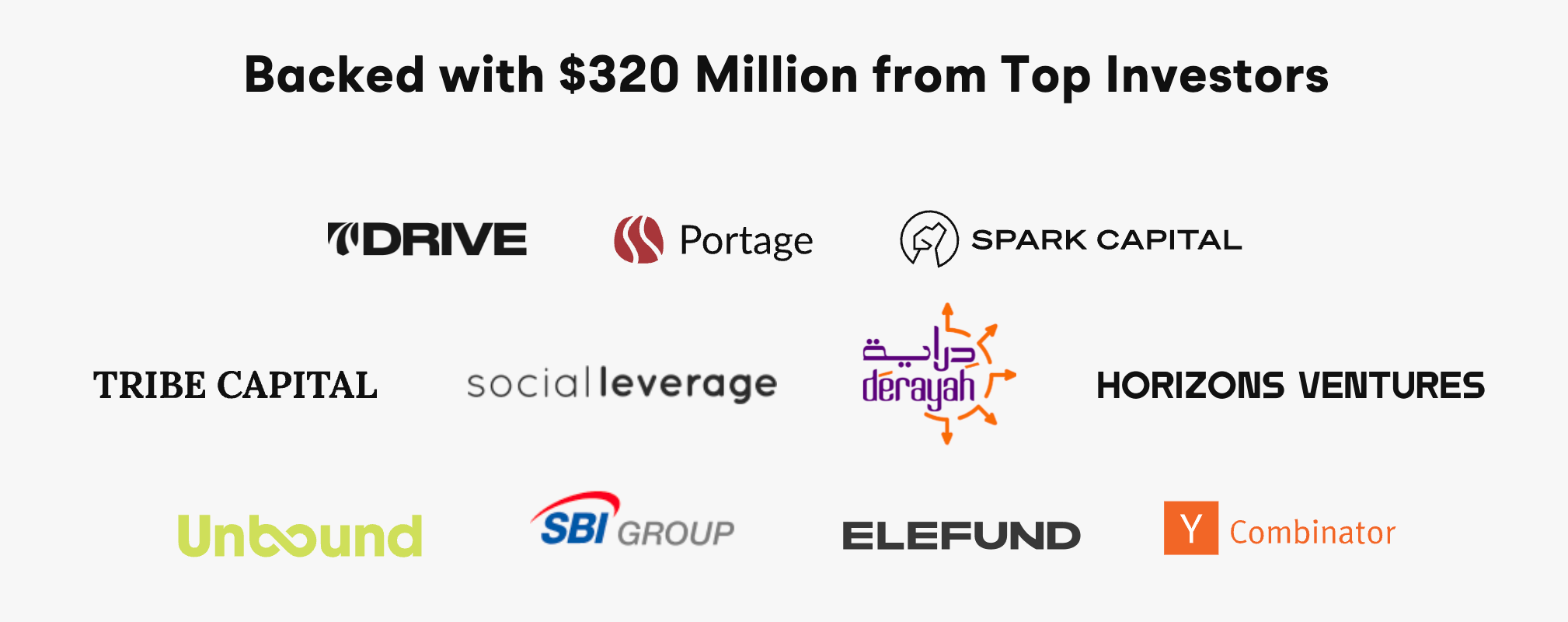
Founded in 2015 in California, Alpaca was co-founded by former Lehman Brothers employee and serial entrepreneur Yoshi Yokokawa (CEO) and engineer Hitoshi Harada (CPO). The company initially focused on financial databases and machine learning, producing trading APIs for quantitative traders. Over time, it evolved from a pure API provider into a full-stack financial infrastructure platform, now supporting stocks, ETFs, options, and cryptocurrencies, along with market data, securities lending, high-yield cash accounts, and 24/5 trading. Since 2019, Alpaca has raised over $320 million from investors including Y Combinator, Spark Capital, Portage Ventures, Tribe Capital, and SBI Group. Today, it serves hundreds of financial institutions and fintech companies across more than 40 countries, having helped open over 7 million brokerage accounts.

Brokerage-as-a-Service: The API-First Magic
Unlike traditional brokers that serve retail investors directly, Alpaca’s core customers are developers, fintech firms, and other broker-dealers. Its Broker API allows partners to quickly assemble a complete securities trading infrastructure — account opening, KYC, order execution, clearing and settlement, and market data. For platforms like Binance, Bitget, Gate, or Ondo, diving into US stock trading would normally require wrestling with broker licenses, regulatory compliance, custody, clearing, and complex routing. Alpaca packages all that into APIs, enabling them to “plug in” to the real securities market with simple calls. This is “Brokerage-as-a-Service” in action: crypto platforms focus on traffic and user experience, while Alpaca handles every back-end connection to the traditional financial world. From a technical standpoint, Alpaca’s API not only supports conventional trading but also accommodates crypto funding and fractional shares, seamlessly aligning with crypto users’ habits — a flexibility traditional brokers struggle to replicate quickly.
Why Crypto Picks Alpaca Over Wall Street Titans
The US has thousands of registered broker-dealers; household names like Charles Schwab, Interactive Brokers, and Fidelity dwarf Alpaca in brand and assets under management. Yet in the stock tokenization wave, it is the decade-old Alpaca that leads. The reason lies in its DNA: Alpaca was never a traditional broker. Its entire product suite is built around APIs, making it a perfect fit for crypto platforms that want to embed securities trading natively. This “API First” philosophy means that from day one, Alpaca designed for integration rather than direct customer acquisition. Moreover, while many traditional financial institutions have been cautious about crypto, Alpaca was one of the earliest US-licensed brokers to actively embrace digital assets and tokenization, building ties with the crypto industry long before stock tokenization became trendy. That early-mover advantage combined with deep product-market fit is what secured its 94% grip on the market.

Network Effects and the “Selling Shovels” Strategy
As more CeFi and DeFi platforms adopt Alpaca, a powerful network effect takes hold: new entrants choose Alpaca for the fastest time-to-market and the most mature compliance path, which brings more accounts and trading volume, fuelling Alpaca’s product improvements — which in turn attracts even more platforms. This flywheel is reinforcing Alpaca’s moat. Stock tokenization is an irreversible trend. While it remains to be seen how many Binances or Ondos will emerge in this race, one thing is becoming crystal clear: when everyone is rushing to dig for gold, the one selling the shovels — Alpaca — stands to be the biggest winner of all.
From a quantitative trading API startup to the essential bridge between crypto and traditional finance, Alpaca’s trajectory mirrors a paradigm shift in financial infrastructure. As the wave of stock tokenization sweeps across the industry, Alpaca’s story may just be beginning.