

On June 1, Binance officially opened trading in over 8,000 US stocks and ETFs to non-US users, allowing purchases with USDC, USDT, and BNB with a minimum of just $5 and zero commission. Behind this launch is a key partner: Alpaca, a US-licensed brokerage responsible for asset custody, dividend payments, and corporate actions. This is far from an isolated choice.

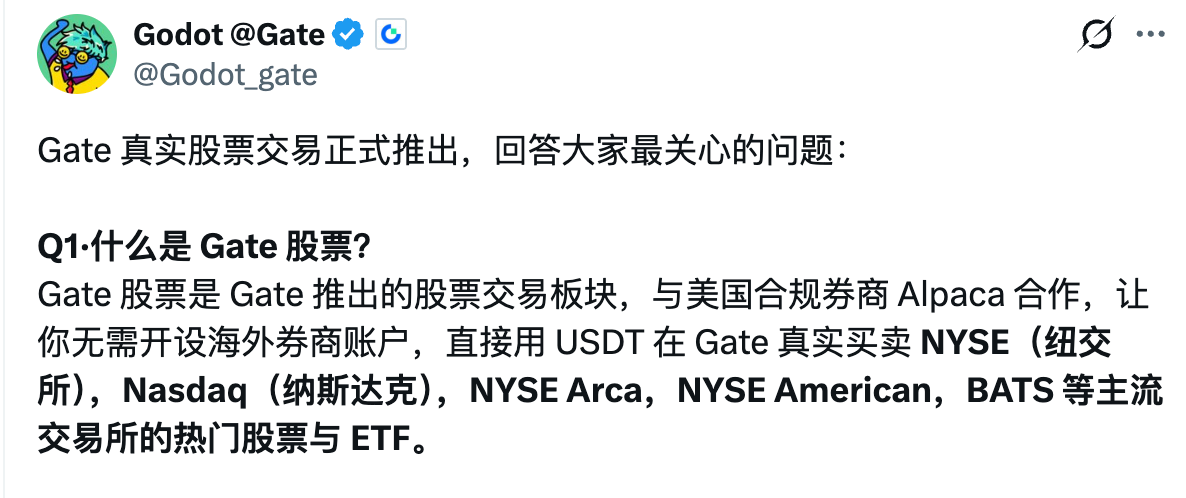
Just days earlier, on May 28, Bitget unveiled its stock token platform Reality, which will issue rTokens pegged 1:1 to real stocks—again built on Alpaca’s infrastructure. On the same June 1 date, Gate rolled out real stock trading with USDT, and once more Alpaca was the brokerage partner. The DeFi space mirrors the trend: Ondo, the leading stock tokenization protocol, partnered with Alpaca last September to tokenize US equities and ETFs, while Kraken-backed xStocks joined forces with Alpaca in December 2025 to accelerate global expansion. According to data disclosed by Alpaca in December 2025, it already holds a 94% market share in tokenized US stock and ETF assets—making it the near-universal infrastructure choice for anyone entering this space.
From Quant Trading API to Full-Scale Infrastructure
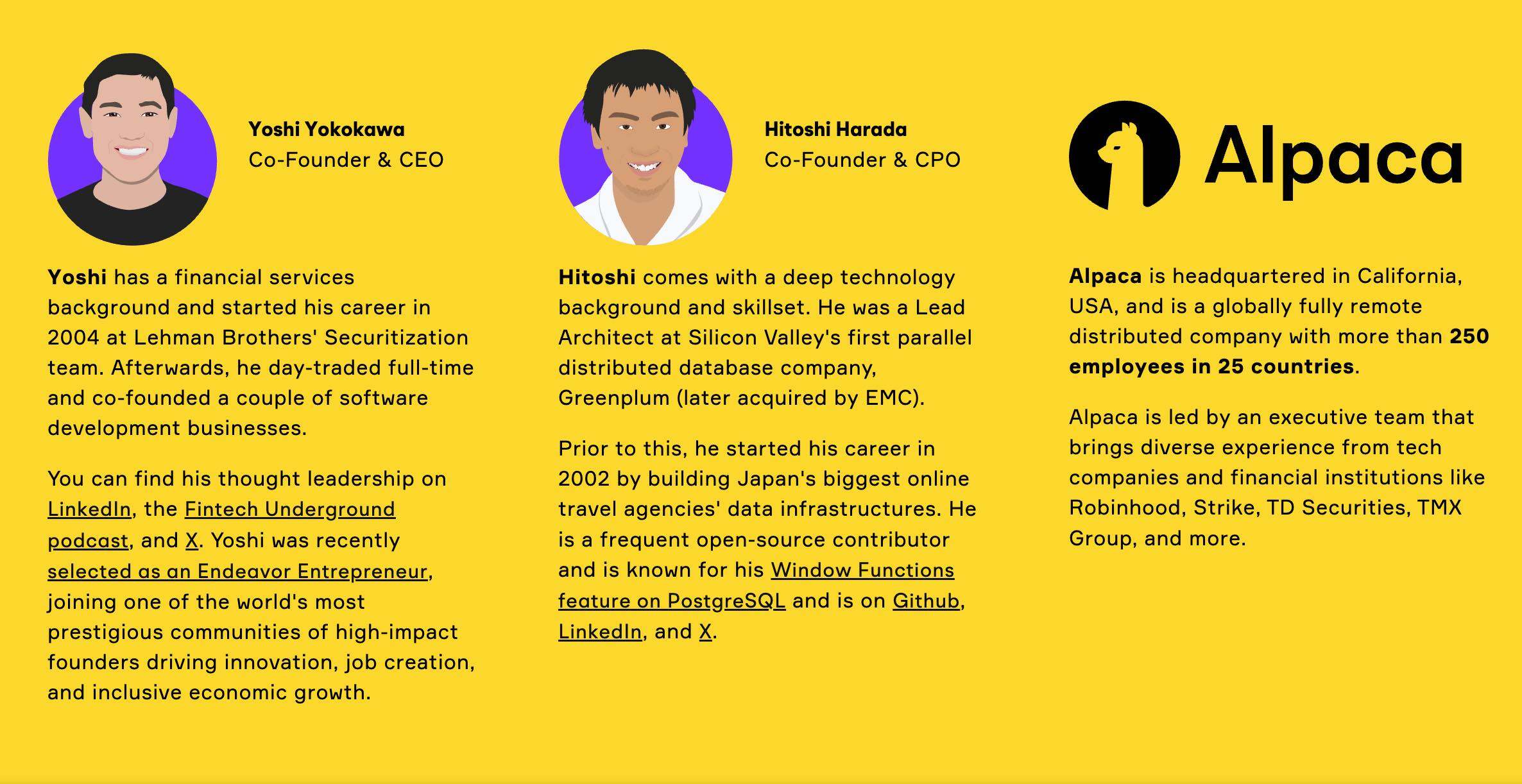
Founded in 2015 and headquartered in California, Alpaca was started by ex-Lehman Brothers employee Yoshi Yokokawa (CEO) and engineer Hitoshi Harada (CPO). Operating with a fully remote workforce of over 250 people across 25 countries, the company initially focused on financial databases and machine learning, offering trading APIs for quantitative traders. Over time, it evolved from a simple interface provider into a comprehensive financial infrastructure platform, now supporting stocks, ETFs, options, crypto, market data, securities lending, high-yield cash accounts, and 24/5 US stock trading.

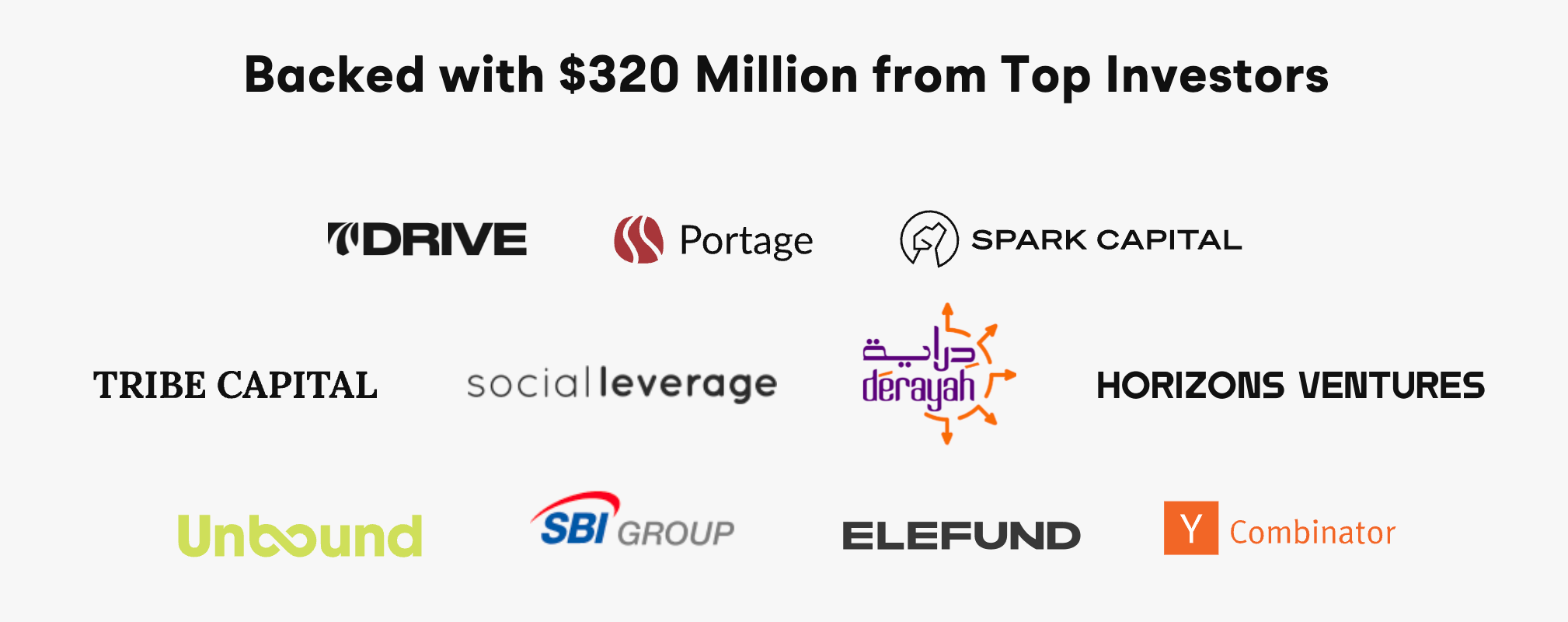
Since 2019, Alpaca has raised over $320 million from investors including Y Combinator, Spark Capital, Portage Ventures, Tribe Capital, and SBI Group. Today, it serves hundreds of financial institutions and fintech companies across more than 40 countries and regions, having facilitated the opening of over 7 million brokerage accounts.

API-First and Crypto-Native: Why Alpaca Stands Out
The US has thousands of registered broker-dealers, and giants like Charles Schwab and Interactive Brokers dwarf Alpaca in brand recognition and assets. Yet they haven’t dominated the stock tokenization wave. The reason: they are built for end investors, not for developers. Alpaca’s core clients are developers, fintech firms, and other institutions. Through its Broker API, partners can rapidly embed the full spectrum of securities trading capabilities—account opening, KYC, order execution, clearing, settlement, and market data—into their own platforms. Binance, Bitget, Gate, Ondo, and others don’t need to tackle licensing, compliance, custody, or clearing headaches; they simply call Alpaca’s APIs to plug into a real-world broker. This “Brokerage-as-a-Service” model lets crypto platforms focus on user acquisition and experience while Alpaca handles all backend connections to regulated securities markets.
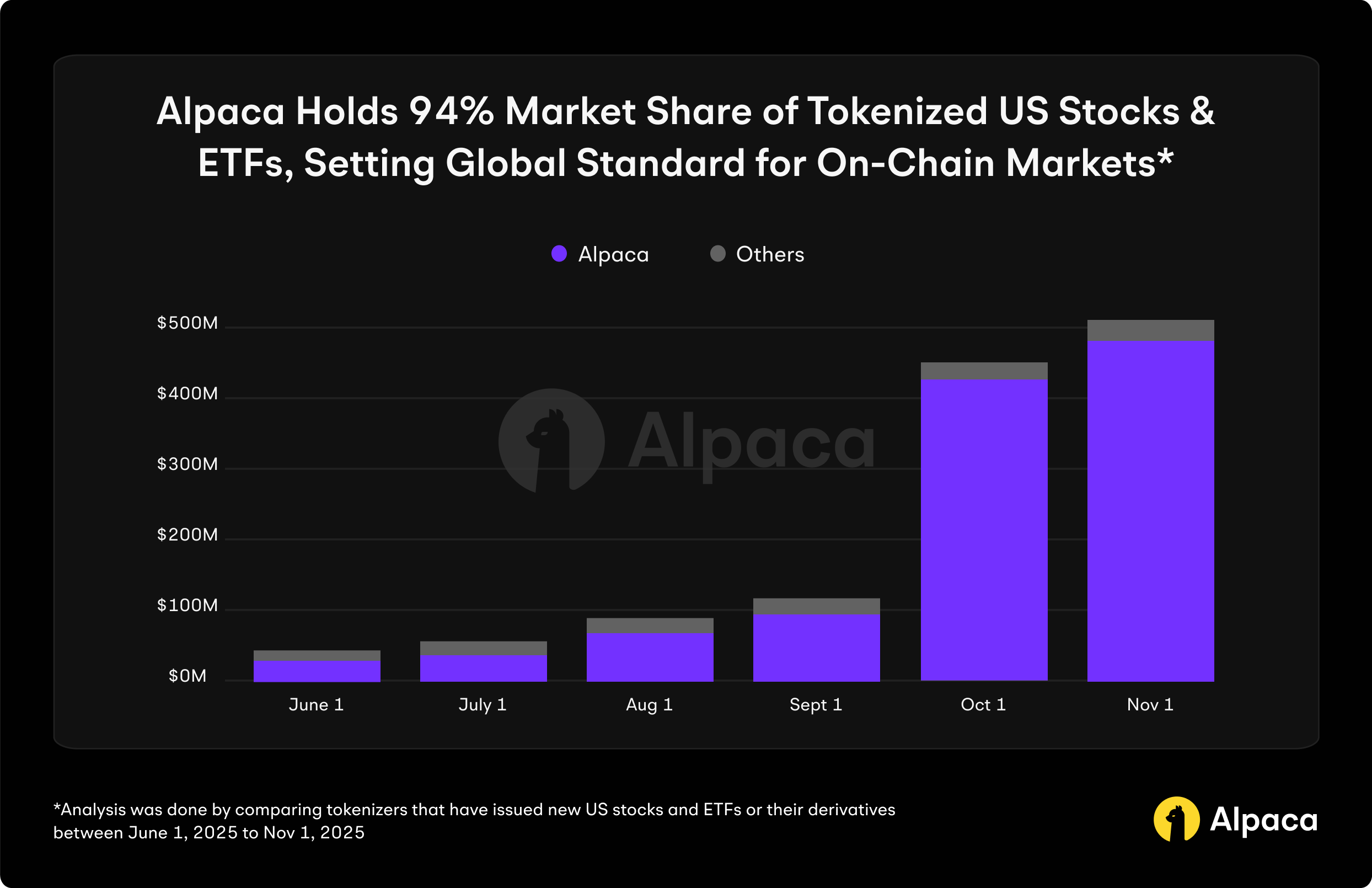
Equally important, Alpaca was one of the earliest US-licensed brokerages to proactively embrace digital assets and tokenization. While many traditional financial institutions kept their distance from crypto, Alpaca had already been building ties with the industry and exploring convergences between securities and blockchain. Its “API First” ethos combined with this early crypto affinity gave it a decisive first-mover advantage when the stock tokenization trend accelerated.
Network Effects Build a Moat
With Binance, Bitget, Gate, Ondo, xStocks, and others all relying on Alpaca, network effects are now reinforcing its competitive position. For latecomers, choosing Alpaca means the fastest time-to-market and a proven compliance path. This fuels a self-reinforcing cycle: more platforms integrate Alpaca → more accounts and trading volume → Alpaca further refines its products and infrastructure → attracting yet more platforms.
In the unfolding stock tokenization boom, no one can predict how many Binances or Ondos will emerge. But the company selling the “shovels” to all of them—Alpaca—is increasingly looking like the most certain winner in this race.