On June 1, Binance officially opened access to over 8,000 U.S. stocks and ETFs for non-U.S. users, enabling commission-free fractional share purchases starting at $5 and supporting transactions in USDC, USDT, and BNB. While this move attracted widespread attention, a crucial detail was often overlooked: Binance partnered with Alpaca, a U.S. compliant broker-dealer that handles asset custody, dividend distribution, and corporate actions. Alpaca’s market position in the stock tokenization space is far more significant than many realize.

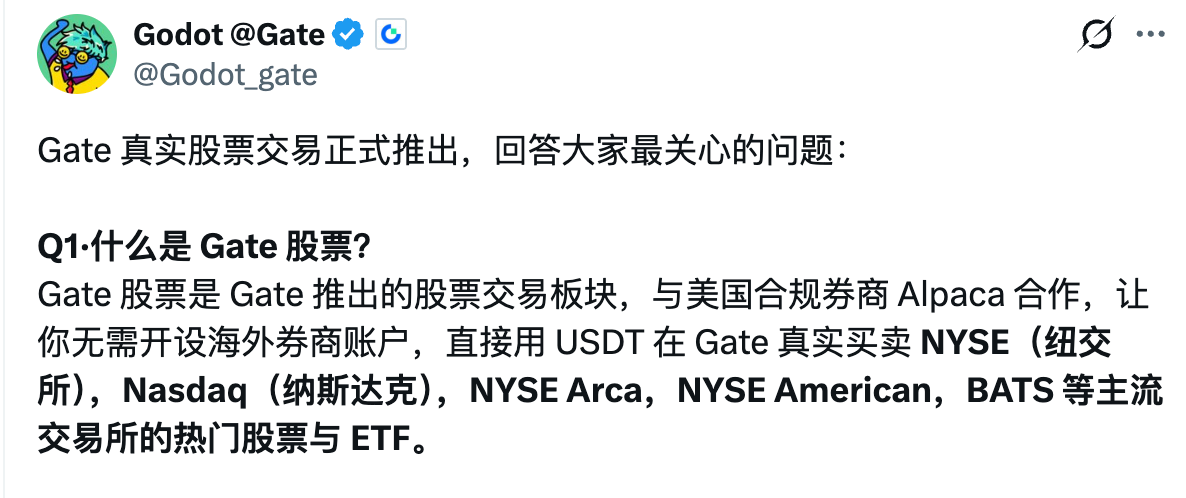
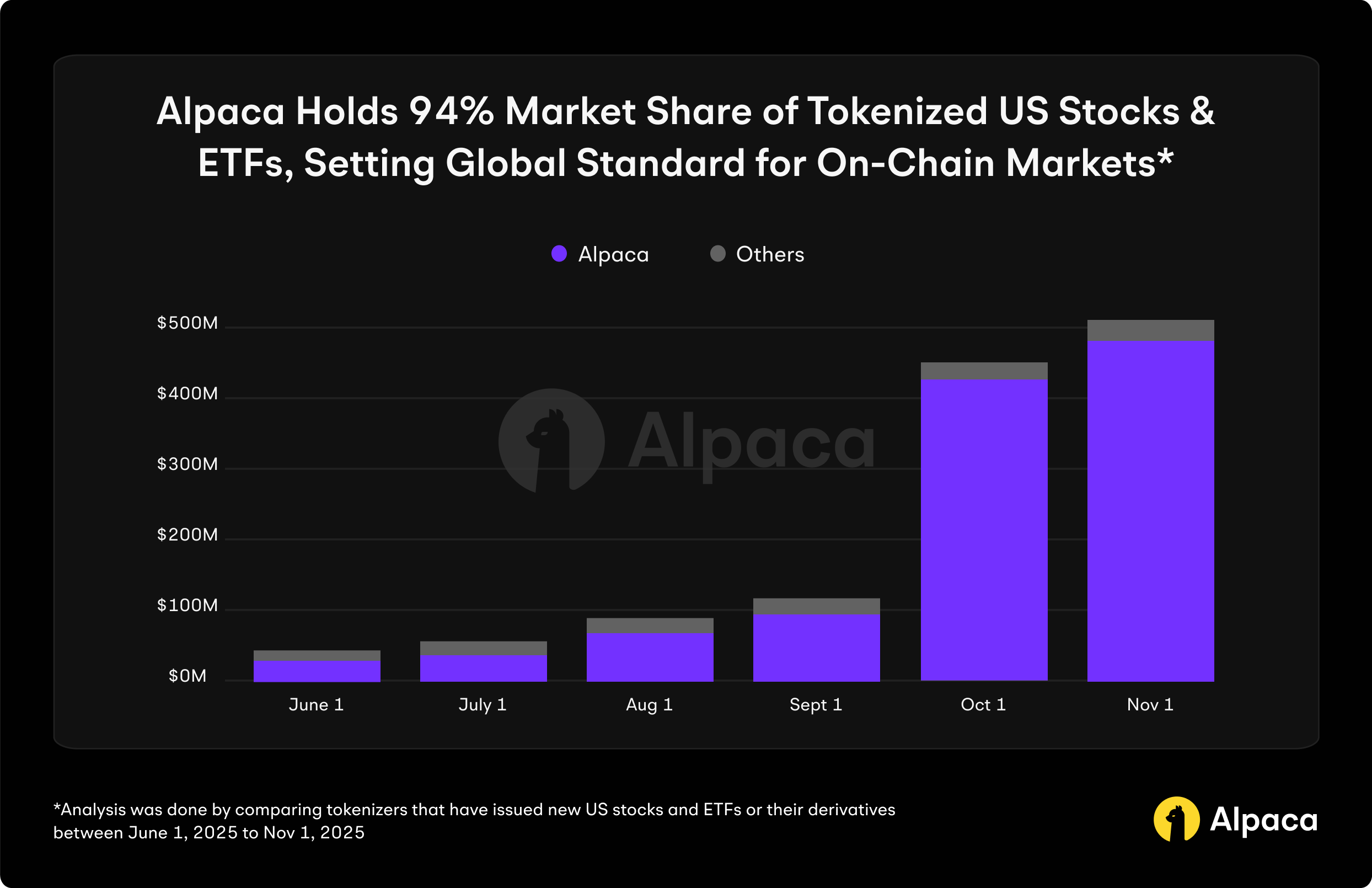
On May 28, Bitget revealed its stock token platform Reality, which will issue rTokens pegged 1:1 to underlying stocks, with Alpaca serving as the underlying broker-dealer. On the same day, Gate launched real stock trading services, allowing users to trade U.S. stocks and ETFs with USDT, again relying on Alpaca as the brokerage partner. In the DeFi sector, Ondo, the dominant player in tokenized stocks, partnered with Alpaca as early as September last year to tokenize equities and ETFs. A direct competitor, Kraken-backed xStocks, also announced a partnership with Alpaca in December to accelerate global distribution. According to Alpaca's disclosure in December, the company already holds a 94% market share in tokenized U.S. stock and ETF assets.

A Brokerage Built for Developers
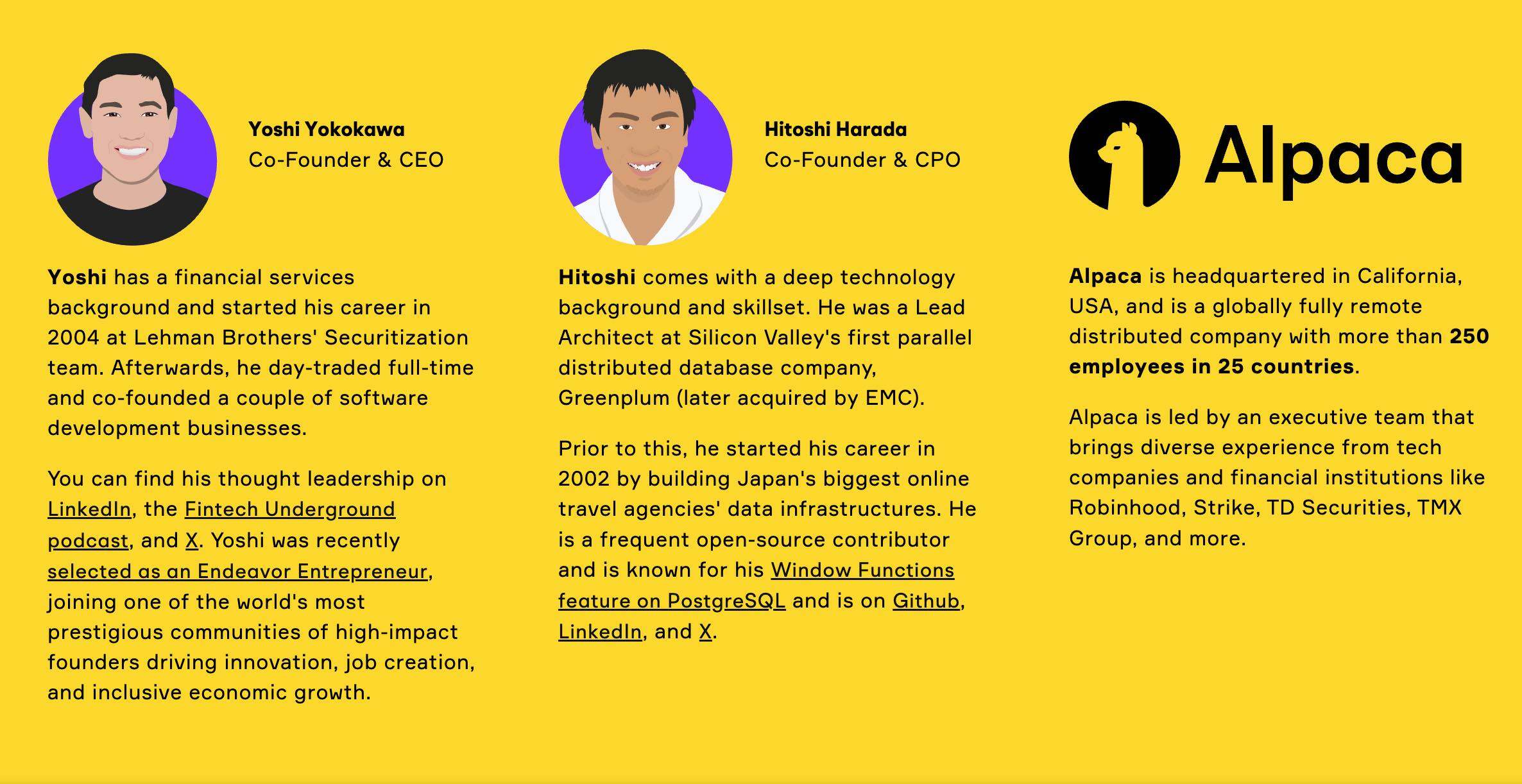
Founded in 2015 and headquartered in California, Alpaca was created by former Lehman Brothers employee and serial entrepreneur Yoshi Yokokawa and engineer Hitoshi Harada. The company initially focused on financial databases and machine learning, offering trading APIs tailored for quantitative traders. Over time, it evolved into a full-stack financial infrastructure provider supporting stocks, ETFs, options, cryptocurrencies, and services such as market data, securities lending, high-yield cash accounts, and 24/5 U.S. stock trading. To date, Alpaca has raised over $320 million from investors including Y Combinator, Spark Capital, and Portage Ventures, and employs more than 250 people across 25 countries, having helped partners open over 7 million brokerage accounts.

Unlike traditional brokerages that cater to end investors, Alpaca’s core clients are developers, fintech companies, and other financial institutions. Its Broker API suite enables partners to rapidly build comprehensive securities trading services, covering account opening, KYC, order execution, clearing, settlement, and market data. This is precisely what crypto platforms like Binance, Bitget, Gate, and Ondo need—they can integrate compliant stock trading capabilities with a few API calls, bypassing the enormous costs and complexities of securing licenses, managing custody, and routing orders. The model has been aptly described as “Brokerage-as-a-Service,” allowing platforms to focus on user acquisition and experience while Alpaca handles the entire backend connection to real-world securities markets.
Why Alpaca Beat the Giants
The U.S. compliant financial market has no shortage of broker-dealers, with giants like Charles Schwab, Interactive Brokers, and Fidelity commanding far greater brand recognition and asset scale. Yet Alpaca has dominated the stock tokenization wave. The reason lies in its DNA: from day one, Alpaca embraced an “API First” design, treating developers—not retail investors—as its customers. This approach aligns perfectly with crypto platforms’ desire to embed securities trading into their native ecosystems. Moreover, unlike many traditional financial institutions that remain cautious about digital assets, Alpaca was among the first licensed U.S. broker-dealers to actively embrace tokenization and blockchain convergence. This first-mover advantage, combined with deep industry compatibility, is the core reason Alpaca captured its leading market position.
Network Effects Moat
As more crypto platforms adopt Alpaca’s infrastructure, a powerful network effect is reinforcing the company’s competitive moat. New entrants choosing Alpaca benefit from the fastest time-to-market and the most mature compliance pathway, which in turn generates more accounts and trading volume for Alpaca, fueling further product enhancements and attracting even more partners. While stock tokenization is undeniably a megatrend, and the number of “Binances” and “Ondos” that will emerge remains uncertain, the entity selling the picks and shovels to all these players—Alpaca—is increasingly positioned as the greatest beneficiary of this race.