
On June 1, Binance officially opened access to over 8,000 US stocks and ETFs for non-US users, enabling purchases with USDC, USDT, and BNB from as little as $5 with zero commission on fractional shares. Rather than building its own brokerage, Binance partnered with US-compliant brokerage Alpaca to handle asset custody, dividend distribution, and corporate actions.
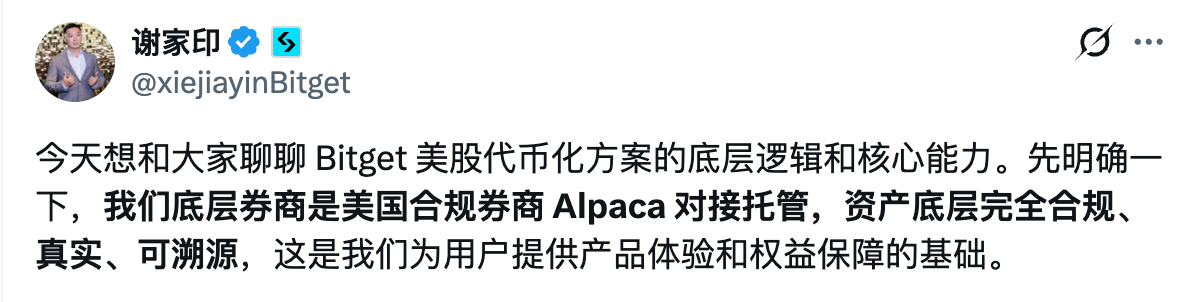
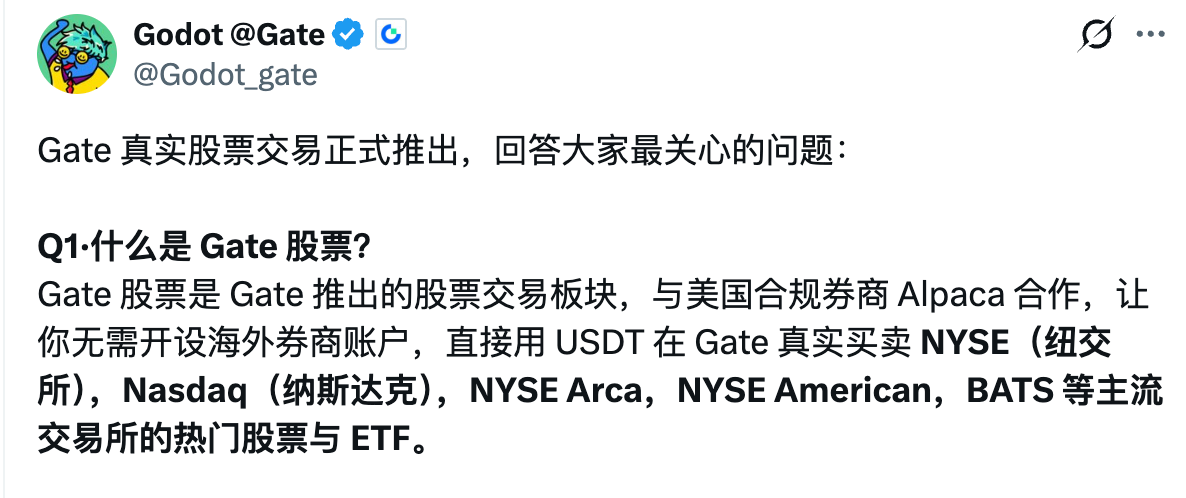
Around the same time, Bitget and Gate also aggressively expanded into stock tokenization. Bitget unveiled its stock token platform Reality and linked derivative rTokens, with its executive 谢家印 confirming Alpaca as the underlying broker. Gate launched real stock trading allowing users to buy into US equities directly with USDT, and its official Godot confirmed the same brokerage partner: Alpaca.
The DeFi side mirrors this pattern. Dominant stock tokenization protocol Ondo announced its partnership with Alpaca as early as last September to tokenize US stocks and ETFs. Its competitor, Kraken-backed xStocks, followed in December, confirming it would leverage Alpaca to accelerate global adoption outside the US.
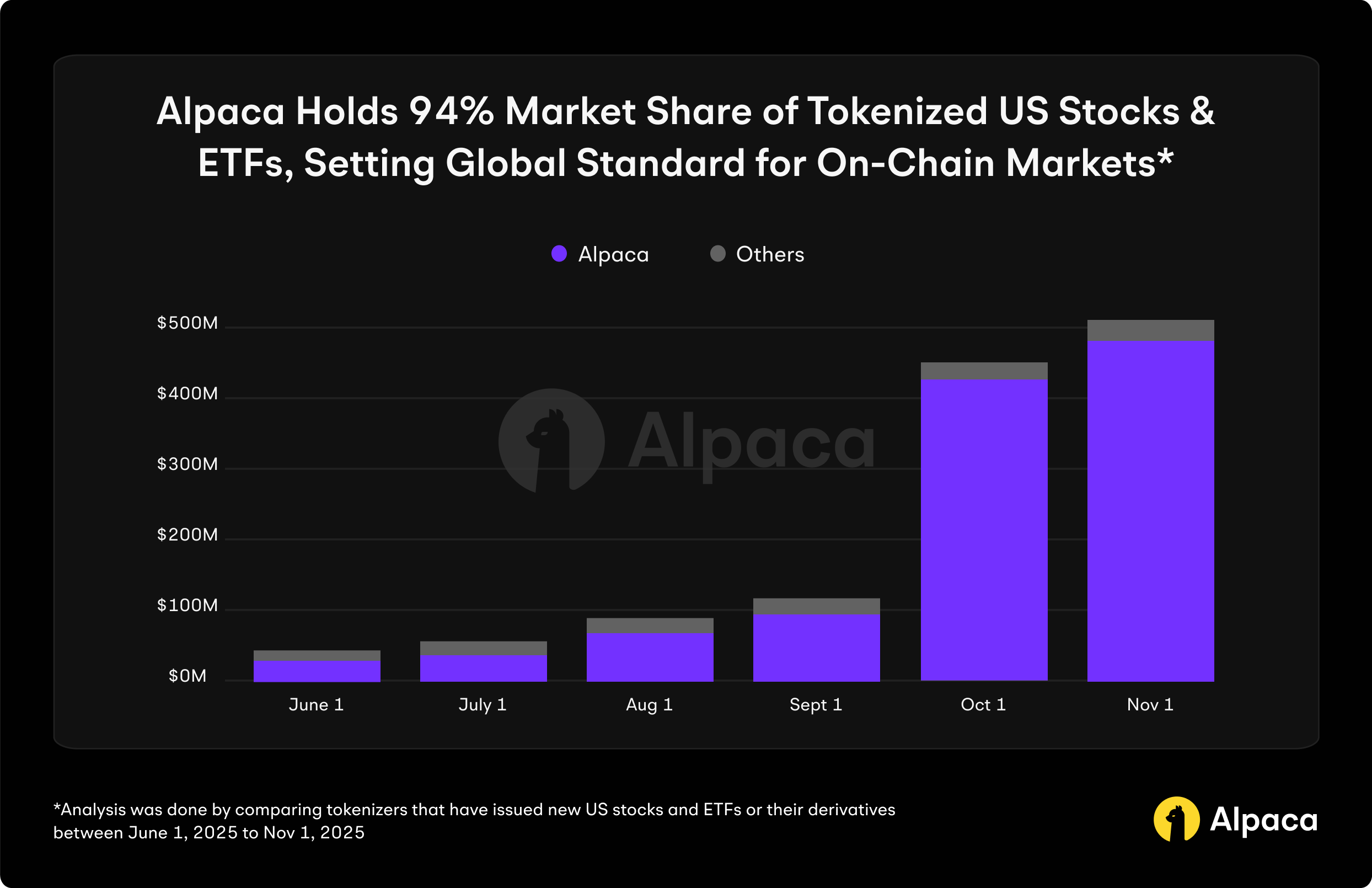
Across CeFi and DeFi, virtually every stock tokenization service has Alpaca in the background. According to data Alpaca disclosed last December, it already commands 94% of the tokenized US stock and ETF market.

From Quant API to Brokerage-as-a-Service
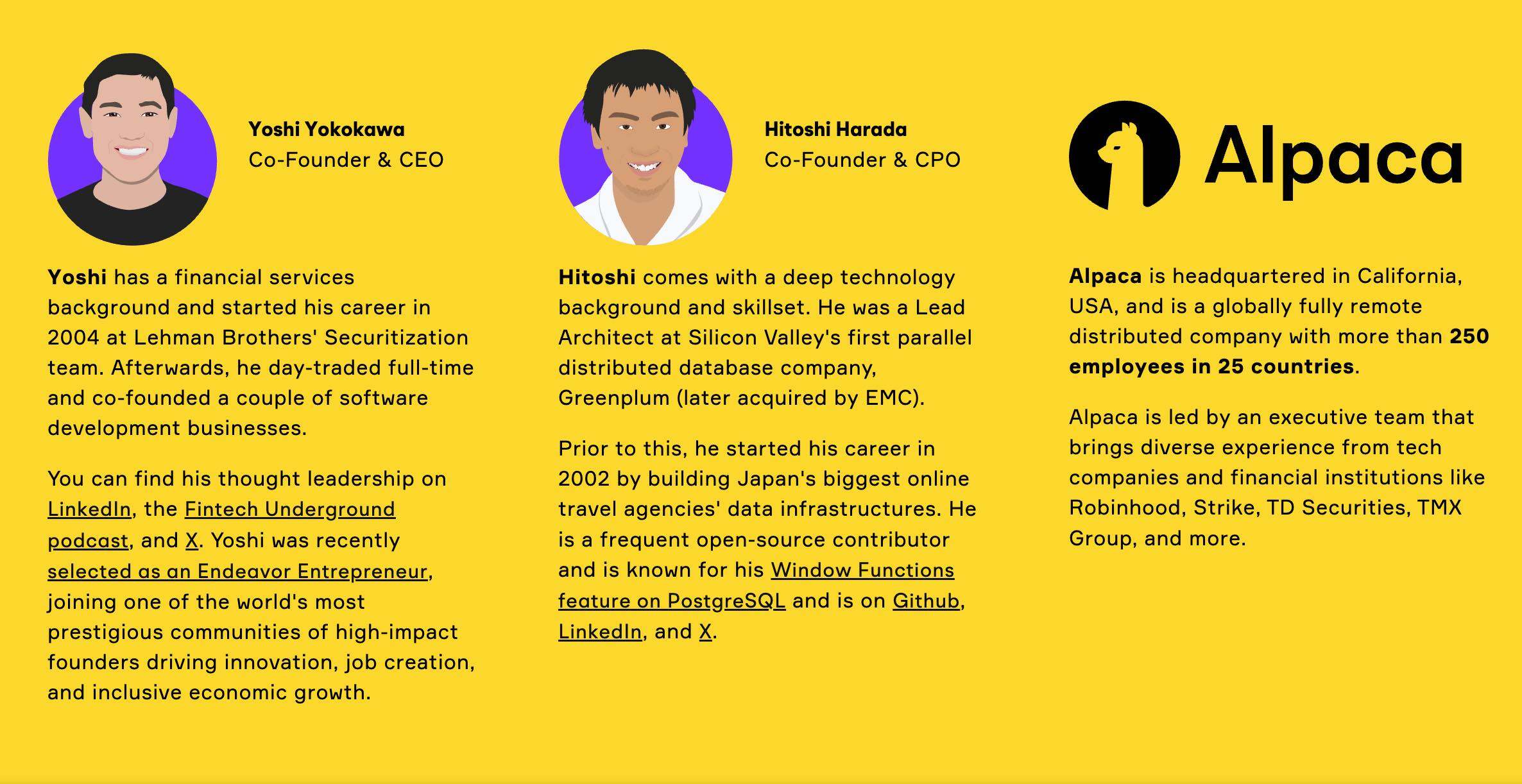
Founded in 2015 and headquartered in California, Alpaca was co-founded by former Lehman Brothers employee Yoshi Yokokawa (CEO) and engineer Hitoshi Harada (CPO). Initially a financial database and machine learning startup, it offered trading APIs for quantitative traders, then evolved into a full-fledged financial infrastructure provider, covering stocks, ETFs, options, crypto, and offering market data, securities lending, high-yield cash accounts, and 24/5 US stock trading.

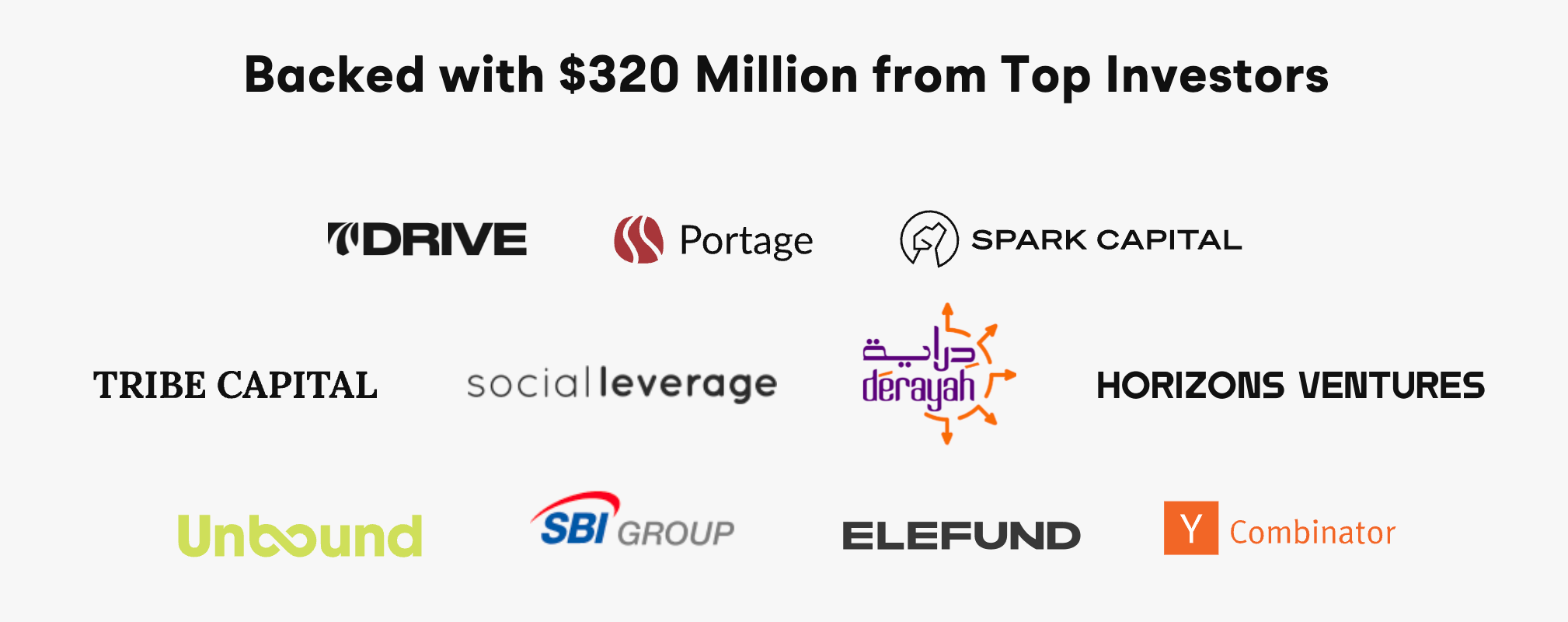
Since 2019, Alpaca has raised over $320 million from investors including Y Combinator, Spark Capital, Portage Ventures, Tribe Capital, and SBI Group. Its globally distributed team of over 250 employees spans 25 countries, serving hundreds of financial institutions and fintechs and helping partners open more than 7 million brokerage accounts.
Unlike traditional brokerages that serve end investors directly, Alpaca's core customers are developers, fintechs, and other brokerage firms. Its Broker API enables partners to quickly build a full securities service suite—account opening, KYC, account management, order execution, clearing, settlement, and market data. This effectively delivers “Brokerage-as-a-Service”: Binance, Bitget, Gate, Ondo, and others only need to focus on user acquisition and traffic, while Alpaca handles everything connecting to real-world securities markets.
Why Crypto Firms Prefer Alpaca
The US compliant financial market has no shortage of brokerages. Giants like Charles Schwab, Interactive Brokers, and Fidelity dwarf Alpaca in brand presence and asset scale, yet when the stock tokenization wave emerged, this decade-old firm seized the lead. The reason lies in Alpaca's DNA: it was never a traditional brokerage. Its customers are developers, not retail investors. Its product design is almost entirely API-centric—developers call an interface and instantly gain full trading capabilities. This “API First” philosophy aligns perfectly with crypto platforms looking to embed securities trading into their own ecosystems.
Moreover, while many traditional financial institutions remain cautious about crypto, Alpaca was one of the earliest licensed US brokerages to proactively embrace digital assets and the tokenization narrative. It built ties with the crypto industry long before stock tokenization became a trend, actively exploring synergies between securities markets and blockchain technology. That first-mover advantage, combined with deep industry fit, is the core reason behind its 94% market share.
The Shovel Seller’s Network Effect
As more CeFi and DeFi players plug into Alpaca's infrastructure, network effects are solidifying its moat. For newcomers, choosing Alpaca means the fastest time-to-market and the most mature compliance path, creating a virtuous cycle: more platforms join → more accounts and trading volume → Alpaca further refines its products and infrastructure → attracting even more platforms.
Stock tokenization is an unstoppable trend. While it remains unknown how many “Binances” or “Ondos” will ultimately emerge, one thing is becoming increasingly clear: the one selling the shovels to all these platforms stands to be the biggest winner in this race.