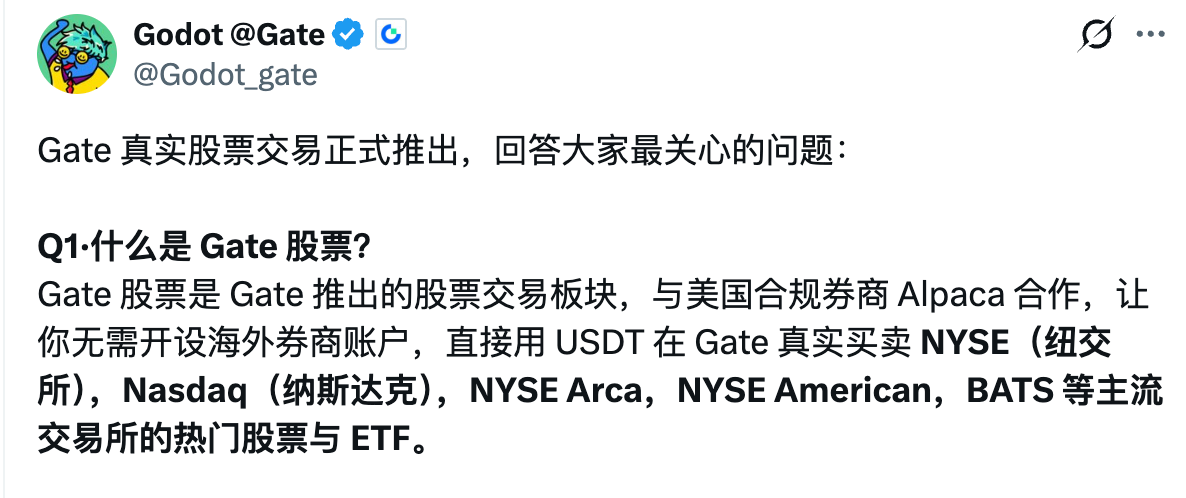
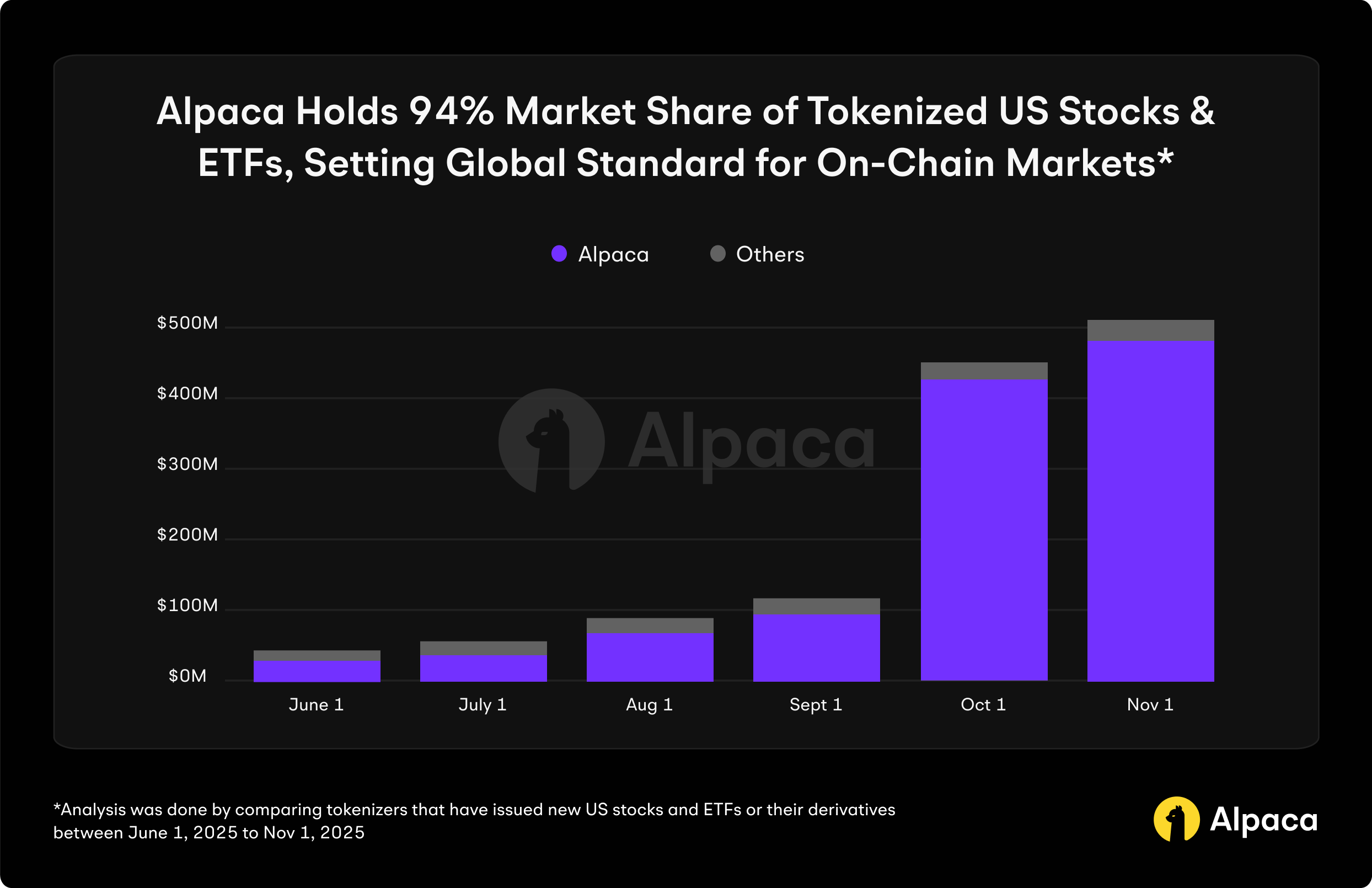
On June 1, Binance officially opened trading for over 8,000 U.S. stocks and ETFs to non-U.S. users, with a minimum of $5 and zero commission using USDC, USDT, or BNB. Almost simultaneously, Bitget and Gate unveiled their own equity token products. Behind these launches, one name repeatedly surfaces: Alpaca, a U.S. compliant broker-dealer. Whether in centralized exchanges or DeFi protocols, an increasing number of crypto platforms are choosing Alpaca as the bridge to real-world securities. According to data released by Alpaca last December, it already commands 94% of the market for tokenized U.S. stocks and ETFs.

From Tech Startup to 'Brokerage-as-a-Service'
Alpaca was founded in 2015 in California by Yoshi Yokokawa, a former Lehman Brothers employee, and engineer Hitoshi Harada. It initially focused on financial databases and machine learning, offering trading APIs for quants. Over time, it evolved into a full-stack financial infrastructure provider, supporting stocks, ETFs, options, and cryptocurrencies, along with market data, securities lending, high-yield cash accounts, and 24/5 U.S. stock trading. Since 2019, Alpaca has raised over $320 million from Y Combinator, Spark Capital, Portage Ventures, Tribe Capital, and SBI Group, among others. Today, it serves hundreds of fintech firms across more than 40 countries and has helped open over 7 million brokerage accounts for its partners.

Why Crypto Platforms Prefer Alpaca
The United States has no shortage of licensed brokers. Traditional giants like Charles Schwab and Interactive Brokers dwarf Alpaca in brand recognition and assets. Yet when the tokenized stock wave arrived, it was this decade-old startup that took the lead. The reason: Alpaca was never built for retail investors; its clients are developers and fintech firms. Its Broker API allows partners to instantly access account opening, KYC, order execution, clearing, settlement, and market data—capabilities that would otherwise require navigating complex licensing and infrastructure. This "API First" philosophy closely aligns with the needs of platforms like Binance, Bitget, Gate, and Ondo, which want to embed securities trading into their existing interfaces. Moreover, Alpaca was among the first U.S. licensed brokers to actively embrace digital assets, exploring blockchain integration long before tokenized stocks became a trend.

Network Effects Build a Deep Moat
With major platforms like Binance, Bitget, Gate, Ondo Finance, and Kraken's xStocks already using Alpaca's infrastructure, powerful network effects are taking hold. New entrants choosing Alpaca benefit from the fastest time-to-market and a proven compliance path, fueling a virtuous cycle: more platforms join, generating more accounts and trading volume, enabling Alpaca to refine its product and attract still more partners. On the DeFi side, both Ondo and xStocks have partnered with Alpaca to tokenize U.S. equities, underscoring Alpaca's irreplaceable position in the crypto world.
The Real Winner: Selling Shovels to Gold Miners
Tokenized stocks are an unstoppable trend, but it remains unclear how many Binances or Ondos will ultimately dominate. One thing is becoming increasingly evident, however: when numerous platforms rush into the market, the infrastructure provider—the "shovel seller"—may emerge as the biggest winner. With its 94% market share and growing client base, Alpaca is cementing its role at the heart of the crypto-equity convergence. Every stock trading feature on a centralized exchange and every tokenized asset on a DeFi protocol relies on Alpaca's back-end securities layer. At the intersection of crypto and traditional finance, Alpaca has become the indispensable connector.

From a broader perspective, Alpaca's success also highlights the crypto industry's urgent demand for compliant financial infrastructure. While traditional brokers hesitated due to their cautious stance on digital assets, API-first and crypto-friendly newcomers like Alpaca seized a huge opportunity window. As more regions open up and more assets are brought onto blockchain rails, Alpaca's Brokerage-as-a-Service model is poised to penetrate further, continuing to play the winning role in this stock-token race.