
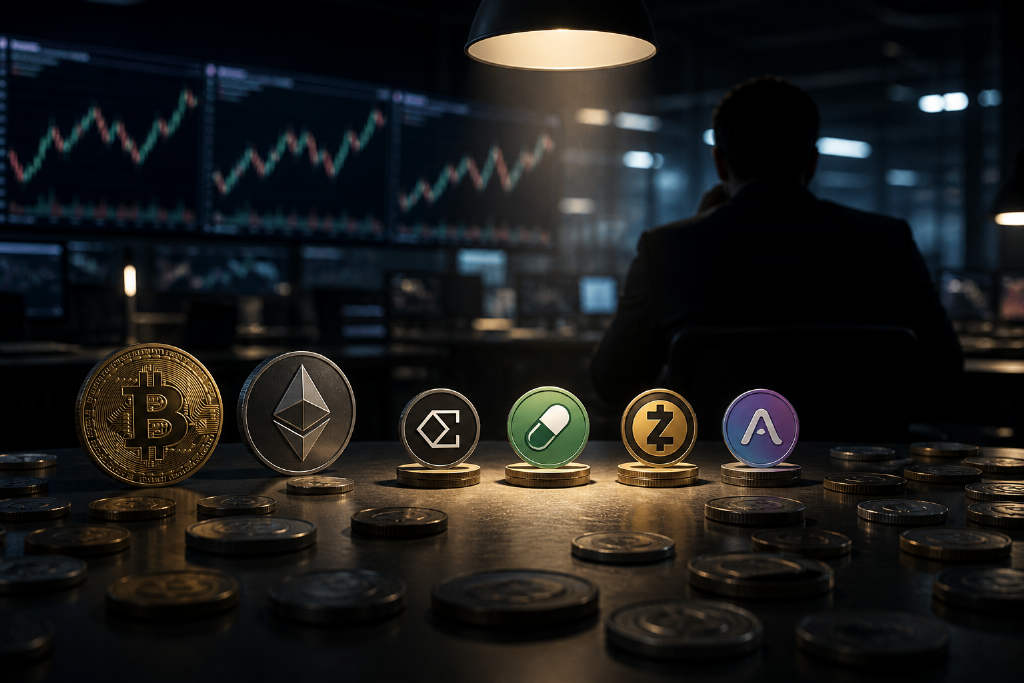
Altcoins have started to heat up again after strong rebounds in Bitcoin and Ether, with several tokens sharply outperforming the broader market and a few even reaching new highs. Even so, the latest market data suggests a full-fledged altcoin season has not been confirmed, and the kind of broad rally that once lifted nearly every token at the same time may be much harder to see again.
Altcoin market cap returns to about $1.13 trillion
PANews said altcoins have regained market attention since Bitcoin’s recent advance, with both market size and trading activity showing clear improvement.
According to CoinGecko data cited in the report, total altcoin market capitalization has increased by more than $250 billion at its peak since Aug. 19 and has climbed back to about $1.13 trillion. CoinGlass data shows daily altcoin trading volume rose over the same period from about $86.23 billion to as high as $132.43 billion, up roughly 53.6%.
That recovery has also appeared in technical readings. CryptoQuant analyst Darkfost said in a recent post that 56% of altcoins listed on Binance have moved back above the 200-day moving average, or 200-DMA, a level often watched as a key technical marker. The reading, according to the report, points to the possibility that the market is entering a new phase of the cycle.
A small group of tokens is doing most of the heavy lifting
As risk appetite has improved, a number of altcoins have posted strong gains. The advance, though, has been concentrated rather than broad.
Among the top 100 tokens by market capitalization, the 30 best performers over the past seven days gained more than 34.9% on average, based on CoinGecko data cited by PANews. That outpaced both Bitcoin and Ether over the same stretch. ENA, PUMP, ZEC and AAVE led the group, rising 98%, 80.5%, 69.7% and 60.7%, respectively.
PANews said those moves were driven not only by the broader recovery in market sentiment, but also by token-specific developments.
- ENA was helped by Ethena securing a $1 billion FalconX financing arrangement, as well as public bullish comments and purchases from BitMEX co-founder Arthur Hayes.
- PUMP was supported by improvement in protocol revenue and token burn ratios, product updates including BOOST mode and Allout Rewards, and the market’s gradual digestion of earlier pressure from large token unlocks.
- AAVE gained alongside improving protocol liquidity, growth in V4 deposits and better expectations around regulatory compliance.
The report noted that only ZEC and HYPE recently set new highs, giving them a higher market premium than most other tokens in the rally.
ZEC’s rise was tied to Grayscale filing an amended Zcash ETF document, discussions at DCG about injecting around 200,000 ZEC into a related fund, and renewed interest in the privacy narrative. HYPE, by contrast, was linked to continued protocol revenue and its buyback mechanism, remarks by Donald Trump at a White House crypto meeting, and expectations for the AQAv2 upgrade.
Strength has been concentrated in privacy, DeFi and meme tokens
By sector, the biggest winners have mainly come from privacy, DeFi, meme, payments and trading. The number of standout assets has still been limited. Public-chain tokens, RWA-related names and oracle projects have seen more moderate gains.
The privacy segment posted the strongest average return, but PANews said that performance was driven mainly by ZEC alone rather than a broader sector-wide move.
DeFi has also been repriced by returning capital. Tokens with actual use cases, protocol revenue or improving fundamentals have drawn attention. ENA, AAVE, UNI, MORPHO and SKY rose about 51.5% on average over the past seven days. Even after excluding ENA, which surged 98%, the other four DeFi tokens still posted an average gain of about 39.9%.
Meme tokens also performed well, with four related tokens up 46.75% on average over the past seven days. PUMP climbed 80.5%, PEPE rose 53.9%, while DOGE and SHIB gained 30.9% and 21.7%, respectively. PANews said a collective rise in meme tokens is often treated as a sign that market risk appetite is improving, but whether the trend can continue depends largely on whether fresh capital keeps entering and whether risk appetite improves again.
Overall, the latest altcoin move reflects both a technical rebound after steep drawdowns and a shift in sentiment from defense toward offense. Even so, capital has been flowing more toward high-beta assets, strong narratives and tokens with clear catalysts, rather than being spread across the market.
Altcoin season index has recovered to 48, still below the 75 threshold
Despite the visible rebound, PANews said the market remains some distance from a full-blown altcoin season.
CoinGlass data shows the altcoin season index has recovered to 48 from its low over the past two months, but that is still well below 75, the level commonly treated as confirmation that altcoin season has arrived. The indicator measures how altcoins are performing relative to Bitcoin. A typical altcoin season usually requires most of the top 100 altcoins by market capitalization to outperform Bitcoin over the previous 90 days.
With the index still hovering around 50, the market appears to remain in a transition and consolidation phase, meaning capital has not yet spilled over into altcoins on a broad basis.
Bitcoin dominance also remains high. CoinGecko data cited in the report puts Bitcoin’s market share at 57.6%. Excluding Ether and stablecoins, the rest of the altcoin market accounts for only 20.64%, with little recent change. PANews said that supports the view that the latest move has been selective, with capital favoring specific tokens rather than lifting the whole market.
Traditional rotation patterns are being challenged
Historically, a classic altcoin season tends to come after Bitcoin posts a large rally and then moves into a period of consolidation near higher levels. As Bitcoin momentum slows, part of the market usually rotates into Ether, large-cap altcoins and then smaller-cap tokens in search of higher returns.
This time, the report says, Bitcoin’s next directional move still needs more confirmation. In the early stage of a market upswing, capital often stays concentrated in Bitcoin first, and the so-called siphoning effect can make it difficult for most altcoins to attract sustained support.
PANews also argued that the capital structure in this cycle has changed. With Wall Street institutions entering through spot Bitcoin and Ether ETFs as well as crypto treasury channels, the traditional pattern in which capital gradually spreads from Bitcoin into the altcoin market is facing pressure. Institutional money tends to prefer the largest, most liquid and more predictable assets over highly volatile risk tokens.
At the same time, the number of altcoins has grown rapidly in recent years. A constant flow of new tokens has spread already limited market liquidity across a larger field. Without a matching increase in fresh capital, even a return of money into altcoins may not recreate the old cycle pattern in which almost everything rises together.
Ki Young Ju says projects with real business and revenue stand out
CryptoQuant founder Ki Young Ju previously said the traditional altcoin rotation effect has largely disappeared and that altcoin trading volume in BTC pairs has contracted sharply since 2021.
In his view, the era in which projects could make money by issuing tokens based only on narrative is over. Altcoins are not dead, he said, but only projects with real businesses and actual revenue are worth holding over the long term.
He highlighted three categories in particular:
- Global internet companies with a tokenized market layer, such as Binance’s BNB and Telegram’s TON. He said those tokens offer ecosystem exposure in a form that is more workable than equity tokenization.
- DeFi protocols with real revenue, including high-quality decentralized exchanges such as Hyperliquid, provided their founders are credible and governance respects token holders.
- Projects aligned with broader global financial trends, including stablecoins, RWA and tokenized stocks.
The conclusion from the report is not that altcoin season can never return. It is that any future altcoin season may look different from the old one. Instead of a market where buying almost any token works, the next phase may be defined by a much more selective rotation in which fundamentals, actual revenue and the durability of a project’s narrative matter far more.