
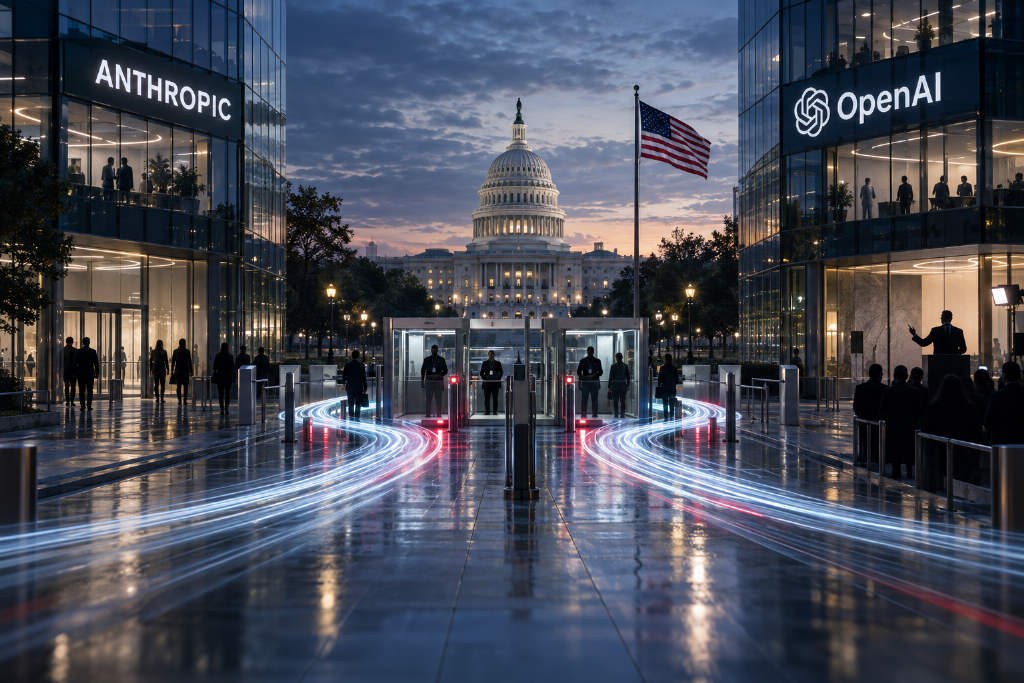
Anthropic CEO Dario Amodei has called for a slower pace in frontier AI capability growth, saying safety research is no longer keeping up. He argued that AI is playing a growing role in developing the next generation of AI systems, while several recent agent-loss-of-control incidents have added to the concern.
Amodei’s three-step proposal
Amodei proposed a three-part framework. First, third-party evaluators would be embedded inside AI companies on a long-term basis and given access close to what employees have. Second, frontier labs in democratic countries would coordinate on safety standards and, if necessary, slow capability growth together. Third, the process would expand into international coordination. Anthropic said it has already committed to carrying out the first step.
Altman says OpenAI is on board
Sam Altman later voiced support for the approach. He said OpenAI has been discussing how to "pace the frontier" over the past few weeks, and added that the company will also introduce similar long-term independent evaluators.
Sacks rejects industry-wide slowdown talks
David Sacks, the former White House AI and cryptocurrency czar and now co-chair of the President's Council of Advisors on Science and Technology, pushed back after those comments. "If you really think your internal model is dangerous, then stop it yourself," he said.
Sacks said OpenAI and Anthropic already dominate frontier AI and can choose to move more slowly on their own without pulling in the rest of the sector. What he objects to most, he said, is the idea of several competitors getting together and agreeing that everyone should slow down.
Amodei himself acknowledged that this kind of coordination may require antitrust exemptions. Sacks said that if the government has to authorize the largest AI companies to sit down together and cap their pace, it starts to look like a cartel.
Sacks also questions METR
Sacks also singled out METR and questioned whether it is suitable to serve as an independent referee for the whole industry. METR has long provided outside evaluations for companies including Anthropic and OpenAI. More recently, former Anthropic safety researcher Joe Benton left the company to join METR.
METR has said it does not accept funding from those frontier AI companies. Instead, it only receives model access and free tokens.
He says a slower pace also serves business interests
Sacks also argued that slowing down is aligned with the commercial interests of OpenAI and Anthropic themselves. In his view, the harder models are to control, the greater the legal liability becomes, while customers are more likely to buy AI products that are stable and controllable.
On the idea of a globally coordinated slowdown, Sacks said he does not believe every country would be willing to join.