
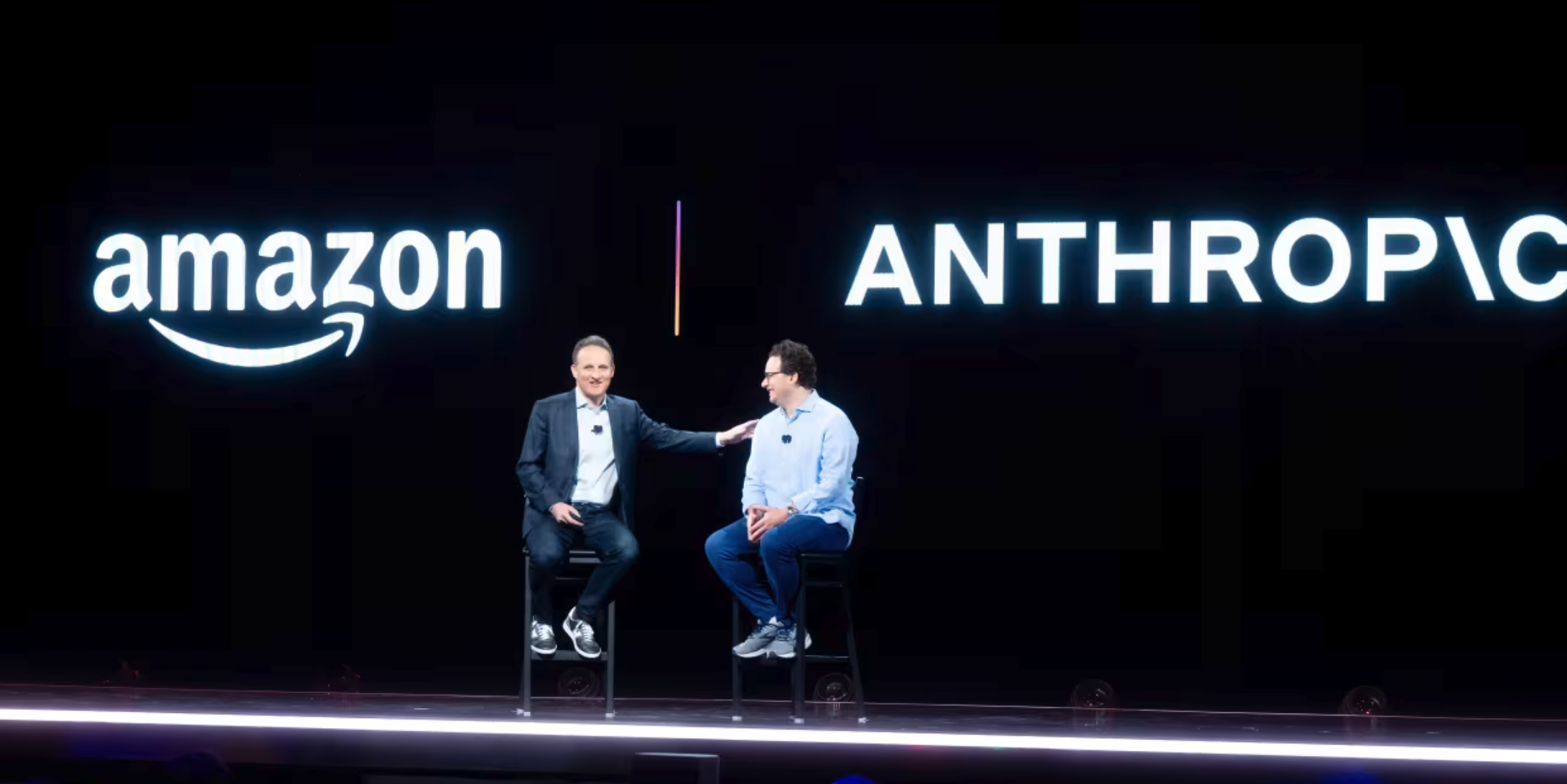
Amazon said it has added $5 billion to Anthropic and could invest as much as $20 billion more if the startup meets commercial milestones. Combined with the $8 billion already invested, Amazon's total committed capital could reach $33 billion.
Milestone-based funding ties the deal to AWS spending
The extra $20 billion is not set to arrive in one payment. It is tied to business milestones that have not been fully disclosed, but Amazon outlined the main trade-off: Anthropic has agreed to spend more than $100 billion on AWS over the next decade and use Amazon's in-house AI chips, Trainium2 and Trainium3, as its primary training hardware.
The compute targets are also explicit. The companies are aiming for roughly 1 GW of compute capacity by the end of 2026, with a longer-term target of 5 GW. In practical terms, Amazon is not just writing a check. It is tying Anthropic's future capital needs back to its own cloud platform and chip business.
Amazon is using capital to secure chip adoption
That structure makes this look less like a standard equity investment and more like a long-term procurement and infrastructure agreement. Amazon does not need board control to make the strategy work. It only needs Anthropic's growth, training demand, and infrastructure choices to stay closely tied to AWS.
The article argues that Amazon's real objective is not simply access to a stronger AI model provider. It wants broader adoption of Trainium. NVIDIA still dominates the AI training market, with products such as H100 and B200 in short supply and at premium prices. Amazon has spent years developing Trainium as a lower-cost alternative that is deeply integrated with AWS, but it has lacked a flagship customer with enough weight to validate the platform at scale.
Anthropic gives Trainium a high-profile proving ground
Anthropic fills that role. For enterprise buyers, shifting core AI training workloads onto a chip platform that has not yet been widely proven is a major decision. If one of the world's leading AI labs runs key training jobs on Trainium, that endorsement carries more commercial value than a conventional marketing campaign.
Amazon CEO Andy Jassy highlighted progress in custom-chip cooperation in the company's statement. The article also notes that Amazon's capital expenditure is projected to reach $200 billion in 2026, with most of that aimed at AI infrastructure. At that scale, using investment dollars to lock in long-term chip usage by a top AI lab fits a clear commercial agenda.
Similar to Microsoft's OpenAI playbook, but with a different center of gravity
The model has precedent. The article says Microsoft has invested more than $13 billion in OpenAI since 2019, securing terms that include OpenAI models running on Azure, a 49% profit share for Microsoft, and priority integration rights for Copilot products.
Amazon's arrangement with Anthropic points in the same direction of deep commercial lock-in, but the emphasis is different. Microsoft focused heavily on model access and product integration. Amazon is leaning harder on chips and compute infrastructure, reflecting its view that the next bottleneck in AI competition sits not only in cloud services, but in control over the hardware that powers model training.