
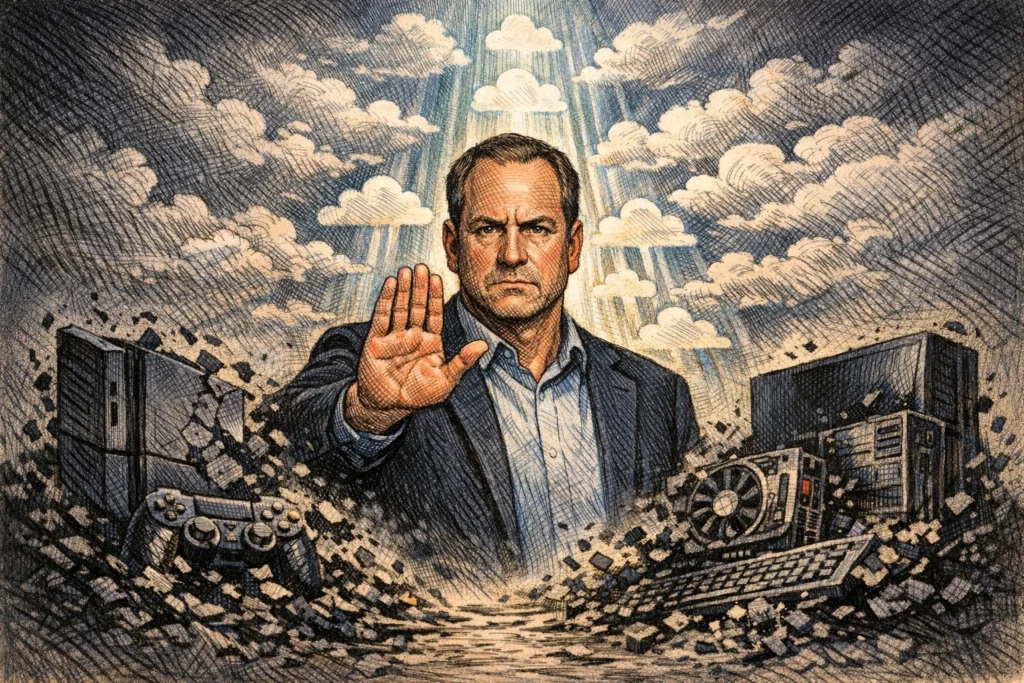
Amazon Games executive Jeff Gathee said rising global memory prices are putting heavier cost pressure on game consoles and PCs, with cloud gaming emerging as the only way out for traditional gaming hardware.
According to the report, Gathee warned that continued increases in DRAM and NAND chip prices have pushed hardware costs to an inflection point. It said the price of a 32GB DDR5 memory kit rose from about RMB 900 last year to nearly RMB 3,800 over the past two years, a fourfold jump that has raised system costs for PC manufacturers.
Memory inflation is lifting hardware costs
The article said the memory crunch is not a short-term issue. Major suppliers including Samsung, SK Hynix, and Micron have continued to raise DRAM prices since 2025, while NAND Flash prices have also moved higher, directly increasing the manufacturing cost of consoles and PCs.
Gathee said only a small share of players currently own a traditional game console or a high-performance PC. By contrast, global smartphone shipments exceed 1 billion units a year, giving cloud gaming a way to reach those devices without requiring users to buy expensive dedicated hardware.
Why cloud gaming fits Amazon’s business
The report listed several business advantages for Amazon’s cloud gaming model.
- Recurring subscription revenue: Amazon Luna runs on a subscription model that offers more predictable recurring income.
- Lower risk of tampering and piracy: running games in the cloud reduces the risk of game modification and piracy.
- Shifted hardware burden: computing is handled in data centers, so users do not need high-spec devices.
The article said cloud gaming is a more profitable model for Amazon than selling hardware.
It also said Amazon Luna has recently been added to the Prime Video app on Fire TV in the U.S. and the U.K., allowing Prime members to use the service without paying an extra fee.
Cloud gaming still has clear limits
The report also pointed to weaknesses in the current cloud gaming experience. Latency-related stutter has not been fully solved, and that makes the service less practical in regions with weaker network conditions.
It added that subscription fees do not decline over time, meaning the long-term cost may not necessarily be lower than buying hardware outright.
Replacement of traditional devices remains unsettled
The article said industry analysis has not reached a firm conclusion on whether cloud gaming can replace traditional gaming devices in the near term. Still, memory price increases are accelerating that shift, while cost pressure on console makers is becoming harder to ignore.