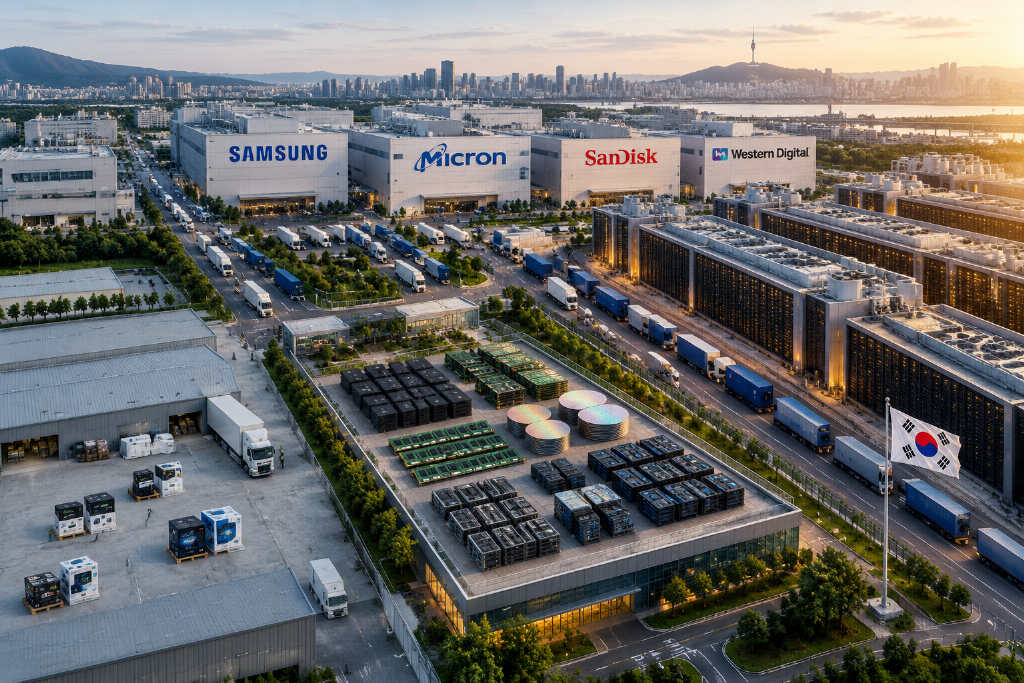
memory2026-09-30 03:46:57Long-term supply deals are tying up memory output and lifting the price floor for consumersMajor memory makers including Samsung, Micron, SanDisk, and Western Digital are shifting more of their output into multi-year supply agreements with a small group of large customers, a move aimed at reducing the industry’s long-standing boom-and-bust cycle. The report says these long-term agreements now cover roughly 50% to 70% of production in some cases, leaving less supply available for the broader market. That shift is already showing up in end-user pricing. A 32GB DDR5 kit that averaged $122.50 in September 2025 is now priced at $567.50, while 64GB DDR5-6000 kits have climbed from about $240 to roughly $1,300 to $1,400. Cloud providers are emerging as the main buyers behind this demand, with TrendForce projecting capital spending by nine major cloud companies to rise from $922 billion in 2026 to $1.383 trillion in 2027. The debate now centers on whether long-term contracts can really weaken the memory cycle, or simply cushion profits until the next downturn. Analysts, executives, and investors remain split, while China’s rising supply and U.S. political resistance add another layer of uncertainty for the retail market.260
AI2026-09-27 11:31:29Analyst says claims of 10-year AI demand visibility do not hold up as memory, ABF substrates and power emerge as bottlenecksP Equity Research analyst Mr. P said in a Sept. 26 podcast that the market narrative claiming hyperscale cloud providers have "10 years of demand visibility" is not credible. In his view, cloud companies struggle to forecast demand even two years out, and AI infrastructure spending will still be constrained by cyclical capital expenditure patterns. In the near term, inference demand is expected to keep lifting demand for memory products including HBM, DRAM and NAND. Mr. P estimates hyperscaler capex could reach $1.1 trillion to $1.2 trillion next year, with memory accounting for 50% to 60%, or roughly $500 billion to $700 billion. UBS has projected the figure could be as high as $900 billion. He also argued that AI compute constraints are shifting away from GPU unit counts alone toward power, advanced packaging, memory and ABF substrates. He added that used prices for older GPUs such as the H100 remain elevated, B-series GPU rental rates are still rising, ABF substrate tightness may last until 2028 to beyond 2030, and gas turbine order books at Mitsubishi, Siemens and GE Vernova are already filled past 2030.280
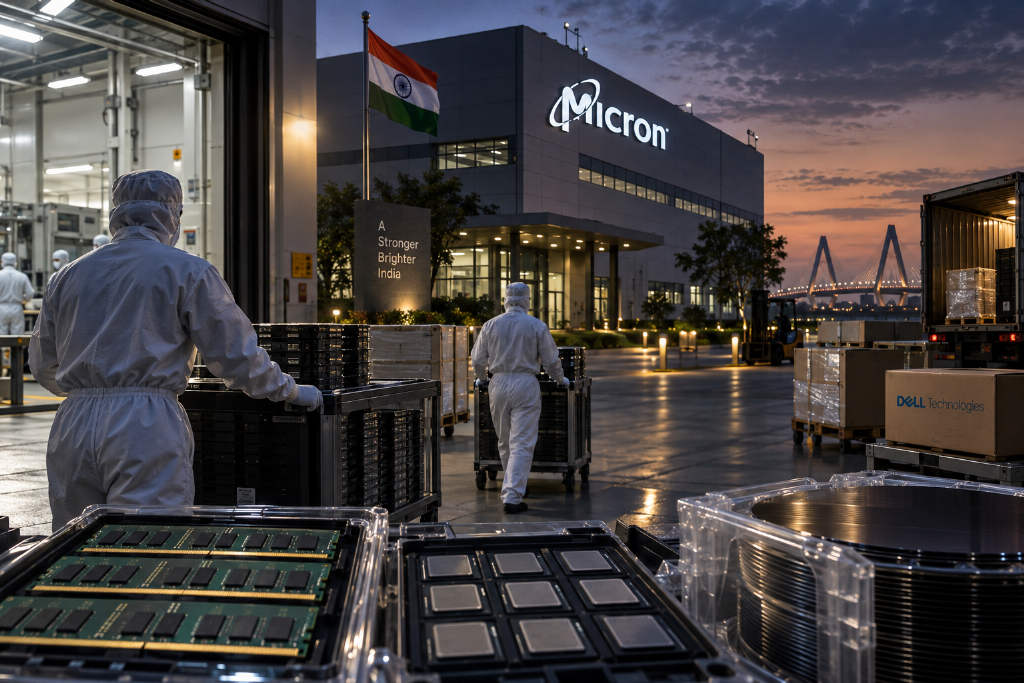
Micron2026-09-26 14:10:14Micron says its Sanand plant in India has moved into full commercial shipmentsMicron said its $2.75 billion plant in Sanand, Gujarat, has completed construction and entered full commercial shipments, supplying finished memory products to customers worldwide. The facility handles advanced DRAM and NAND wafers produced by Micron at other sites and converts them into finished storage products in India. According to the company, commercial production at the plant began earlier this year. Micron also said the first India-made shipments from the site have already been sent to Dell Technologies. The update was cited by Techub News, which referenced Watcher Guru. The announcement marks the transition of the Sanand facility from the construction phase to full shipment operations, with the plant now serving global customers as part of Micron’s manufacturing network.250
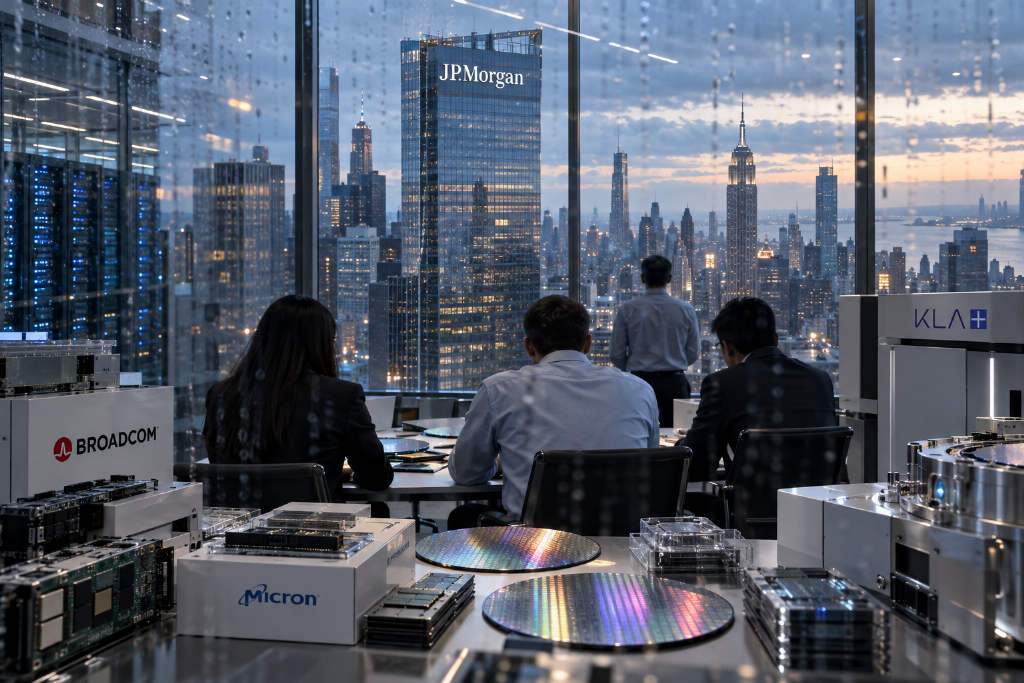
JPMorgan2026-09-20 06:31:03JPMorgan Sees Stronger Semiconductor Fundamentals, Puts 2026 Cloud Capex at $954 BillionJPMorgan said in its Sept. 18 U.S. semiconductor and semiconductor equipment autumn report that industry fundamentals are improving and the recent pullback in chip stocks looks constructive rather than disruptive. The bank’s model projects semiconductor industry growth of 118% in 2026 and 35% in 2027, while wafer fab equipment is seen rising 31% in 2026 and 38% in 2027. A key pillar in that view is cloud capital spending, which JPMorgan now estimates at $954 billion in 2026, climbing to $1.41 trillion in 2027 and $1.54 trillion in 2028. The bank said early AI monetization and return-on-investment signals are becoming easier to see, with faster cloud and AI revenue growth, larger backlogs, more long-term contracted capacity, and improving profitability across cloud and AI businesses. JPMorgan also highlighted custom AI ASICs and memory as two major themes in the current upcycle. It estimates the custom AI ASIC market at roughly $60 billion to $70 billion in 2026, with a 40% to 50% compound annual growth rate over the next several years, and forecasts DRAM and NAND pricing to rise about 250% in 2026. Among its preferred names, the bank listed Broadcom, Analog Devices, Marvell, Micron and KLA in large caps, while also favoring Nvidia, Applied Materials and Lam Research.730
UBS2026-09-20 06:06:44UBS sees global AI capital spending reaching about $1.4 trillion by 2027UBS expects global capital spending tied to artificial intelligence to rise to about $1.4 trillion in 2027, with higher memory costs cited as the main driver. According to the forecast, memory-related spending is projected to jump from $71 billion in 2025 to $923 billion in 2027. UBS said that increase would account for about 60% of the overall growth in AI capital expenditure during the period. The projection points to memory as a central cost component in the buildout of AI infrastructure over the next two years.360
Acer2026-09-20 01:40:04Acer chair says memory shortage has eased, but PC prices still face Q4 increasesAcer Chairman Jason Chen said on the 19th that memory is no longer in short supply, with mainland Chinese suppliers continuing to release volume and disrupting pricing. Contract prices are now fluctuating at elevated levels, with mixed moves across products. Some components, including LPDDR5 and DDR5 9600 paired with N1 or N1X, remain tight, while DDR4 is already oversupplied. CPUs are generally available, except for Small Core specifications used in Microsoft low-license-fee project models. Chen said price increases in key components this year have been unprecedented, pushing customers from complaints to stockpiling. Acer has raised inventory of lower-cost components to cope with the situation, while facing pressure to lift PC prices every quarter. In the fourth quarter, different product lines are still expected to see selling price increases of 5% to 20%. He added that although the three major memory suppliers have signaled optimism that the uptrend could last through 2027, continued output from mainland China means prices are unlikely to keep rising indefinitely. Acer expects its SSD and memory holding costs in 2027 to come in below this year’s level, with a chance for prices to stop rising and stabilize in the second half of next year.440
Infineon2026-09-18 01:26:09Infineon to Sell NOR Flash and F-RAM Business to Winbond for $1.12 Billion, Reviving the Spansion NameInfineon Technologies said on Sept. 16 that it will sell its NOR Flash and F-RAM business to Winbond Electronics in a $1.12 billion deal, with closing targeted for the second half of 2027. Winbond plans to run the business as a standalone company based in San Jose, California, and bring back the Spansion brand, a name that disappeared after Spansion was folded into Cypress in 2015. The transaction does not cover Infineon’s entire memory portfolio. SRAM, HYPERRAM, nvSRAM, and radiation-hardened memory based on SONOS technology will remain with Infineon and continue serving automotive, industrial, infrastructure, aerospace, and defense markets. The report says Winbond sees strategic value in buying an established memory business with more than 30 years of experience, an existing supply chain, R&D operations, and customer relationships in sectors where qualification cycles are long. Infineon, for its part, said it will sharpen its product portfolio and capital allocation around core growth areas, as it continues to expand in automotive, power semiconductors, and AI data center power management.530
Micron2026-09-15 13:21:11Micron says it reached a 512GB DDR5 memory module milestone, with 512GB DDR5 RDIMM mass production expected in H2 2027Micron Technology said it has reached a milestone for a 512GB DDR5 memory module, according to a ChainCatcher news brief. The company also said its 512GB DDR5 RDIMM is expected to enter large-scale mass production in the second half of 2027. The brief did not include additional product specifications, shipment targets, customer names, or capacity figures beyond the timeline and module size. Micron is identified in the report as MU.O.710